
Observation Spots
Formation
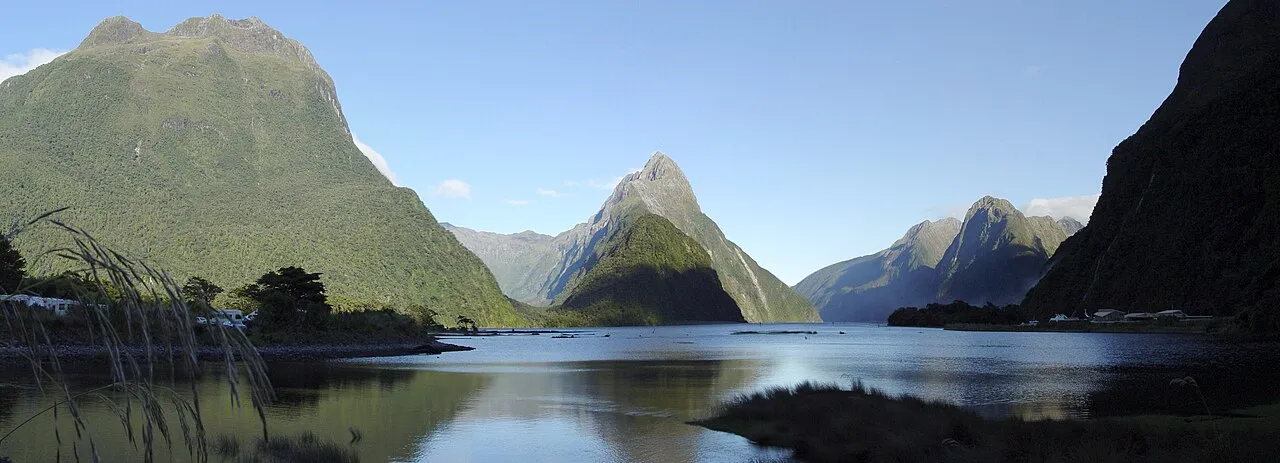
Milford Sound is a textbook glacial fiord — a valley cut far below sea level by ice, then drowned by the ocean when the glaciers retreated. The rock itself is far older than the landscape: the cliffs are hard Fiordland gneiss and granite assembled on the margin of the ancient supercontinent Gondwana hundreds of millions of years ago, so resistant that when the Ice-Age glaciers ground down the valley over the past two million years they carved near-vertical walls rather than the gentle V of a river gorge. Successive glaciations over-deepened the trough far below the modern shoreline, while a shallow rock sill near the fiord's mouth — scoured less deeply by the thinning ice as it spread out to meet the sea — now traps a distinct body of water inside the basin behind it. The fourteen fiords of this coast earned Te Wāhipounamu its UNESCO World Heritage listing in 1990 precisely because they preserve this glacial record so completely.
That trapped water produces Milford's strangest feature. The 6-plus metres of annual rainfall stain the run-off the colour of tea with tannins washed from the forest floor, and this cold fresh water floats in a layer several metres thick over the denser seawater below. The dark surface filters out light, so deep-water species that normally live hundreds of metres down — most famously black coral (Antipathella fiordensis), which is actually white when alive — thrive here just below the surface. The phenomenon is safeguarded within the Piopiotahi (Milford Sound) Marine Reserve, gazetted in 1993, where some black coral colonies are estimated to be several centuries old; the easiest way to see them is the floating underwater observatory at Harrison Cove.
The rain is the engine of the whole spectacle. Moist westerlies sweep in off the Tasman Sea, hit the wall of the Southern Alps, and dump their moisture on Fiordland before they can cross — an orographic downpour that makes Milford one of the wettest inhabited places on Earth, with rain on roughly 180 days a year. The deluge feeds the permanent waterfalls, sustains the moss-hung temperate rainforest that clings to every vertical wall, and, in the hours after a heavy downpour, switches on the hundreds of temporary cascades that make a wet day here more spectacular than a clear one.
Human history is comparatively brief. Māori prized Piopiotahi for its pounamu (greenstone) and reached it on seasonal trails from the east; the Welsh-born sealing captain John Grono charted the entrance in the early 1800s and named it Milford Haven after his home port in Wales; Captain John Lort Stokes anglicised the name to Milford Sound aboard HMS Acheron in 1851. The pioneer Donald Sutherland built the fiord's first permanent European dwelling in 1877 and gave his name to the 580-metre Sutherland Falls inland, and the route opened over the Mackinnon Pass in 1888 became the celebrated Milford Track. The whole fiord sits within Fiordland National Park, managed today by New Zealand's Department of Conservation.
Wildlife
The fiord is one of the best places in New Zealand to meet marine wildlife from a boat deck. A resident colony of New Zealand fur seals (kekeno) hauls out on the rocks near Seal Point, basking within metres of passing cruise boats, and a small resident population of bottlenose dolphins — among the most southerly resident pods in the world — regularly rides bow waves toward the Sound's open mouth.
Milford is penguin country too. The Fiordland crested penguin (tawaki), one of the world's rarest penguins, comes ashore to breed in the dripping coastal forest between roughly July and November, while little penguins (kororā) are present year-round and occasionally surface alongside boats. In the rainforest above the water, listen for tūī, bellbird (korimako), and the cheeky alpine parrot the kea, which famously gathers at the eastern portal of the Homer Tunnel to inspect — and dismantle — parked cars. Below the waterline, the tannin-stained halocline lets divers and the Harrison Cove observatory encounter black coral, sea pens, and the eleven-armed sea star at depths a snorkeller can reach, all safeguarded within the Piopiotahi (Milford Sound) Marine Reserve that the Department of Conservation has protected since 1993.
Trails
Most visitors see Milford only from a cruise, but the walking on offer ranges from a twenty-minute stroll to New Zealand's most celebrated multi-day tramp. The famous Milford Track — a 53.5-kilometre, four-day Great Walk crossing the Mackinnon Pass and finishing at Sandfly Point on the fiord — must be booked months ahead through the Department of Conservation for the summer Great Walk season, when hut bookings for the one-way route sell out within hours of release.
"The finest walk in the world."
That verdict, published in the London Spectator in 1908, has advertised the Milford Track for more than a century — and the scenery that earned it is only the grand finale of the glaciated country the track crosses to reach the fiord.
For those on a day trip, shorter walks capture the same landscape:
- Milford Foreshore Walk — a flat, ten-minute path from the terminal to the best free, land-based view of Mitre Peak mirrored in the water
- The Chasm — a 20-minute loop about 10 km back up the Milford Road, where the Cleddau River has drilled smooth potholes and arches through solid rock beneath Mount Tutoko
- Key Summit — a three-hour return climb from The Divide onto an alpine bog garden of tarns and Southern Alps views, sharing its first section with the Routeburn Track
- Lake Marian and Gertrude Saddle — longer, steeper routes off the Hollyford Road for fit, well-equipped walkers seeking hanging valleys and alpine lakes
If high-country walking whets your appetite, the free Queenstown Hill summit track back near town makes an easy companion outing on either side of the Milford day.
When to Visit
Milford Sound is accessible year-round, including winter. Cruises operate daily from the Milford Sound terminal, with most operators running 6–10 sailings a day between roughly 9 AM and 4 PM; each cruise lasts about 1.5 to 2 hours and runs the length of the fiord to its mouth and back. Coach day trips from Queenstown depart around 7–7:30 AM and return by 8–9 PM, leaving 2.5 to 3.5 hours at the Sound. Booking in advance is essential in summer (November–April) and for early-morning departures at any time of year.
Each season brings a different fiord. Summer (November–April) offers the longest days, the warmest decks, and the fullest timetable, but shares the water with the most boats; autumn most reliably delivers the still, mirror-calm mornings that reflect Mitre Peak; spring (September–November) combines snow-capped walls with powerful snowmelt in the waterfalls; and winter is the quietest and clearest window, at the cost of a Milford Road that snow can close at short notice. Within any day, the first sailing of the morning usually finds the calmest water and the softest light before the mid-morning coaches arrive.
The single-lane Homer Tunnel runs on traffic lights in peak season and can close after heavy snow, and the Milford Road crosses avalanche paths that are actively managed through winter and spring. Always check live conditions with Waka Kotahi NZ Transport Agency before setting out, and carry chains if you are self-driving between May and November.
Admission and Costs
Coach + cruise day trip from Queenstown: approximately NZ$180–280 (US$110–170) per person, depending on operator and cruise option. Fly from Queenstown + cruise: roughly NZ$350–450 (US$210–270) for a one-way scenic flight plus cruise, with a coach return available. Fly both ways: NZ$450–550 (US$270–330) with an optional cruise. Cruise only (for those driving in independently or staying at Milford): about NZ$75–120 (US$45–72) per person. Milford Underwater Observatory at Harrison Cove: roughly NZ$35 (US$21) on top of a cruise to descend into the marine-reserve viewing chamber. Overnight sea-kayak expeditions: NZ$350–600 (US$210–360) per person with specialist multi-day operators.
The Case for a Guide
- The road as much as the fiord — half of a Milford day is the drive, and a guide turns the five hours from Queenstown through the Eglinton Valley and Homer Tunnel into a narrated geology-and-ecology lesson rather than dead transit time
- Geological narration — the visual drama becomes comprehensible when a guide explains the mechanics of glacial carving, why the walls are vertical rather than sloped, and why the valley floor lies below sea level before rising to the terminal moraine
- Dual-water ecology — the fresh-over-salt layering that lets deep-sea species survive at snorkel depth is a phenomenon unique to Fiordland's fiords, and most visitors would never know to look for it without a naturalist pointing it out
- Rain, reframed — a guide frames rain not as a disappointment but as the hydrological engine that switches on hundreds of temporary waterfalls and sustains the forest clinging to every vertical wall above the fiord
- Māori history — Piopiotahi was prized by Māori as a source of pounamu, the most valued material in pre-European Polynesian culture; guides with te ao Māori knowledge connect the fiord's contemporary appearance to centuries of human significance
Tips for Visitors
If you only have one day for Milford, book the first coach or the earliest cruise from Queenstown — arriving before the mid-morning crowds means calmer water, fewer boats sharing the fiord, and the best morning light on Mitre Peak's western face. The cruise deck is always cold regardless of the air temperature, so bring a warm layer and a waterproof shell even in summer; the spray off the waterfalls and the wind at the Sound's mouth create real chill. If the Homer Tunnel is backed up with traffic (common on summer afternoons), use the wait to walk the nearby Chasm loop rather than idling in the car.
Staying overnight at the Milford Sound Lodge buys you the fiord in early-morning light before the day-trippers arrive — a genuinely different experience. And because the drive eats a full day, treat Milford as one anchor of a longer Queenstown itinerary: pair it with the Skyline Gondola and the historic TSS Earnslaw steamship on the days either side, and stretch your legs on the free Queenstown Hill summit walk to recover from the long Milford day.
Frequently Asked Questions
How do you get to Milford Sound from Queenstown?
The most popular approach from Queenstown is a full-day coach excursion, departing around 7–7:30 AM and returning by approximately 8–9 PM. The 5-hour each-way journey via Te Anau and through the Homer Tunnel passes through some of New Zealand's most dramatic mountain scenery — the alpine views along the Milford Road are considered a highlight in themselves. Fly-drive options (fly one way, coach the other) reduce total travel time while preserving the scenic road experience. Direct scenic flights from Queenstown Airport reach Milford in 45 minutes.
Is Milford Sound better in rain or sunshine?
Both conditions produce extraordinary experiences for opposite reasons. Sunshine delivers the classic mirror-calm reflection of Mitre Peak in the fiord's surface and sharply defined views of the vertical cliff faces. Rain — and Milford receives more than 6 metres annually — activates hundreds of temporary waterfalls that cascade from every cliff face simultaneously, turning the fiord into a spectacle of falling water that has no parallel anywhere else. Many experienced visitors consider a rainy Milford to be more dramatic and memorable than a clear one.
What wildlife can I see at Milford Sound?
Milford Sound supports a permanent colony of New Zealand fur seals on the rocks at Harrison Cove, visible from cruise boats at close range. Bottlenose and common dolphins frequently escort vessels through the fiord, particularly near the open sea at the Sound's mouth. Little blue (korora) penguins are present year-round and occasionally visible from boat decks. Fiordland crested penguins breed in the area in spring. The underwater world is equally remarkable — the layer of dark fresh water over the salt water creates conditions that allow deep-water black coral and rare species to thrive at accessible snorkel depths, observable from the Milford Underwater Observatory.
Who discovered Milford Sound and how did it get its name?
Māori knew the fiord as Piopiotahi for centuries and visited it seasonally to collect pounamu (greenstone) on the trail to the West Coast. The first European credited with charting it was the Welsh-born sealing captain John Grono in the early 1800s, who named it Milford Haven after his home port in Wales. Captain John Lort Stokes later anglicised the name to Milford Sound while surveying the Fiordland coast aboard HMS Acheron in 1851. The pioneer Donald Sutherland — remembered as "the Hermit of Milford" — built the first permanent European home on the fiord in 1877, and the celebrated Milford Track was pioneered over the Mackinnon Pass in 1888.
When is the best time of year to visit Milford Sound?
Milford Sound rewards a visit in any season, but the character changes month to month. The summer months of November through April bring the longest daylight, the warmest air, and the most cruise and coach departures, making them the easiest for a Queenstown day trip — and the busiest. Autumn delivers the highest chance of still, mirror-calm mornings that reflect Mitre Peak, while late winter and spring (July through October) combine snow on the peaks with heavy run-off that keeps the waterfalls at full volume. Winter is the quietest time on the fiord, but the Milford Road crosses managed avalanche paths and the Homer Tunnel can close after heavy snow, so self-drivers must carry chains and check conditions with the NZ Transport Agency.
Can you experience Milford Sound without taking a cruise?
Yes, though a cruise remains the classic way to reach the fiord's open mouth. From the terminal, the flat ten-minute Milford Foreshore Walk reaches the best free, land-based view of Mitre Peak mirrored in the water, and the 20-minute Chasm loop on the Milford Road passes thundering potholes carved into solid rock. Guided sea-kayak trips put you at water level beneath the cliffs, the Milford Underwater Observatory at Harrison Cove descends into the Piopiotahi Marine Reserve to see black coral, and scenic flights from Queenstown reveal the fiord's full glacial geography from above. Most visitors still pair one of these with a boat cruise for the complete picture.