
Architecture
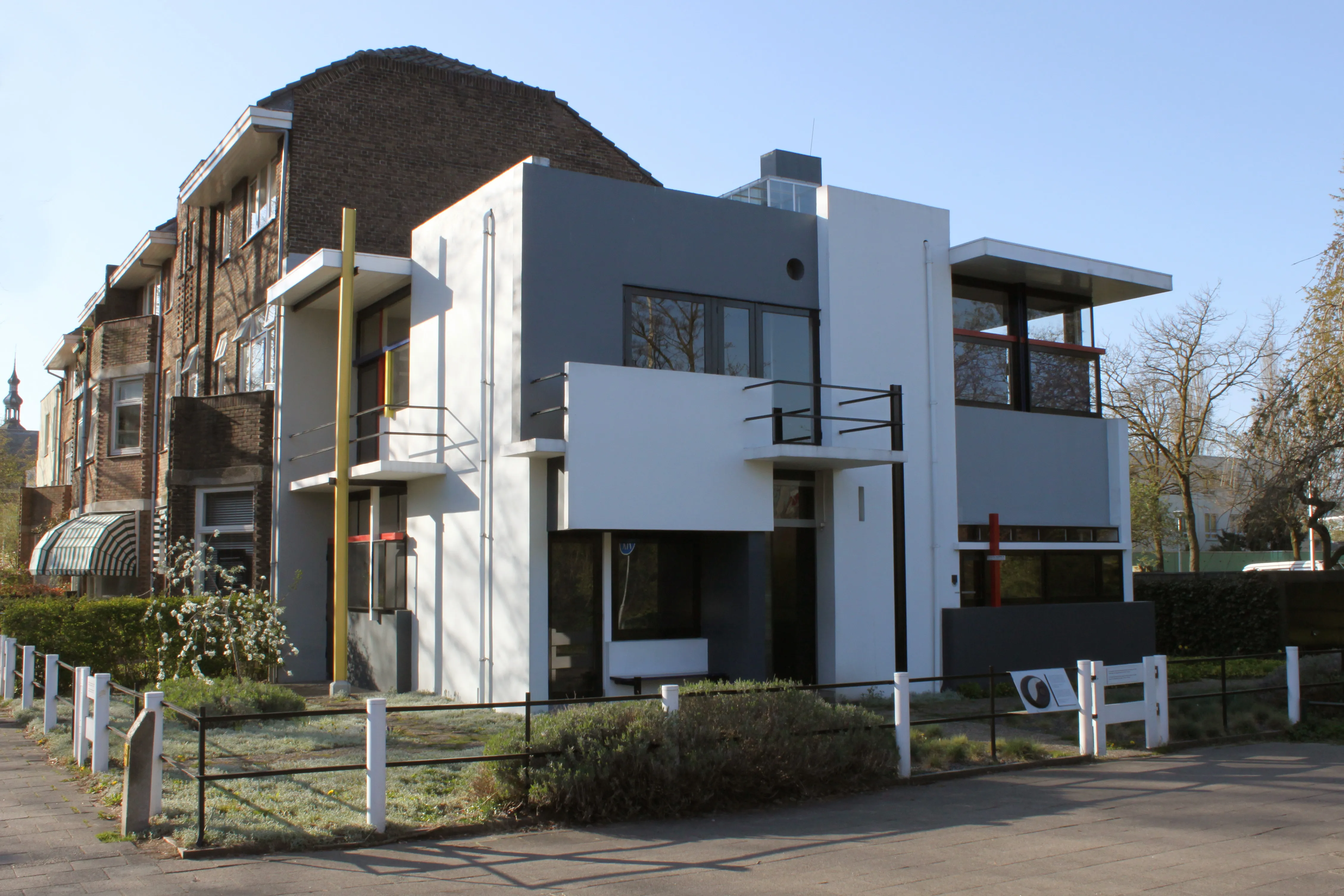
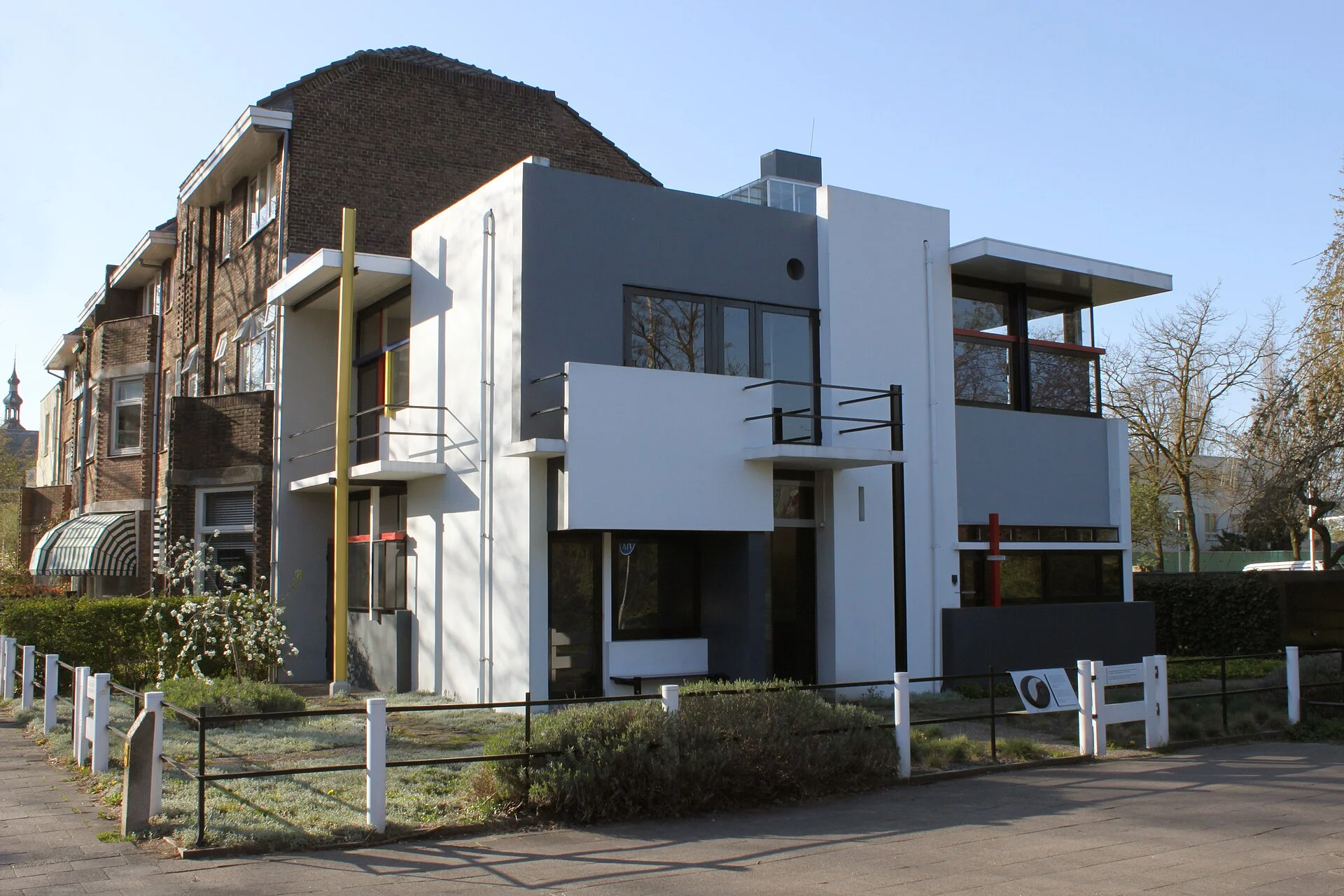
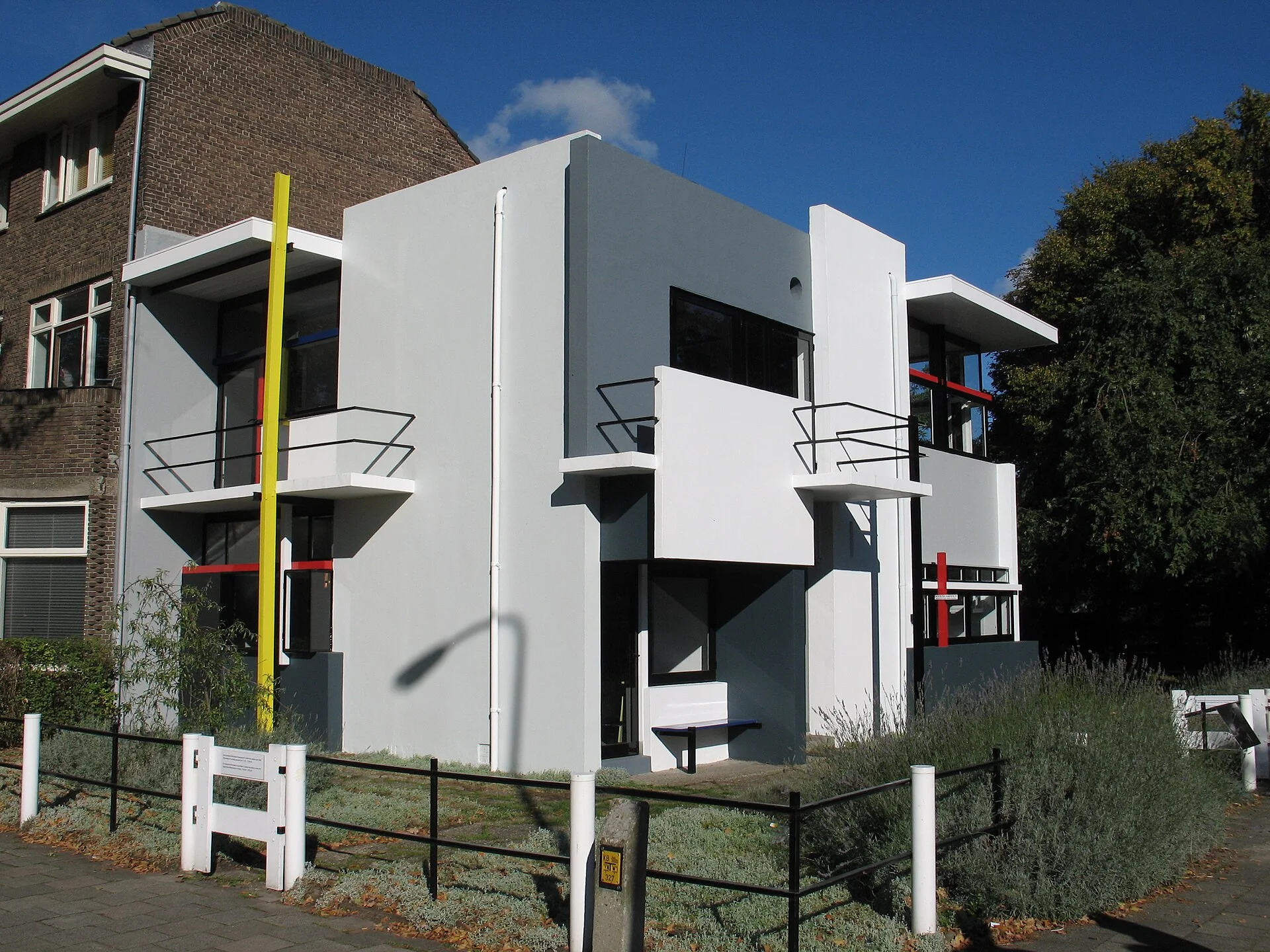
De Stijl in three dimensions: The house translates Mondrian's flat compositions into built space — overlapping planes, no symmetry, and load-bearing elements deliberately disguised so the walls appear to float. Primary-colour structure: The steel beams and window frames are painted red, yellow, and blue against white and grey surfaces, making the structure itself part of the artwork rather than something to hide. The transformable floor: The upper storey's sliding partitions are the building's heart — a guide will demonstrate how a single space becomes a multi-room apartment and back again, a flexibility that anticipated open-plan living by decades. Inside-outside continuity: Corner windows open with no post between the panes, dissolving the boundary between room and garden — a detail Rietveld considered essential to "a connection between inside and outside." Built-in furniture: Much of the furniture, including Rietveld's famous Red and Blue Chair lineage, was designed for the house, so architecture and objects form one coherent statement.
Historical Significance
A break with everything before it: Critics describe the house as the moment European architecture stopped decorating boxes and started composing space — its influence runs through the Bauhaus, modernism, and the open-plan interiors common today. A collaboration, not a commission: Truus Schröder-Schräder worked beside Rietveld throughout, and her insistence on flexible, unhierarchical living shaped the design as much as his geometry — an unusually equal partnership for the 1920s. Lived continuity: That the client occupied the house for 61 years, adapting it daily, makes it a rare modernist landmark that was genuinely used rather than preserved as a showpiece. UNESCO recognition: Its 2000 inscription cited it as an icon of the Modern Movement and "a manifesto" of De Stijl, putting a small Utrecht townhouse alongside cathedrals and palaces on the World Heritage list. Why Utrecht: The house anchors Utrecht's claim as a design city and pairs naturally with the Rietveld holdings at the Centraal Museum, making the two a single architectural story.
Rietveld Schröder House in Pictures
When to Visit
Open: Typically Tuesday-Sunday with tours on the hour; closed Mondays and outside booked slots. Tours: Run in Dutch and English — confirm the English schedule when booking, as it is limited. Duration: Allow 45 minutes to 1 hour for the guided visit, plus travel time from the centre. Best: Mid-week mornings are quietest; weekend slots sell out first. Combine: Pair the visit with the Centraal Museum, which holds the world's largest Rietveld collection and where most tickets are collected.
Admission and Costs
Combination ticket: A single ticket usually covers the Rietveld Schröder House and the Centraal Museum — around €19 for adults, with reductions for children and students. Museumkaart: Holders enter both for free but must still reserve a timed house slot. Booking: Online advance reservation is effectively mandatory, since the house cannot accommodate walk-ups when groups are full. Tip: The price reflects the guide and the conservation limits on visitor numbers, not the building's modest size — budget for the experience, not the square metres.
Tips for Visitors
Book the English tour early: English-language slots are fewer than Dutch ones and fill first — reserve several days ahead. Start at the museum: Collect tickets and watch the short introductory film at the Centraal Museum before heading to the house, so the guide can focus on the building itself. No bags or photos inside: Large bags must be left behind and interior photography is restricted to protect the original fabric — read the rules when booking. Wear flat shoes: The stairs are steep and narrow, in keeping with a 1924 home. Mind the viaduct: A motorway flyover now passes nearby; ask your guide how Mrs. Schröder fought it — the story says a lot about the house's relationship to its surroundings. Make a half-day of it: From here it is a short ride back to the Dom Tower and the canal wharves for lunch at water level.
Frequently Asked Questions
Can you visit the Rietveld Schröder House without a guided tour?
No. The house is only accessible on a timed, guided tour booked in advance through the Centraal Museum, which runs it. Groups are capped at around a dozen people to protect the fragile interior, and walk-up tickets are rarely available — reserve days ahead, especially for English-language slots.
How do you get to the Rietveld Schröder House from Utrecht centre?
It sits at Prins Hendriklaan 50 on the eastern edge of the centre, about a 30-minute walk or 10-minute cycle from the Dom Tower. City bus 8 from Utrecht Centraal stops a few minutes away. Most visitors collect their tickets and an introductory film at the Centraal Museum first, then continue to the house.
Is the Rietveld Schröder House worth visiting for non-architects?
Yes, if you enjoy design stories — the upper floor's sliding and folding partitions, which turn one open space into separate rooms, are genuinely surprising to see demonstrated. If you have no interest in modern architecture or design history, the small scale and strict no-touch rules may feel underwhelming.