
Landmarks Along
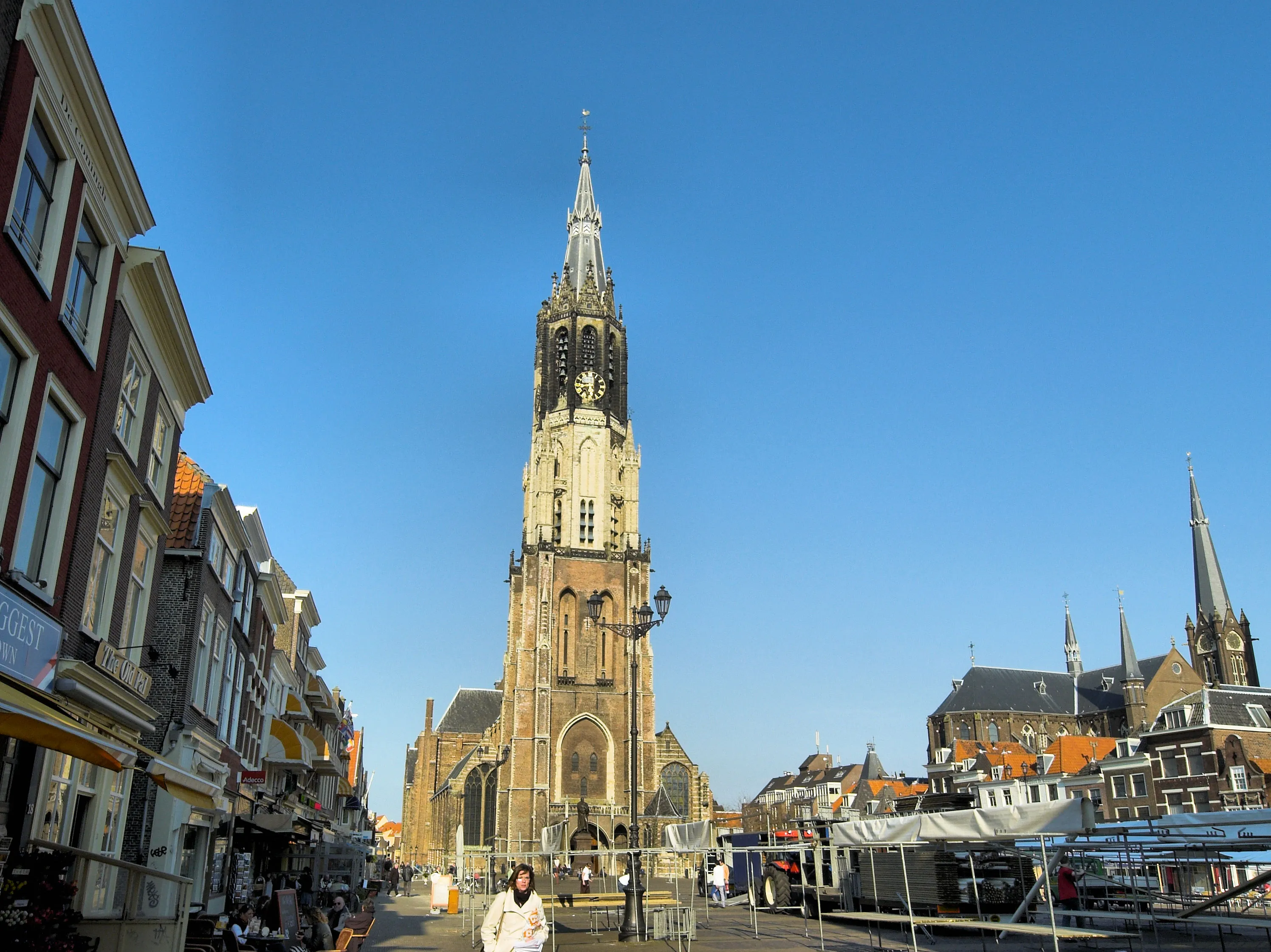
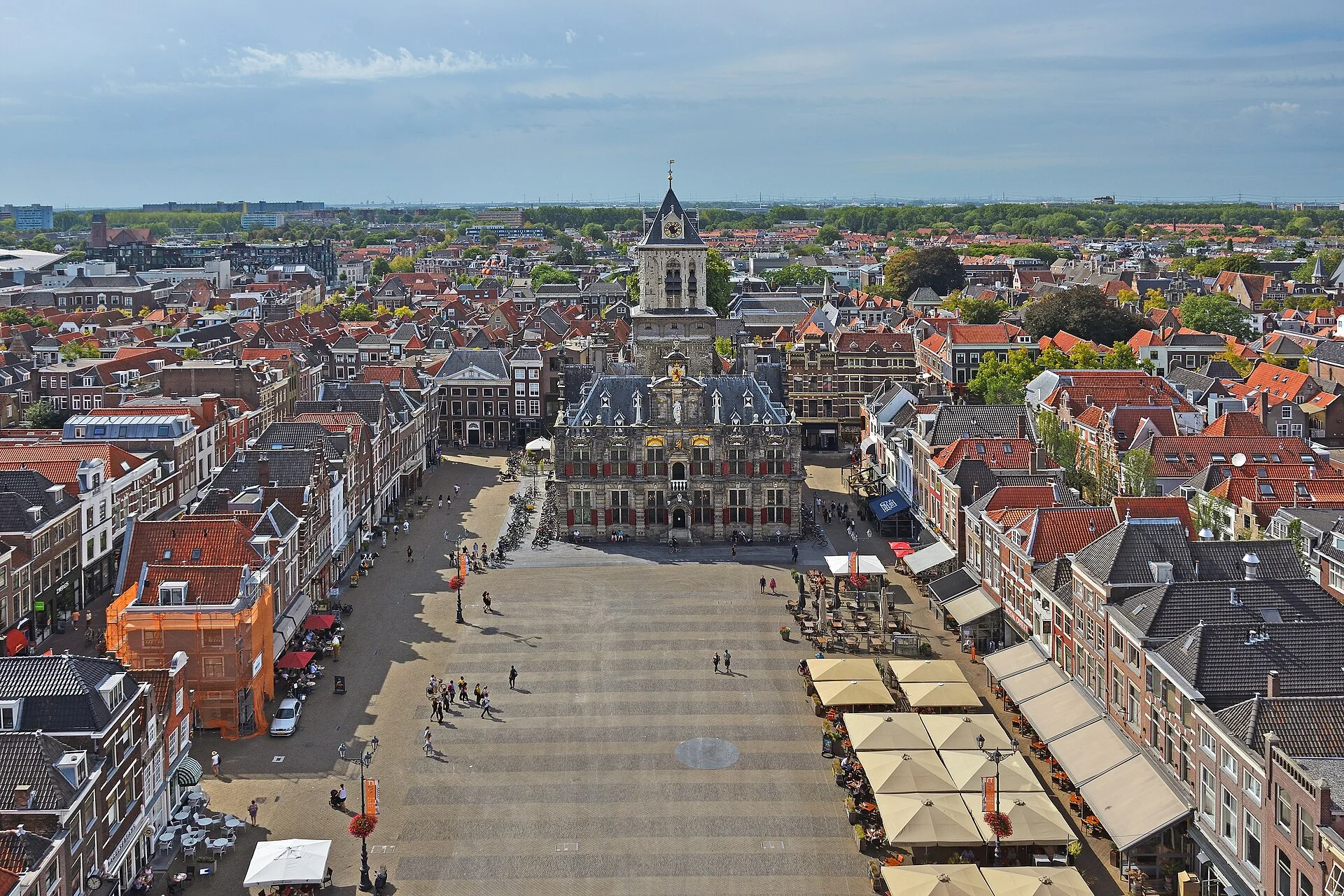
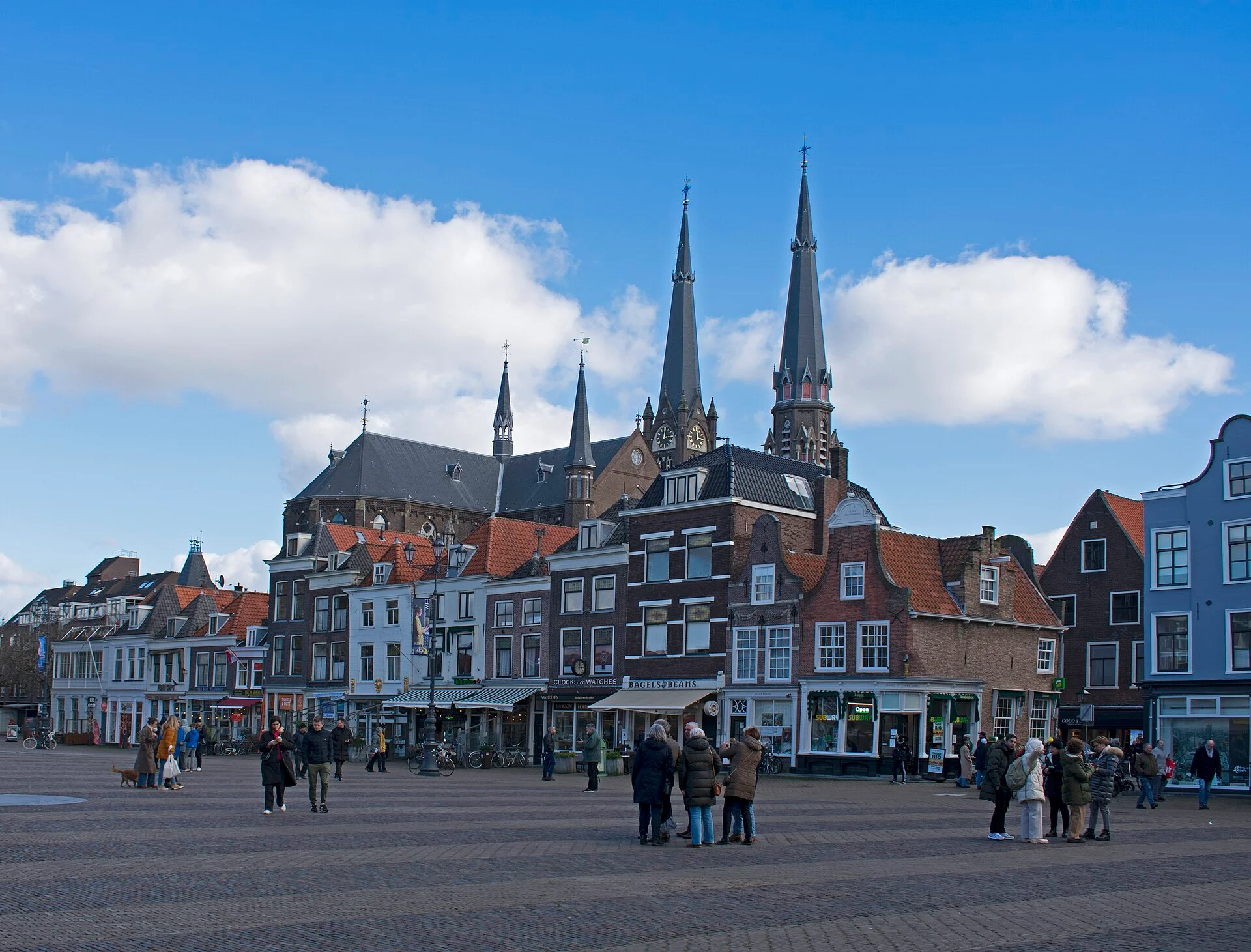
The Nieuwe Kerk: The Nieuwe Kerk closes the east end with its soaring tower and the royal tomb inside — the single most photographed sight on the square. The Stadhuis: The Renaissance Stadhuis faces the church from the west end, its red shutters and gilded detail wrapped around the medieval Het Steen tower. Hugo Grotius statue: The 1886 bronze of the Delft-born jurist Hugo de Groot stands before the church, marking the city's contribution to international law. Merchant houses: The long sides are lined with stepped and bell-gabled houses now occupied by Delftware shops, chocolatiers, and cafés. The waag and side markets: Just off the square, the old weigh-house area and the Brabantse Turfmarkt host the overflow of the Thursday market. Canal approaches: Bridges and quays leading off the Markt open onto the Oude Delft and Voldersgracht, the route toward the Oude Kerk and Vermeer's birthplace.
Photo Spots
Church-tower symmetry: Stand at the City Hall end and frame the full length of the square rising to the Nieuwe Kerk tower — the classic Delft postcard. From above: The Nieuwe Kerk tower gives a bird's-eye view straight down onto the cobbles and the market stalls. Market colour: On Thursdays, the flower and cheese stalls give vivid foreground colour against the historic facades. City Hall facade: The red shutters and gilded coat of arms of the Stadhuis photograph best in late-afternoon light. Reflections nearby: Walk a minute to the bridges over the Oude Delft for the canal reflections that made Delft famous in paint. Golden hour: Early morning empties the square for clean architecture shots; evening light warms the brick and fills the terraces.
Markt in Pictures
When to Visit
Open: Always — the Markt is a public square, accessible day and night, free of charge. Market days: Thursday for the big general market (roughly 9:00-17:00), Saturday for a flower and general market, plus a summer Saturday art and antiques market along the canals. Best: Thursday morning for the full market spectacle; early morning or evening for empty cobbles and clean photographs of the Nieuwe Kerk tower; warm evenings for the terraces. Allow: 20-30 minutes to take in the square itself, longer if you climb the tower, shop, or settle in for a drink.
Admission and Costs
The square: Free to enter and enjoy at any hour. Around it, you pay only for what you choose: the Nieuwe Kerk church and tower climb (about €9 / $10 combined), a terrace coffee (around €3-4 / $3-4), or market food such as a herring or a paper cone of stroopwafels (a few euros). Guided walking tours of the historic centre, which typically start on the Markt, run roughly €0-12 ($0-13) for group or tip-based walks. Delftware on the square ranges from inexpensive souvenirs to certified hand-painted pieces from Royal Delft.
The Case for a Guide
The Markt looks simple — a big square with a church and a town hall — but a guide reveals it as Delft's stage set, where civic, royal, and intellectual history all face one another. Standing in the middle, a guide can point from the royal tomb in the Nieuwe Kerk to the Stadhuis where William of Orange's assassin was tried and executed, to the Grotius statue marking the birth of international law, and tie all three to the same Golden Age moment. Guides also decode the market traditions, the gable styles of the merchant houses, and the difference between tourist-grade and genuine Royal Delft ceramics sold on the square. Because nearly every walking route through the city passes the Markt, it is the ideal place to begin a tour and set the day's story in motion.
Tips for Visitors
Come on Thursday: The general market is the square at its most alive — arrive before 11:00 for the best of the flowers and cheese. Climb for the overview: From the top of the Nieuwe Kerk tower you look straight down onto the Markt and out across the canal grid. Tell genuine Delftware apart: Shops on and around the square sell everything from machine-printed souvenirs to hand-painted pieces — see how to spot the real thing on the Royal Delft page. Start your day here: The Markt is the natural hub for the one-day Delft itinerary, with the church, City Hall, and canals all a few steps away. Terrace timing: Mid-afternoon and early evening are when the cafés fill — grab a table on the church side for the best view down the square.
Frequently Asked Questions
What days is the market held on Delft's Markt square?
Delft's big general market fills the Markt every Thursday, spilling along the adjoining Brabantse Turfmarkt, with hundreds of stalls of food, cheese, flowers, and goods. Saturdays bring a smaller flower and general market on the square, and in summer a Saturday art, book, and antiques market runs along the canal quays nearby. Thursday is the liveliest day to experience the square as locals do.
What buildings surround the Markt in Delft?
The Markt is anchored by the Nieuwe Kerk and its 108-metre tower at the east end and the Renaissance City Hall at the west end, facing each other across the square. The long sides are lined with gabled merchant houses, cafés, chocolate shops, and Delftware stores, with the statue of jurist Hugo Grotius standing in front of the church.
Is the Markt in Delft worth visiting?
Yes — it is the heart of the city and the natural starting point for any visit. The square is one of the largest historic market squares in the Netherlands, free to wander at any hour, and within a few steps of the Nieuwe Kerk tower climb, the City Hall, Delftware shops, and the canals. Its café terraces make it the best place to orient yourself before exploring.
Do I need to pay to visit the Markt square?
No. The Markt itself is a public square, free and open day and night. You only pay for what you choose to do around it — climbing the Nieuwe Kerk tower, a coffee on a terrace, or shopping the market stalls. Guided walking tours of the historic centre almost always begin or pause here.