
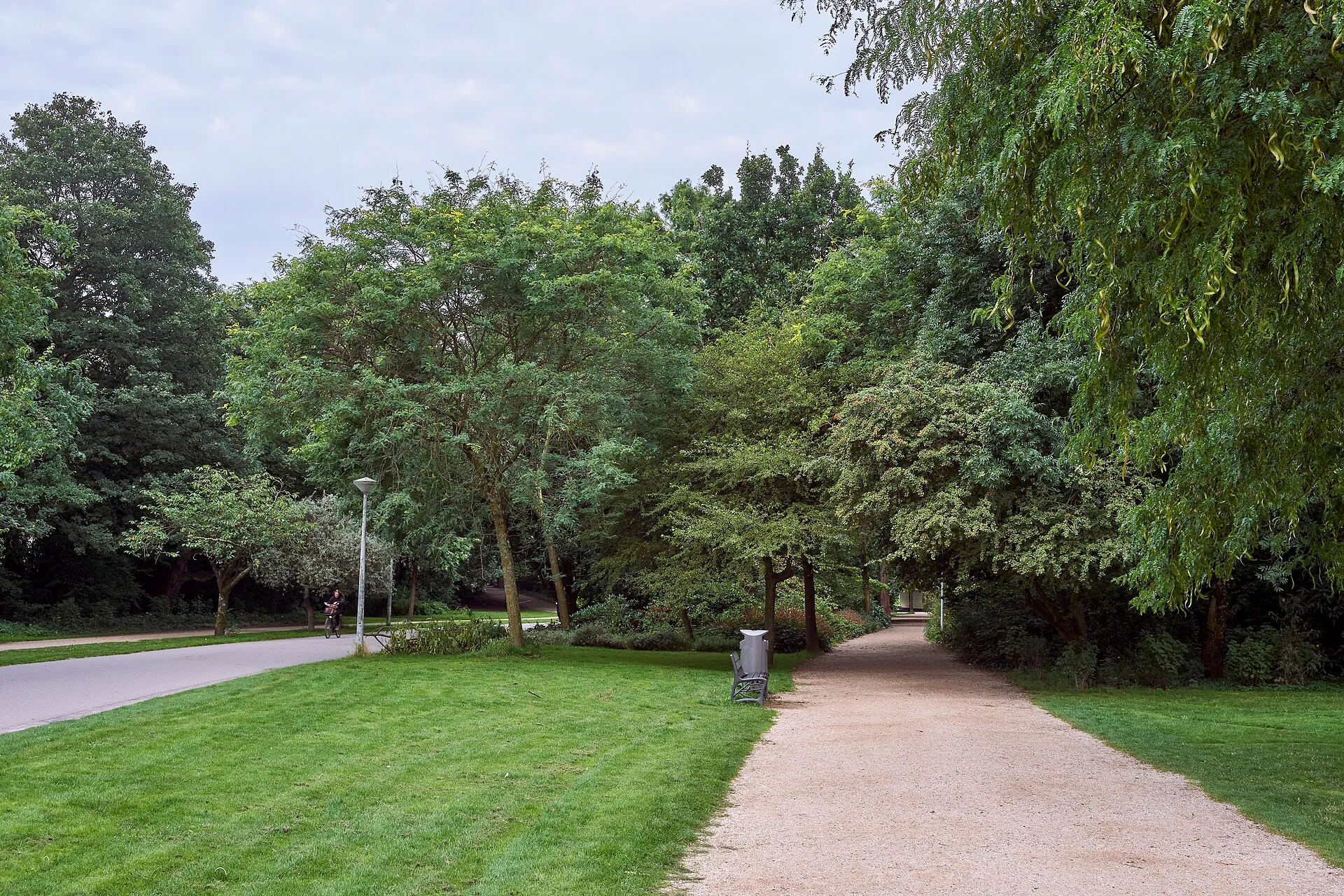
Observation Spots
Activities
Openluchttheater: the open-air venue stages over 100 free performances each summer — jazz, classical music, stand-up comedy, children's theatre, and dance from international companies. Blauwe Theehuis: the 1937 Functionalist pavilion looks like a landed UFO among the trees, and its wraparound terrace is Amsterdam's most atmospheric outdoor café. The Fish (Picasso sculpture): a large abstract figure by Pablo Picasso stands near the centre of the park — donated to Amsterdam for its centenary in 1965 and one of few Picasso sculptures in a public park.
Parakeet colony: wild ring-necked parakeets — descendants of escaped pets — have thrived here since the 1970s, nesting in old woodpecker holes and chattering through the treetops. Rose garden: over 70 rose varieties bloom from June to October in a formal garden tucked near the park's south-west corner, a tranquil contrast to the lively central lawns. Running and skating: the flat perimeter loop is a favourite with joggers and inline skaters, and the park's wide asphalt paths stay usable year-round.
Seasonal Highlights
The Openluchttheater hosts over a hundred free concerts, comedy shows, and dance performances from roughly late May through August on warm summer evenings. King's Day on April 27 turns the park into one of Amsterdam's biggest outdoor parties, with orange-clad revellers, flea markets on the lawns, and live music at every clearing. Late April also brings tulip season, when beds along the walking paths burst into colour alongside the park's blooming cherry trees.
In October the park's mature canopy turns gold and copper, drawing photographers to the ponds; from November through February the grounds are quiet and often misty, and in a rare hard freeze the shallow water draws skaters just as the canals do.
Vondelpark timeline
-
The New Park opens
A private association opens the privately funded Rij- en Wandelpark (riding and walking park) on marshy meadows south-west of the city, laid out by landscape architect Jan David Zocher and his son Louis Paul Zocher in the English landscape style.
-
Renamed for Joost van den Vondel
A bronze statue of the 17th-century playwright Joost van den Vondel by sculptor Louis Royer is unveiled near the eastern entrance, and the New Park gradually takes his name.
-
Extended to its full length
Successive land purchases stretch the park westward toward the Amstelveenseweg, giving it the roughly 47-hectare, 1.5-kilometre ribbon shape it keeps today.
-
Blue Tea House built
The Baanders brothers complete the Blauwe Theehuis, a glass-walled, saucer-shaped café pavilion in the Nieuwe Bouwen (Dutch Functionalist) style that still anchors the park's central pond.
-
Given to the City of Amsterdam
After nearly ninety years in private hands, the grounds are transferred to the municipality, cementing Vondelpark as free public space rather than a members' pleasure garden.
-
Picasso donates a sculpture
For the park's centenary, Pablo Picasso gives the city a large abstract figure nicknamed The Fish, one of few Picasso sculptures standing in a public park.
- 1970s
Wild parakeets move in
Ring-necked parakeets descended from escaped or released pets establish breeding colonies in the park's old trees, adding a flash of tropical green to the Dutch canopy.
-
Free Open Air Theatre season begins
The Openluchttheater foundation starts programming a full summer of free concerts, dance, and children's shows on the park's open-air stage.
-
Declared a national monument
Vondelpark is listed as a rijksmonument, protecting the Zochers' landscape design and its pavilions as nationally significant heritage.
- 2008-2010
Major restoration against subsidence
Because the park rests on soft peat below sea level and slowly sinks, a multi-year renovation raises paths and lawns, rebuilds the pond banks, and renews the drainage.
When to Visit
Access: Open 24 hours, year-round, with no gates, tickets, or admission. Best: Late morning (10:00-12:00) for a relaxed atmosphere, or summer evenings for free performances at the Open Air Theatre. Busiest: Sunny weekend afternoons, especially spring and summer, when the central lawns fill with picnickers.
The Openluchttheater runs free performances roughly late May through August — check the current schedule online and arrive 30-45 minutes early for a spot on the grass. For photography and quiet, come at sunrise, when mist often hangs over the ponds and the paths belong to joggers and dog-walkers alone. The park empties fast in rain, which can make a drizzle-day visit unexpectedly peaceful. In high summer the long Dutch twilight keeps the lawns busy until around 22:00.
Admission and Costs
Park access: Free, at all hours. Open Air Theatre: free performances (arrive early for seating). Café terraces: coffee €3-5 (about $3-5), beer €4-6 ($4-7), lunch €10-16 ($11-17) at venues inside the park such as the Blauwe Theehuis and Groot Melkhuis. Bike rental: available near the park entrances from about €10/day ($11).
A private walking guide covering Vondelpark and the surrounding Museumplein quarter typically runs €150-250 (about $160-270) for a customised 2-hour tour. Many of the park's best experiences — the sculptures, the rose garden, the free summer stage — cost nothing at all.
The Case for a Guide
Vondelpark reads at first glance as a simple green space, but almost everything in it was deliberately composed, and a guide turns a pleasant stroll into a tour of landscape design, public sculpture, and the social history of Amsterdam.
- A landscape built to look natural: Guides explain how the Zochers engineered the winding paths, sightlines, and ponds of the English landscape style onto flat, waterlogged peat — and why the park now has to be lifted out of the ground it keeps sinking into.
- Sculpture among the trees: From the 1867 Vondel statue to Picasso's 1965 The Fish, the grounds hold works most visitors walk straight past; a guide places each in the story of the park and the city.
- A democratic commons: The shift from private members' garden to free public ground in 1953 mirrors Amsterdam's own move toward openness — the same pragmatic tolerance a guide can trace into the canal ring and the Jordaan.
- A natural museum pairing: Beginning or ending a Rijksmuseum or Van Gogh Museum visit with a loop of the park, five minutes away, lets one afternoon span the city's art and its everyday life.
Tips for Visitors
Cycling through: Vondelpark is one of the few Amsterdam parks where cycling is permitted — it functions as a commuter route, so stay to the right on shared paths, slow down near the ponds and playgrounds, and expect heavy two-way traffic at rush hour. Picnic supplies: stock up at Albert Heijn on Overtoom or at the Albert Cuyp Market in De Pijp before entering; the park's cafés are pleasant but pricey for what you get.
Getting there: trams 1, 2, 3, 5, 7 and 12 stop within a few minutes of one of the entrances, and the park has almost no car parking, so arrive on foot, by bike, or by tram. Museum proximity: the north-east entrance is a 5-minute walk from the Rijksmuseum and Van Gogh Museum — a natural post-museum decompression zone. Accessibility: the main asphalt paths are flat and step-free, suiting wheelchairs, strollers, and skaters, though a few older side paths are gravel.
Dogs and children: off-leash dog zones and several fenced playgrounds are scattered throughout, and the park is reliably family-friendly during daylight hours. Rainy days: the park clears quickly, and the Blauwe Theehuis offers shelter with a view over the water.
Frequently Asked Questions
What months are best for enjoying Vondelpark?
May through August is when Vondelpark truly comes alive, with free Open Air Theatre performances, blooming rose gardens, and Amsterdam's famously long summer evenings drawing picnicking crowds until sunset around 10 PM. Late April brings King's Day festivities and tulip season, with the park's flower beds erupting in color alongside cherry blossoms. From November through February, the park is cold, wet, and largely empty, best appreciated as a brisk walk between museum visits rather than a destination in its own right.
What are the access hours and best times to visit Vondelpark?
Access: Open 24 hours, year-round. Best: Late morning (10:00-12:00) for a relaxed atmosphere, or summer evenings for free performances at the Open Air Theatre. Busiest: Sunny weekend afternoons, especially spring and summer.
Is Vondelpark free to enter?
Park access: Free. Open Air Theatre: Free performances (arrive early for seating). Café terraces: Coffee €3-5 (about $3-5), beer €4-6 ($4-7), lunch €10-16 ($11-17) at venues inside the park. Bike rental: Available near park entrances from €10/day (about $11).
What should cyclists know when riding through Vondelpark?
Cycling through: Vondelpark is one of the few Amsterdam parks where cycling is permitted — it functions as a commuter route, so stay to the right on shared paths, keep speed down near the ponds and playgrounds, and expect heavy two-way traffic at rush hour.
How do you get to Vondelpark?
Vondelpark sits just south-west of Leidseplein in Amsterdam-Zuid. Trams 1, 2, 3, 5, 7 and 12 stop within a few minutes' walk of one of its entrances, and the north-east gate is roughly a 5-minute walk from the Rijksmuseum and Van Gogh Museum on Museumplein. From Amsterdam Centraal it is about 15 minutes by tram or 20 minutes by bike. There is almost no car parking at the gates, so most visitors arrive on foot, by bike, or by tram.
Is Vondelpark accessible and family-friendly?
Yes. The main asphalt paths are flat, wide, and step-free, so they suit wheelchairs, strollers, and skaters, though a few older side paths are gravel. Several fenced playgrounds, off-leash dog areas, and the café at Groot Melkhuis make it a reliable family stop, and the Open Air Theatre programmes free children's shows through the summer. Free public toilets are limited, so use the café facilities when you can.
What are the most picturesque spots in Vondelpark?
The large central pond mirrors the trees and the saucer-shaped Blauwe Theehuis terrace; the formal rose garden peaks from June to October; the bronze Vondel statue frames the leafy eastern entrance; and Picasso's abstract sculpture The Fish sits out on the open lawns. Early morning mist over the water and the gold of the October canopy are the two most rewarding times for photographs.