
Walking Route
Local Life
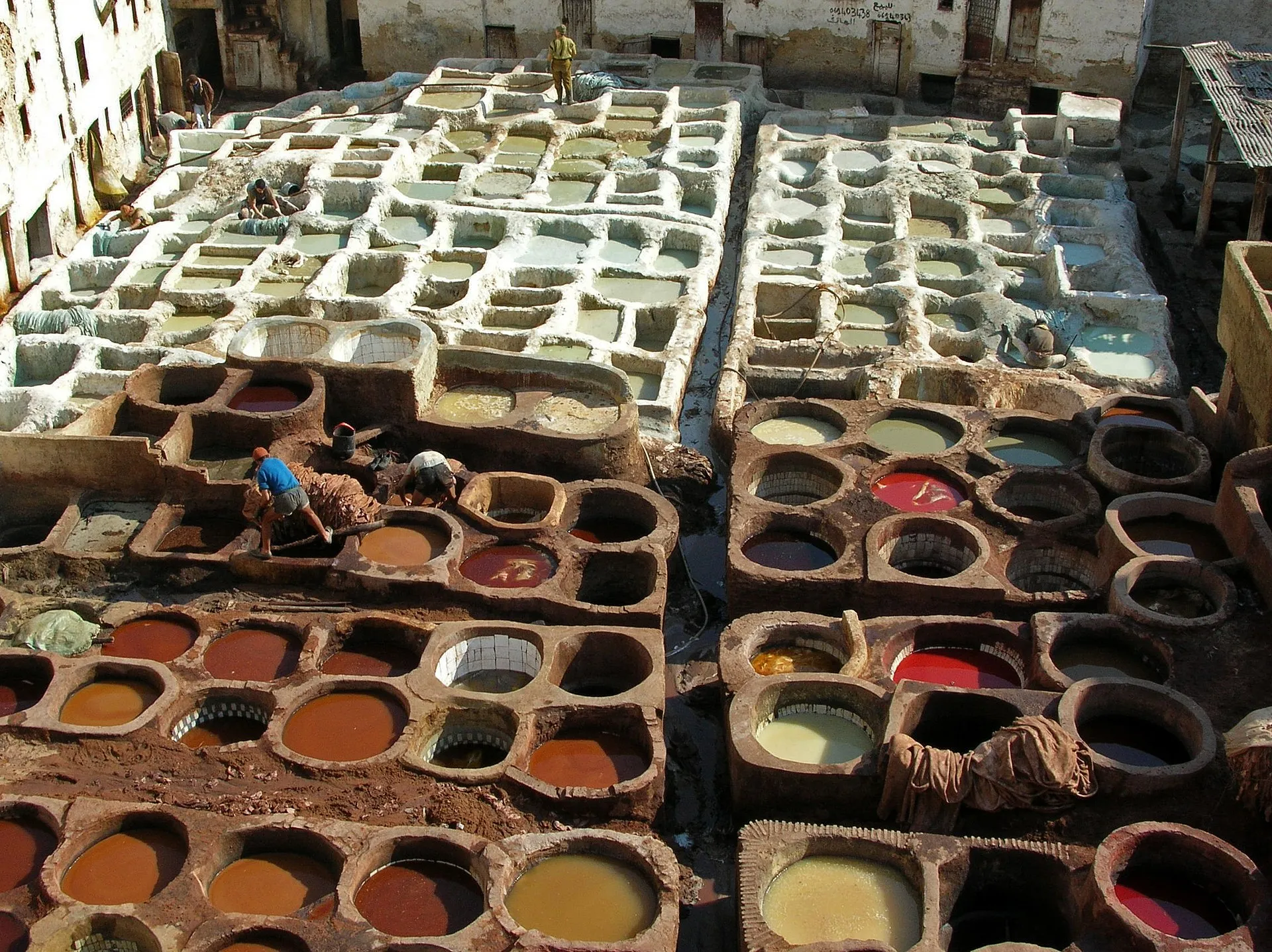
Navigation is the first reason a guide is indispensable — the 9,400 alleys form a labyrinth in which even lifelong residents occasionally lose their bearings. The second is access: guides open unmarked doors to workshops for zellige tile-cutting, brass engraving, silk-button weaving, and leather tooling that carry no signage at all. Reaching the Chouara Tannery terrace means passing through a leather shop, and a guide negotiates that arrangement and hands you mint to soften the smell of the pigeon-dung solution used to cure the hides.
Fes el Bali's real distinction is that it is still organised by guild and quarter, medieval-fashion. Coppersmiths cluster around Place Seffarine, hammering trays and couscoussiers by hand; the dyers keep their own souk; and the carpenters hold the Nejjarine square, watched over by a restored 18th-century fondouk (caravanserai) that now houses a woodcraft museum. Neighbourhood life still turns on the shared institutions the guilds built: the communal farran oven where families send their bread to bake, the hammam baths, the fountain, and the corner mosque — the five together defining a houma, or quarter. Guides read the architectural layers as you walk, distinguishing Idrisid (9th-century), Almoravid (11th-century), Almohad (12th-century), and Marinid (13th-14th-century) stonework. When the alleys become too much, the Jnan Sbil gardens beside Bab Boujloud — a restored royal garden of water channels, rose beds, and towering bamboo — are the medina's one great green refuge.
Walking Routes
The classic first-time route runs downhill from Bab Boujloud toward the tanneries, so gravity works for you and the day ends at the medina's most photogenic sight. These are the stops most worth your camera, in walking order:
- Bab Boujloud (Blue Gate) — The ornate 1913 gateway is faced in blue zellige on the outer arch (blue is Fez's colour) and green on the inner (the colour of Islam). Shoot it from the little square outside in late-afternoon light, framing the green minarets of Bou Inania through the horseshoe arch.
- Bou Inania Madrasa — A few steps down Talaa Kebira, this is the only Marinid college you can fully enter. The mid-morning sun rakes across the courtyard's carved stucco and zellige; photograph the arcades reflected in the marble after the floor is washed.
- Souk Attarine — The spice and perfume souk frames pyramids of cumin, saffron, dried rosebuds, and ras el hanout. Look up for the striped light falling through the reed canisse screens onto the sacks below.
- Al-Qarawiyyin — Non-Muslims cannot enter, but the great bronze doors and the green-tiled ablution fountains glimpsed through open doorways are the classic shot; a guide knows which doors open at which hour.
- Chouara Tannery — The medina's most visceral sight: dyers standing waist-deep in a honeycomb of stone vats, a technique unchanged since the 11th century. The best overhead composition is from the leather-shop terraces above — accept the sprig of mint against the smell, and use a long lens to isolate one worker against the ochre and indigo.
Between the monuments, Fez rewards eating on the move. Fried sfenj doughnuts and msemen flatbread come hot from hole-in-the-wall farrans near Bab Boujloud; a bowl of harira soup or bissara fava purée costs a few dirhams at the stalls along Talaa Kebira; and the lanes off Souk Attarine hide restored palace-restaurants around Place Seffarine for a sit-down tagine. Save one last frame for the 14th-century Dar al-Magana water clock on the wall facing Bou Inania Madrasa, whose twelve brass bowls still baffle the engineers who have tried to reconstruct the mechanism.
Fes el Bali timeline
-
Idris I founds Fez on the Oued Fès
The founder of the Idrisid dynasty establishes a settlement on the river's right bank, the seed of what would grow into the medina.
- 808-818 CE
Andalusian and Kairaouine refugees settle the two banks
Families exiled from Córdoba found the Adwa al-Andalus quarter while emigrants from Kairouan settle the opposite bank, giving Fez its lasting Arab-Andalusian character.
-
Fatima al-Fihri founds Al-Qarawiyyin
The Kairaouine community builds the mosque and university that Guinness and UNESCO recognise as the oldest continuously operating degree-granting institution on Earth.
-
The Almoravids unite the two towns
Yusuf ibn Tashfin merges the rival riverbank settlements into a single walled city, tracing the gates and defences still followed by today's ramparts.
- 1250s
The Marinids make Fez their capital
After taking the city, the Marinid sultans restore Fez as the seat of the kingdom and open its architectural golden age.
-
Fes el-Jdid ("New Fez") is founded
The Marinids build a walled royal city beside the old medina, complete with a sultan's palace and one of North Africa's oldest mellahs.
- 1351-1357
The Bou Inania Madrasa is built
Sultan Abu Inan Faris endows the finest surviving Marinid college, its Dar al-Magana water clock still puzzling historians across Talaa Kebira.
-
The capital moves to Rabat
Under the French Protectorate, Fez cedes the role of national capital it had held on and off for more than a thousand years.
-
UNESCO inscribes the Medina of Fez
Fes el Bali joins the World Heritage List as one of the largest and best-preserved medieval Islamic cities in the world.
- 1980s-present
ADER-Fès leads the medina's restoration
A dedicated agency and UNESCO-backed campaigns stabilise crumbling houses, fondouks, and fountains to keep the living city intact.
When to Visit
The medina is a living neighbourhood, open 24 hours through some fourteen gates (babs), so there is no ticket and no closing time — only rhythms worth planning around:
- Main gates — Bab Boujloud (the Blue Gate) is the popular, ceremonial entrance; Bab Rcif, beside the taxi stand in the medina's middle, and Bab Guissa to the north are quieter ways in and out.
- Early morning (8-10 AM) — Shops are opening and bakers are firing the communal farran ovens; foot traffic is light and the light is soft, the best window for both photographs and calm walking.
- Midday (12-3 PM) — Many shops shut, and on Fridays the medina all but empties for communal prayers between roughly 12 and 2 PM; save monuments, not shopping, for that slot.
- Best plan — Enter at 9 AM from Bab Boujloud and work downhill toward the Chouara Tannery, ending where the afternoon light is strongest.
Admission and Costs
Entering the medina: Free (it is a public neighborhood). Licensed guide (half-day): 600-1,000 MAD (€55-92) for up to 6 people. Licensed guide (full-day): 1,000-1,800 MAD (€92-165) for up to 6 people. Group medina walking tour: 150-300 MAD (€14-28) per person, 3-4 hours. Monuments inside: Bou Inania Madrasa 30 MAD, Fondouk Nejjarine museum 20 MAD.
The Case for a Guide
In a labyrinth of 9,400 alleys where Google Maps fails and dead ends are unmarked, a licensed guide is not a luxury — it is the difference between seeing the medina and simply surviving it.
- Tannery vantage points: The Chouara Tannery requires passing through a leather shop to reach the terrace, negotiating access, and receiving mint for the smell — a guide handles all three while positioning you at the angle where the stone dye vats and workers form the classic overhead composition
- Foundouk access: Medieval caravanserais like the Fondouk Nejjarine are now museums with no external signage — a guide leads you inside to courtyard fountains and carved cedar ceilings that independent visitors walk past entirely
- Madrasa interiors: Bou Inania Madrasa is fully open to non-Muslims, but only a guide explains the Marinid dynasty's political motivation for building it in the 14th century and how to read its tiered zellige, zouak, and stucco decoration as a single visual argument
- Water system engineering: The medina's 14th-century hydraulic clock on the exterior of Bou Inania and the gravity-fed fountain network running beneath the alleys represent engineering that historians still haven't fully reconstructed — a guide marks the visible remnants
- Historical layering: Guides distinguish Idrisid (9th-century), Almohad (12th-century), and Marinid (13th-14th-century) construction as you walk, turning a confusing mass of old stone into a readable timeline of Moroccan civilization
Tips for Visitors
- Wear closed shoes — Cobblestones are uneven and slick, and donkey traffic leaves the lanes messy.
- Learn one word: "Balek!" — When you hear it shouted, press against the wall at once; a loaded mule or handcart is coming through and has the right of way.
- Carry small bills — Keep 10 and 20 MAD notes for street food, small purchases, and tips to artisans; most of the medina is cash-only.
- Mint for the tanneries — Your guide will hand you sprigs to hold against the pungent smell at Chouara.
- Stay with your guide — Wandering off into side alleys can cost you 30-plus minutes of being genuinely lost.
- Mind Friday mornings — Many shops close for prayers between 12 and 2 PM; sightsee then and shop later.
- Ask before photographing people — Artisans and shopkeepers may expect a few dirhams or a small purchase; a smile and a nod avoid friction.
- Beware faux guides — Young men near Bab Boujloud who offer to "help" you navigate are usually unlicensed touts; decline politely and keep to your badged, licensed guide.
- Go downhill — The medina slopes from Bab Boujloud down to the tanneries, so plan the walk in that direction and spare your knees.
Frequently Asked Questions
What is the best season for walking through Fes el Bali?
April, May, and October are the prime months for navigating the 9,400 alleys of the world's largest car-free urban zone, with mild daytime temperatures around 25 degrees Celsius that make multi-hour walking tours comfortable. The Chouara Tannery's pungent smell intensifies in summer heat, so spring and autumn visits are kinder on the senses. Winter visits in January and February are manageable but bring occasional cold rain that makes the cobblestones slippery, especially on the steep descents between quarters.
What are the main entrance gates and access hours for Fes el Bali?
Access: The medina is a living neighborhood, open 24 hours through multiple gates (babs). Main gates: Bab Boujloud (Blue Gate) is the most popular entrance, Bab Rcif and Bab Guissa are less crowded alternatives.
How much should visitors budget for Fes el Bali?
Entering the medina: FREE (it's a public neighborhood). Licensed guide (half-day): 600-1,000 MAD (€55-92) for up to 6 people. Licensed guide (full-day): 1,000-1,800 MAD (€92-165) for up to 6 people.
What practical tips should visitors know before exploring Fes el Bali on foot?
Wear closed shoes: Cobblestones are uneven and donkey traffic leaves the streets messy. "Balek!": When you hear this shout, press against the wall immediately - a loaded donkey is coming through.
Where are the best photo spots in Fes el Bali?
The overhead terraces above the Chouara Tannery give the classic frame of dyers among a honeycomb of coloured stone vats; bring a long lens and accept the mint offered against the smell. The Blue Gate (Bab Boujloud) frames the green minarets of Bou Inania in late-afternoon light, the courtyard of the Bou Inania Madrasa glows in mid-morning sun, and Souk Attarine offers striped light falling through reed screens onto sacks of saffron and cumin. For a rooftop panorama over the whole medina, the Merenid Tombs on the hill above are unbeatable at sunset.