
Spiritual Significance
Guadalajara Cathedral is the mother church of the Archdiocese of Guadalajara, one of the largest and most historically important Catholic jurisdictions in Mexico, and it has served continuously as a center of worship since its consecration in 1618. For tapatíos, it is far more than a landmark: it is where the city marks its great religious moments, from the Feast of the Assumption (the cathedral's titular celebration on August 15) to the processions and Masses surrounding Día de la Virgen de Zapopan and Holy Week. The crypt beneath the main altar holds the remains of cardinals and archbishops, making the building a tangible link to four centuries of the city's spiritual leadership. The relic of Santa Inocencia draws pilgrims and locals alike who light candles and leave petitions, and the daily rhythm of Mass, confession, and quiet prayer keeps the cathedral very much alive rather than frozen as a tourist set piece.
Visitor Etiquette
Because the cathedral is a functioning house of worship, a few simple courtesies matter. Dress respectfully — cover shoulders and knees, and remove hats on entering. Keep voices low, silence your phone, and never walk in front of or photograph people who are praying. Do not enter or move around the nave during Mass; wait at the back or return between services if a celebration is underway. Flash photography is discouraged and may be prohibited near the altar and the chapels, so shoot with available light. If you wish to light a candle or leave an offering, small denominations placed in the marked boxes are the norm. Treating the relic of Santa Inocencia and the side chapels with the same quiet reverence the locals show is the surest way to be a welcome guest.
When to Visit
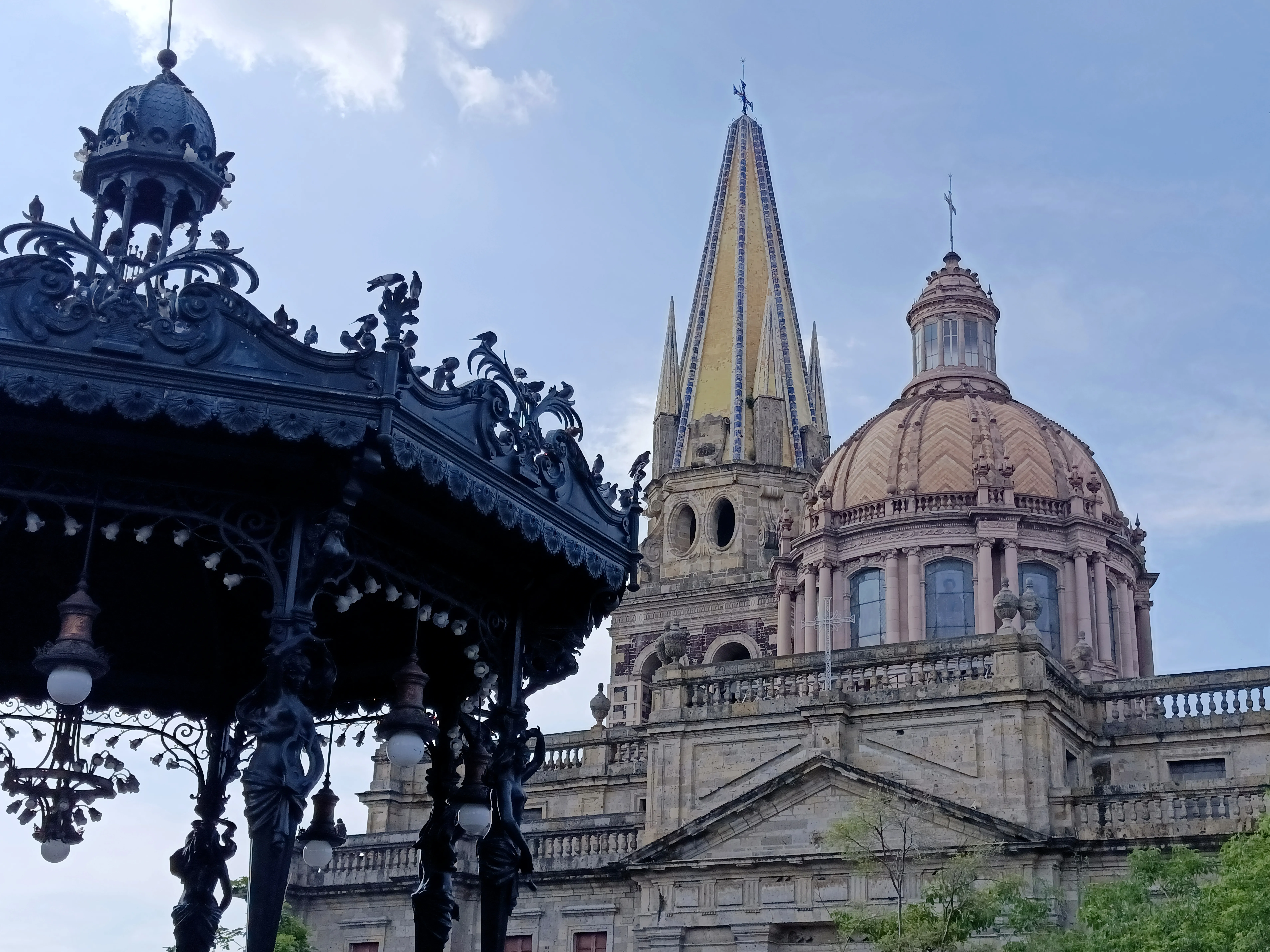
The cathedral is generally open daily from around 8 AM to 8 PM, though access is restricted during Mass — typically held several times each morning and in the early evening. Best times for sightseeing are mid-morning (9–11 AM) between services, when light streams through the dome and crowds are thin, or just after dusk when the floodlit yellow spires are at their most photogenic. A focused interior visit takes 30–45 minutes; allow 1.5–2 hours to combine it with the four surrounding plazas. Sundays and major Catholic feast days are far busier with worshippers.
Admission and Costs
Entry to the cathedral is free, as it is an active place of worship. There is no ticket booth and no admission charge for the nave or side chapels, though a small donation in the offering boxes is appreciated. Most visitors fold the cathedral into a wider walking tour of the historic center, which runs roughly MX$300–600 ($17–34) per person for a small group, or MX$1,200–2,000 ($65–110) for a private licensed guide for a half day covering the plazas, the Teatro Degollado, and the Hospicio Cabañas. Calandria (horse-drawn carriage) rides circling the cathedral plazas cost about MX$300–400 ($17–22) for roughly 45 minutes.
The Case for a Guide
The cathedral looks like a single building but is actually a 450-year argument between architectural styles and earthquakes, and a guide is what turns that confusion into a story.
- Decoding the styles: A guide shows you exactly where the Gothic floor plan, Baroque facade, Moorish detailing, and 19th-century neo-Gothic towers meet — clashes most visitors walk straight past
- The earthquake history: Understanding why the towers were rebuilt twice (1818 and 1849) explains the building's odd silhouette and connects it to the city's seismic past
- Finding the art: The Murillo Assumption and the relic of Santa Inocencia are easy to miss in the dim side chapels without someone pointing them out and explaining their significance
- Reading the four-plaza cross: A guide walks you through the deliberate urban design that frames the cathedral from every side and links it to the Rotonda and Plaza de Armas
- Etiquette navigation: A local guide knows the Mass schedule and steers your visit around services so you see the interior respectfully and without interruption
Tips for Visitors
Time it around Mass: Check the posted service schedule and aim for the gaps mid-morning so you can move freely through the nave. Dress modestly: Cover shoulders and knees; this is an active cathedral, not just a monument. Look up: The rib-vaulted Gothic ceiling and the dome are the architectural highlights — easy to miss if you only scan eye level. Visit Santa Inocencia quietly: The glass-cased child martyr in the side chapel is deeply venerated by locals; approach respectfully. Walk all four plazas: Circle the building to see it from the Plaza de Armas, Plaza Guadalajara, the Rotonda, and Plaza de la Liberación — each frames the spires differently. Come back at night: The floodlit yellow towers against a dark sky are the classic Guadalajara photograph, best paired with a stroll to the Hospicio Cabañas.
Frequently Asked Questions
Why are the cathedral's two towers so much taller and pointier than the rest of the building?
The original towers were squat and Baroque, but an 1818 earthquake toppled them, and another quake in 1849 damaged their replacements. The slender, yellow-tiled neo-Gothic spires you see today were built around 1854 by architect Manuel Gómez Ibarra in a completely different style from the 16th-century body below them. That stylistic clash is exactly why the silhouette is so distinctive — and why those twin spires, not the facade, became the emblem printed on Guadalajara's tourism logos, coins, and postcards.
Is the cathedral still an active place of worship or just a tourist site?
It is very much a working cathedral — the seat of the Archdiocese of Guadalajara and the daily spiritual heart of the city. Mass is celebrated several times every day, confessions are heard, and major feast days fill the nave completely. Tourists are genuinely welcome, but you are entering a living church, not a museum, so quiet behavior and modest dress are expected, especially when a service is underway.
What is the story behind the glass coffin with a child saint inside?
Inside one of the side chapels rests the relic of Santa Inocencia, a young martyr whose remains are displayed in a glass case and dressed in fine clothing. She is one of the most venerated figures in the cathedral, and you will usually find candles, flowers, and quietly praying tapatíos (Guadalajara locals) gathered around her — it is one of the most emotionally charged corners of the building.
How does the cathedral fit into a wider walk through the historic center?
The cathedral sits at the dead center of four interconnected plazas that form a cross around it, so it is the natural starting point for exploring downtown. From here you can walk east along Plaza Tapatía to reach the Hospicio Cabañas in about ten minutes, passing the Teatro Degollado and the Rotonda de los Jaliscienses Ilustres on the way.