
Local Life
The neighbourhood operates on a rhythm that rewards early risers. The wet market at the northern end of Petaling Street begins before dawn and is winding down by 9 AM — a kaleidoscope of tropical produce, live seafood, and fresh tofu made on-site. The kopitiam coffee shops that open alongside the wet market are among the best places in KL to experience kopi tarik (pulled coffee) and kaya toast (toasted bread with coconut jam and butter) — a breakfast routine unchanged since the colonial era.
By mid-morning, the traditional trades are at their busiest: goldsmiths weighing 916 gold jewellery, traditional medicine shops with their distinctive dried-herb smell, incense stick makers, and the occasional craftsman repairing antique furniture in a ground-floor workshop. The Masjid Jamek, KL's oldest mosque, is a ten-minute walk north and draws a lunchtime prayer crowd that spills through the covered walkways.
After dark, the night market character takes over: red lanterns, vendor calls, and the controlled chaos of hawker stalls appearing on trestle tables along lanes that were clear at noon. The best eating in the neighbourhood happens after 7 PM, when the char siu has rested, the wonton broth has been simmering for hours, and the wok hei of the noodle stalls is at full intensity.
Walking Routes
Core Chinatown walk (90 minutes, 2 km):
Starting from the Masjid Jamek LRT station, walk south along Jalan Tun Perak past the colonial-era Klang River confluence viewpoint, then enter the Chinatown precinct via Jalan Tun H.S. Lee. Stop at:
- Sri Mahamariamman Temple — Active Hindu temple with ornate gopuram; remove shoes to enter
- Sze Ya Temple — Oldest Taoist temple in KL, founded 1864; quiet interior, incense-heavy atmosphere
- Chan See Shu Yuen Clan Association — Finest clan architecture in the district; often open for self-guided viewing
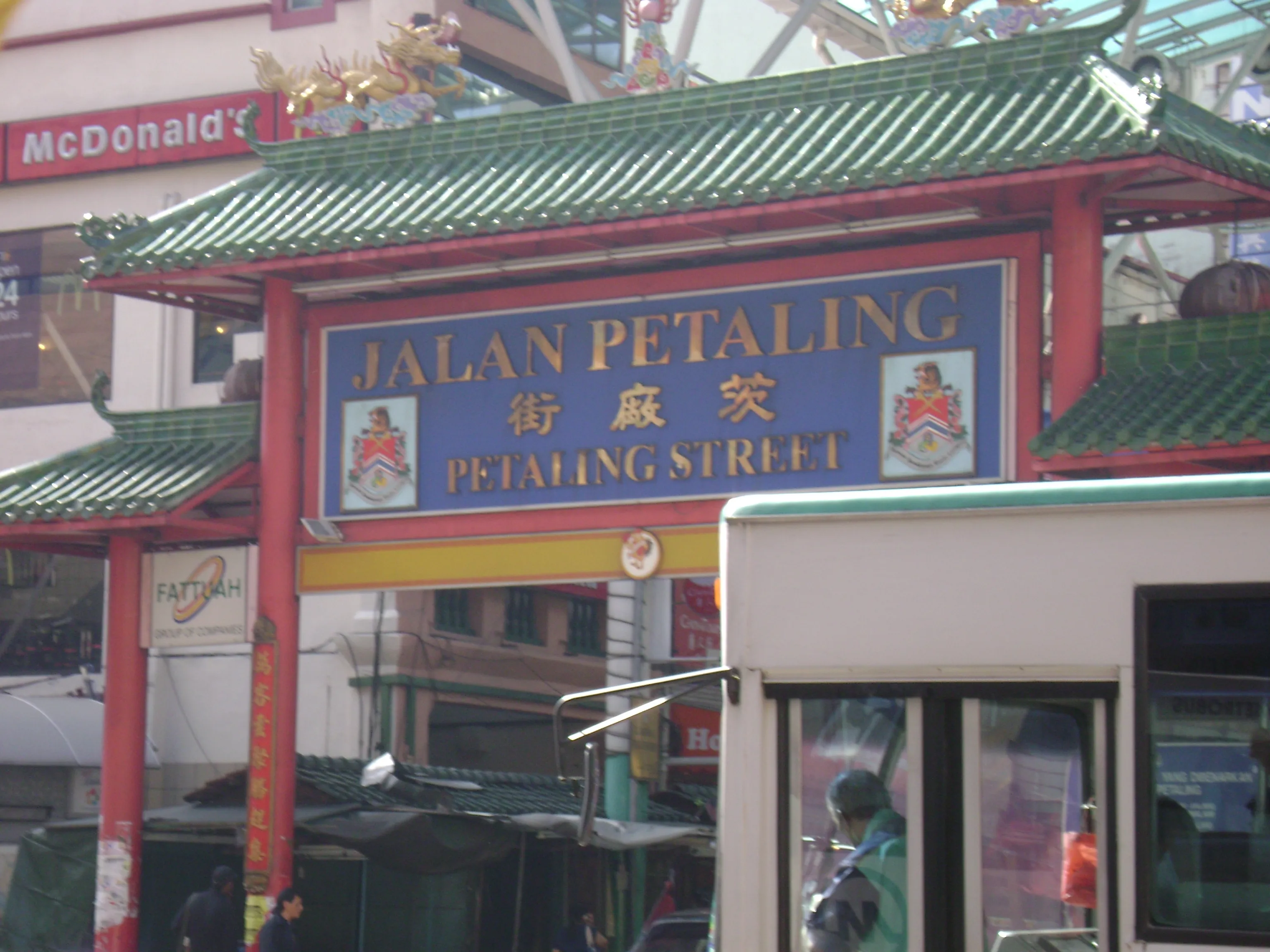
- Jalan Petaling covered market — The main Petaling Street bazaar; peak activity in evenings
- Petaling Street kopitiam coffee shops — Look for the old-style marble-topped tables and sock-filter coffee
Extended walk to Central Market (add 45 minutes): Continue west from Petaling Street along Jalan Hang Lekir to Central Market (Pasar Seni) and the adjacent Kasturi Walk craft stalls — a good contrast between the authentic Chinese quarter and the curated Malaysian craft market.
When to Visit
Best times to visit:
- Early morning (6–9 AM): Wet market activity, kopitiam breakfast culture, traditional trades opening
- Morning (9 AM–noon): Temples quieter but accessible; traditional trades in full swing; less crowded for walking and photography
- Evening (6–10 PM): Night market stalls active, hawker dining at peak, lanterns illuminated — most atmospheric for visitors
Daily rhythm: The neighbourhood is active seven days a week; Saturday and Sunday evenings are the busiest for markets; weekday mornings are the best time for a peaceful walking experience without crowds.
Chinese New Year (January–February): The neighbourhood transforms for two weeks — lion dances, red lantern displays, and the smell of burning paper offerings create an atmosphere that is extraordinary with a guide who can explain the rituals.
Admission and Costs
- Entry to neighbourhood and streets: Free
- Sri Mahamariamman Temple: Free (donations appreciated; small charge for shoe storage)
- Chan See Shu Yuen Clan Association: Free (donation encouraged)
- Sze Ya Temple: Free
- Central Market: Free entry; goods from RM 5–200+ depending on item
- Street food: RM 5–15 per dish at hawker stalls; kopitiam breakfast under RM 10 per person
- Petaling Street market goods: Negotiable; start at 40–50% of asking price for non-food items
- Guided walking tour: RM 80–130 ($18–30 USD) per person (group); RM 200–350 ($45–79 USD) private (up to 4)
The Case for a Guide
The surface of Chinatown is legible without a guide — the lanterns, the stalls, the temples are visible to any visitor. But the layers beneath require interpretation. A guide with roots in KL's Chinese community can explain the clan system and why Cantonese and Hokkien groups built separate associations that still function today; translate the inscriptions above temple doorways that reveal founding histories; navigate the traditional medicine shops and explain the logic of Chinese pharmacology; and lead you to the specific hawker stalls where the families with the best recipes have been cooking the same dishes for two or three generations.
Food guidance is particularly valuable. KL Chinatown's hawker stalls vary enormously in quality, and the best ones are often unmarked, without English menus, and run by elderly cooks who respond warmly to a guide who greets them by name and orders in Cantonese or Hokkien. The difference between an average bowl of wonton mee and an exceptional one is invisible to the first-time visitor — a guide makes it obvious. The same applies to Batu Caves temple visits and the broader Kuala Lumpur experience: context transforms everything.
Tips for Visitors
- Arrive hungry — the neighbourhood is at its best when explored with appetite; plan at least two food stops into any visit
- Bargaining is expected at the market stalls — smile, be good-humoured, and accept that a vendor who doesn't budge has simply calculated their minimum; move on without offence
- Temples require bare feet — wear sandals that slip off easily; shoe storage is provided at Sri Mahamariamman
- Photography: Ask before photographing individuals at prayer; most people are welcoming if you ask with a smile rather than pointing a lens
- Avoid peak afternoon heat (noon–3 PM) — the covered five-foot walkways provide shade, but the covered Petaling Street section traps heat; mornings and evenings are far more comfortable
- Carry small bills — many hawker stalls and market vendors do not break large notes or accept cards; RM 10 and RM 20 notes are most useful
- Combine with Merdeka Square: The colonial heritage precinct is a 15-minute walk north along the river and makes a natural pairing with Chinatown for a full-morning heritage circuit
Frequently Asked Questions
What is the best time to visit Chinatown and Petaling Street?
The neighbourhood rewards visits at two very different times. Early morning (6–9 AM) is when the wet market at the northern end of Petaling Street operates at full intensity — vegetable vendors, char siu roast pork hanging in shop windows, freshly brewed kopitiam coffee being pulled through a sock filter, and tofu sellers calling out prices. This is the neighbourhood at work, not yet performing for tourists. Evening from 6 PM onwards is when the covered Petaling Street market stalls light up under red lanterns and the hawker stalls along Jalan Petaling and the surrounding lanes begin serving dinner — bak kut teh, wonton mee, chee cheong fun, and the famous KL char kuey teow. Both sessions are worth visiting if time allows.
What should I eat and drink in KL's Chinatown?
Chinatown is one of the best places in Kuala Lumpur to eat Chinese-Malaysian food at its most authentic and affordable. Bak kut teh (pork rib soup with garlic, pepper, and herbs) is the morning meal par excellence — best at the long-running shops on Jalan Tun H.S. Lee. Wonton mee (egg noodles with prawn dumplings and roasted pork) is a Cantonese staple found at nearly every kopitiam. Chee cheong fun (steamed rice rolls with soy, chilli, and sesame paste) is a classic breakfast dish. The Old Town White Coffee style coffee — made with a slow filter into sweetened condensed milk — is ubiquitous. For a full meal, look for Hokkien mee (thick black noodles wok-fried with pork fat and dark soy) or the lighter seafood bee hoon at the hawker tables that appear after dark.
Is Petaling Street just a knockoff goods market?
Petaling Street has a reputation as a market for replica designer goods, but this oversimplifies a neighbourhood with over 150 years of layered history. Yes, the covered section of Jalan Petaling sells replica handbags, sunglasses, and watches — vendors are direct about what they're selling, and bargaining is expected. But the surrounding streets contain 19th-century clan association halls (kongsi), pre-war coffee shops where the same families have been brewing the same coffee for three generations, traditional medicine shops with walls of lacquered wooden drawers, active Taoist and Buddhist temples, and the Sri Mahamariamman Temple — one of KL's oldest Hindu temples, located right at the Petaling Street entrance. A guide navigates all of this, separating the tourist-facing market surface from the genuinely historic neighbourhood underneath.