
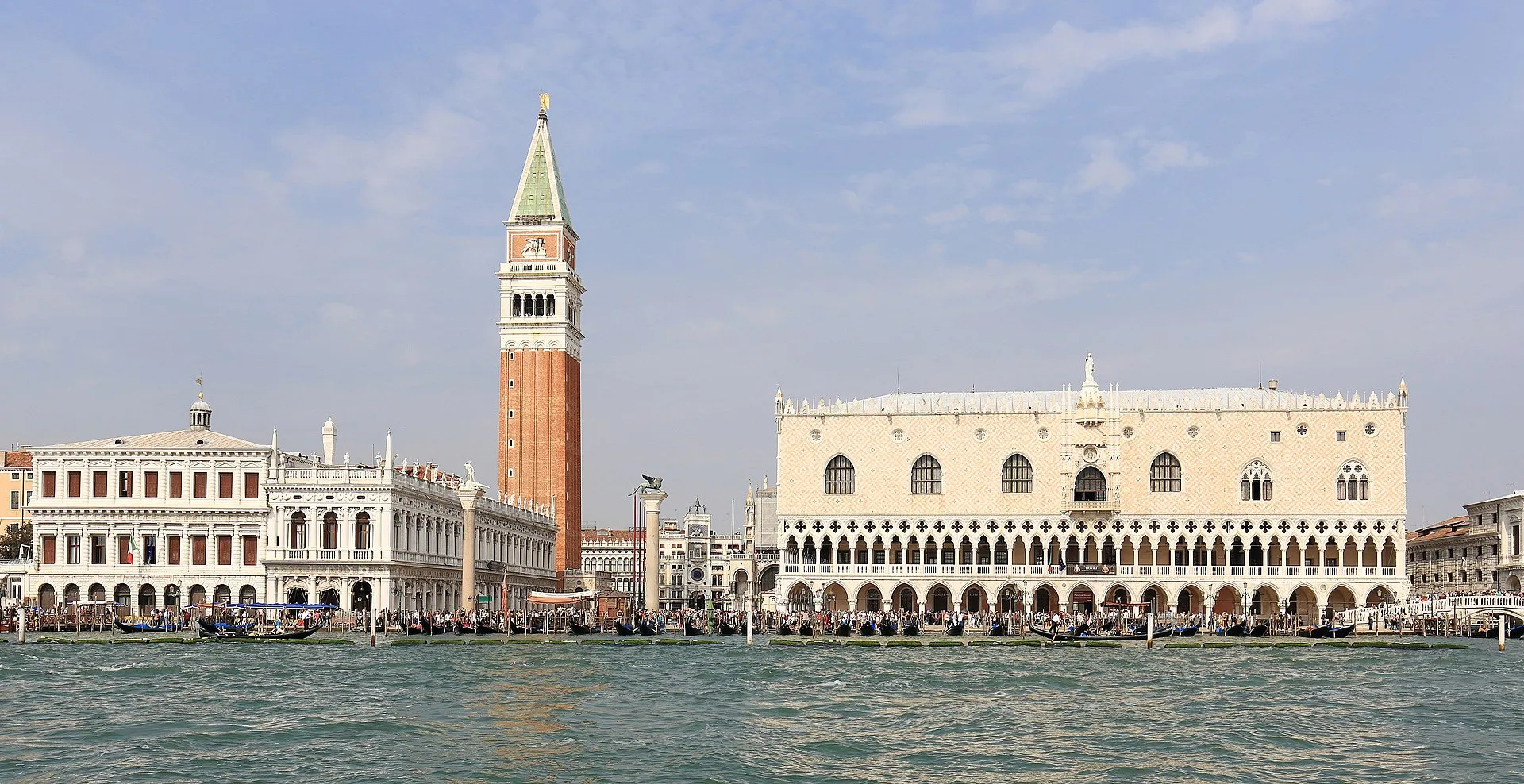
Spiritual Significance
The basilica houses the relics of St. Mark the Evangelist, stolen from Alexandria in 828 AD by Venetian merchants who smuggled the body past Muslim guards by hiding it under layers of pork. This audacious theft gave Venice its patron saint and its enduring symbol -- the winged lion of St. Mark, still stamped on flags, coins, and doorways across the city. When the relics went missing during the eleventh-century rebuilding, tradition holds that they reappeared from a pillar at the 1094 consecration, a miracle known as the apparitio and commemorated each 25 April on the saint's feast day. The 8,000 square meters of Byzantine mosaics depict scenes from Genesis through Revelation, with the gold ground representing divine light. The Pala d'Oro altarpiece behind the high altar is one of the finest works of Byzantine goldsmithing: a panel of gold, enamel, and roughly 1,927 precious gems -- rubies, sapphires, emeralds, and pearls -- assembled between the 10th and 14th centuries. The four bronze horses on the facade (originals now inside the museum) were looted from Constantinople during the Fourth Crusade in 1204.
Visitor Etiquette
Dress code: shoulders and knees must be covered -- strictly enforced at the entrance with no option to cover up at the door, so plan your outfit before arriving and carry a light scarf in summer. Large backpacks and bulky bags are not allowed inside; leave them free of charge at the Ateneo San Basso deposit just off the piazza and return with the claim ticket to enter. Visitors follow a one-way route through the narthex and nave, so decide before you start whether you are adding the Pala d'Oro, Treasury, or museum, since backtracking against the flow is discouraged. No photography with flash is permitted inside, and respectful silence is expected throughout, especially during Mass. The museum level (€7 / $8) offers rooftop views directly over Piazza San Marco and a chance to see the original bronze horses up close.
St. Mark's Basilica timeline
-
St. Mark's relics reach Venice
Two Venetian merchants smuggle the evangelist's body out of Alexandria, and the first church is raised beside the doge's palace to shelter the new patron saint's remains.
-
First church burns
Fire during a revolt against Doge Pietro IV Candiano destroys the original shrine, which is soon rebuilt on the same footprint.
-
Present basilica begun
Doge Domenico Contarini launches the third and current church, a Greek-cross plan crowned by five domes and modelled on the Church of the Holy Apostles in Constantinople.
-
Consecration and the apparitio
The basilica is consecrated, and legend holds that St. Mark's relics, lost during the rebuilding, miraculously reappear from a pillar before the assembled Venetians.
-
Constantinople loot arrives
The Fourth Crusade sacks the Byzantine capital, and the four bronze horses, Treasury goldwork, and enamel panels for the Pala d'Oro are shipped home to adorn the facade and altar.
-
Pala d'Oro reset in gold
Goldsmith Giovanni Paolo Boninsegna reframes the altarpiece into the panel seen today, studded with roughly 1,927 gems accumulated over four centuries.
-
Chapel becomes cathedral
After the fall of the Republic, the doge's private chapel finally becomes the seat of the Patriarch of Venice, taking over from San Pietro di Castello.
-
Record flood and conservation
An exceptional acqua alta of 187 cm inundates the narthex and crypt, accelerating ongoing work to seal the foundations against salt damage.
When to Visit
Monday-Saturday: 9:30 AM - 5 PM, with Sunday and holiday visiting from 2 PM - 5 PM so that morning worship is undisturbed. The ticketed interior sections — the Pala d'Oro, the Treasury, and the museum with its Loggia dei Cavalli — keep similar hours but can close earlier, so tackle them first if your slot is late in the day.
Aim for the 9:30 AM opening or the final hour before closing: midday brings both the thickest cruise-ship crowds and the flattest light, while late morning is when the sun climbs high enough over Piazza San Marco to set the gold ground alight. From November through February, acqua alta high tides can flood the narthex and briefly shut the ground-level entrance; the basilica posts a tide forecast and lays raised walkways, but a badly timed peak can cost you the visit, so check conditions the night before. Worshippers may enter free for prayer through a side door, but sightseeing is not permitted during services.
Admission and Costs
Basic entry to the basilica is €3 ($3), best reserved as a timed-entry ticket on the official site to skip the standby queue. The ticketed interior sections are priced separately: the Pala d'Oro altarpiece €5 ($5), the St. Mark's Museum and Loggia €7 ($8), and the Treasury €5 ($5) -- a combined ticket bundles all three. A skip-the-line small-group guided tour runs €30-50 ($32-54) per person; a private guide for up to 6 people is €200-350 ($216-378). Children and residents pay reduced rates, and the timed ticket adds only a small booking fee that pays for itself the moment you walk past a two-hour standby line.
The Case for a Guide
St. Mark's Basilica is a building written in gold mosaic and stolen relics — without a guide who can read both the art history and the theology, most visitors leave knowing they saw something beautiful but not understanding what any of it meant.
- Byzantine vs. Venetian mosaic eras: The oldest mosaics date from the 11th century while others were added or restored through the 18th; guides identify each era by technique, iconography, and gold-ground intensity, explaining how successive Doges used additions to the mosaic programme as political statements.
- The theft of St. Mark's relics: In 828, Venetian merchants smuggled the evangelist's body from Alexandria by hiding it under pork fat to deter Muslim inspection; guides narrate the full story of this audacious theft and explain how possession of an apostle's relics transformed Venice's status in the Christian world.
- Treasury gold looted from Constantinople: The Fourth Crusade of 1204 was redirected to sack a Christian city; guides explain how Venice orchestrated this diversion, what portion of the treasury's Byzantine goldwork was seized, and why the four bronze horses on the facade are the most famous piece of that looting.
- Pala d'Oro gem count and assembly: The altarpiece contains 1,927 genuine gemstones set into Byzantine enamel panels accumulated over four centuries; guides trace the assembly history, point out panels looted from Constantinople alongside commissioned Venetian goldwork, and explain which gems were added by each Doge.
- Flood-damaged mosaics and conservation: Rising acqua alta has saturated the basilica's foundations repeatedly since the 1960s, leaching salt into the walls; guides point to discoloured tesserae and areas of active conservation work, giving the mosaics a fragility that transforms passive admiration into something more urgent.
Tips for Visitors
The Pala d'Oro golden altarpiece costs an extra €5 ($5) but is absolutely worth it for the close-up view of intricate Byzantine goldwork. Buy the combined ticket if you also want the Treasury and the museum level, whose Loggia dei Cavalli gives you rooftop views directly over Piazza San Marco and the best angle on the original bronze horses. Combine the visit with the adjacent Doge's Palace -- both open onto the same square -- and the Grand Canal begins just around the corner, so a single morning covers the three defining sights of Venice. Arrive by vaporetto at the San Marco-San Zaccaria or Vallaresso stops, drop bulky bags at the Ateneo San Basso deposit first, and reserve a timed-entry slot online to spare yourself the standby line entirely. Early morning or late afternoon visits avoid the worst crowds and catch the mosaics at their most luminous.
Frequently Asked Questions
When is the best time of day and year to visit St. Mark's Basilica?
April through June and September through October pair manageable queues with the best natural light through the 8,000 square metres of gold mosaics, which glow most brilliantly in late morning as the sun climbs over Piazza San Marco. Aim for the 9:30 AM opening or the last hour before the 5 PM close; midday brings both the thickest cruise-ship crowds and the flattest light. From November through February, high tides (acqua alta) can flood the atrium and briefly close the ground-level entrance, so check the tide forecast before a winter visit.
How do I skip the long line at St. Mark's Basilica?
Book a dated, timed-entry ticket on the official basilica website rather than joining the standby queue, which routinely runs one to two hours in high season. The timed ticket carries a small booking fee but sends you through a separate, faster entrance. A skip-the-line guided tour goes a step further, bundling reserved entry with commentary, and many tours add the Pala d'Oro and museum so you are not re-queuing for each ticketed section inside.
What do tickets to St. Mark's Basilica cost?
Basic entry to the basilica is €3 ($3). The ticketed interior highlights are priced separately: the Pala d'Oro golden altarpiece is €5 ($5), the St. Mark's Museum and Loggia (the original bronze horses plus rooftop views) €7 ($8), and the Treasury €5 ($5); a combined ticket bundles all three. A skip-the-line small-group guided tour runs €30-50 ($32-54) per person, and a private guide for up to six people €200-350 ($216-378).
What is the dress code and bag policy at St. Mark's Basilica?
Shoulders and knees must be covered for everyone, and it is enforced at the door with no cover-ups sold on site, so plan your outfit before you arrive — carry a light scarf or shawl in summer. Large backpacks and bulky bags are not allowed inside; leave them for free at the Ateneo San Basso deposit just off the piazza, then return with the claim ticket to enter. Flash photography is prohibited, and respectful silence is expected, especially during Mass.
How much time do you need inside St. Mark's Basilica?
Allow about 45 minutes to an hour to do the basilica justice. The free, one-way route through the nave takes only 10-15 minutes if you keep moving, but pausing to read the mosaic cycles overhead adds time, and each ticketed add-on is a separate stop: budget roughly 15 minutes for the Pala d'Oro behind the high altar, 20-30 for the museum and the Loggia dei Cavalli, and 10 for the Treasury. A guided tour typically runs 60-90 minutes because the commentary keeps you looking up rather than shuffling past.
How do you get to St. Mark's Basilica by vaporetto?
The basilica sits at the eastern end of Piazza San Marco, a two-minute walk from the waterfront. By vaporetto (water bus), the San Marco-San Zaccaria and Vallaresso stops on the Grand Canal are both a short stroll away; ACTV lines 1 and 2 connect them to the train station (Ferrovia) and the Piazzale Roma bus terminal. From the airport, the Alilaguna water-bus line runs directly to San Marco. There is no car access anywhere in central Venice, so every route ends on foot across the piazza.