
Spiritual Significance
The cathedral is the seat of the Church of Ireland Bishop of Cork, an active place of worship with daily prayer, Sunday services and a strong musical and choral tradition. Its dedication to St Finbarr, the sixth- and seventh-century monk-saint who is the patron of Cork, binds the building to the very origins of the city, which grew up around his monastery in the marsh.
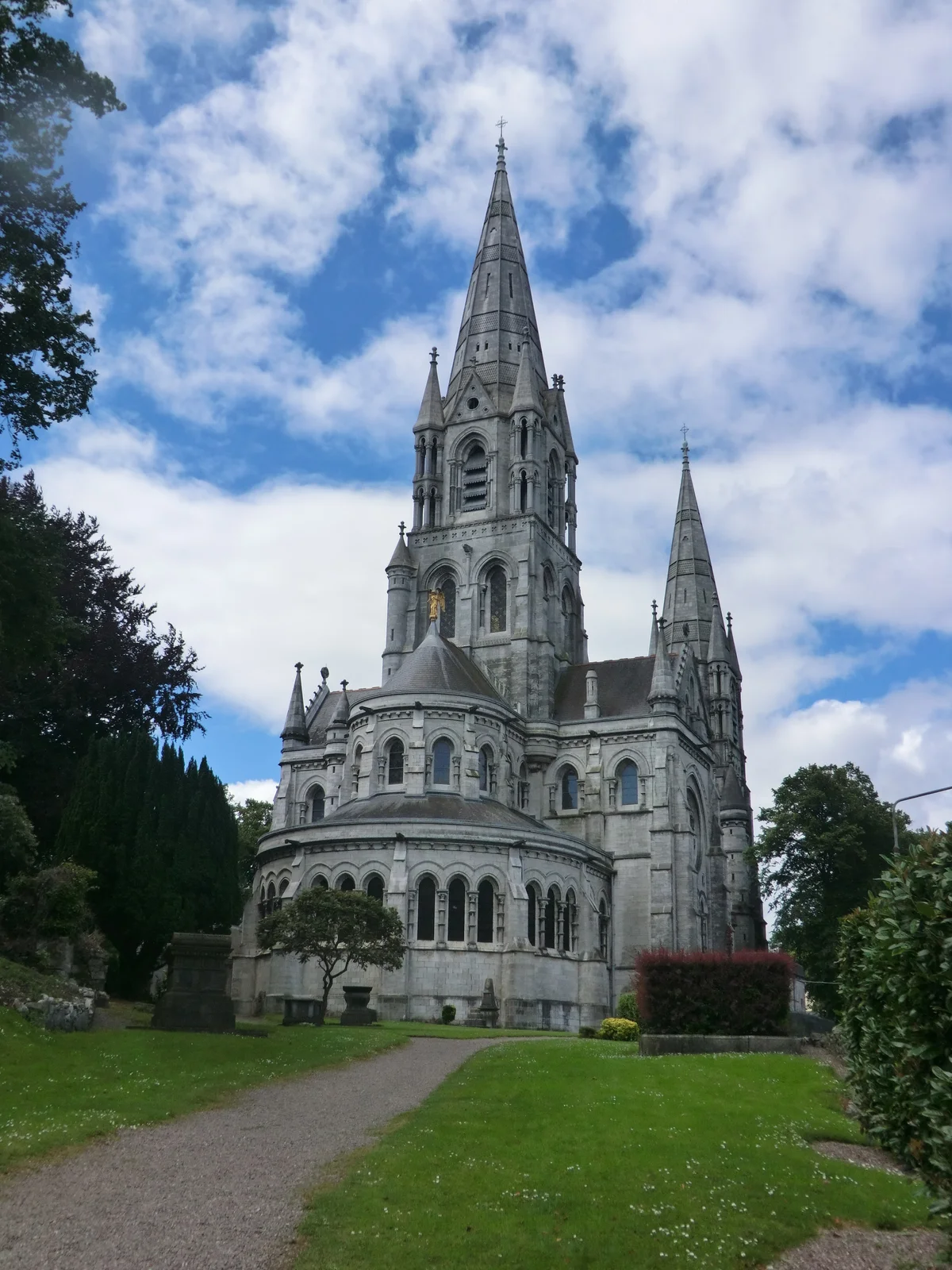
Burges conceived the whole interior as a sermon in stone and glass: the sculpture and windows set out a coherent Christian narrative from creation to resurrection, culminating in the Resurrection Angel outside, so that the building's art is inseparable from its faith. For all its Victorian date, the cathedral thus carries a spiritual weight that reaches back some 1,400 years to the saint who gave Cork both its church and its name.
Visitor Etiquette
As a working cathedral, it asks the usual courtesies of a place of worship: dress modestly, keep your voice low, silence your phone, and remove hats inside. Sightseeing pauses during services, weddings, funerals and concerts, though you are welcome to join worship instead.
Photography for personal use is generally allowed, but avoid flash near the fragile stained glass and never photograph a service or people at prayer; check for any posted restrictions. Move quietly, don't touch the carvings, mosaics or altar furnishings, and give the choir and clergy space during rehearsals. The modest admission or a donation supports the considerable cost of conserving one of Ireland's most elaborate Victorian interiors.
When to Visit
The cathedral keeps regular daytime opening hours for visitors, generally through the day from morning to late afternoon, with access limited during services and concerts — check the current schedule, especially on Sundays. Being indoors, it is a fine choice in Cork's frequent showery weather.
A visit takes about forty-five minutes to an hour to take in the sculpture, glass and mosaics at a proper pace. The building is rewarding year-round, and its evening concerts and recitals show off the acoustics and the great organ. Its position just south of the city centre makes it easy to combine with the English Market and a walk across the Lee to Shandon, so budget a half-day for the trio.
Admission and Costs
Adult admission is modest, around €8–10 ($9–11), with reductions for students, seniors and families and free entry for young children; the charge helps maintain a building of exceptional decorative richness. Entry is free if you attend a service.
Concerts and recitals are ticketed separately and are a lovely way to experience the interior. A guided city walk taking in the cathedral usually folds the admission into its price, or the cathedral itself sometimes offers guided introductions. All figures are estimates that change over time, so confirm the current rate and any concert schedule when planning your visit.
The Case for a Guide
A guide unlocks a building that rewards knowledge more than almost any in Cork. William Burges packed the cathedral with meaning — a dense programme of sculpture, symbolic stained glass and hidden details — and a good guide reads it for you, explaining the architect's vision, the St Finbarr story and the 1,400-year history of the site, and pointing out the carvings and the Resurrection Angel folklore you would otherwise miss. Guides naturally weave the cathedral into a wider Cork walk, linking it to the English Market and the Shandon Bells so the city's sacred, commercial and social threads come together. For Cork's richest single monument, that interpretation is what turns admiration into understanding.
Tips for Visitors
Look closely — the pleasure of Burges's cathedral is in its detail, so take time over the carved west front, the stained-glass windows and the mosaic floor rather than treating it as a quick look. Ask about, or pick up, a guide to the sculpture programme, which repays close attention.
Spot the gilded Resurrection Angel on the eastern end and enjoy the Cork folklore attached to it. Come for an evening concert if the schedule allows, to hear the organ in its setting. Combine the visit with the nearby English Market and a walk across the river to the Shandon Bells, which together capture the everyday, the sacred and the panoramic sides of Cork.
Frequently Asked Questions
Who designed Saint Fin Barre's Cathedral?
The cathedral was designed by the English architect William Burges, who won an open competition in 1863, and it was consecrated in 1870. Burges worked in an exuberant French Gothic style and controlled almost every detail — architecture, sculpture, stained glass, mosaics and metalwork — making the building one of the most complete artistic visions of the Victorian Gothic Revival anywhere.
What is the golden angel on the cathedral?
On the eastern end stands the gilded Resurrection Angel (often called the "Golden Angel"), a Burges figure holding a trumpet. Local tradition holds that the angel will sound its trumpet to announce the end of the world — a much-loved piece of Cork folklore. It gleams above the roofline and is one of the building's most photographed features.
Is this on an ancient religious site?
Yes. The cathedral stands on the reputed site of a seventh-century monastery founded by St Finbarr, Cork's patron saint, around which the city itself grew — the name Cork comes from Corcach, "marsh". So while the present building is Victorian, the site has been a place of Christian worship for some 1,400 years.