
Formation
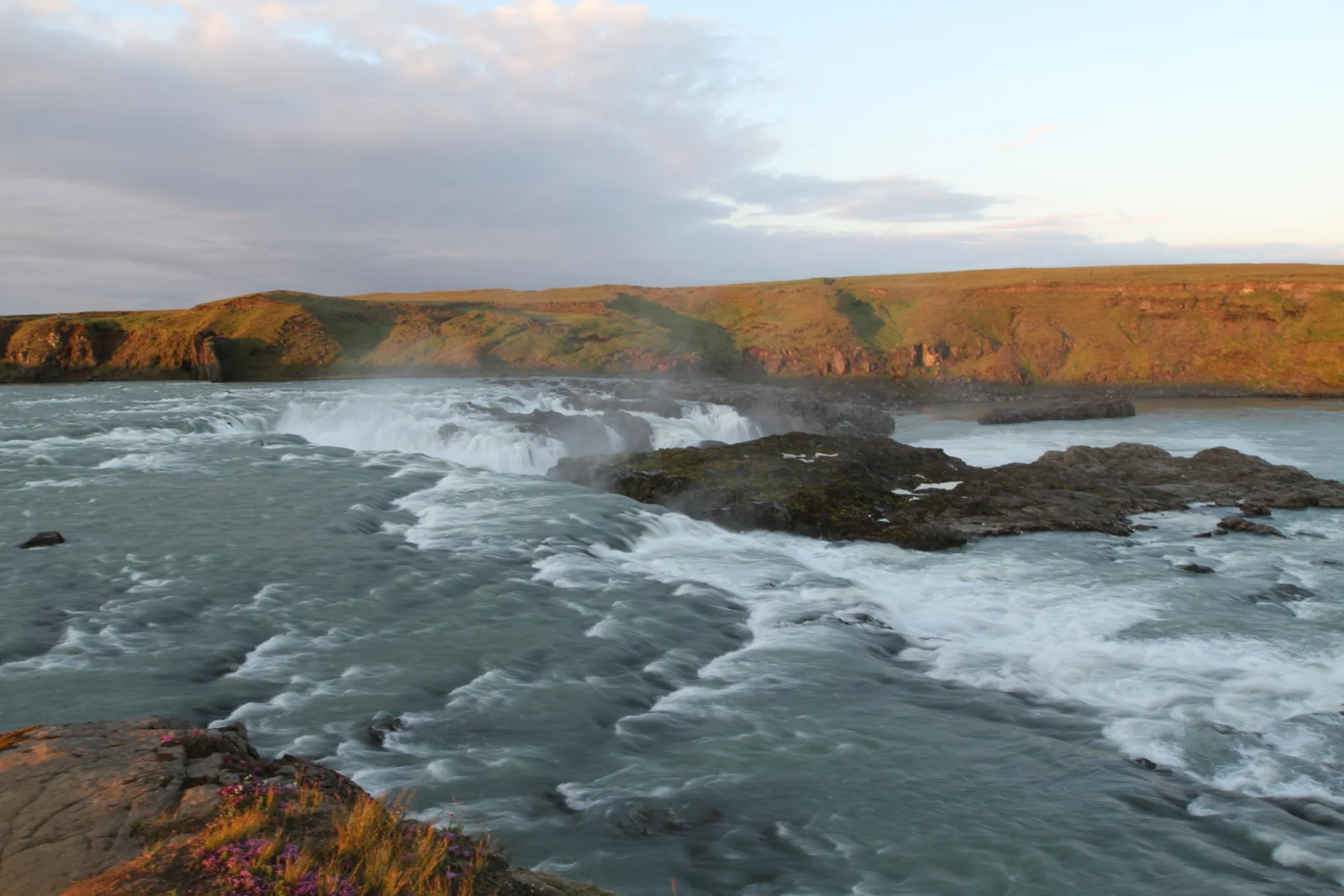
Urriðafoss is the work of the Þjórsá, Iceland's longest river at around 230 kilometres, which carries glacial meltwater from the Hofsjökull ice cap and the highlands down to the south coast. The waterfall itself sits where the river crosses the edge of a great lava field — the Þjórsárhraun, one of the largest lava flows on Earth from a single eruption after the last Ice Age — and drops over the resistant rock in a broad, low step.
Because the river is so large and the drop so modest, the result is a waterfall defined by volume and width rather than height: the Þjórsá simply has more water to move than any other Icelandic river at a waterfall. The grey, silt-laden colour of the flow is the signature of its glacial origin, carrying rock flour ground from beneath distant ice, and the whole scene is a clear illustration of how Iceland's rivers, glaciers and volcanic bedrock shape one another.
Wildlife
The falls take their name from fish: urriði is the brown or sea trout, and the Þjórsá is one of Iceland's premier salmon and trout rivers, with runs of Atlantic salmon that must pass this point to reach the spawning grounds upstream. A fish ladder has long been built at Urriðafoss to help migrating fish climb past the drop, a reminder that the waterfall is a barrier and a gateway in the river's living system.
The surrounding farmland and riverbanks support the birdlife typical of lowland south Iceland — waders, waterfowl and, in summer, the ubiquitous Arctic terns and golden plovers of the Icelandic countryside. Anglers prize this stretch of the Þjórsá, and the interplay of a powerful glacial river, its migrating fish and the low-lying farmland around it gives Urriðafoss an ecological interest that its quiet setting can disguise.
When to Visit
Urriðafoss is freely accessible year-round and at any hour, but it is most powerful and easiest to reach from late spring through autumn, when glacial melt swells the Þjórsá and the tracks are clear. May to September offers the fullest flow, the longest daylight and the safest footing.
In winter the falls take on a stark beauty amid snow and ice, but the approach can be icy and the short days limit viewing, so take care. A visit takes only twenty to thirty minutes, which makes it an easy add-on to a longer day. Being just off the Ring Road near the Þjórsá bridge, it slots neatly between Selfoss and the attractions further east or along the south coast.
Admission and Costs
Urriðafoss is completely free to visit — there is no entrance fee, and parking at the small car park by the falls is free — which, combined with how little time it takes, makes it one of the best-value stops in the region.
There are no facilities to speak of, so bring what you need. A guided south Iceland tour that includes Urriðafoss will naturally cost for the tour itself, but the waterfall adds nothing to the price. As with all Icelandic sights, respect any signs and keep to the paths; the value here is simply a great natural spectacle at no cost, minutes from Selfoss.
The Case for a Guide
On a guided south Iceland tour, a good driver-guide adds Urriðafoss precisely because it is the sort of remarkable place most self-drivers speed past — and then explains why it matters: that this modest-looking fall moves more water than any other in the country, how the glacial Þjórsá and the vast Þjórsárhraun lava field created it, and why its salmon and trout gave it its name. Guides read the safe vantage points on a dangerous river, time the visit to combine it with the Kerið crater and other sights around Selfoss, and place the waterfall in the bigger story of how ice, fire and water have shaped southern Iceland. For a stop whose significance is easy to underestimate, that context is exactly what makes it worth the detour.
Tips for Visitors
Come in summer for the fullest flow, when the volume of water is most impressive, and use the short track and viewpoints by the car park rather than scrambling on wet, slippery rock near the powerful river — the Þjórsá is fast and dangerous, so keep well back from the edge.
Bring a waterproof and protect your camera from spray on a windy day. Because it is so quiet, it is a lovely place to pause away from the Golden Circle crowds — allow a few extra minutes simply to take it in. Combine the stop with the nearby Kerið crater and Ölfusá Bridge for a rewarding half-day around Selfoss.
Frequently Asked Questions
What makes Urriðafoss special?
Urriðafoss is generally reckoned the most voluminous waterfall in Iceland by average water flow — the glacial Þjórsá, the country's longest river, pours over it in a wide, powerful curtain. It is not tall, dropping only about six metres, but the sheer volume and breadth of water give it real force, and its ease of access with almost no crowds make it a rewarding stop.
How do I get there from Selfoss?
It lies just off the Ring Road (Route 1) near the Þjórsá bridge, roughly a 15-minute drive east of Selfoss. A short signposted track and a brief walk from the small car park bring you to viewpoints beside the falls. It is one of the most convenient waterfalls in the south for how little effort it takes.
Is there really a name meaning "trout falls"?
Yes — Urriðafoss means "trout waterfall" (urriði is brown trout / sea trout), and the Þjórsá is one of Iceland's great salmon and trout rivers. Fish must pass this point to reach the upper river, and there has long been a fish ladder here to help them, so the name reflects a genuine ecological reality.