
Events Schedule
Sparty night-bathing parties: The signature event at Széchenyi is the Sparty — a ticketed after-dark bathing party held in the outdoor pools on Saturday nights, running roughly 10:30 PM to 3 AM. International DJs play from a stage above the main pool while laser shows, projection mapping, and light effects transform the neo-Baroque courtyard. Tickets are sold in tiers (general, VIP with skip-the-line entry, and packages with drinks), and the events routinely sell out in peak summer — booking days ahead is essential.
Seasonal music and light programmes: Beyond the weekly Sparty, Széchenyi hosts occasional themed nights, New Year's Eve bathing galas, and holiday specials with expanded lighting installations across the outdoor pools. These are announced on the official calendar a few weeks in advance and priced separately from standard day admission.
Daytime spa experience: On non-event days the baths function as a continuous open programme rather than scheduled performances — the fifteen pools, eighteen saunas, and steam cabins are available across the full 6 AM–10 PM day, with no set showtimes. The famous floating chess players are the closest thing to a recurring daytime "event," gathering in the main outdoor pool most weekday mornings and weekend afternoons.
Seating Guide
Choosing your ticket type: Standard admission comes in two forms. A cabin ticket (approximately 9,000–11,000 HUF) gives you a private changing cabin and is worth the premium for couples or anyone wanting a secure, roomy base; a locker ticket (approximately 6,000–8,000 HUF) is cheaper but assigns you a shared changing area and a locker. Booking online in advance guarantees entry on busy days and lets you skip the ticket queue.
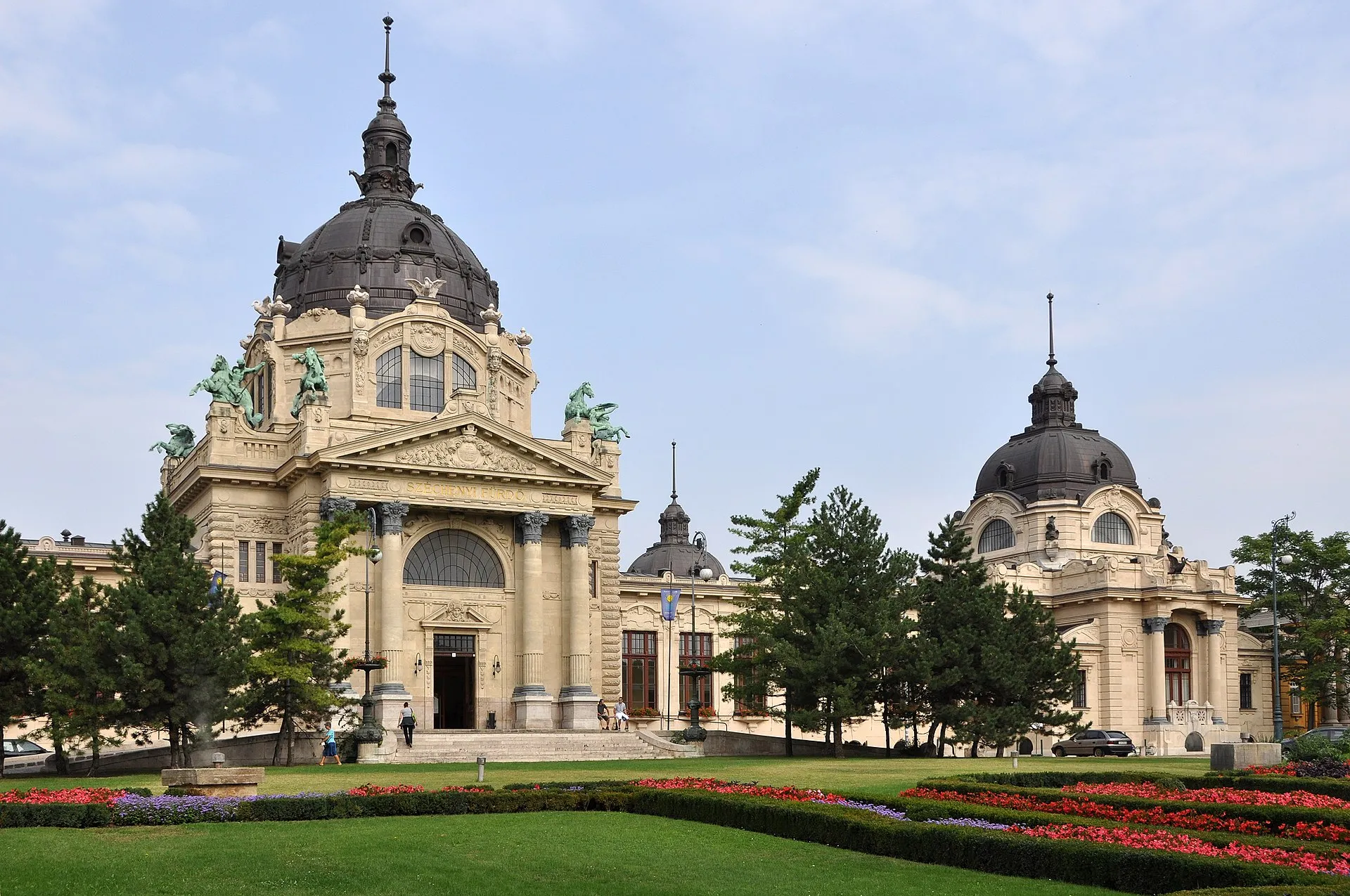
Best spots in the complex: The main outdoor pool (36–38°C) is the iconic centrepiece with its lazy-river current and chess players — the sweet spot is the jetted circular section. For quiet soaking, the smaller of the three outdoor pools is far calmer. Indoors, the two hottest 40°C pools suit therapeutic relaxation, while the cooler central swimming hall is best for lap swimming. Sauna regulars favour the block beside the cold-plunge pool for contrast bathing.
For Sparty tickets: Night-party entry is separate from day admission and sold by tier — general access, VIP with priority entry and a reserved poolside area, and packages bundling drinks. Arrive before midnight for the best position near the DJ stage above the main pool.
When to Visit
Széchenyi is open daily year-round: Monday–Friday 6 AM–10 PM; Saturday–Sunday 6 AM–10 PM (last entry 9 PM). The outdoor pools remain open throughout winter — swimming in steaming outdoor pools in falling snow is one of Budapest's most atmospheric experiences. Weekday mornings (6–9 AM) are quietest; Saturday afternoons in summer are the busiest. Night bathing sessions are available on weekend evenings in summer (with music), requiring separate booking. On Sunday mornings in winter, locals of all ages gather at the outdoor pools for a genuinely social bathing experience.
Admission and Costs
Cabin (with changing room): approximately 9,000–11,000 HUF (€22–27) depending on day. Locker entry: approximately 6,000–8,000 HUF (€15–20). Children under 14 receive reduced rates with proof of age. Online booking recommended to guarantee entry (included in Budapest Cards or combined tickets). Swimsuit hire: 1,000 HUF. Towel hire: 1,000 HUF. Swimming cap: 500 HUF. A range of massages and physiotherapy treatments are bookable separately inside the complex at rates from 8,000 HUF for a basic 20-minute massage. Budapest Card holders receive discounts.
The Case for a Guide
A specialist guide or a tour that includes a thermal bath orientation provides value for first-time visitors:
- Bath etiquette — The protocol for lockers, pool entry, wearing caps, and navigating between wet and dry areas is not always obvious to visitors unfamiliar with Central European bathing culture
- Which pools for what purpose — The fifteen pools at Széchenyi have different temperatures and mineral profiles; some are specifically therapeutic for joint conditions; a guide explains how to choose
- Historical context — Understanding that Budapest's thermal culture stretches from Roman Aquincum through Ottoman hammams to the neo-Baroque present gives the experience a depth beyond a pleasant swim
- Combined city and bath tours — Many guides offer a morning of architectural sightseeing followed by an afternoon at Széchenyi, pairing Buda Castle or the Parliament building with the bath experience
Tips for Visitors
Arrive early on weekdays to beat the crowds and have the main outdoor pool nearly to yourself — the difference between 7 AM and 11 AM on a summer weekday is dramatic. Winter visits are genuinely special: the outdoor pools steam in the cold air and the atmosphere is completely different from the summer tourist crowds. Bring coins or a small amount of cash for the lockers and any drinks from the poolside café — card machines are available but sometimes slow. The thermal water is warm (36–38°C in the main outdoor pool) but genuinely mineral-rich; most visitors feel pleasantly soporific after an hour and plan their visit to have a quiet afternoon rather than attempting afternoon sightseeing.
Frequently Asked Questions
What should I bring to Széchenyi Thermal Bath?
A swimsuit is essential (available to hire on site if you forget) and a swimming cap is required for the indoor pools (also available at the entrance desk). Bring a towel, flip-flops or sandals for the wet areas, and a small padlock if you want to secure a locker. Water-resistant sandals are strongly recommended as the deck surfaces are slippery when wet. Leave valuables in your hotel — the lockers are large enough for a small bag but take nothing irreplaceable.
How long should I spend at Széchenyi?
Most visitors spend 2–3 hours, which is enough to use the outdoor pools, one or two indoor pools, and the steam rooms. A full day is possible but energy-sapping — the thermal minerals are genuinely relaxing and many visitors find they want to nap by the afternoon. Weekday mornings (before 10 AM) are the quietest; Saturday afternoons in summer are the busiest and can feel crowded around the main outdoor pool.
Are the famous chess players in the thermal bath real?
Yes — the image of elderly men playing chess on floating boards in the outdoor thermal pool is genuine and still happens, particularly on weekday mornings. It is not staged for tourists; the chess players have been using the pools this way for decades. The main outdoor pool also has a consistent current generated by jets that creates a lazy-river circuit.