
Walking Tours vs. Hop-On Hop-Off Buses: How to Choose
A practical comparison of walking tours and hop-on hop-off bus tours to help you decide which format suits your destination, travel style, and time. Includes when each is worth the money and when to combine both.
Read the full guideUpdated · 11 min read
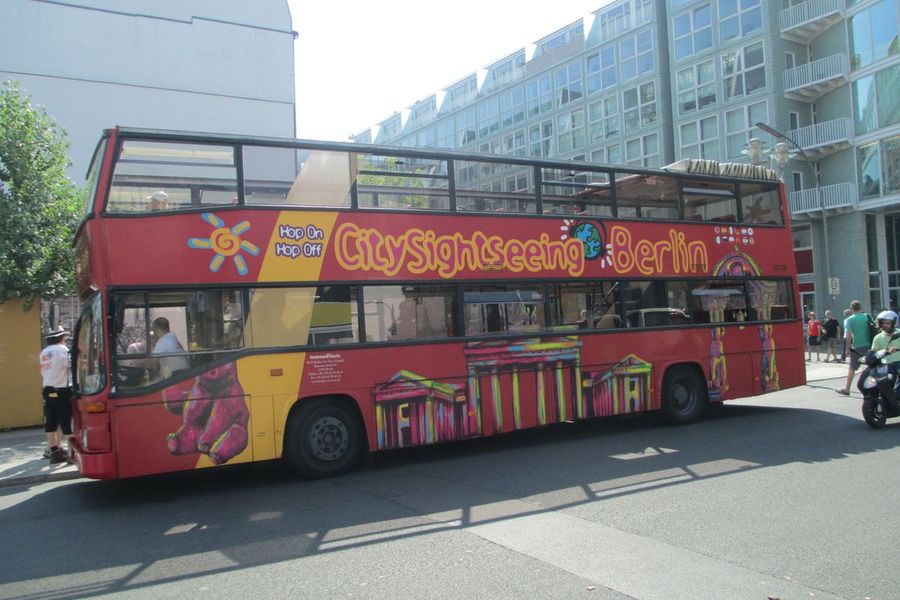
Choose a hop-on hop-off bus for large, spread-out or scenic cities and a tired first day, when you need an easy overview and transport between distant sights. Choose a walking tour for compact historic centres, food districts, and neighbourhoods where story and access matter. Best of all, combine them: bus first to orient, then targeted walks.
Two of the most popular guided tour formats in every major city, and they couldn't be more different. Hop-on hop-off (HOHO) buses offer autonomy, coverage, and commentary from a seat; walking tours offer depth, human connection, and access to things a bus cannot stop at. Choosing between them—or combining both—depends on what you actually want from a guided experience. This guide breaks down both formats honestly so you can decide.
What Does Each Format Actually Deliver?
A hop-on hop-off bus gives an elevated city overview, flexible timing across 15–25 fixed stops, multilingual audio, and coverage of far-flung neighbourhoods, but no human guide or interior access. A walking tour delivers a knowledgeable local, real-time answers, stories, and access to courtyards and passages, at the cost of geographic breadth and rest.
Hop-On Hop-Off Buses
The formula is consistent across cities: an open-top double-decker (or enclosed single-level in cold climates) follows a fixed loop of 15–25 stops. A recorded audio commentary narrates as the bus moves. You can disembark at any stop, explore at your own pace, and reboard a later bus.
What you get:
- An overview of an entire city from an elevated vantage point
- Flexible timing — spend 15 minutes or 3 hours at any given stop
- Coverage of neighborhoods spread too far apart for a single walking route
- Audioguide in multiple languages (typically 8–15 options)
- A physical orientation that makes subsequent navigation easier
What you don't get:
- Personal interaction with a knowledgeable guide
- Access to interiors, passages, or courtyards the bus drives past
- Contextual depth, local stories, or current information
- Any flexibility in route or coverage
- Shelter in rain (on open-top versions)
Walking Tours
A human guide leads a group (typically 6–20 people) through a specific neighborhood or theme, stopping to explain history, architecture, social context, and local life along the way. Duration runs 1.5 to 3 hours. Free walking tours (tip-based) exist in almost every major European and Latin American city; paid small-group versions run €20–80 per person.
What you get:
- Direct engagement with a local who knows the area intimately
- Answers to questions in real time
- Stories, anecdotes, and personal context that no recorded commentary provides
- Access to courtyards, markets, hidden passages, and interiors
- A specific depth rather than broad coverage
- Social experience with fellow travelers
What you don't get:
- Geographic breadth — most cover one neighborhood or 2–3 km
- Physical rest — you're on your feet for the duration
- Language flexibility (you choose a tour in your language)
- Freedom to linger or deviate from the route
When Does a Hop-On Hop-Off Bus Make More Sense?
A bus wins in large, sprawling cities like Los Angeles, Dubai, or Cape Town, where core areas sit 10–15 km apart. It also suits a jet-lagged first day, travellers with limited mobility, and scenic cities like Edinburgh or Istanbul, where elevated views along the route are the experience. With one day, it covers most ground.
Large, Sprawling Cities
Some destinations are simply too large for a single walking tour to provide meaningful orientation. Los Angeles, Dubai, Sydney, and Cape Town have core areas separated by 10–15 km. The HOHO bus here does what no walking tour can: connect disparate zones and give you a visual map of how the city is structured before you decide which neighborhoods to prioritize.
When You Arrive Tired
The first day after a long-haul flight, when your body clock is disordered and your judgment is impaired, a HOHO bus lets you do something productive without demanding physical or cognitive effort. See the city, orient yourself, identify what you want to return to, and do it all from a comfortable seat.
Limited Mobility
For travelers with physical restrictions that make extended walking difficult, a HOHO bus provides access to major sightseeing spots that would otherwise require multiple taxi journeys. The gap between what a HOHO covers and what's accessible to someone who can't walk long distances is meaningful.
Scenic Cities
Cities where the views from elevated positions form a core part of the experience—Cape Town with Table Mountain, Edinburgh with its volcanic ridge, Istanbul overlooking the Bosphorus—are particularly well-suited to open-top HOHO tours. Some of the best photography opportunities on these routes come during the bus ride itself rather than at any individual stop.
When You Have One Day
A full HOHO circuit typically takes 90 minutes to 2 hours without disembarking. Combined with one or two strategic stops, a HOHO tour covers more ground in a single day than any walking tour can.
When Does a Walking Tour Make More Sense?
Walking tours win in historic centres like Rome, Athens, and Lisbon, where ancient street patterns bar buses entirely. They excel wherever story matters, in food and market districts like Bangkok's Chinatown or Istanbul's Grand Bazaar, and in slow-paced neighbourhoods like Amsterdam's Jordaan, where a local reads the current texture of a place.
Historic City Centers
Cities like Rome, Athens, Lisbon, and the old city areas of Dubrovnik have medieval or ancient street patterns that buses literally cannot enter. The depth of what a walking guide can show you in these areas—a Roman wall embedded in an apartment block, a fresco in a doorway, a fountain that fed the city for four centuries—is inaccessible by any other format.
When Story Matters
Architecture is half context, half story. A HOHO audio commentary tells you when a building was constructed and who commissioned it. A walking guide tells you why it looks the way it does, what happened inside it, and how people who lived near it thought about it at the time. For travelers with genuine curiosity about history, culture, or art, the walking tour delivers proportionally more value.
Food and Market Districts
A walking food tour through Bangkok's Yaowarat (Chinatown), Istanbul's Grand Bazaar, or Paris's Montmartre delivers a hands-on experience—actual eating, conversation with vendors, samples pressed into your hands—that no bus can replicate. Food-focused walking tours are among the highest-value guided experiences in the world.
Neighborhoods That Reward Slow Exploration
The distinction between a neighborhood and a destination often comes down to walking pace. Amsterdam's Jordaan, London's Bermondsey, Tokyo's Yanaka, and Kyoto's Gion are places where the experience is the neighborhood itself rather than any individual landmark. A walking guide who lives nearby understands the current texture of the place: where the old bookshop moved after its rent increased, which café has been there since the 1950s, which street was only built after a fire in 1890.
Small Groups and Depth
The ideal walking tour has 8–12 people. Guides can engage everyone, answer questions thoroughly, and adapt pacing to the group. Compare this with a HOHO bus where you share a vehicle with 50–80 strangers and interact with no one.
How Do the Costs Compare?
A hop-on hop-off 24-hour pass typically runs €25–45, with online booking saving 15–20% and children often discounted. Free walking tours are tip-based (€5–15 fair), paid small-group walks €20–45, and premium or private tours €60–300-plus. The real comparison is value, not price: a targeted €30 walk can beat a €40 circuit that skims everything.
Hop-On Hop-Off:
- Typically €25–45 per adult for a 24-hour pass
- 48-hour passes usually offer only marginal additional value for one-city visits
- Children often travel free or at significant discount
- Pre-booking online typically saves 15–20% versus buying on the bus
Walking Tours:
- Free (tip-based) tours: typically €5–15 per person as fair tip
- Paid small-group walking tours: €20–45 per person
- Premium specialist tours (food, architecture, private): €60–150+ per person
- Private walking tours: €100–300+ for the group, not per person
The real cost comparison is value rather than price. A €35 HOHO pass that gives you broad orientation and three productive stops may be worth more than a free walking tour of a single street you weren't particularly interested in. Conversely, a €30 paid walking tour of a specific historically rich neighborhood often delivers more memorable experience than a €40 HOHO circuit that skims the surface of everything.
How Do You Combine Both Formats?
Use them in sequence. On day one, ride a full hop-on hop-off circuit before disembarking to get the spatial overview and identify which neighbourhoods interest you. From day two, take walking tours in exactly those areas. This prevents wasting three walking hours where fifteen bus minutes would do, while surfacing districts you'd otherwise miss.
Many experienced travelers use both in sequence. The formula that works consistently:
Day 1: HOHO bus on arrival, especially a full circuit before disembarking anywhere. Get the spatial overview. Identify which neighborhoods interest you most.
Day 2+: Walking tours in the specific areas the bus identified as worth deeper exploration.
This approach prevents the common mistake of spending three walking tour hours in a neighborhood that would have taken 15 HOHO minutes to exhaust, while also ensuring you don't miss a remarkable district you'd never have encountered in a single-neighborhood walking tour.
How Do You Evaluate Tour Quality?
For buses, frequency is decisive: 10–15-minute intervals let you explore spontaneously, while 30-minute gaps cost waiting time, and commentary quality varies wildly. For walking tours, look for specific expertise, a stated maximum group size of 8–12, a thematic focus over generic city tours, and recent reviews citing particular stories the guide shared.
Identifying a Good HOHO Operation
Bus frequency matters enormously. A HOHO route where buses arrive every 30 minutes means a visit to any stop costs an expected 15 minutes in wait time. Routes with 10–15 minute intervals let you explore spontaneously. Check frequency before booking.
Audio commentary quality varies from inert recitation of dates and names to genuinely engaging narration. Reading reviews specifically mentioning commentary quality provides a better signal than overall star ratings.
Identifying a Good Walking Tour Guide
The best indicators:
- Specific expertise (archaeologist-led tours in Athens, an architect guiding a Modernisme tour in Barcelona)
- Maximum group size stated in the booking (8–12 is ideal; 25+ dilutes the experience significantly)
- Thematic focus rather than general city tours (food tours, art tours, social history tours tend to be led by guides with genuine subject knowledge)
- Recent reviews that mention specific stories or insights the guide shared
The worst indicator: cheap price alone. Free walking tours can be extraordinary; expensive private tours can be perfunctory. Quality depends on the individual guide.
Which Format Suits Each Destination?
It depends on the city's shape. Buses shine in sprawling or scenic Dubai, London, and Istanbul; walking tours dominate compact, layered Rome, Athens, and Amsterdam, where old centres are inaccessible by road. Paris and New York land in between, rewarding a scenic circuit alongside deeper neighbourhood walks. The table below maps each.
| Destination | HOHO Strength | Walking Tour Strength |
|---|---|---|
| Rome | Low (old city inaccessible) | Very high (ancient layers) |
| London | High (sprawling, scenic views) | High (neighborhood depth) |
| Paris | Moderate (scenic Seine route) | Very high (arrondissement character) |
| Amsterdam | Low (canal district too narrow) | Very high (Jordaan, Jewish Quarter) |
| Dubai | High (spread across vast distances) | Moderate (limited historic core) |
| Athens | Low (Acropolis area narrow) | Very high (archaeological context) |
| New York | Moderate (neighborhood overviews) | High (specific boroughs) |
| Tokyo | Low (dense, complex) | High (specific neighborhoods) |
| Istanbul | High (Bosphorus views) | Very high (Byzantine/Ottoman layers) |
Related Guides
- Amsterdam Canal Tours Compared — a deep dive into one of the most distinctive tour types in any European city
- Athens Archaeological Tours — context for choosing specialist vs. general archaeological tours
- Bangkok Temple Tours — when walking is the only practical format in dense historic districts
The question isn't really which format is better. It's which format matches what you want to get out of your time in a specific place. For a first morning in a new city, a hop-on hop-off bus is an extraordinarily efficient investment. For a dedicated afternoon in a specific neighborhood, a walking tour with a knowledgeable local is irreplaceable. The best itineraries use both deliberately, letting each format do what it does best.
Unsure which tour format suits your upcoming destination? Send a message with where you're headed and how long you have — we'll point you in the right direction.
Frequently Asked Questions
Are hop-on hop-off bus tours worth the money?
They make most sense in large, spread-out cities where the major sights are far apart, offering an easy overview and transport between stops. In compact historic centres they often deliver less value than walking.
What is the main advantage of a walking tour?
Walking tours reach narrow streets and hidden corners buses cannot, and a knowledgeable guide adds context and answers questions, making them ideal for dense historic districts.
Can I combine a walking tour and a hop-on hop-off bus?
Yes, and it often works well. Use the bus on the first day to get oriented and cover distance, then take focused walking tours of the neighbourhoods that interested you most.
Are free walking tours actually free?
They are tip-based rather than truly free, with guides relying on what you give at the end, typically the equivalent of 10 to 20 units of the local currency per person for a good two-hour tour.