
Guided Tours in Toronto: Choosing the Right Experience
How to choose the right guided tour in Toronto — neighbourhood food walks, CN Tower and skyline views, multicultural street tours, museum visits and island or day trips — with honest notes on timing, budget and TTC logistics across a city of 200-plus neighbourhoods.
Read the full guideUpdated · 14 min read
Toronto is less a single sight than 200-plus neighbourhoods stitched together, so the smartest move is spending your tour budget where a local decodes the city for you. Book food-and-neighbourhood walks through Kensington and Chinatown, a specialist for the Royal Ontario Museum, and a day trip to Niagara; ride the CN Tower and browse the markets on your own.
Most great cities have a postcard silhouette; Toronto has a skyline and a bewildering sprawl of neighbourhoods behind it. Over half its residents were born outside Canada, and that shows up as more than a statistic — it is the reason a single afternoon can carry you from Jamaican patty counters to Portuguese bakeries to Sichuan noodle houses, often within a few blocks. That density of difference is exactly why the useful question here is rarely whether to take a guided tour, but which one earns its price against a city you could otherwise explore with a transit pass and a good appetite. This guide sorts Toronto's tours by what they are genuinely good for, what they cost, when to go, and the TTC logistics that decide whether a day runs smoothly. Read it alongside the Toronto city guide and the wider Canada overview for the bigger picture.
What does a guide actually add in Toronto?
A lot of Toronto is self-explanatory once you can navigate it, so a guide earns its fee on the layer beneath the map. It buys someone who can connect the food to the waves of immigration that built each neighbourhood, interpret the collections inside the museums, unlock the history of the Distillery District's industrial past, and take the driving and planning off your hands on longer trips.
A great deal of Toronto you can manage alone. You don't need anyone to help you ride the elevator up the CN Tower, photograph the murals of Graffiti Alley, or graze your way through the St. Lawrence Market. Where a guide earns its fee is the layer beneath the surface:
- Reading the multicultural city. Toronto's food and street life make sense only when someone ties them to the immigration story — why the patty shops cluster where they do, how Kensington Market became a bohemian crossroads, what the Portuguese, Chinese, Italian and Caribbean communities each built. A good food-and-neighbourhood guide turns a meal into a genuinely moving account of how the city assembled itself.
- Interpretation indoors. The dinosaur galleries and world-culture collections at the Royal Ontario Museum, and the marine life at Ripley's Aquarium beneath the CN Tower, reward someone who can tell you what you're actually looking at.
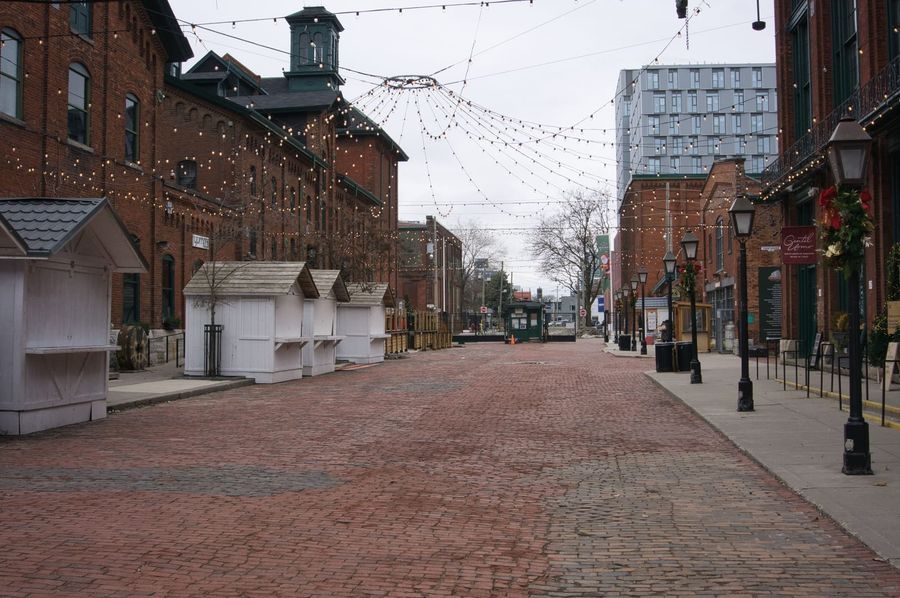
- Historical context. The Distillery District's Victorian red-brick lanes were once the largest distillery in the British Empire; a heritage guide explains how an industrial relic became a pedestrian arts quarter, and why so little of old Toronto survives elsewhere.
- Logistics on longer trips. For Niagara Falls, wine country in Niagara-on-the-Lake, or a themed day out, a guide absorbs the two-hour drive, the parking and the timing so you don't.
If your trip is short and your interests are mainstream, you can see a lot of Toronto without a single paid tour. The skill is spending your budget where it changes the experience rather than packaging something you could do yourself.
What are the main types of guided tour in Toronto?
Toronto's tours sort into five broad formats: food-and-neighbourhood walks through the multicultural districts, skyline and CN Tower experiences, downtown history and architecture walks including the Distillery District, museum and indoor-attraction visits, and day trips out to Niagara Falls and wine country. Matching the format to your interests matters far more than booking the priciest option.
Toronto's tour market sorts into a handful of distinct experiences. Matching the format to what you actually came for — and your tolerance for winter cold or summer heat — matters more than booking the most expensive option.
Food and Neighbourhood Walks
This is the tour Toronto does best. Small-group food walks thread through Kensington Market, Chinatown, Little Italy, or St. Lawrence Market, stopping at family-run counters most visitors would walk straight past. The good ones are as much social history as tasting menu, using each dish to explain who settled where and why.
- Best for: Food-and-culture travellers, first-time visitors, anyone wanting the city's character beyond its skyline.
- Typical length: 2.5–3.5 hours.
- Rough cost: CA$80–130 per person, tastings included.
Skyline and CN Tower Experiences
The CN Tower held the title of world's tallest free-standing structure for 34 years, and its glass floor and 360 restaurant remain the city's signature view. You don't need a guide for the ride — it's a timed ticket — but skyline-focused tours package it with the waterfront, the Toronto Islands ferry, or a harbour cruise for the classic view back at the towers.
- Best for: First-time visitors, families, photographers.
- Typical length: 1–3 hours for the tower and waterfront; add a half-day for an island trip.
- Rough cost: CN Tower admission is a single timed ticket; guided skyline-and-waterfront walks fall in the group-tour range below.
Downtown History and Architecture Walks
Licensed and tip-based walking tours cover the old core — the Distillery District's heritage lanes, the financial district, Old Town Toronto around St. Lawrence, and the murals of Graffiti Alley. A good guide explains how a young, fast-growing city keeps colliding its Victorian survivors with glass towers, and can time the route to dodge the worst of the crowds.
- Best for: History and architecture lovers, anyone wanting their bearings on day one.
- Typical length: 1.5–2.5 hours.
- Rough cost: Free–CA$50 per person, depending on whether it's tip-based or a licensed group walk.
Museum and Indoor-Attraction Tours
When the weather turns — and in Toronto it will — the indoor sights carry the day. A specialist guide adds real value at the Royal Ontario Museum, one of North America's largest, and pairs naturally with Ripley's Aquarium and the market halls for a full weather-proof day.
- Best for: Families, rainy or bitterly cold days, art-and-culture travellers.
- Typical length: 1.5–3 hours per venue.
- Rough cost: Admission as a single ticket each; add a guide's fee for a led visit.
Day Trips and Private Guides
Toronto is a springboard. Niagara Falls sits about two hours south, with the wineries of Niagara-on-the-Lake alongside, and a private guide can build a full itinerary around you. Day trips are where a guide's value peaks, because the alternative is renting a car and navigating the QEW yourself.
- Best for: Time-pressed visitors, families, anyone heading beyond the city.
- Typical length: Half a day in the city; a full day for Niagara or wine country.
- Rough cost: Private half-day CA$250–400, full day CA$450–700 for a small group; Niagara day tours priced per person.
How do you match Toronto's tours to your trip length?
Think in days rather than single bookings. With one day, pair a skyline or downtown orientation in the morning with a food-and-neighbourhood walk in the afternoon. A second day adds either the Royal Ontario Museum or a ferry to the Toronto Islands. Three days or more justify a full day trip to Niagara Falls and wine country.
Rather than booking tours one at a time, it helps to think in days:
- One day: Get oriented in the morning — the CN Tower and waterfront, or a downtown history walk through Old Town and the Distillery District — then take a food-and-neighbourhood walk through Kensington and Chinatown after lunch. That pairing captures both Toronto's skyline and its street-level soul.
- Two days: Keep day one as above, then choose your second-day character — the Royal Ontario Museum and a market for culture and a cold-weather backup, or a ferry across to the Toronto Islands for the postcard skyline and a car-free afternoon.
- Three days or more: Add a Niagara Falls day trip, with a stop in Niagara-on-the-Lake wine country, and leave one slow afternoon for a single neighbourhood — Roncesvalles, Leslieville, or Little India along Gerrard — that most visitors never reach.
Resist over-booking. Toronto rewards unstructured time — a coffee on a Kensington patio, a streetcar ride through a district you'd never have picked — as much as any ticketed tour.
When is the best time to take a tour in Toronto?
Tours run year-round, but the season decides the character. Summer (June–September) is the sweet spot, with open patios, frequent island ferries and comfortable walking; September adds the film festival and clear skyline days. Winter (December–March) can plunge toward -20°C, pushing tours indoors to museums, market halls and the PATH, while July and August weekends can reach 35°C.
Toronto runs tours across the whole year, but the season shapes the experience:
- Summer (June–August): The prime window for walking tours, patios and the Toronto Islands ferry, though weekends can hit 35°C and CN Tower timed tickets sell out — book ahead and start walks early to beat the heat.
- Early autumn (September–October): Arguably the best of all — warm, clear days, thinning summer crowds, and the Toronto International Film Festival lighting up the city each September.
- Winter (December–March): Cold enough to dip toward -20°C, which shifts the smart itinerary indoors: the Royal Ontario Museum, the St. Lawrence Market, and the 30-kilometre underground PATH network that lets you cross much of downtown without a coat.
- Spring (April–May): Mild and quieter, with patios reopening and fewer crowds, though the weather swings day to day — pack layers.
Whatever the month, Toronto's weather is changeable, so a light waterproof and a warm layer rarely go to waste. For a fuller month-by-month picture, the Toronto city guide covers seasonal conditions.
How much should you budget for guided tours in Toronto?
Costs span a wide range. Group walking tours run CA$30–50, food-and-neighbourhood walks CA$80–130 with tastings, a private half-day guide CA$250–400, and a full day CA$450–700. The free-and-cheap layer — the markets, the murals, the waterfront — is large, so spend your budget on the food walks, the museum interpretation and the day trips.
Toronto reflects Canada's high standard of living, so tours are not cheap, but plenty of the city costs little or nothing. Thinking in ranges helps:
| Tour type | Approximate cost |
|---|---|
| Group walking tour | CA$30–50 (~US$22–37) per person |
| Food & neighbourhood tour | CA$80–130 (~US$59–96) with tastings |
| Private half-day guide | CA$250–400 for a small group |
| Private full-day guide | CA$450–700 for a small group |
| Niagara Falls day trip | Priced per person, typically a full day |
A few cost notes worth knowing before you book:
- The free layer is large. Kensington Market, Graffiti Alley, the waterfront and the ferry-free views from Harbourfront cost nothing — spend your budget on the food walks and the day trips.
- Prices are usually per group for private guides. Splitting a half-day guide across three or four people brings the per-person cost down sharply.
- Tickets are often separate. CN Tower admission, ROM and aquarium entry, and the island ferry are usually charged on top of a guide's fee unless a package bundles them.
- Tipping is expected. Canadians tip 15–20% for guided tours, meals and taxis, in line with the rest of Canada — factor it into the real cost.
Treat every figure here as a planning guide rather than a quote — admission, ferry and guide prices change each season, so confirm the current rates when you book.
What local logistics make a Toronto tour day run smoothly?
Most of the difference between a smooth Toronto day and a frustrating one is practical. Lean on the TTC to connect far-flung neighbourhoods, book timed CN Tower tickets ahead, plan around the weather rather than against it, and remember that "downtown" tours and "neighbourhood" tours often sit a streetcar ride apart.
Most of the difference between a smooth Toronto day and a frustrating one comes down to a few practical details:
- Ride the TTC. The subway, streetcars and buses reach almost everywhere a visitor wants to go; a day pass usually beats single fares once you're hopping between Chinatown, Kensington and the Distillery District.
- Book the marquee sights ahead. CN Tower timed-entry tickets sell out on summer weekends, and the EdgeWalk and 360 restaurant even further in advance — reserve before you arrive.
- Plan around the weather, not against it. Save museums, the market halls and the PATH for the coldest or wettest days, and keep the walking tours and island ferry for clear ones.
- Mind the distances. Toronto's neighbourhoods are spread out; a "downtown history" walk and a "Little India" food tour can sit half an hour apart, so don't stack two walking tours in different districts back to back.
- Use the PATH in winter. The 30-kilometre underground network links Union Station, the financial district and five subway stops, letting you cross much of the core without a coat.
How do you find a good guide in Toronto?
Look for licensed, reputable operators and small groups. Established food-tour and heritage-walk companies publish their routes and credentials openly, and the smaller the group, the more room there is for questions. City tourism resources and neighbourhood BIAs are useful starting points for vetted operators.
Toronto's best guides tend to work for established, transparent operators who publish their routes, their group sizes and their credentials up front — that openness is itself a signal. For food and neighbourhood walks, a specialist who lives the multicultural story rather than reciting it makes all the difference; for heritage and museum tours, look for guides who cite their training and keep groups small enough for real conversation. City tourism resources and neighbourhood business associations point toward reputable companies, and the best guides read the room — adjusting the pace, dropping the script when a question is more interesting, and turning a checklist of sights into a coherent story of immigration, industry and a skyline that keeps rebuilding itself.
Related Guides
- Toronto city guide — neighbourhoods, attractions, and practical tips for the wider stay
- Canada country guide — how Toronto fits into a longer trip across the country
- Planning a Montreal Trip — pairing Toronto with Quebec's French-speaking metropolis
- Best Time to Visit Quebec City — extending an Ontario trip into old Québec
Final thoughts: In a city that hides its best stories inside its neighbourhoods, the smartest approach is to spend on the experiences that genuinely need a guide — a food walk through Kensington and Chinatown, a specialist at the Royal Ontario Museum, a heritage tour of the Distillery District, a day trip to Niagara — and lean on the TTC and your own curiosity for everything else. Decide which Toronto you came for, book the marquee slots ahead, plan around the weather, and let the city's extraordinary variety do the rest.
Frequently Asked Questions
Do you need a guided tour to see Toronto?
Not for the basics — Toronto is spread out but well served by the TTC, and you can ride up the CN Tower, wander Kensington Market, or browse St. Lawrence Market on your own. A guide earns its place where the city is hardest to read alone: the multicultural food scene across Chinatown, Little Italy and Little India; the immigration history layered into each neighbourhood; the Distillery District's Victorian industrial past; and full-day trips out to Niagara Falls where a guide handles the two-hour drive and the logistics.
How much does a guided tour in Toronto cost?
Group walking tours run roughly CA$30–50 (about US$22–37) per person, and food-and-neighbourhood tours CA$80–130 (about US$59–96) with tastings included. A private half-day guide for a small group is CA$250–400, and a full day CA$450–700. Day trips to Niagara Falls are typically priced per person. CN Tower admission, museum tickets and the island ferry are usually separate unless a package bundles them.
When is the best time to take a tour in Toronto?
June through September is the sweet spot, when patios are open, the Toronto Islands ferry runs frequently and walking tours are comfortable. September brings the Toronto International Film Festival and warm, clear days ideal for skyline views. Winters can dip toward -20°C, which pushes tours indoors — the PATH, museums and market halls — while summer weekends can hit 35°C, so book timed CN Tower tickets ahead and start walking tours early.
What is the best Toronto tour for a first-time visitor?
Start with a downtown orientation or skyline visit — the CN Tower and the harbour — to get your bearings, then take a food-and-neighbourhood walk through Kensington Market and Chinatown the same day to understand what makes Toronto tick. With a second day, add the Royal Ontario Museum with a specialist guide or a ferry across to the Toronto Islands for the classic skyline view.
How do you get around Toronto on a tour day?
The TTC — subway, streetcars and buses — reaches almost every neighbourhood a visitor wants, and a day pass often beats single fares if you are hopping between areas. Most walking tours stay within a compact core you can cover on foot, but connecting Chinatown, Kensington and the Distillery District in one day usually means one or two streetcar rides. In winter, the underground PATH network links much of downtown without stepping outside.