
Best Time to Visit Quebec City: A Season-by-Season Guide
Quebec City rewards very different travellers in different months — Carnaval revellers in February, festival-goers in July, leaf-peepers in October. Here is how to match the season to the trip you actually want.
Read the full guideUpdated · 10 min read
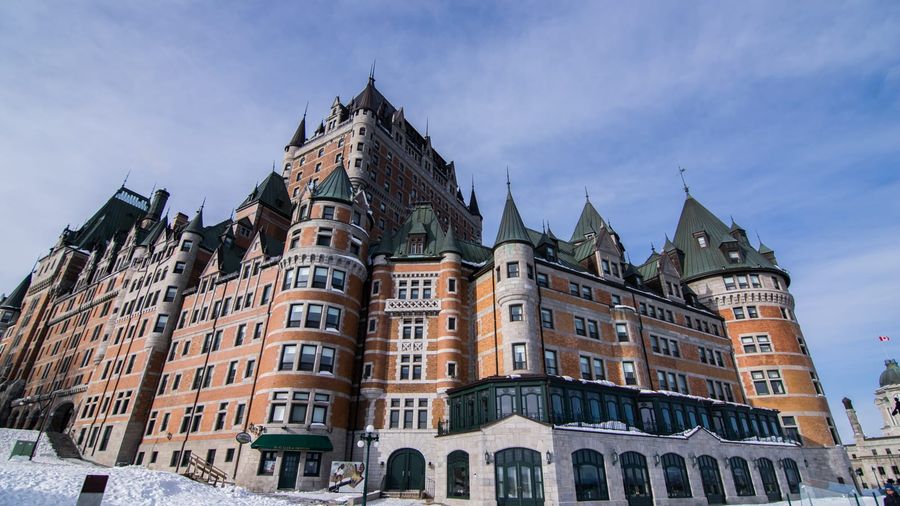
The best time to visit Quebec City depends on the trip you want: come late January and February for the Winter Carnival and snow-covered ramparts, June to August for warm terrace evenings and open-air festivals, or late September to mid-October for the region's spectacular autumn colour and the year's most comfortable walking weather. Spring is the quiet, good-value shoulder, with maple season on the side.
Founded in 1608, Quebec City is the only walled city north of Mexico, and its clifftop silhouette — dominated by the copper-turreted Château Frontenac — barely changes from one century to the next. What changes dramatically is the season. The same cobbled lane that hosts a jazz trio and a gelato queue in July becomes a hushed, snow-lined passage under Carnaval lanterns in February. Deciding when to come is really deciding which version of the city you want to meet.
What is the short version of when to visit Quebec City?
Pick your season by what you came for. Festival energy and long warm evenings mean summer; the famous Winter Carnival and a genuine northern winter mean February; the best mix of good weather, fair prices and beautiful scenery means early autumn. The bullets below distil each choice.
- Winter Carnival, snowy streets, lowest hotel rates: late January and February
- Festivals, warm evenings, everything open: June to August
- Autumn colour and the best all-round weather: late September to mid-October
- Quiet streets, maple season, spring value: April and May
What is summer like in Quebec City (June to August)?
Summer is the city at full volume. The Festival d'été fills eleven July days with concerts, the Old Town's terraces stay busy until late, and warm evenings on the Dufferin Terrace boardwalk are the season's signature. The trade-offs are peak prices, the busiest streets of the year, and cruise-ship crowds on docking days.
From late June, Quebec City settles into long, bright days with average highs in the mid-20s Celsius (mid-70s Fahrenheit). This is when the outdoor programme peaks: the Festival d'été de Québec draws big-name acts to the Plains of Abraham each July, and the streets of the lower town's Place Royale fill with buskers, patios and pop-up markets. It is the easiest season to simply wander — nothing closes early, and the light lingers past nine in the evening.
The costs are the familiar ones of any headline destination in high season. Hotels inside the walls charge their top rates and book up weeks ahead around festival dates, the most photogenic corners get genuinely crowded, and when several cruise ships dock at once the Old Town's narrowest streets can feel shoulder-to-shoulder. A simple fix locals swear by: explore the historic core early in the morning or after dinner, and save the middle of the day for Montmorency Falls or an excursion out to Île d'Orléans.
What is winter like in Quebec City (December to March)?
Winter is the city many travellers come specifically to see. The Carnaval de Québec in late January and February is one of the world's largest winter festivals, the stone streets look their storybook best under snow, and the Montmorency waterfall freezes into a towering ice cone. The price is real cold — highs often below freezing — and short daylight.
If you want a proper northern winter with four centuries of architecture as the backdrop, this is the season. The Carnaval de Québec brings ice sculptures, night parades and canoe races across the ice-choked St. Lawrence, presided over by its snowman mascot Bonhomme. Between festival weekends the city is quietly magical: snow softens the ramparts, café windows fog with the steam of soupe aux pois, and the 83-metre Montmorency Falls — thirty metres taller than Niagara — freezes into the pain de sucre, a sugarloaf of ice that climbers actually scale.
Come prepared for the cold: January and February highs frequently sit below −10°C (14°F), and the wind off the river bites. Daylight is short, so plan indoor anchors — a long lunch, a museum, the warmth of the Château Frontenac's lobby — between outdoor stretches. The reward beyond the scenery is value: outside the Carnaval and holiday peaks, midweek winter hotel rates are the lowest of the year, and restaurant tables that vanish in July are easy to book.
Is autumn Quebec City's sweet spot (late September to October)?
For a great many visitors, yes. Early autumn keeps the terraces open and the days mild while shedding the summer crowds, and from late September the maples and vineyards of Île d'Orléans turn brilliant crimson and gold. It is the season locals quietly recommend when asked when they would come.
September and early October deliver the most forgiving weather of the year: comfortably warm afternoons for walking the ramparts, crisp evenings that suit a bistro dinner, and skies that photograph the Château Frontenac beautifully. The summer festival throng has largely gone home, so the Old Quebec funicular and the Petit-Champlain quarter feel relaxed rather than packed.
The scenic headline is the foliage. A short drive east, the pastoral island of Île d'Orléans — a patchwork of farmsteads, cider houses and maple groves — turns spectacular shades of red and amber from late September into mid-October. Pair a morning in the walled city with an afternoon loop of the island and you get the season's best of both worlds. The one caveat is that colour timing shifts a little each year with the weather, so build in a day of flexibility if the leaves are your main reason for coming.
What about spring in Quebec City (April and May)?
Spring is the quiet, good-value shoulder. The snow retreats, gardens bud along the fortification walls, streets are calm, and the surrounding countryside runs with fresh maple syrup at the cabanes à sucre. You trade certainty on the weather, which swings between mild afternoons and lingering cold snaps.
April and May are the city's least-crowded warm-weather months and among its most affordable. As the thaw sets in, the ramparts and the gardens below them green up, the terraces begin to reopen, and you can walk the historic core without competing for space. It is also maple season: the cabanes à sucre (sugar shacks) in the countryside around the city serve hearty spring feasts drenched in the year's first syrup, a tradition worth building a day trip around.
The honest trade-off is unpredictability. Early April can still deliver a cold, grey day or a late dusting of snow, while late May can feel like early summer. Pack layers, keep the itinerary flexible, and treat any warm afternoon as a bonus rather than a guarantee.
What kind of guided tour suits each season?
Match the tour to the weather. Compact walking and food tours work in any season and are ideal in summer and autumn; lantern-lit ghost and history walks come into their own on dark winter and shoulder evenings; and a private guide with transport is the smart choice in deep winter, when driving to Montmorency Falls or Île d'Orléans in the snow is best left to a local.
Because Quebec City's historic core is so compact and overwhelmingly francophone, a walking tour with a knowledgeable bilingual guide is the single best way to unlock it — the 1759 Battle of the Plains of Abraham, the story behind the ramparts, and the evolution of Québécois cuisine all land more vividly with someone to narrate them. In the warm months, food-focused and architecture walks make the most of open terraces and markets; the evening ghost and history tours are atmospheric year-round but especially so on long winter and autumn nights.
For anything beyond the walls in winter — the frozen falls, the sugar shacks, the island foliage runs — a private guide with a vehicle takes the stress out of snowy driving and weather calls. Whatever the season, the value of a guide here is as much about the language bridge as the history: it turns a beautiful but reserved French-speaking city into an open, story-rich one.
How much should you budget for Quebec City?
Guided tours are reasonably priced: group walking tours run about CA$25–40 (US$19–30) per person and evening ghost or history walks CA$30–50 (US$22–37), while a private half-day guide is CA$200–350 (~US$148–259). Your bigger seasonal variable is the hotel bill, which peaks in summer and around Carnaval and bottoms out midweek in late winter and spring.
The city is walkable enough that daily costs stay modest once you are there. Typical guided-tour pricing looks like this:
| Tour Type | Price | Details |
|---|---|---|
| Group walking tour | CA$25–40 | ~US$19–30 per person |
| Ghost & history tour | CA$30–50 | ~US$22–37 evening tours |
| Private half-day | CA$200–350 | ~US$148–259 |
| Private full-day | CA$380–600 | ~US$281–444 |
Accommodation is where the season really shows in your budget. Rooms inside the walls command their highest rates in July and August and around the Carnaval weekends; the best value is midweek in late winter (outside the festival) and in the spring shoulder. Beyond that, Quebec is not an expensive city day-to-day: many of its finest sights — the ramparts, the Dufferin Terrace, Place Royale, the boardwalk views — cost nothing at all. Canadians expect roughly 15–20% tips on guided tours and restaurant meals, so factor that in.
What local logistics should you know before visiting?
A few practical habits smooth any trip: explore on foot, use the funicular to spare your legs the cliff, expect to hear French first, and let the season dictate your footwear. Canada also requires most visa-exempt visitors to hold an eTA before flying in.
- Walk the core — Old Quebec is small and best explored on foot; the upper and lower towns are the two halves you'll shuttle between
- Take the funicular — the historic funicular linking upper and lower town costs about CA$4 (~US$3) each way and saves a steep climb, a small mercy in summer heat or winter ice
- Wear the right shoes — cobblestones and steep hills demand sturdy footwear year-round, and genuine winter boots with grip from December through March
- French comes first — Quebec City is far more francophone than Montreal; a little bonjour goes a long way, and a bilingual guide removes the friction entirely
- Mind cruise-ship days — when ships dock in summer and autumn, the Old Town swells around midday, so plan the historic streets for early or late
- Sort your paperwork — most visa-exempt travellers flying into Canada need an Electronic Travel Authorization (eTA) arranged before departure
Choose your season honestly and the city will meet you halfway. Come for the Carnaval and the snow, the festivals and the light, or the quiet gold of an Île d'Orléans autumn — just decide which Quebec City you are travelling to see, and let that, rather than the calendar of your holidays, set the dates.
Frequently Asked Questions
What is the best month to visit Quebec City?
September is many locals' favourite — warm enough for terrace dining, cool enough for comfortable walking, thinner summer crowds, and the first autumn colour appearing on Île d'Orléans. July and August are livelier and sunnier but busier and pricier.
Is Quebec City worth visiting in winter?
Very much so, if you dress for it. The Winter Carnival in late January and February, snow-dusted stone streets, and the frozen Montmorency Falls ice cone are unlike anything else in North America, and hotel rates outside the festival weekends are the lowest of the year.
How many days do you need in Quebec City?
Two full days cover Old Quebec's upper and lower towns comfortably. A third day lets you reach Montmorency Falls and Île d'Orléans, and a fourth suits a seasonal festival or a slower pace.
Does everyone in Quebec City speak English?
Quebec City is overwhelmingly French-speaking — far more so than Montreal — but tourism staff in Old Quebec generally speak English, and bilingual guides bridge the gap effortlessly for deeper history and neighbourhood context.