
Guided Tours in Pisa: Choosing the Right Experience
How to choose the right guided tour in Pisa — square walks, the Leaning Tower climb, monument tickets, and Tuscany day trips, with costs and timing.
Updated · 9 min read
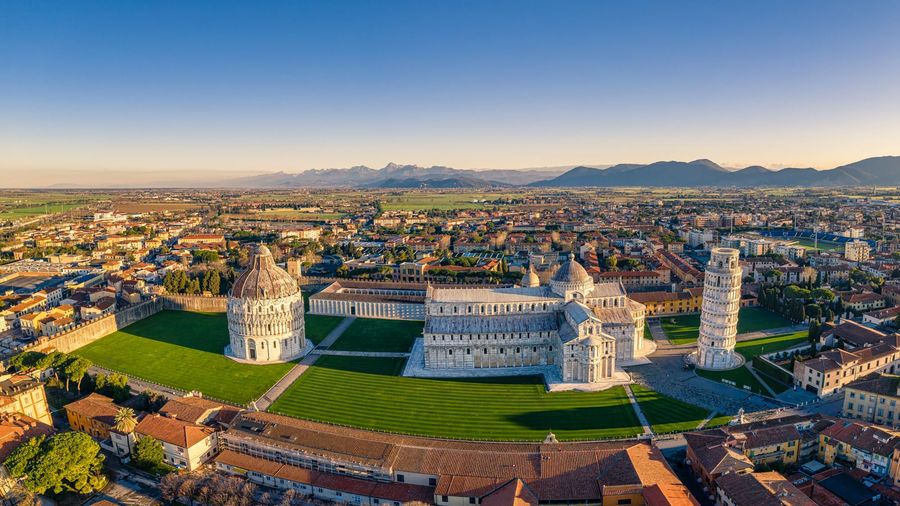
Pisa rewards a decision made up front: the Piazza dei Miracoli is free, open-air, and easy to reach on your own, so pay for a guide only where context or access changes the visit — the timed Leaning Tower climb, the Camposanto frescoes, the Baptistery acoustics, and the Galileo-and-maritime-republic history behind the marble.
Most visitors give Pisa under an hour — a photo pretending to prop up the Tower, then back on the bus. That is enough to miss a city that rivaled Genoa and Venice as a medieval maritime power, funded one of Europe's great cathedral complexes, and later schooled Galileo Galilei.
This guide sorts the tour options by what each one actually buys you, then covers timing, budget, and local logistics so you can decide how much of Pisa you want. Pair it with the Pisa city guide and the wider Italy overview.
What to see on your own in Pisa
The Piazza dei Miracoli needs nothing but your legs and a ticket or two. The square sits on the northern edge of the compact centre, roughly a 20–25 minute walk from Pisa Centrale station, and wandering it — lawn, white marble, the famous tilt — costs nothing at all.
Beyond the Piazza, the rest of Pisa is just as walkable. The medieval Borgo Stretto arcades, the elegant Piazza dei Cavalieri where the Knights of St. Stephen once trained, and the riverside Gothic jewel of Santa Maria della Spina all reward an unhurried self-guided stroll, and a paper map beats a booked walk for finding them.
If you want light structure on a first morning, a tip-based or small-group walking tour covers the same ground with running commentary — a useful middle option between solo wandering and a specialist private guide. But nobody needs a guide to stand in the square or photograph the Tower.
The guided tour options, compared
Pisa's tours split cleanly by scope: a quick square-focused walk, a deeper city-and-monuments tour, or a full day pairing Pisa with Lucca or the Tuscan coast. The prices below are typical ranges and exclude monument tickets unless noted.
| Tour type | Typical price | Length | Best for |
|---|---|---|---|
| Group walking tour | €20–35 per person | 1.5–2 hrs | First-timers wanting the square's history |
| Private walking tour | €120–200 per group | 2 hrs | Families or small groups, flexible pace |
| Tower + Piazza private | €180–280 per group | 2.5–3 hrs | Climbing the Tower with full context |
| Pisa + Lucca day | €300–450 per group | 6–7 hrs | Combining two Tuscan cities in one day |
Private rates are charged per group of up to six, so splitting one across four people brings the per-person cost well below a group ticket. Always reconfirm current prices when you book.
Where a guide actually changes the visit
Laid side by side, the pattern is consistent: open-air, self-explanatory sights are fine alone, while anything needing physical access, expert reading, or acoustic timing rewards a guide.
| Sight | On your own | What a guide adds |
|---|---|---|
| Piazza & lawn | Free to walk and photograph | Backstory on the maritime republic that funded it |
| Leaning Tower | Climb solo on a timed ticket | Books the slot; explains the lean and the 1990s rescue |
| Baptistery | Enter with a monument ticket | Times your visit to the half-hourly echo demonstration |
| Camposanto | Enter and view the frescoes | Reads the Roman sarcophagi and the war-damaged murals |
| Cathedral | Free timed entry | Unpacks Giovanni Pisano's carved marble pulpit |
| Piazza dei Cavalieri | Walk through for free | Connects it to Galileo and the Scuola Normale |
The thread a good guide keeps returning to is the one that explains the whole ensemble: a cloth-and-sea-trading city that poured its wealth into marble before Florence conquered it in 1406.
Climbing the Leaning Tower: a timed ticket, not a tour
The climb is the one experience almost everyone wants, and it works differently from the rest of the Piazza — a timed, capacity-limited slot rather than a guided tour. Small groups are admitted every 30 minutes, and even guided packages simply reserve the slot and wait at the base while you ascend.
A few rules catch visitors out. The minimum age is 8, and children aged 8–18 must be accompanied by an adult. Bags larger than a small purse are banned inside, but free storage is provided nearby, so travel light to the square. Slots sell out weeks ahead in summer, so book early through the official Opera della Primaziale Pisana site or a reputable reseller.
The reward is the lean felt underfoot as you spiral up, plus a rooftop view over the cathedral and the Tuscan plain to the Apuan Alps. Allow about 30 minutes for the slot itself, and arrive a little early, as late climbers are usually turned away.
What a day in Pisa costs
Pisa is gentle on a budget: the square is free to enter, and the paid layers are monument tickets plus whatever guiding you choose.
| Item | Approximate cost |
|---|---|
| Walking the Piazza dei Miracoli | Free |
| Single monument (Baptistery, Camposanto, or Sinopie Museum) | €7 |
| Combined ticket, all monuments except the Tower | €15 |
| Leaning Tower climb | About €20 |
| Group walking tour | €20–35 per person |
| Private half-day guide | €120–280 per group |
The Cathedral is free but still needs a timed ticket, which comes bundled with any monument or combined ticket. If you plan to enter two or more monuments, the combined ticket beats buying single entries. Treat every figure as a planning guide, since museum and guide prices shift each season.
Timing your visit by season and hour
Season and time of day matter as much as the itinerary, because the Piazza's crowd swings hard. Late March to early June and September to October are the sweet spots: warm Arno light, lively term-time university streets, and fewer coaches than July and August, when heat and queues both peak.
The daily clock matters too. Tour buses flood the square mid-morning and thin out by late afternoon, so visit at opening or near sunset — the white marble glows gold in the evening, and the lawn is calmest then. Whatever the month, the Tower's timed slots are the one thing you cannot leave to chance, so book that first and plan the day around it.
Getting around and practical logistics
Pisa is small, flat, and easily walked, so most "getting around" is really a short stroll. The historic centre spans barely a couple of kilometres, and the Piazza dei Miracoli is about 20–25 minutes on foot from Pisa Centrale, or a few minutes on the LAM Rossa city bus.
Most visitors arrive by train. Pisa sits about an hour from Florence, which makes it a classic day trip, and Pisa Centrale connects widely across Tuscany and the coast. From Galileo Galilei airport, the automated PisaMover links to the station in minutes.
Two small habits save time: brush past the aggressive souvenir sellers who crowd the Piazza, and store any large bag before the Tower climb rather than carrying it across town. Restaurants in the student quarter near Borgo Stretto are cheaper and better than the tourist traps ringing the square.
Building Pisa into a Tuscany trip
Pisa flexes from a two-hour photo stop to a full day, and it pairs naturally with the rest of Tuscany. A half-day covers the Piazza comfortably; a full day adds the Knights' Square, the Borgo Stretto arcades, the riverside churches, and a proper lunch.
With more time, Pisa works as a base or a stepping stone. Lucca, with its intact Renaissance walls, is half an hour away and the obvious pairing for a combined guided day. Florence is an hour by train, and the Tuscan coast lies within easy reach for anyone extending the trip.
Whatever shape your visit takes, decide up front which monuments you want to enter, book the Tower slot before anything else, and let the square — free, open, and unforgettable — carry the rest.
Related Guides
- Pisa city guide — attractions, neighbourhoods, and practical tips for the wider stay
- Italy country guide — how Pisa fits into a longer Italian trip
- Florence city guide — the Renaissance capital an hour away by train
- Getting Around Cinque Terre — extending the trip along the Ligurian coast
- Best Time to Visit Bologna — another northern-Italian city worth timing well
Save Guided Tours in Pisa: Choosing the Right Experience
Save Guided Tours in Pisa: Choosing the Right Experience to your free account
Sign in or create a free account to keep this place in Saved places and add it to your trips.
Frequently Asked Questions
Do you need a guided tour to see Pisa?
Not for the Piazza dei Miracoli itself — the square is open-air, free to walk, and barely 20 minutes on foot from Pisa Centrale station. A guide earns its place where context or access changes the visit: the timed Leaning Tower climb, the Camposanto frescoes, the Baptistery's famous echo, and the Galileo-and-maritime-republic history that turns white marble into a story. Many visitors see the square alone in a morning and book a guide only for a deeper half-day or a Tuscany day trip.
How much does a guided tour in Pisa cost?
Group walking tours run about €20–35 per person for 1.5–2 hours. A private walking tour is roughly €120–200 for up to six people, and a private Tower-plus-Piazza tour €180–280. A full day pairing Pisa with Lucca is around €300–450. Monument tickets are usually separate: the Leaning Tower climb is about €20, single monuments near €7, and a combined ticket for everything except the Tower around €15. Confirm current rates when you book.
When is the best time to take a tour in Pisa?
Late March to early June and September to October are ideal, with warm Arno light, lively university streets, and thinner crowds than high summer. July and August bring the heaviest heat and the longest tour-bus queues on the Piazza. Whatever the month, book the Leaning Tower's timed climb well ahead — slots sell out fastest in summer — and see the square at opening or near sunset to dodge the midday coach crowds.
Can you climb the Leaning Tower on a guided tour?
The climb is a timed, ticketed slot rather than a guided tour: small groups are admitted every 30 minutes, and most guided packages book the slot for you but wait at the base while you ascend. There is a strict minimum age of 8, and children aged 8–18 must be accompanied by an adult. Bags larger than a small purse are not allowed, though free luggage storage is provided nearby. Book the slot well in advance.
Is Pisa worth more than a half-day stop?
For many visitors a half-day covers the Piazza dei Miracoli comfortably, but Pisa rewards a slower look. Beyond the square lie the Knights' Square (Piazza dei Cavalieri), the medieval Borgo Stretto arcades, Gothic churches along the Arno such as Santa Maria della Spina, and a genuine university atmosphere. A full day lets you add these, and Pisa also makes an easy base for Lucca, sits an hour from Florence, and reaches the wider Tuscan coast.