
Getting Around Cinque Terre: A Practical Transport Guide
How to get between the five villages of Cinque Terre — the Express train, the seasonal ferry, the coastal trails, and which Cinque Terre Card to buy.
Updated · 10 min read
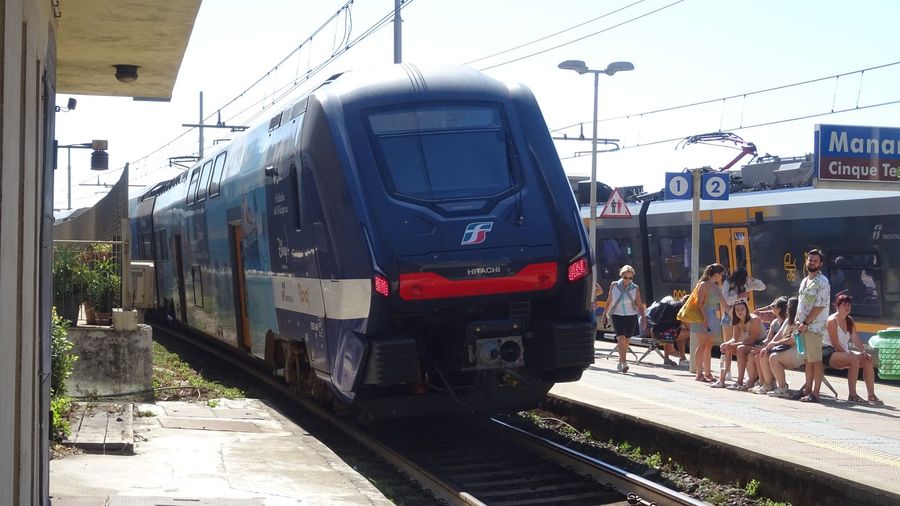
The five villages of the Cinque Terre are car-free, so getting around means mastering three things: the Cinque Terre Express train that hops between them in minutes, the seasonal ferry that links the four harbours, and the cliff trails that join them on foot. Buy the right Cinque Terre Card, check trail status before you set out, and you rarely need anything else — least of all a rental car.
Arriving in the Cinque Terre, the first thing to unlearn is the rental car. The five villages string along a near-vertical stretch of Italy's Ligurian coast, joined by a railway tunnelled through the headlands in 1874 and by footpaths far older than that. The lanes are too steep and narrow for traffic, and the villages ban cars outright.
What replaces the car is a tight, interlocking system: a regional train, a fleet of seasonal ferries, and a network of trails. Each has its own strength — speed, scenery, or exercise — and the knack is knowing which to reach for on any given morning. Here is how the pieces fit together, and how to pay for them without overspending.
The four ways to move between the villages
Movement here comes down to four modes — train, ferry, foot, and the occasional shuttle bus — and most visitors use three of them in a single day. The train is your backbone, the ferry your scenic treat, and the trails are the reason many people come at all.
| Mode | Best for | Typical hop | Watch out for |
|---|---|---|---|
| Cinque Terre Express train | Fast, all-weather hops between all five villages | 4–20 min | Crowded midday; buy and validate before boarding |
| Ferry | The finest harbour views, arriving by sea | 10–30 min | Seasonal; skips hilltop Corniglia; rough seas cancel it |
| Walking the trails | Scenery, and the whole point of the trip | 1–2 hr per leg | Paid sections close after storms; real climbs involved |
| ATC shuttle bus | Reaching upper hamlets and hillside sanctuaries | 10–15 min | Infrequent; mainly for the steep village tops |
Think of a typical day as a mix: train out to the far end in the cool morning, walk one leg while the light is good, and ferry back in the afternoon when the harbours glow. Nothing about the geography forces a single mode, and the best days combine all three.
Riding the Cinque Terre Express train
The Cinque Terre Express is the single most useful way to get around: a regional train that connects all five villages and the gateway towns of La Spezia and Levanto, stopping at each in only a few minutes. It is your default for covering distance.
Because the line runs mostly in tunnel, the "views" from the train are brief flashes of sea between the cliffs — this is transport, not sightseeing. The payoff is speed and reliability: trains run through rain and heat alike, and the short hops mean a missed departure costs only a short wait.
Buy tickets at station machines, the ticket windows, or on the Trenitalia app, and remember that a separate paper ticket must be validated before boarding. Stations are small and signage is minimal, so confirm the direction — trains toward La Spezia head south, toward Levanto and Genoa head north. Note too that Corniglia's station sits well below the village, at the foot of the 382-step Lardarina.
Taking the ferry between the harbours
The ferry is the Cinque Terre's scenic alternative: a seasonal boat service, run by the local navigation company, that links the four villages with harbours and gives the finest first view of each one from the water. It runs roughly from spring to autumn.
The boats connect Riomaggiore, Manarola, Vernazza and Monterosso, usually extending south to Portovenere and La Spezia. Hilltop Corniglia, with no harbour, is the one village left off the route. A hop-on day pass pays off if you plan several crossings, while single tickets suit a one-off sunset sail.
Seas off this coast can turn quickly, and a stiff swell cancels sailings with little notice, so never build a tight connection around the last boat. Check the day's posted schedule at the harbour kiosk each morning; departures thin out at the shoulders of the season and stop altogether in winter.
Walking the Sentiero Azzurro and higher trails
On foot is how residents have always crossed these headlands, and for many visitors the coastal Sentiero Azzurro — the Blue Trail — is the whole reason to come. But it is a genuine mountain path in places, not a seaside stroll.
The Blue Trail is the paid, maintained coastal route linking the villages, and its sections open and close independently. The Monterosso–Vernazza and Vernazza–Corniglia legs are the classic walks, with real elevation gain on rocky, uneven ground; the gentler Riomaggiore–Manarola Via dell'Amore reopened after years of landslide repairs. Always confirm which sections are open on the national park site before setting out.
Above the paid coastal path runs a free network of higher sanctuary and ridge trails, steeper and quieter, linking the villages to the shrines on the hillsides behind them. Whichever you choose, come shod for it — sturdy trainers or boots, never sandals — and carry more water than you think you need on the exposed slopes.
The Cinque Terre Card: which one to buy
One card covers the trails and, in its pricier version, the trains — so choosing between the two Cinque Terre Cards is the key budgeting decision of any visit. Buy whichever matches how much you intend to ride the rails.
| Card | Covers | Best for |
|---|---|---|
| Cinque Terre Trekking Card | The paid trail network, ATC buses, and station Wi-Fi | Walkers who barely use the train |
| Cinque Terre Treno MS Card | All of the above, plus unlimited regional trains between the villages and out to La Spezia and Levanto | Anyone hopping the villages by rail |
Both are sold as one-, two- or three-day passes at station ticket offices, park welcome points, and online, with reduced rates for children. Prices shift by season, so confirm the current figures on the official park card site rather than trusting an old number. The proceeds fund the trail repairs and terrace maintenance the coast depends on — and remember the card never includes the ferry.
Getting in: arriving by train, car, or air
You reach the Cinque Terre by changing onto the local line at one of two gateway stations — La Spezia Centrale to the south or Levanto to the north — from almost anywhere in Italy. Drivers, meanwhile, should plan to park and ride.
The nearest airports are Pisa and Genoa, each a straightforward train connection away. If you must drive, do not aim for the villages themselves: leave the car in a paid garage at La Spezia, Levanto, or Monterosso's edge and switch to the train. A vehicle is pure liability here — you will pay to park it and never once need it between the villages.
Choosing a guided tour: types, timing, and cost
A guide earns their fee in the Cinque Terre by reading the trails, tides, and timetables you cannot — knowing which path is open, when the tour boats dock, and where to taste wine at source. Match the tour to what the coast does best.
| Tour type | Typical cost | What it covers |
|---|---|---|
| Group walking tour | €25–45 per person | 2–3 hours, one or two villages |
| Guided village-to-village hike | €60–110 per person | 4–6 hours on the Sentiero Azzurro |
| Private half-day | €180–320 | up to 6 people, 3–4 hours |
| Sciacchetrà / terrace wine tasting | €20–40 per person | at a working village cantina |
For any trail-based tour, confirm the guide holds Liguria's regional Guida Ambientale Escursionistica (environmental hiking guide) licence, distinct from a city art guide, and that they check live trail status. The real value is timing: reaching a viewpoint before the ferries unload, or lining a village up for the sunset light.
Budgeting and timing your days
Getting around the Cinque Terre is cheap if you lean on the train and your own feet; the costs that add up are the ferry, private boats, and peak-season parking back at the gateway towns. A little seasonal planning keeps both crowds and fares down.
Late April to early June and September to mid-October are the sweet spots: open trails, swimmable sea, and trains that are busy but bearable. July and August bring crushing midday crowds onto the platforms and paths — ride early, walk early, and save the ferry for late afternoon when the day-trippers have thinned.
Carry some cash for harbour kiosks and small cantine, keep your validated ticket or activated card to hand for inspectors, and build each day around the car-free core. Once the logistics click, the Cinque Terre guide covers what to see in each village, and the wider Italy guide sets the coast in its national context.
Save Getting Around Cinque Terre: A Practical Transport Guide
Save Getting Around Cinque Terre: A Practical Transport Guide to your free account
Sign in or create a free account to keep this place in Saved places and add it to your trips.
Frequently Asked Questions
Is the train or the ferry faster between the villages?
The train, by a wide margin. The Cinque Terre Express covers each hop in roughly four minutes, so Riomaggiore to Monterosso takes well under fifteen minutes end to end. The ferry is far slower — ten to thirty minutes between stops, with waits between sailings — but you ride it for the sea-level views of the harbours, not for speed. Use the train to cover ground and the ferry when the journey itself is the attraction.
Does the Cinque Terre Card include the ferry?
No. The Cinque Terre Trekking and Treno cards cover the paid trail network and, in the Treno version, unlimited regional trains between the villages and out to La Spezia and Levanto — but never the boats. The ferry is run by a separate company and sold as its own single ticket or day pass at the harbour kiosks. Budget for it on top of your card if you want at least one crossing by sea.
How often does the Cinque Terre Express run?
Frequently in high season — often two or more trains an hour in each direction through the middle of the day, thinning in the early morning and late evening. Exact times shift with the season and with engineering works, so check the live Trenitalia timetable or the station boards rather than assuming a fixed interval. Because the hops are so short, a missed train usually costs you only a short wait on the platform.
Can you reach Corniglia by ferry?
No. Corniglia is the only one of the five villages without a harbour, perched about 100 metres up on a rocky promontory, so the ferries skip it entirely. Reach it instead by train — its station sits below the village — and then either climb the 382-step Lardarina stairway or take the shuttle bus up. The other four villages, plus Portovenere and La Spezia, all have ferry stops in season.
Do you need to validate Cinque Terre train tickets?
It depends on the ticket. A paper regional ticket bought separately must be validated in the green or white platform machine before you board, or you risk a fine. The Cinque Terre Treno Card works differently — you activate it once for its validity period and then simply travel, no per-trip stamping. When in doubt, validate a paper ticket; it takes seconds and the inspectors do check.