
Walking Route
Local Life
Monterosso works as the easiest base in Cinque Terre: the Cinque Terre Express regional train stops here on the La Spezia–Genoa line, a seasonal ferry calls from spring to autumn, and it is the one village you can approach by car — though parking above town is scarce, so most visitors arrive by rail. The old town is entirely pedestrian, linked to the Fegina seafront by a short tunnel under the San Cristoforo hill.
The village food to seek out is the salted anchovy (acciuga salata), still cured here and served fried, marinated, or baked with potatoes; pair it with the local Cinque Terre DOC white and finish with limoncino made from the outsized lemons grown on the terraces above.
Walking Routes
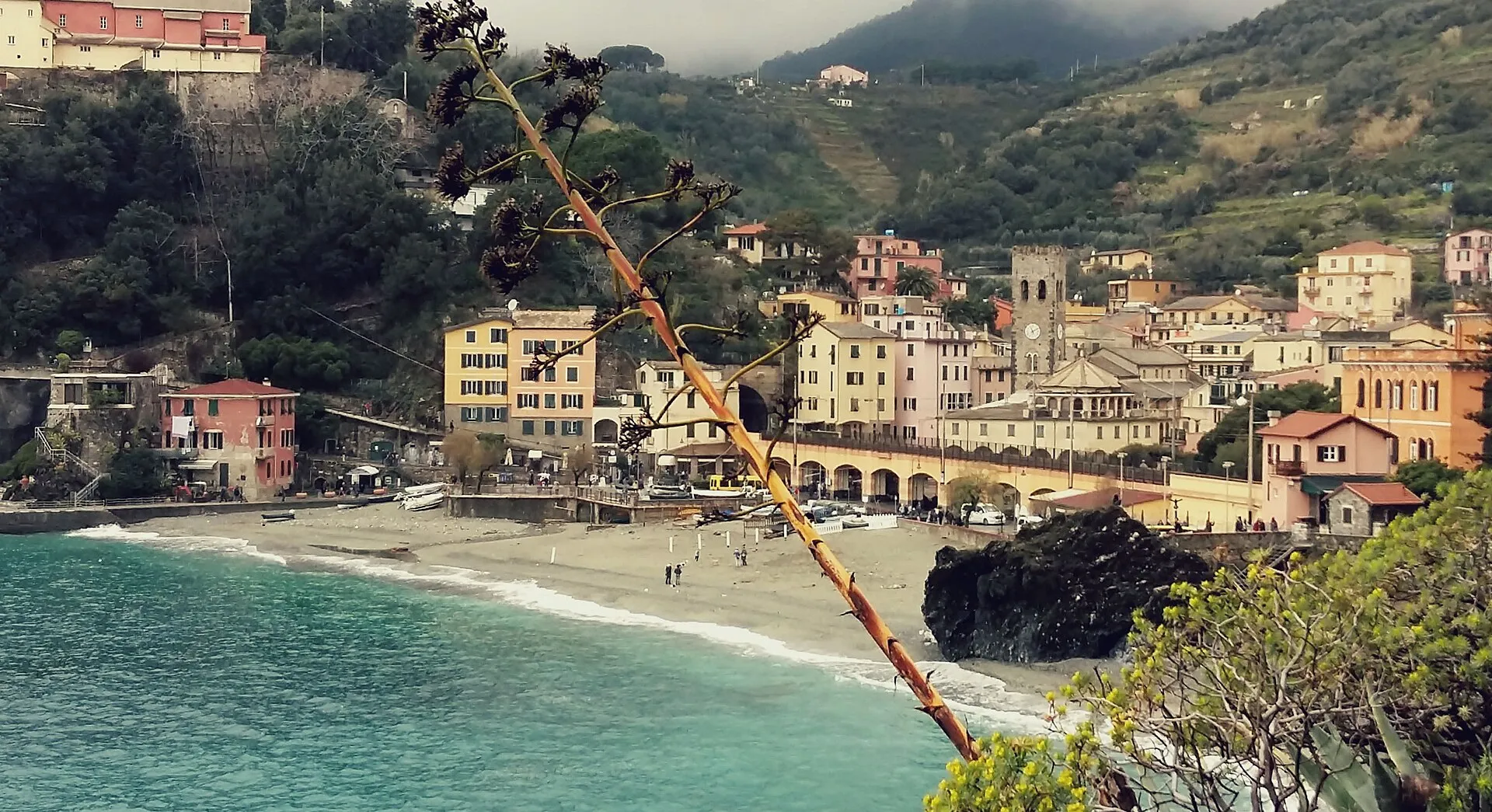
Start on Fegina beach, the broad sandy stretch that gives Monterosso its character and the only one of its kind in Cinque Terre, with free public sections alongside the rented umbrellas of the beach clubs. At its western end stands Il Gigante, a reinforced-concrete statue of Neptune built in 1910 that once stood about 14 metres tall and supported a terrace on its shoulders before wartime bombing and storms stripped away its arms and shell.
Walk the tunnel into the old town for the striped San Giovanni Battista church (see the Blue Trail and the terraced hills from its steps), climb the Colle di San Cristoforo to the Aurora Tower and the Convento dei Cappuccini, then follow the first switchbacks of the Sentiero Azzurro toward Vernazza for the classic high view back over the rooftops and beach.
When to Visit
Monterosso has more beds and services than any other Cinque Terre village, which makes it the natural place to sleep if you want to see the villages at dawn and dusk after the day-trippers leave. The beach fills by mid-morning in summer, so arrive early for a free patch of sand or book a club umbrella.
The old town is at its most atmospheric in the evening, once the light softens on the striped church and the caruggi. If you intend to hike, start the climb to Vernazza in the cooler morning and confirm the Blue Trail is open first — storm damage closes sections of the coastal path for weeks at a time.
Admission and Costs
Walking into the village and onto the free public sections of Fegina beach costs nothing, and viewing both Il Gigante and the San Giovanni Battista church is free. A sunbed and umbrella at a private beach club runs about €20–40 ($22–44) per day; a trattoria lunch of fried anchovies and local white wine is around €15–25 ($16–27).
The paid coastal trails require a Cinque Terre Card, while the higher sanctuary paths are free. A licensed walking guide is usually bundled into a wider Cinque Terre day tour rather than sold for Monterosso alone.
The Case for a Guide
Monterosso rewards a guide less for queue-skipping — there is little to pay for — and more for turning a pretty beach stop into a village you understand. A good local guide earns their fee here by:
- Reading the trail: confirming whether the Sentiero Azzurro to Vernazza is open that day, pacing the steep climb, and choosing the start point so you walk toward the best light.
- Unlocking the old town: explaining the black-and-white marble bands of San Giovanni Battista, the pirate-era story of the Aurora Tower, and the van Dyck Crucifixion attributed to the Convento dei Cappuccini that casual visitors walk straight past.
- The food story: pointing you to where the salted anchovies and limoncino are actually made rather than the harbourfront tourist menus.
- Beating the crowds: timing your beach, church and viewpoint stops around the midday train surge that floods all five villages.
Tips for Visitors
Monterosso is the most comfortable base in Cinque Terre — more hotels, restaurants and sand than the other villages — but the beach and old town are two distinct experiences, so give yourself time for both. Claim beach space before mid-morning in summer or budget for a club umbrella.
Save the centro storico for the evening, when it empties and the striped church glows. Try the salted anchovies and the lemon-based limoncino while you are here; both are genuinely local rather than generic souvenirs. For sheer cliffside drama, pair the day with Manarola at sunset and Vernazza for its harbour.
Frequently Asked Questions
What is the best time of year to visit Monterosso al Mare?
June and September are the sweet spot: the sea off Fegina beach is warm enough to swim, the lemon groves on the terraces are heavy with fruit, and you avoid the shoulder-to-shoulder heat of August. May is quieter still and coincides with the village's Sagra del Limone (Lemon Festival), when stalls along the old town serve limoncino and lemon cake.
The Blue Trail to Vernazza is usually open from spring through autumn but closes after storms, so check the park's trail status before you build a day around hiking. January and February are the slowest months, with reduced train service and many hotels and beach clubs shuttered.
How do you get to Monterosso al Mare and get around once there?
Monterosso al Mare has its own station on the La Spezia–Genoa line, served by the frequent Cinque Terre Express that links all five villages in a few minutes per hop; from spring to autumn a seasonal ferry also calls at the village, and it is the only one of the five you can realistically reach by car, though parking above town is limited and expensive.
On foot, the medieval old town is car-free, and a short pedestrian tunnel beneath the San Cristoforo hill connects it to the newer Fegina beach district. The Sentiero Azzurro coastal path climbs south to Vernazza in roughly two hours — one of the trail's steepest and most rewarding sections.
How much should you budget for a day in Monterosso al Mare?
Walking into the village and onto the free public sections of Fegina beach costs nothing, and viewing the Il Gigante statue and the striped church of San Giovanni Battista is free. A sunbed and umbrella at one of Fegina's private beach clubs (stabilimenti) runs about €20–40 ($22–44) a day, and lunch of fried anchovies and local white wine at a trattoria is around €15–25 ($16–27).
If you plan to hike the paid coastal trails you will also need a Cinque Terre Card; a licensed walking guide for the village is usually folded into a wider Cinque Terre day tour.
What makes Monterosso al Mare different from the other Cinque Terre villages?
Monterosso is the largest and westernmost of the five lands and the only one with a genuine sandy beach, so it feels flatter, roomier and more resort-like than the cliff-stacked harbours of Manarola and Vernazza.
It is really two villages in one — the medieval centro storico and the 20th-century Fegina seafront — and it has more hotels, restaurants and services than the other four combined, which makes it the easiest base for a multi-day stay. It is also the literary village: the Nobel-winning poet Eugenio Montale summered here as a child, and the Ligurian coast of his landmark collection Ossi di seppia is this stretch of terraces and sea.