
Getting Around Rovinj: A Practical Transport Guide
How to move around Rovinj on foot, by boat, bike, and rental car — reaching the old town and St Euphemia, catching taxi boats to the archipelago, arriving via Pula, and budgeting fares and tours.
Read the full guideUpdated · 10 min read
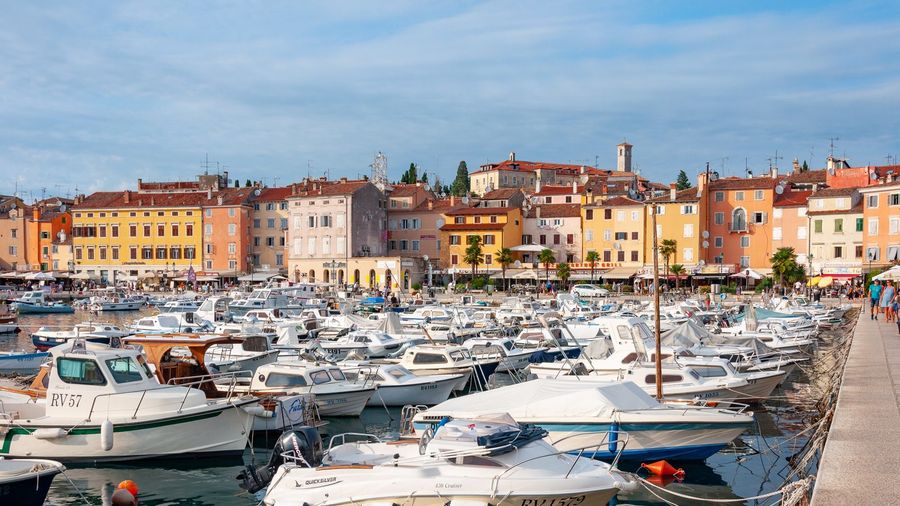
Rovinj is best explored on foot and by boat: the old town peninsula is entirely pedestrian, taxi boats fan out from the harbour to the archipelago, and you only need wheels — a bike along the coast or a rental car inland — for the countryside beyond. There is no train, so the intercity bus and your own two feet do most of the work.
Rovinj rewards visitors who grasp one thing on arrival: this is a town shaped by the sea and by its history as an island, not by the car. The old town spirals up a former island — joined to the mainland in 1763 — in concentric rings of alleys too narrow and too stepped for any vehicle, so the moment you accept that you will walk it, everything gets simpler. Getting around Rovinj really comes down to four modes: your feet for the peninsula, a taxi boat for the islands, a bike for the waterfront, and a rental car for the truffle country inland. Knowing which to use, and when, is the whole game.
How Rovinj's layout shapes the way you move
The old town is a car-free peninsula of spiralling alleys, ringed by a waterfront promenade and a working harbour; everything else — the bus station, car parks, and most hotels — sits on the flatter mainland just behind it. Understanding this split is the key to planning any day here.
The peninsula's streets climb from the harbour to the Baroque Church of St Euphemia at the summit, and because they trace the shoreline of the vanished island, they twist, dead-end, and open suddenly onto sea views. No cars, no bikes at busy times, and plenty of steps: the campanile alone is 187 of them. Around the base of the peninsula runs the harbour and its promenade, where fishing and excursion boats tie up and where the taxi boats to the islands depart.
Behind the old town, the mainland is where the practical infrastructure lives — the marina, the main car parks, the bus station, the market, and most of the larger hotels and apartments. Distances are short: from the bus station to the tip of the peninsula is a ten-to-fifteen-minute walk. Think of your base as the mainland and the old town as the pedestrian showpiece you walk into.
Getting to Rovinj: airport, bus, and driving in
Rovinj has no railway, so arrivals come by air into Pula, by intercity coach, or by car; the bus station on the edge of the centre is the hub for public transport. The nearest airport is Pula, about 40 km south, with Trieste, Zagreb, and Venice as wider alternatives that pair with a longer road transfer.
There is no train to Rovinj — the closest station, Kanfanar, sits some 20 km inland on a slow regional line and is rarely worth the effort. Instead, the coach network does the heavy lifting, with frequent services linking Rovinj to Pula in about 40 minutes, Poreč to the north, and long-distance routes to Zagreb and across the borders to Italy and Slovenia.
| Arriving from | Best option | Typical time | Notes |
|---|---|---|---|
| Pula Airport | Transfer, taxi, or car hire | ~40 min | No direct airport bus; book transfers ahead in summer |
| Pula city | Scheduled coach | ~40 min | Frequent daily departures |
| Zagreb | Intercity coach | ~4–5 hrs | Several direct services a day |
| Trieste / Venice | Car or seasonal bus | 2–4 hrs | Handy for wider Istrian or Italian itineraries |
If you arrive by car, do not aim for the old town: the peninsula is closed to traffic. Head instead for the signed car parks near the marina and the market, or straight to your accommodation's own parking. Day visitors should budget for paid parking, which is priced to discourage long stays in peak season.
Walking the old town on foot
Walking is not just the best way around the old town — it is the only way, and almost everything you came to see lies within a fifteen-minute stroll of the harbour. Wear grippy shoes for the polished limestone and treat getting pleasantly lost as part of the experience.
From the harbour, the natural route is up Grisia, the artists' street lined with galleries and studios, which climbs toward St Euphemia at the top. The alleys branching off it are where Rovinj is at its most photogenic — laundry strung between shuttered windows, cats in doorways, sudden gaps that frame the Adriatic. Because the layout is a spiral rather than a grid, a paper map is nearly useless; navigate by heading uphill for the church and downhill for the water.
A sensible on-foot sequence for a single day: climb to St Euphemia in the cooler morning for the view over the archipelago, wind back down through Grisia to the harbour for a seafood lunch, then walk the promenade at golden hour when the pastel houses light up. None of it costs a cent in transport. The polished stones can be slippery after rain and the gradients are real, so anyone with limited mobility should plan shorter loops and rest stops rather than attempting the full climb.
Boats to the Rovinj archipelago
Taxi boats from the harbour are the second essential mode here, running to the wooded islands just offshore for swimming, monastery ruins, and undeveloped coastline. The two most visited are Red Island (Crveni Otok) and St Andrew's Island, both within a short hop of the old town.
Scheduled taxi boats leave regularly through the day in season from the harbour and the promenade, and buying a return ticket is the simplest option for a beach day. If you would rather set your own timing — or reach a quieter cove — small private boats can be hired by the half-day. The archipelago scatters some 22 islands and islets across the water immediately offshore, part of it protected as a marine reserve, so even a short crossing feels like a proper excursion.
| Boat option | Typical cost | Good for |
|---|---|---|
| Scheduled taxi boat (return) | €15–25 per person | Red Island / St Andrew's beach day |
| Private small-boat hire (half-day) | €80–150 | Quiet coves, own schedule |
| Guided archipelago cruise | €25–45 per person | Multiple islands, swimming stops |
Prices peak in July and August and soften in spring and autumn. Confirm the last return departure before you set off — miss it and your only way back is an expensive private charter.
Cycling the waterfront and coast
Rovinj is flat along the water, which makes cycling an easy and cheap way to reach the beaches, campsites, and coastal path beyond the centre — though the old town itself stays a walking-only zone. Rental shops and many hotels hire bikes by the day for a modest rate plus a deposit.
The star ride is the coastal path that runs north toward Vrsar, a mostly level route past pine-shaded coves and the Zlatni Rt (Golden Cape) forest park just south of town. It is the fastest way to string together the swimming spots that are a long walk but a short pedal from the centre. Keep to marked paths, walk your bike through the busiest promenade stretches, and lock up at racks rather than leaning against railings. For anything hillier — the interior climbs quickly — an e-bike or a car makes more sense.
Renting a car for Istria's interior
A rental car is worth it only for the countryside: the truffle forests, hill towns, and wine roads of inland Istria are where public transport thins out and a vehicle pays for itself. For the town alone, a car is a liability you will pay to park.
The interior is Rovinj's hidden half. The truffle-hunting country around Livade lies about 30 minutes inland, the medieval hill towns of Motovun and Grožnjan crown ridges another half-hour on, and the wine roads linking family konoba cellars simply cannot be reached on a bus timetable. Collect a car at Pula Airport or a town-edge rental office, leave it at your accommodation while you explore the peninsula, and use it purely for day trips. The same car makes a run down to Pula — where the Roman amphitheatre is Istria's headline sight — an easy half-day rather than a bus-bound chore.
Choosing a guided tour: types, timing, and cost
Rovinj is small enough that free walking tours are less common than in Croatia's big cities, but private old-town walks, boat trips, and inland truffle experiences are all easy to book and often better value bundled. Match the tour to what the town does best: alleys, sea, and food.
| Tour type | Typical cost | What it covers |
|---|---|---|
| Private old-town walk (up to 6) | €80–130 | Grisia alleys, St Euphemia, harbour history |
| Tip-based walking tour (seasonal) | €8–15 tip | Old-town orientation in peak summer |
| Archipelago boat trip | €15–45 per person | Islands, swimming, monastery ruins |
| Truffle-hunting experience | €50–90 per person | Forest hunt, tasting, and a meal near Livade |
For timing, aim your old-town walk for the morning before cruise-day crowds thicken the alleys, and save boat trips for the calmer light of late afternoon. Truffle hunts run best in the autumn white-truffle season, when the Istrian forests are at their most productive. A 10% tip is standard for a private guide, and rounding up at tastings and restaurants is normal Istrian practice.
Budgeting, timing, and local logistics
Getting around Rovinj is cheap if you walk and time your boat trips well; the costs that add up are peak-season parking, private charters, and inland car hire. A little planning around the seasons keeps both crowds and fares down.
May, June, and September–October are the sweet spots: the light is best, the alleys are walkable, and boat and parking prices ease off. July and August bring the crowds and the top of the price range — expect the narrow streets to congest by mid-morning and book transfers and boats ahead. Pay small vendors and some taxi-boat operators in cash where you can; Croatia uses the euro, so there is no currency to change if you are arriving from the eurozone. Above all, build your days around the pedestrian core and the harbour, and treat wheels — bike or car — as tools for the countryside rather than the town.
Once you have the logistics sorted, the Rovinj city guide covers what to see, and the wider Croatia guide puts the town in the context of the whole Adriatic coast.
Frequently Asked Questions
Does Rovinj have a train station?
No. Rovinj has no passenger railway, and the nearest station at Kanfanar (about 20 km inland) is served only by a slow regional line. The intercity bus is the backbone of public transport here — frequent coaches link Rovinj with Pula, Poreč, Zagreb, and neighbouring countries from the bus station on the edge of the centre.
Can you drive into Rovinj's old town?
No — the old town peninsula is pedestrian-only, and cars are stopped at its edge. Leave your vehicle in one of the signed car parks around the marina and the market, then continue on foot. Most hotels outside the peninsula have their own parking, and many will carry luggage the last stretch for you.
How do you get from Pula Airport to Rovinj?
Pula Airport is the nearest, roughly 40 km south. There is no direct airport bus, so most visitors take a pre-booked transfer or taxi (around 40 minutes), or a taxi to Pula's bus station and a scheduled coach from there. A rental car collected at the airport is the most flexible option if you also plan to explore inland Istria.
How much do boat trips to the Rovinj archipelago cost?
Scheduled taxi boats from the harbour to Red Island and St Andrew's Island cost roughly €15–25 per person return, while hiring a small private boat runs about €80–150 for a half-day. Fares are highest in July and August and drop noticeably in the shoulder season.
Do you need a rental car in Rovinj?
Not for the town itself, which is best explored on foot and by boat. You only need a car to reach the Istrian interior — the truffle forests around Livade, the hill towns of Motovun and Grožnjan, and the inland wine roads — where public transport is sparse and a vehicle turns a full-day excursion into an easy morning.