
Getting Around Munich: A Practical Transport Guide
How to move around Munich on foot, by U-Bahn, S-Bahn, tram, bus, and MVG Rad bike — the MVV zone system, what tickets cost.
Read the full guideUpdated · 11 min read
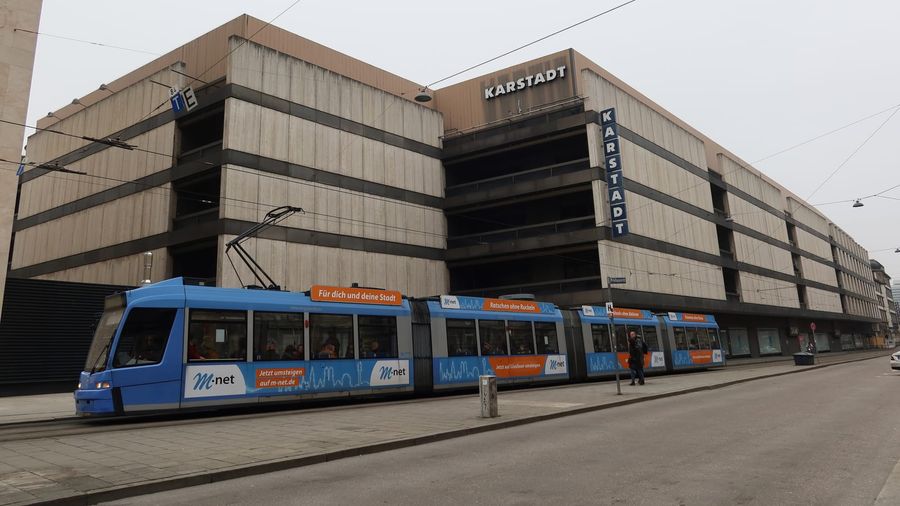
Munich is one of Europe's easiest big cities to cross without a car: the pedestrian Altstadt around Marienplatz packs the headline sights within a short walk, and the integrated MVV network — U-Bahn, S-Bahn, tram, and bus — reaches everywhere else on a single zoned ticket. Walk the old town, ride the S-Bahn in from the airport, take a tram along the Isar, and let the train do the work on the day trip to Neuschwanstein.
Munich fans out from a compact medieval core on the River Isar, and that shape decides how you get around. The Altstadt — the old town ringed by the line of the vanished city walls — is small, flat, and largely closed to traffic, so you walk it. Everything beyond it, from the beer gardens of the English Garden to the BMW towers in the north, is stitched together by one of Germany's most reliable public-transport systems. Level ground you walk, longer hops you ride, and the whole network answers to a single ticket.
Is Munich's Altstadt walkable, and where should you start?
Yes — start on foot at Marienplatz, the central square where the new town hall's Glockenspiel chimes through its clockwork pageant late each morning. From here the Frauenkirche, the Viktualienmarkt food market, and the Hofbräuhaus are all a few minutes apart, so the core needs no transport at all.
Marienplatz is both the geographic and the transport heart of the city, which makes it the natural place to orient yourself. Radiating out from it, the pedestrianised Kaufingerstraße runs west toward Karlsplatz (known to locals as Stachus), while a short walk east brings you to the 16th-century beer hall at the Hofbräuhaus. North lies the Residenz palace complex and, past it, the vast English Garden, larger than New York's Central Park.
The only central sights that reward a ride rather than a walk are the ones on the city's edges: Nymphenburg Palace to the west, the BMW Museum and Olympic Park to the north, and the Deutsches Museum a short tram hop across the Isar. Keep those for the network and give the old town to your feet.
How does the MVV network work?
A single authority, the MVV (Münchner Verkehrs- und Tarifverbund), ties four modes into one system: the U-Bahn subway and the trams and buses run by MVG, plus the S-Bahn commuter rail run by Deutsche Bahn. One ticket is valid across all of them, and Marienplatz and the Hauptbahnhof are the two hubs where the lines converge.
The pieces each do a different job, and knowing which is which saves time underground.
| Mode | What it is | Best for |
|---|---|---|
| U-Bahn (U1–U8) | Eight subway lines threading the city | Fast trips to Olympic Park, the museums quarter, and the fairgrounds |
| S-Bahn (S1–S8) | Commuter rail sharing a central tunnel, the Stammstrecke | The airport, day-trip towns, and crossing the centre via Marienplatz |
| Tram (around a dozen lines) | Street-level rails circling and crossing the core | Scenic hops along the Isar and to Schwabing, plus stops the subway misses |
| Bus | Dense network, including night buses | Neighbourhoods and the gaps between rail lines |
The key thing to grasp is the Stammstrecke: every S-Bahn line funnels through one trunk tunnel under the centre, calling at Hauptbahnhof, Karlsplatz, and Marienplatz. That means a single S-Bahn platform at Marienplatz can take you almost anywhere in the region. Plan any journey in the MVGO or MVV app, which shows live departures and sells tickets; the network map looks busy but resolves quickly once you spot those two hubs.
What do tickets cost and how do you pay?
Munich prices tickets by zone, not by distance. The city and its inner suburbs all sit inside Zone M, so almost every journey you make as a visitor is a single-zone fare — the exception is the airport, which lies further out. Buy in the app or at a machine, and validate paper tickets before boarding.
Fares are revised periodically, so treat the figures below as a guide and check the current price in the MVV app before you buy.
| Ticket | Roughly (Zone M) | Good for |
|---|---|---|
| Single ride (Einzelfahrt) | ~€3.90 | One direct journey across the city |
| Day ticket (Tageskarte) | ~€9 | A full day of unlimited travel, all modes |
| Group day ticket (up to 5) | ~€17 | Families or small groups sharing a day |
| Airport-City-Day-Ticket | ~€16 (single) | Airport transfer plus a day in town |
The simplest approach is the app: buy and store tickets on your phone, and they activate on purchase — no validation needed. If you use a paper ticket from a machine, stamp it in the blue box on the platform or on board before your first ride, because inspectors do check and an unstamped ticket counts as fare evasion. If you plan to pair transport with sightseeing, the CityTourCard and München Card bundle unlimited MVV travel with attraction discounts and can pay for themselves on a busy day. Travelling around Germany more widely? The flat-rate Deutschland-Ticket covers every regional train, tram, and bus nationwide — including all of the MVV — for a single monthly fare.
Should you cycle Munich with MVG Rad?
For flat trips beyond the old town, yes. Munich is genuinely bike-mad, with wide separated lanes on most main streets and riverside paths along the Isar, and the city's own MVG Rad bike-share puts hire bikes at stations across the centre. The terrain is dead flat, so riding is a pleasure rather than a workout.
Cycling is woven into everyday life here, and as a visitor you can join in without committing to a rental shop. MVG Rad bikes unlock from the same app you use for transit; grab one at a station, ride, and return it to another. The riding is best where the traffic thins out — the paths flanking the Isar are a green corridor through the middle of the city, and the tracks through the English Garden let you cover a lot of parkland quickly, pausing at the Chinese Tower beer garden or the Eisbach surfers along the way. In the tightest pedestrian lanes of the Altstadt, walk the bike; everywhere else, the lanes are yours.
How do you get to and from Munich Airport?
Take the S-Bahn, not a taxi. Lines S1 and S8 both run between Munich Airport (MUC) and the city centre, calling at Hauptbahnhof and Marienplatz in roughly 40–45 minutes and departing every few minutes for most of the day. Because the airport sits outside Zone M, you need a ticket that covers the extra zones.
The two lines approach the airport from different directions — S8 via the eastern suburbs, S1 via the west — but for a visitor heading to the centre they are interchangeable; take whichever leaves first. The Airport-City-Day-Ticket is usually the smart buy, since it covers the transfer and then a full day of city travel for little more than the one-way fare. There is also a Lufthansa Express Bus to the Hauptbahnhof for those with heavy luggage, and taxis and ride-hailing apps (FreeNow, Uber, Bolt) operate, but for most trips the S-Bahn is faster, cheaper, and immune to the ring-road traffic.
How do you reach Neuschwanstein and other day trips?
The train handles Munich's famous excursions. For Neuschwanstein Castle, take a regional train to Füssen (about two hours) and change to a short local bus up to Hohenschwangau; a Bayern-Ticket covers the whole day and gets cheaper per person for groups. Guided coach tours cost more but bundle the transport and castle entry.
Munich makes an excellent base for Bavaria, and the regional rail network spreads the region out at your feet. The Neuschwanstein Castle run is the classic: trains to Füssen connect with buses 73 and 78 to the castle village, and booking your timed castle-entry slot in advance is essential in high season. Beyond it, the Dachau Concentration Camp Memorial sits a short S-Bahn ride away, the lakes of Starnberg and Tegernsee are under an hour out, and fast trains reach Nuremberg or across the border to Salzburg in about ninety minutes to two hours. For most of these day trips the Bayern-Ticket — a day pass for regional trains, trams, and buses across Bavaria — is the cheapest option, especially split among a small group, and the Deutschland-Ticket works too if you already hold one.
Which guided tours are worth it, and what do they cost?
A brewery-and-beer-hall tour and a Neuschwanstein day trip are the two guided experiences that most repay the money: one unpacks the city's defining culture, the other removes the logistics from a fiddly castle visit. Free walking tours and bike tours round out the choices, most of them modestly priced.
Munich's guides play to the city's strengths — beer, royal history, and the Alps beyond. The table shows the main options and rough per-person costs; prices vary by operator and season.
| Tour type | Roughly | Why take it |
|---|---|---|
| Free walking tour (tips-based) | €10–15 tip | A two-hour orientation of the Altstadt and its history |
| City bike tour | €30–40 | The English Garden, the Isar, and the sights on two wheels |
| Beer / brewery tour | €35–60 | Beer-hall culture and tastings, including the Hofbräuhaus |
| Neuschwanstein day trip | €55–75 | Guided coach to the castle, transport and entry sorted |
| Private half-day guide | €200–350 | A tailored route for up to a small group |
A beer tour is the most Munich-specific choice, tracing the brewing tradition that shaped the city from the Hofbräuhaus to the beer gardens — and it comes into its own during Oktoberfest, when a guide who knows the tents is worth every euro. A Neuschwanstein day trip trades a little money for a lot of saved planning. Whatever you book, reserve ahead: the best beer-hall and castle slots fill fast in summer and festival season. For the wider picture of finding a guide across the country, our Germany country guide covers licensing and typical costs.
Day trip or base — how should you plan Munich?
Munich rewards a stay of two or three nights rather than a rushed day, because its quieter pleasures — a beer garden at dusk under the chestnut trees, a slow morning at the Viktualienmarkt, the Residenz without the crowds — belong to people who linger. Fast regional rail then turns the whole of southern Bavaria into easy day trips.
You can tick off the headline sights in a long day, but the city is at its best in the unhurried margins, and it makes a natural launch pad for everything around it. From a Munich base the castles, the lakes, and the Alpine foothills are all within a comfortable day's return by train — no car required. Once you have the transport sorted, the Munich city guide covers what to see when you arrive, from the Glockenspiel and the beer halls to the palaces and parks on the city's edge.
Frequently Asked Questions
Is Munich's old town walkable?
Very. The Altstadt is largely pedestrianised, and Marienplatz, the Frauenkirche, Viktualienmarkt, and the Hofbräuhaus all sit within a ten-minute walk of one another. You only need public transport for the outlying sights — the BMW complex, Olympic Park, Nymphenburg Palace, and the airport.
How do you pay for the U-Bahn, S-Bahn, tram, and bus in Munich?
Everything runs on one MVV ticket, valid across all four modes. Buy a single ride, a day ticket, or a group day ticket in the MVGO or MVV app, or from a machine at any station, and pick the zone your journey crosses — the city sits inside Zone M. Paper tickets from a machine must be validated before you board; app tickets are already active.
How do you get from Munich Airport to the city centre?
Take the S-Bahn. Lines S1 and S8 both link the airport to the centre, calling at Hauptbahnhof and Marienplatz in roughly 40–45 minutes. The airport lies outside Zone M, so you need a ticket that covers the extra zones — the Airport-City-Day-Ticket is usually the best value if you will travel again the same day.
What is the cheapest way to visit Neuschwanstein from Munich?
The independent route is a regional train to Füssen — about two hours — then a short local bus (73 or 78) to Hohenschwangau below the castle. A Bayern-Ticket covers the regional trains and the bus for a day and gets cheaper per head for groups. Guided coach day trips cost more but remove the planning and the ticket queue at the castle.
Do you need a car in Munich?
No. The MVV network, MVG Rad bikes, and a walkable centre cover the city easily, and regional trains reach the castles, lakes, and Alpine towns beyond it. Parking in the centre is scarce and expensive, so most visitors are better off arriving by train and relying on public transport.