
Getting Around Galway: A Practical Transport Guide
How to get around Galway: walk the medieval centre, ride Bus Éireann with a Leap Card, and reach the Aran Islands and Connemara car-free.
Read the full guideUpdated · 12 min read
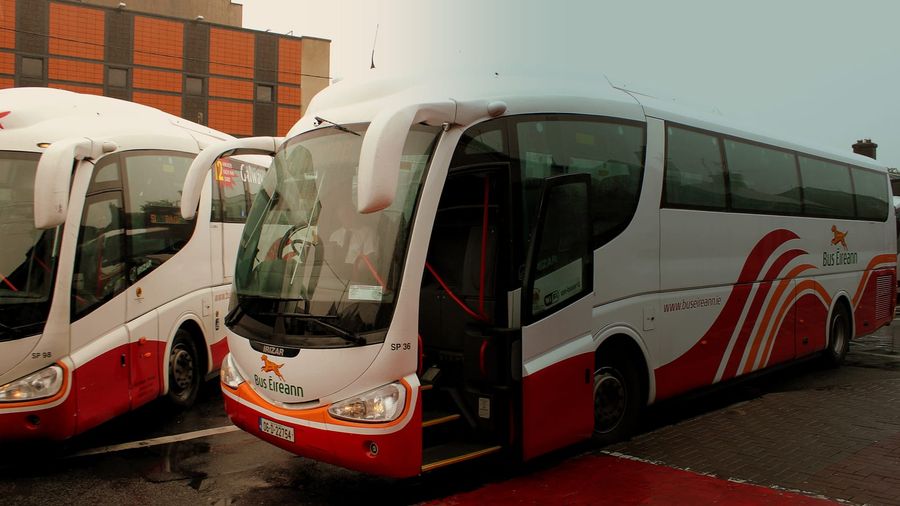
Galway is one of Ireland's easiest cities to navigate on foot: the medieval core between Eyre Square and the River Corrib is compact, largely pedestrianised, and packed with the sights most visitors come for. Beyond the centre, a single transport hub at Eyre Square gathers the trains, the Bus Éireann network, and the private intercity coaches, while a ferry shuttle and organised tours handle the Aran Islands and Connemara. Pay with a TFI Leap Card, arrive by coach or train, and save a rental car for the wild country west of the city.
Galway grew up where the River Corrib empties into Galway Bay, and the oldest streets — Shop Street, Quay Street, and the lanes of the Latin Quarter — still form a tight, walkable grid that cars were long ago nudged out of. That compactness is the key to getting around: most of what you have come to see sits within a short stroll of Eyre Square, and the square doubles as the city's transport nerve centre. The art of moving around Galway is knowing when to walk (almost always, in the centre), when to catch a bus (the bay suburbs and the airport-free approach from elsewhere in Ireland), and when a ferry, a coach, or a guided tour does the heavy lifting out to the islands and the mountains.
Is Galway's city centre walkable?
Yes — emphatically. The core between Eyre Square and the Spanish Arch is small, flat, and heavily pedestrianised, so walking is both the fastest and the most pleasant way to see the city, and it costs nothing.
From Eyre Square you can reach the river, the Saturday Market at St Nicholas' Church, and the Spanish Arch in under fifteen minutes on foot, with Shop Street and Quay Street pedestrianised along the way. The medieval street pattern was never built for traffic, and today the Latin Quarter is a car-light warren of pubs, bookshops, and buskers best explored at walking pace. Distances are genuinely short: the walk from the train station to the far end of the Latin Quarter is around ten minutes.
The one modest climb is north and west toward Galway Cathedral and the university across the Salmon Weir Bridge — still an easy stroll. For orientation, let Eyre Square and the River Corrib anchor your mental map: the historic centre fits neatly between them, and almost everything else radiates out from the square.
How Galway's buses work: Bus Éireann and the Leap Card
Galway's public transport is bus-only — there is no tram or metro — run by Bus Éireann under the national Transport for Ireland (TFI) brand. The cheapest way to ride is a TFI Leap Card, which you tap on boarding for a lower fare than cash.
City bus routes fan out from the centre to the bay suburbs and residential districts — Salthill, Knocknacarra, Newcastle, and the university among them — with services converging on Eyre Square. For visitors the single most useful move is to pick up a Leap Card, the reusable contactless smart card used across Ireland. It gives a discounted fare on every journey compared with paying the driver, and it spares you fumbling for exact change.
| How to pay | Roughly | Best for |
|---|---|---|
| TFI Leap Card | Discounted per ride; top up as needed | Any visitor taking more than one or two buses |
| Cash to the driver | Full single fare | A one-off ride with no card to hand |
| TFI Go / contactless | Varies by rollout | Travellers who prefer their phone or bank card |
Buy and top up a Leap Card at newsagents showing the TFI sign and at machines around the city. Fares and any free-transfer window are set nationally and change periodically, so check the current prices on the Transport for Ireland website rather than trusting a figure from an old guide. Plan any trip in the TFI journey planner, which shows live times and the right route number.
Arriving by train: Ceannt Station at Eyre Square
Galway's rail terminus, Ceannt Station, sits directly beside Eyre Square, so you step off the train into the heart of the city. Iarnród Éireann intercity services link it to Dublin Heuston in roughly two and a half hours.
Ceannt Station is Galway's gateway for anyone arriving by rail, and its location could hardly be more convenient — the platforms open onto Eyre Square, a few minutes' walk from most city-centre accommodation and the start of the Latin Quarter. Intercity trains to Dublin Heuston run several times daily and make a car-free visit from the capital entirely practical; other destinations connect at Athlone.
There is no commuter rail within Galway and no light rail of any kind, so the train is for getting to and from the city rather than around it. Once you arrive, you walk. Check the current timetable and fares on Iarnród Éireann before you travel, and consider booking intercity tickets online in advance for the cheapest fares.
Intercity coaches: reaching Galway from Dublin, the airport, and Cork
Galway has no commercial airport with scheduled passenger flights, so most visitors arrive by road from Dublin, Dublin Airport, Shannon, or Cork. Frequent private coaches and Bus Éireann services make this straightforward and cheap, all stopping at or beside Eyre Square.
Because the nearest big airports are a drive away, the coach is the workhorse of long-distance arrivals. Private operators run comfortable, frequent direct services, and competition between them keeps advance online fares low. The table shows the main road approaches; confirm current times and prices with each operator before booking.
| Route | Typical operators | Rough journey |
|---|---|---|
| Dublin city ↔ Galway | Citylink, GoBus, Bus Éireann | ~2.5–3 hrs |
| Dublin Airport ↔ Galway | Citylink, GoBus | ~2.5–3 hrs |
| Shannon Airport ↔ Galway | Bus Éireann | ~1.5–2 hrs |
| Cork ↔ Galway | Bus Éireann (route 51) | ~4 hrs |
Coaches drop you at Galway Coach Station or the bus bays by Ceannt Station, both at Eyre Square and both within walking distance of the centre. For the Dublin run in particular, the direct coach is often faster door-to-door than it looks on paper and avoids the connection that rail can require. Book the airport services ahead in summer, when demand peaks.
Getting to the Aran Islands and the coast
The classic Galway day trip — out to the Aran Islands — is entirely doable without a car: a shuttle bus from the city to Rossaveal Pier connects with the Aran Island Ferries sailings, often sold as a single combined ticket.
The usual route to the Aran Islands begins with a shuttle bus from near Eyre Square to Rossaveal (Ros a' Mhíl), the ferry pier about 45 minutes west in the Connemara Gaeltacht. From there, Aran Island Ferries crosses to Inis Mór in around 45 minutes, with longer sailings to Inis Meáin and Inis Oírr. Many operators bundle the bus and the ferry into one day ticket, so you never touch a steering wheel. Sailings are most frequent from April through October; winter crossings depend on the Atlantic weather.
For variety, Aer Arann Islands flies to all three islands from Connemara Airport at Inverin — a ten-minute hop with extraordinary views of the limestone pavements. If you are approaching from the Clare side instead, separate ferries sail to the islands from Doolin. Book island day trips well ahead in July and August, when both the ferries and the island accommodation fill up.
Driving and parking: when a car actually helps
Skip the car for the city itself — the centre is pedestrianised, parking is limited and metered, and you will not need it. A rental comes into its own only for exploring Connemara and the Burren, where public transport thins to almost nothing.
Driving into central Galway is more hindrance than help. The medieval streets are narrow or closed to cars, on-street parking is metered and scarce, and multi-storey car parks fill quickly on market days and festival weekends. If you are staying in the city, you do not need a vehicle.
Where a car transforms your options is the country beyond the city. The bogs, mountains, and Gaeltacht villages of Connemara, Kylemore Abbey, the Sky Road around Clifden, and the limestone hills of the Burren to the south are strung along roads that scheduled buses serve sparsely, if at all. If that landscape is your goal and you would rather not join an organised tour, hire the smallest car that suits you — the lanes are narrow but well signed — and collect it as you leave the city rather than parking it unused downtown.
Cycling and the bay: Salthill and the prom
For the flat centre and the seafront, cycling and walking are a pleasure. The three-kilometre Salthill Promenade along Galway Bay is the city's great outdoor walk, reachable on foot, by bike, or on a frequent city bus.
Galway has a growing network of cycle lanes, and the flat ground around the centre and the bay suits two wheels far better than a car. Bike hire is available in the city for day trippers, and the gentle leisure routes toward Salthill and the Terryland forest park are the most rewarding casual rides. Within the busiest pedestrian lanes, walk your bike — the crowds on Shop Street leave little room to pedal.
The Salthill Promenade is the set-piece. The seafront path runs for about three kilometres along the bay, ending at the spot where locals touch the wall before turning back — a small Galway ritual. You can walk it from the centre in half an hour, cycle it, or hop a Salthill-bound bus one way and stroll back along the water at sunset.
Which guided tours are worth it, and what do they cost?
A walking tour of the medieval centre is the best-value introduction, while organised Connemara and Aran Islands day tours are the natural choice for the harder-to-reach country — they fold the transport and the commentary into a single booking.
Galway's guided offerings play to its strengths: its compact history on foot, its food culture, and the wild landscapes that surround it. The table shows the main options and rough per-person costs, which vary by operator and season.
| Tour type | Roughly | Why take it |
|---|---|---|
| City walking tour (2–3 hrs) | €15–25 | History and orientation across the medieval core |
| Aran Islands day trip (shuttle + ferry + guide) | €40–70 | The islands bundled into one booking, no car needed |
| Connemara full-day tour | €55–90 | Kylemore Abbey and the Twelve Bens by coach |
| Private city guide (half-day) | €130–200 | A tailored walk at your own pace |
| Private Connemara/Aran day guide | €280–400 | Your own driver-guide for the west |
A walking tour unpacks the city's merchant history, its trading links with Spain, and its island geography in a couple of hours — the easiest way to get your bearings on arrival. For the Aran Islands and Connemara, an organised day tour removes the logistics of shuttles, ferries, and timetables, which is worth the premium for many travellers. If you would rather set your own pace, a private guide or a small rental car gives you the freedom the scheduled network cannot.
Once the transport is sorted, the Galway city guide covers what to see when you arrive — from the Saturday Market and the Spanish Arch to the trad sessions that make the city's evenings.
Frequently Asked Questions
Do you need a car to visit Galway?
Not for the city or its headline excursions. Galway's medieval centre is small enough to cross on foot in fifteen minutes, and scheduled buses, a ferry shuttle, and organised day tours cover the Aran Islands, Connemara, and the Cliffs of Moher. A rental car only earns its keep if you want to explore Connemara or the Burren at your own pace on back roads that buses barely touch. For a city-and-day-trips visit, arrive by coach or train and skip the car.
What is the cheapest way to pay for buses in Galway?
Use a TFI Leap Card. The national contactless smart card gives a cheaper fare than cash on every Bus Éireann city journey around Galway, and tapping on is faster than counting coins for the driver. Buy and top up a Leap Card at newsagents showing the TFI sign and at machines in the city. Fares are set nationally and revised periodically, so check the current prices on the Transport for Ireland website before you travel.
How do you get from Galway to the Aran Islands?
The usual route is a shuttle bus from Galway city to Rossaveal Pier (about 45 minutes west), then an Aran Island Ferries crossing to Inis Mór, Inis Meáin, or Inis Oírr. Many operators sell a combined bus-and-ferry day ticket, so you board the shuttle near Eyre Square and need not drive. Sailings run most frequently from April to October. Aer Arann Islands also flies to all three islands from Connemara Airport, and separate ferries sail from Doolin in County Clare.
Does Galway have a train station, and where does the train go?
Yes — Galway Ceannt Station sits right beside Eyre Square in the heart of the city. Iarnród Éireann intercity trains link it with Dublin Heuston in roughly two and a half hours, with connections at Athlone for other lines. There is no commuter rail network within Galway itself and no tram or metro, so for getting between city sights you walk, and for the suburbs you take a bus.
What is the best way to reach Galway from Dublin or the airport?
Direct intercity coaches are the simplest option. Private operators such as Citylink and GoBus run frequently between Galway and both Dublin city centre and Dublin Airport, typically taking around two and a half to three hours, and they stop at or near Eyre Square. Bus Éireann and the train (from Dublin Heuston) are alternatives. Compare current fares and times across operators before booking, as promotional online fares are often the cheapest.