
Activities
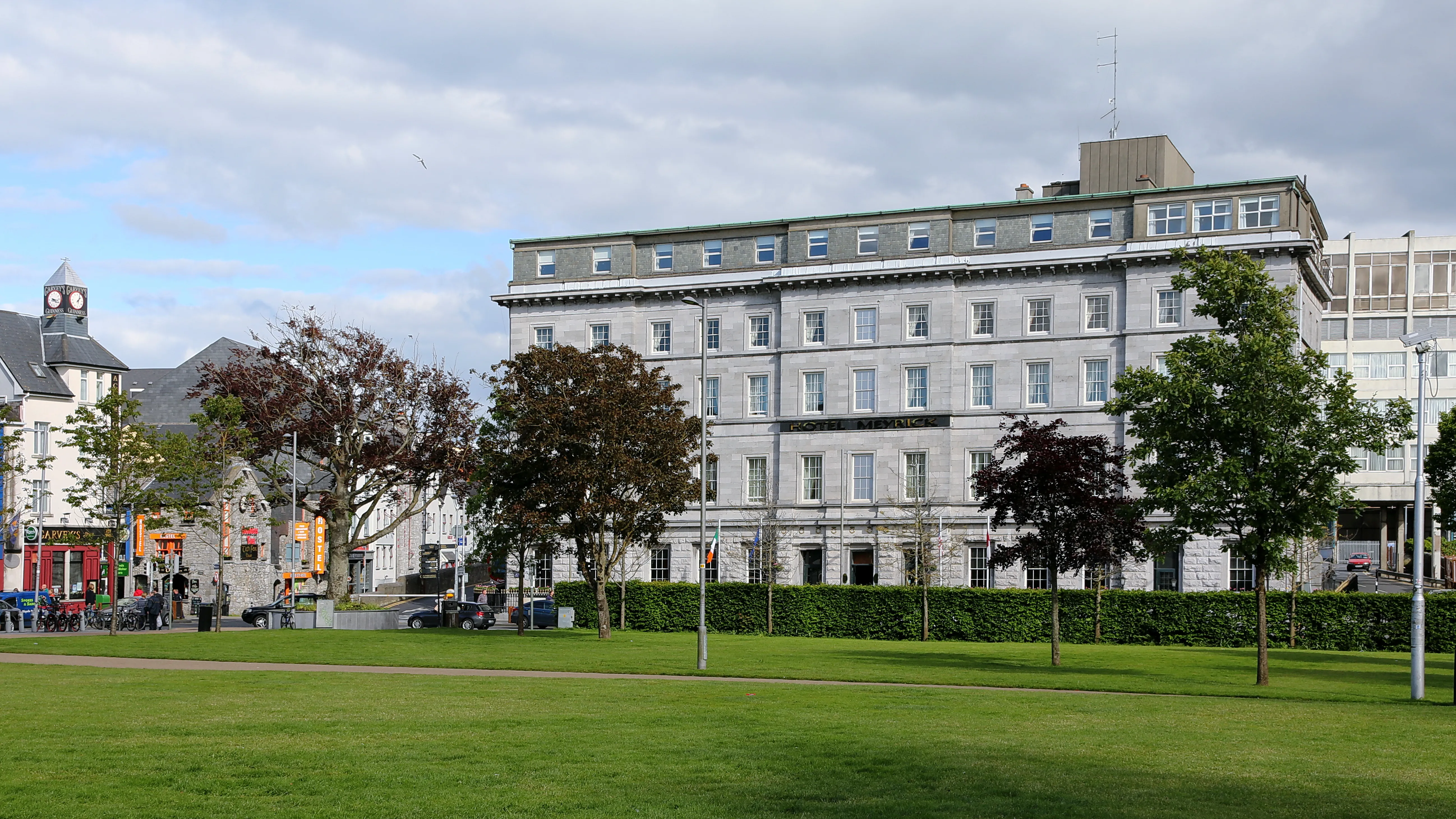
The square is built for lingering rather than ticking off sights. On dry days people picnic and sunbathe on the terraced lawns, children clamber near the Quincentennial Fountain, and buskers and street performers draw circles of onlookers. It is the main assembly point for walking tours and for the hop-on tourist train, and a regular venue for outdoor festivals, food fairs, and live-music events through the warmer months. Come December, the Galway Christmas Market brings a Ferris wheel, an ice rink, craft and food chalets, and a German-style mulled-wine bar. Year-round it remains the city's favourite spot simply to sit, meet friends, and watch Galway go by.
Seasonal Highlights
Spring brings the first warm afternoons that coax students and shoppers back onto the grass, with bedding flowers planted around the monuments. Summer (June–August) is the square at full tilt — long evenings, buskers, festival marquees, and overflow crowds from the nearby pubs and shopping streets, often timed with Galway's busy festival calendar. Autumn quietens the green and gives the clearest, crowd-free views of the flags and the Browne Doorway. Winter is dominated by the Christmas Market, when the entire square is wrapped in lights, food stalls, and a Ferris wheel from mid-November until just before Christmas, making December one of the most atmospheric times to visit despite the cold.
When to Visit
The square is an open public park with no gates or closing time, so you can wander through at any hour, though it is liveliest from late morning to early evening. Daytime is best for seeing the flags, fountain, and monuments clearly; on a fine summer afternoon the lawns fill with people. The Christmas market transforms the space from mid-November to just before Christmas, with stalls open roughly noon to 9 PM and later at weekends. For photography, June to August gives long daylight and the busiest, most colourful scenes; a quiet early morning visit is better if you want the monuments without crowds. A relaxed look around takes 15–30 minutes.
Admission and Costs
Entry to the square is completely free at all times. The Christmas market is free to walk through, though individual attractions such as the Ferris wheel or ice rink charge €5–10 (about $5–11) per ride or session, and food and mulled-wine stalls price drinks around €4–6 (about $4–7). Many Galway walking tours begin at the square and cost roughly €15–25 (about $16–27) per person; the hop-on tourist train that departs from here runs about €12–15 (about $13–16) for adults. Deckchairs, picnics, and people-watching, of course, cost nothing.
The Case for a Guide
Eyre Square looks like a simple city park, but a guide reveals how much of Galway's story is compressed into one green:
- Decoding the fourteen tribes — A guide explains who the merchant families were, why Galway is the City of the Tribes, and how their coats of arms on the banners connect to streets and buildings you will pass later in the day
- The Browne Doorway's rescue — The transplanted 17th-century mansion entrance is easy to walk past; a guide tells how it was salvaged from a demolished townhouse and what it reveals about the wealth of Galway's golden age
- The Kennedy connection — Standing on the spot where JFK addressed the crowd in 1963 lands far harder when a guide describes the day and the city's enduring affection for him
- Reading the Quincentennial Fountain — The sail-like sculpture references the Galway Hooker boats; a guide links it to the city's maritime trade and the 1984 celebration of Galway's 500th anniversary as a chartered town
- Orientation for the whole city — Because nearly every route into the old town starts here, a guide uses the square to map out the day before heading down toward the medieval streets and the river
Tips for Visitors
Start your day here — The square is the most logical launch point for exploring the old town, and most walking tours and the tourist train assemble on its lawns. Bag a bench early in summer — On warm afternoons every seat and patch of grass fills quickly. Visit in December for the market — The Galway Christmas Market is one of the best in Ireland, and the square is its home. Mind your belongings — As the busiest public space in the city, it attracts crowds; keep bags zipped during events. Use it as a landmark — If you get turned around in the medieval lanes, walking uphill almost always brings you back to Eyre Square and the station.
Frequently Asked Questions
Where exactly is Eyre Square and how do I get there?
Eyre Square sits at the top of Williamsgate Street in the very centre of Galway, a two-minute walk from the train and bus station, which adjoins the eastern side of the square. Almost every visitor passes through it: the pedestrianised shopping streets and the Latin Quarter run downhill from its southwest corner toward the river. If you arrive by coach or rail, you step out practically onto the grass.
What are the flags flying around the square?
The fourteen banners along the eastern walk represent the fourteen "tribes" of Galway — the leading merchant families (Lynch, Browne, Blake, Joyce, Martin and others) who governed the walled medieval town and gave Galway its nickname, the City of the Tribes. Each banner carries a family's coat of arms, and the display is one of the most photographed features of the square.
Why is it officially called Kennedy Park?
US President John F. Kennedy addressed a huge crowd here in June 1963, only months before his assassination, and the square was formally renamed Eyre Square (John F. Kennedy Memorial Park) in his honour. A limestone memorial and a bust mark the visit, and older Galwegians still recall the day vividly.
Is Eyre Square a good base for exploring the rest of the city?
Ideally so. It is the natural starting point for a walk down through the shopping streets to the medieval quarter, the Spanish Arch, and the waterfront, and it doubles as the assembly point for many walking tours and the hop-on tourist train. Cafés, hotels, and the city's main shopping centre all ring the square.