
Best Time to Visit Bali: Dry Season, Wet Season & Crowds
A season-by-season guide to timing a Bali trip — the dry season and the wet, the crowd and price peaks, the best months for surfing, diving.
Read the full guideUpdated · 9 min read
Bali has just two seasons — a dry one from about April to October and a wet one from November to March — and the dry season is the classic time to visit for beaches, surfing, and temples. But the smartest timing threads between them: the shoulder months of April-June and September give you dry-season sun without the July-August and festive-period crowds and prices, while the green wet season rewards those who want Bali quieter and cheaper.
Timing a trip to Bali is simpler than for a four-season destination but no less important, because the island's tropical climate, its crowds, and its extraordinary Hindu festival calendar all pull on the decision. The weather divides neatly into wet and dry, yet the busiest and priciest weeks do not always line up with the finest conditions, and one date on the calendar — the island-wide Day of Silence — can stop a trip in its tracks if you arrive unaware. This guide maps Bali's year across Indonesia's most famous island, so you can align your dates with the weather, the wallet, and the culture all at once.
How do Bali's two seasons work?
Bali sits just south of the equator, so it has no spring, summer, autumn, or winter — only a dry season and a wet one, split by the monsoon. The dry season, roughly April to October, brings sunshine, lower humidity, and calm seas; the wet season, November to March, brings heavy afternoon rain, high humidity, and lush green landscapes. Temperatures stay warm year-round.
Being tropical, Bali's weather runs on a monsoon rhythm rather than a temperature one — it is warm all year, hovering around the high 20s to low 30s Celsius, and what changes is the rain and the humidity. The dry season, from about April to October, is defined by sunshine, comfortable humidity, gentle breezes, and calm, clear seas, which is why it is the default choice for most visitors. The wet season, November to March, is not the washout its name suggests: the rain usually arrives as intense but short afternoon or evening downpours, leaving many mornings bright, but the humidity is heavy, the sea rougher, and the sky often overcast. Knowing the island only has these two modes — and that both are warm — is the foundation for choosing your dates.
Why is the dry season the classic choice?
The dry season, April to October, is peak Bali for good reason: reliable sunshine, low humidity, and calm seas make it ideal for the beaches, the surf breaks, diving, and long days of temple and rice-terrace exploring. It is the safest bet for a first visit, with the fewest weather compromises on any outdoor plan.
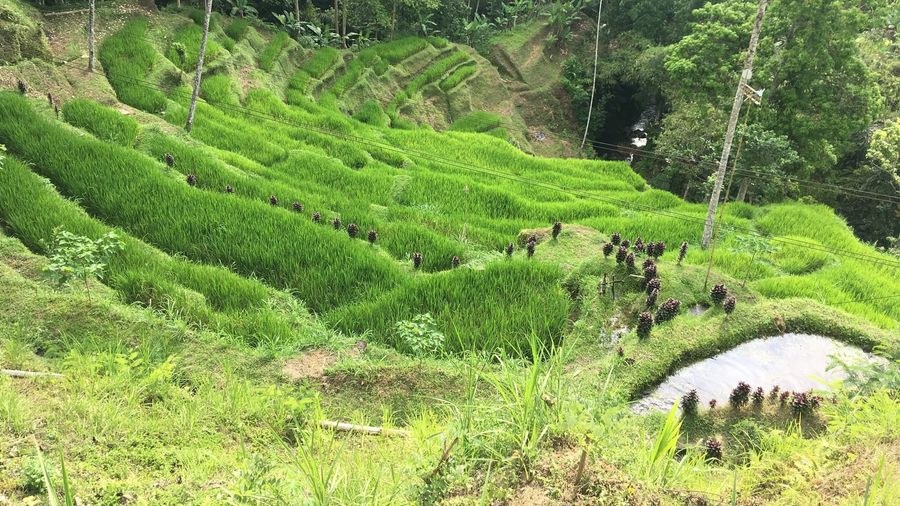
If you want Bali at its most dependable, come in the dry season. With rain rare and the humidity down, this is when the island's outdoor life is at its best: the beaches of the south are at their finest, the surf breaks of the Bukit Peninsula and the west coast are working, visibility for diving and snorkelling is at its clearest, and the inland landscapes are perfect for walking. It is the season to explore the emerald Tegallalang Rice Terraces near Ubud under blue skies, or to make an early start for the water temples without dodging a downpour. The trade-off is that everyone else has the same idea, so the dry season is also the busy and more expensive one — which is where the distinction between its peak and its shoulders becomes worth understanding.
When are the crowds and prices highest?
Two windows spike above the rest: July-August, the northern-hemisphere summer holidays, and the Christmas-to-New-Year fortnight. Both bring the biggest crowds, the highest room rates, and booked-out restaurants and villas, even though late December falls in the wet season. Outside these peaks, Bali is markedly cheaper and calmer.
Bali's busy periods are driven by the calendars of its visitors as much as by its own weather.
| Period | Crowds & prices | Weather | Verdict |
|---|---|---|---|
| Jul–Aug | Highest of the year | Dry, sunny, ideal | Great weather, peak crowds and cost |
| Late Dec–early Jan | Very high (festive peak) | Wet season | Crowded despite the rain |
| Apr–Jun | Moderate | Dry, sunny | Shoulder sweet spot |
| Sep | Moderate | Dry, sunny | Shoulder sweet spot |
| Nov, Feb–Mar | Lowest | Wet | Quiet and cheap, weather permitting |
The lesson is that the very best weather and the very worst crowds coincide in July and August, and that the festive fortnight is packed even though it sits in the rainy season. If your dates are flexible, the shoulder months deliver most of the upside with far less of the crush and cost.
What are the best shoulder-season months?
April to June and September are Bali's sweet spot: firmly in the dry season for reliable sun and calm seas, but outside the July-August and Christmas peaks, so crowds thin and prices ease. You get the best weather with the best value, which is why seasoned visitors target these windows.
The shoulder months are where experienced Bali-goers aim. April, May, June, and September all sit squarely within the dry season, so you keep the sunshine, the low humidity, and the calm water, yet you sidestep the two crowd peaks entirely. Rooms and villas cost noticeably less, popular spots like the Sacred Monkey Forest in Ubud and the cliff temples feel less swamped, and it is easier to get into the restaurants and experiences that book out in high summer. May and June in particular are often cited as the finest months of all — the landscape is still green from the recent wet season, the weather is dry and settled, and the tourist volume has not yet surged. If you can travel outside fixed school holidays, these are the windows to choose.
Is the wet season worth considering?
The wet season, November to March, has genuine upside for the right traveller: the lowest prices, the thinnest crowds, the greenest landscapes, and mornings that are often dry before the afternoon rain. It suits budget-minded and flexible visitors happy to plan around downpours, though rough seas and humidity are real trade-offs.
Do not dismiss the wet season out of hand. Outside the festive fortnight, November through March is the cheapest and quietest time to visit, with room rates falling and the crowds all but gone from the temples and rice fields. The rice terraces and jungle are at their most vividly green, waterfalls run full, and the classic pattern of bright mornings giving way to afternoon storms means you can often pack the outdoor sightseeing into the first half of the day and retreat to a spa, a long lunch, or your villa when the rain comes. The honest trade-offs are the heavy humidity, the rougher and murkier seas that dampen diving and some surf spots, and the need to keep plans flexible. For culture-focused travellers, the sacred water temple of Tirta Empul and Ubud's arts scene are just as rewarding under grey skies — so for value and quiet, the wet season is a real option, not a consolation prize.
How do festivals and Nyepi shape your dates?
Bali's Hindu calendar adds a cultural layer to timing, above all Nyepi, the March Day of Silence, when the whole island shuts down for 24 hours — including the airport. Colourful temple ceremonies and the Galungan festival can enrich a trip, but Nyepi in particular must be planned around, since you cannot travel or go outside during it.
Bali's living Hindu culture means the festival calendar matters as much as the weather one. The pivotal date is Nyepi, the Balinese New Year Day of Silence, which usually falls in March. For a full 24 hours the entire island stops: the airport closes, no flights land or depart, no vehicles use the roads, no one goes outdoors, and lights are kept low or off — a genuinely extraordinary experience of collective quiet, but one that confines you to your accommodation. The night before brings the dramatic Ogoh-Ogoh parades of giant demon effigies. Arriving in the days around Nyepi is wonderful if you plan for it and a shock if you do not, so decide deliberately whether to build your dates around it. Elsewhere in the year, the ten-day Galungan festival and countless local temple anniversaries fill villages with offerings, processions, and decorated bamboo poles; catching one adds a memorable dimension, and none of them shuts the island down the way Nyepi does.
Related Guides
- Best Time to Visit Japan: Cherry Blossom & Autumn Colour — timing another Asian trip around seasons and crowds
- Best Time to Visit Cape Town — a southern-hemisphere destination where weather and wildlife set the dates
- Siem Reap & Angkor Temple Tours — pairing Bali with a nearby Southeast Asian temple destination
Bali really only asks you to choose between two seasons, but the choice within them is where the trip is made. Come in the dry season for the surest weather, aim for the April-to-June or September shoulders to dodge the crowds and the cost, or embrace the green, cheap wet season if you value quiet over guaranteed sun. Whenever you go, check the date of Nyepi, and let the island's remarkable calendar be part of the plan rather than a surprise.
Frequently Asked Questions
What is the best time to visit Bali?
The dry season, roughly April to October, is the best all-round time — sunny, less humid, and ideal for beaches, surfing, and temple-hopping. Within it, April to June and September are the sweet spot, offering fine weather without the July-August and Christmas crowd and price peaks. The wet season has its own quieter, greener rewards.
When is the rainy season in Bali?
Bali's wet season runs roughly from November to March, peaking in December, January, and February. Rain typically comes in short, heavy afternoon downpours rather than all-day drizzle, so mornings are often still usable, but humidity is high, the sea can be rough, and some outdoor plans need flexibility.
What is Nyepi and how does it affect a Bali trip?
Nyepi is the Balinese Day of Silence, a Hindu new-year observance usually in March, when the entire island shuts down for 24 hours — no flights, no traffic, no going outside, and lights kept low. It is a remarkable experience if you plan for it, but you must stay in your accommodation, so build it into your dates deliberately.
Is Bali too crowded in July and August?
July and August are the busiest and most expensive months, drawing the biggest international crowds to the beaches, Ubud, and the temples, alongside the Christmas-New Year peak. The weather is excellent, but for fewer crowds and lower prices with similar sunshine, the shoulder months of April to June and September are a better bet.