
Observation Spots
Activities
The forest is compact enough to see in one unhurried loop, yet it rewards visitors who treat it as several distinct experiences rather than a quick photo stop.
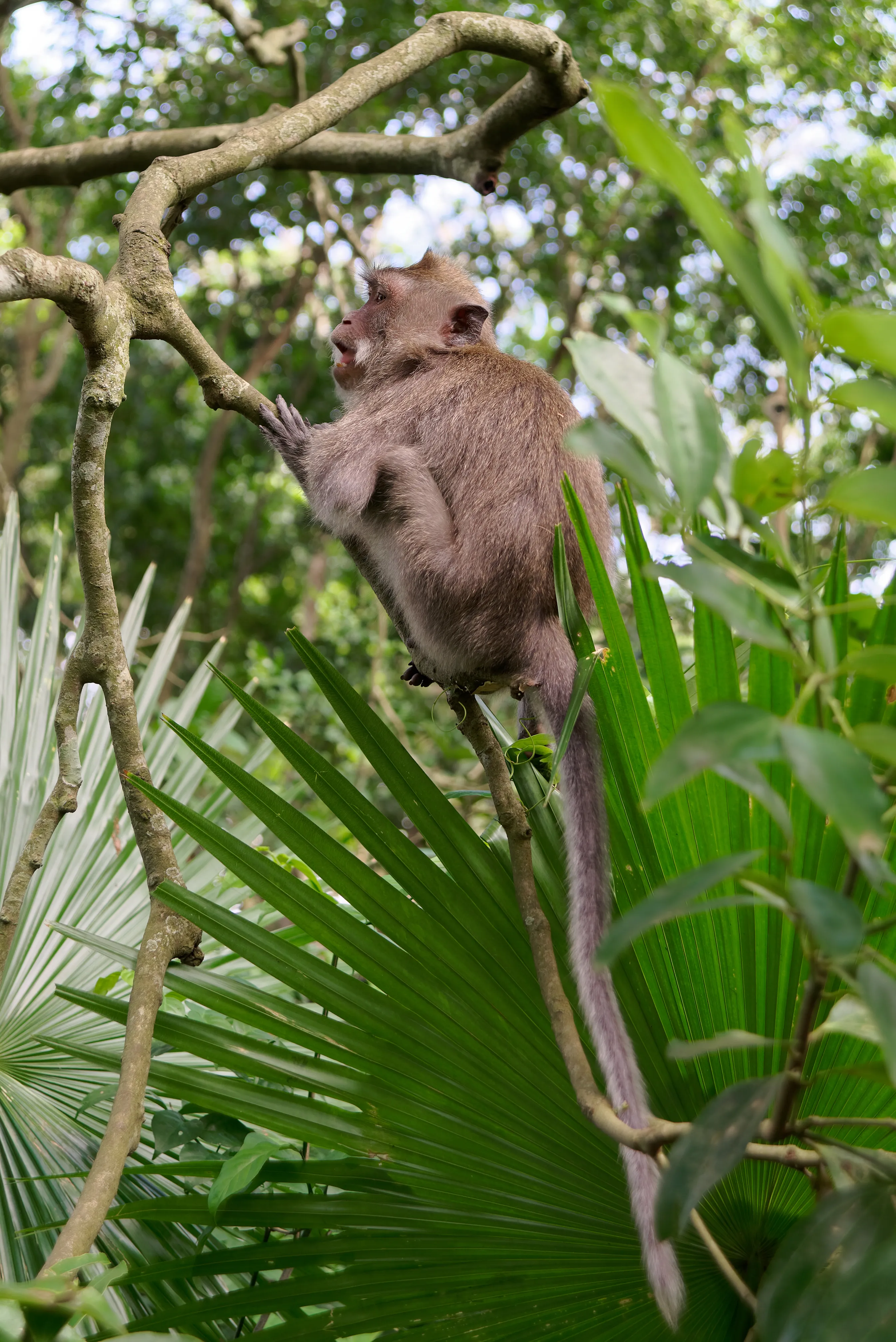
- Macaque observation: The Central Feeding Ground is where the troops concentrate around the roughly 9 AM and 3 PM feedings of sweet potato, banana, and forest greens; sitting quietly at the edge for twenty minutes reveals grooming chains, play-fighting juveniles, and the subtle politics of the dominant males far better than walking through does.
- The three-temple circuit: Linking Pura Dalem Agung, Pura Beji, and Pura Prajapati on foot traces the full Balinese arc of death, purification, and cremation in the space of a kilometre; the moss-covered statuary along the way is the most photographed sculpture in the forest.
- The Wos River gorge walk: The paths descend to two stone bridges over the ravine, including the ornately carved Dragon Bridge, where the canopy closes overhead and the sound of the river drowns the crowds.
- Guided interpretation: A forest guide, or a driver-guide from Ubud town, turns a wildlife walk into a reading of Balinese cosmology — see the case for a guide below.
Seasonal Highlights
Balinese Hinduism runs on the 210-day Pawukon calendar rather than the Gregorian year, so the forest's most memorable moments are tied to ceremony as much as to weather. The dry season from April to October offers the most comfortable walking — firm paths, cooler mornings, and dependable light through the canopy — with May, June, and September the sweet spot of reliable weather and thinner crowds than the July–August peak (as reflected in the month ratings above). The wet season from November to March leaves the gorge at its most luxuriant, though the stone steps turn slippery and afternoon downpours are routine; a morning visit sidesteps most of the rain.
Roughly every 210 days the Padangtegal temples hold their odalan anniversary ceremonies, when villagers in white processional dress fill the death temple with offerings and gamelan — an extraordinary sight for anyone who happens to coincide with one. Ask a guide or your accommodation whether an odalan, or a ngaben cremation preparation at Pura Prajapati, falls during your stay; these are the days the forest most fully reveals itself as a working sacred site rather than a wildlife attraction.
When to Visit
Opening hours: Daily 9 AM – 6 PM, with last entry at 5:30 PM; current times and ticket details are published on the sanctuary's official site. Individual temple compounds may close to visitors without notice when a ceremony is under way.
Feeding times: Roughly 9 AM and 3 PM, when the troops converge on the Central Feeding Ground — the highest concentration of monkeys and the liveliest social behaviour of the day.
Best time to visit: Arrive at opening (9–10 AM) to beat both the midday heat and the tour-bus crowds, or come from 3 PM for the second feeding and the low golden light filtering through the pule canopy.
How long to stay: 1–1.5 hours for an independent loop of the paths, temples, and feeding ground; 1.5–2 hours with a guide who can slow the visit down and read the monkey and temple life for you.
Admission and Costs
Admission is collected at the Padangtegal entrance and, as a community-run site, supports the sanctuary's conservation work and the upkeep of its temples.
- Entrance fee: IDR 80,000 adults / IDR 60,000 children under 12 (approximately USD 5 / USD 4)
- Forest guide (hired at the gate): IDR 100,000–150,000 per group for a 60–90 minute walk
- Sarong: required for the temple compounds and available at the entrance; women must also cover their shoulders
- Combined Ubud half-day with a driver-guide (forest plus town, and often the Tegallalang rice terraces and Tirta Empul to the north): IDR 400,000–600,000 with transport
The Case for a Guide
The Sacred Monkey Forest rewards patience and knowledge in equal measure, and a guide who knows the reserve offers a fundamentally different visit from a solo walk:
- Monkey social structure: Each of the five troops has a dominant male and a defended territory; a guide points out the alpha males and decodes the grooming, play, and boundary skirmishes unfolding in real time.
- Temple cosmology: The three temples' roles — death, purification, and cremation staging — map the Balinese Hindu journey of the soul, the same ngaben cycle most visitors never witness; a guide explains how the forest fits the complete arc of Balinese spiritual life.
- Sacred ecology: The pule trees, the holy spring, and specific stones each carry ritual designations in Balinese belief; a guide identifies them and their place in village ceremony.
- Safe navigation: Someone who reads the troops' daily patterns knows which areas are currently assertive, times movement around the feedings, and turns a potentially tense encounter into a calm one.
Tips for Visitors
- No food, no plastic bags: Do not carry food, snacks, or visible plastic into the forest — the macaques will find them and may scratch or bite to reach them. A sealed water bottle inside a zipped bag is generally fine.
- Secure loose items: Remove earrings, necklaces, loose sunglasses, and dangling phone straps before entering; the monkeys are quick, deliberate grabbers of anything shiny or detachable.
- Keep your distance: Avoid prolonged eye contact, sudden movements, and reaching toward a monkey's face — all are threat signals in macaque body language. If one climbs on you, stay still and let a staff member coax it off.
- Footwear and terrain: The circuit includes stone steps and uneven, root-crossed paths that turn slick in the wet season, so closed shoes beat sandals. The main paths and central area suit most walkers, but the descents to the Wos River bridges are steep and are not wheelchair- or stroller-friendly.
- Temple etiquette: Cover your shoulders and wear the provided sarong in all three temple areas; flash photography near the troops triggers alarm responses, so switch it off.
- Combine your visit: The forest is a five-minute walk from Ubud's central market and Ubud Palace (Puri Saren Agung), an easy start or end to an Ubud town half-day that a guide can extend north to the Tegallalang rice terraces and Tirta Empul.
Frequently Asked Questions
Are the monkeys at the Sacred Monkey Forest dangerous?
The Balinese long-tailed macaques (Macaca fascicularis) in the forest are habituated to humans but remain wild animals capable of biting and scratching if they feel threatened or if food is visible. The sanctuary management prohibits visitors from bringing in outside food or plastic bags — monkeys will aggressively search bags that smell of food. Do not make prolonged eye contact, sudden movements, or reach toward a monkey's face; these are threat signals in macaque social behaviour. Sanctuary staff and guides circulate through the forest and can intervene quickly. Children under 12 should be supervised closely, as their unpredictable movements and height (eye-level with many monkeys) can trigger defensive responses. If a monkey climbs on you, remain calm and let sanctuary staff guide it off — a guide familiar with the forest's monkey groups knows which individuals are more assertive.
What are the three temples inside the Sacred Monkey Forest?
The forest contains three functioning Balinese Hindu temples. Pura Dalem Agung Padangtegal is the death temple at the forest's centre — dedicated to the god Shiva in his destructive aspect, it is where the souls of the dead are spiritually cleansed before their next incarnation. Pura Beji is a bathing temple beside the holy spring at the forest's north entrance, its carved nagas (serpent deities) channelling spring water that villagers have used for ritual purification for six centuries. Pura Prajapati is a cremation temple adjacent to a cemetery at the forest's southeast — the oldest of the three, dating to the 14th century, and still used for pre-cremation preparations. All three remain active temples where Padangtegal villagers hold ceremonies throughout the year.
How long should I spend in the Sacred Monkey Forest?
One to two hours is comfortable for a thorough visit — enough time to walk all three main paths through the forest, visit each temple exterior, observe the monkey social groups at feeding stations, and stop at the Holy Spring Bridge where troops often congregate. Two hours allows for patient monkey observation at the main feeding area (feeding occurs at approximately 9 AM and 3 PM daily) and time to sit quietly in the forest without feeling rushed. A guide extends the experience meaningfully: 90 minutes with a knowledgeable forest guide transforms a wildlife encounter into an understanding of Balinese cosmological beliefs about the relationship between sacred forest, death rituals, and the monkey's spiritual role in Hindu mythology.