
Best Time to Visit Japan: Cherry Blossom & Autumn Colour
A season-by-season guide to timing a trip to Japan — the cherry blossom of spring and the maple colour of autumn, the humid summer and clear winter.
Read the full guideUpdated · 9 min read
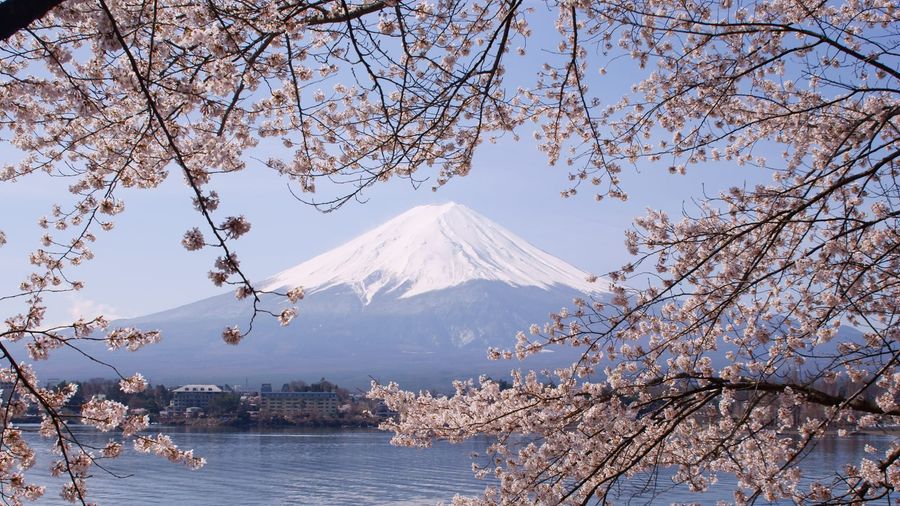
Spring and autumn are the two great seasons to visit Japan. Cherry blossom peaks in late March to early April in Kyoto and Tokyo, while the maple colour of autumn peaks from mid-November to early December — both bringing mild weather and extraordinary scenery. Summer is hot and humid, winter clear and cold, and both colour fronts sweep the country from one end to the other.
Japan is a country that lives by its seasons, and timing a trip well is half the art of visiting. The classic images — pink blossom drifting over a temple, a hillside of flaming maples, snow on a thatched roof — each belong to a specific and often brief window, and knowing when and where to catch them transforms a good trip into a great one. Nowhere makes this clearer than Kyoto, whose gardens and temples are engineered to frame the turning year. This guide walks through the seasons of Japan, what each offers, and how the famous cherry blossom and autumn colour fronts move across the islands so you can plan your dates around them.
When is cherry blossom season, and where should you see it?
Cherry blossom, or sakura, peaks in late March to early April in Tokyo and Kyoto, but the bloom front sweeps north from the subtropical south to Hokkaido over roughly three months. Full bloom lasts only about a week, so build in flexibility. Kyoto's temples, the Philosopher's Path, and riverbanks are among the loveliest places to see it.
The cherry blossom is Japan's most celebrated natural event, and for good reason: for a few days each spring the country turns pale pink, and the fleeting beauty of the sakura — cherished precisely because it does not last — shapes a national mood of picnics and hanami blossom-viewing parties. The catch is timing. The bloom does not happen everywhere at once; it advances as a "front" from the warm south, where Okinawa can flower as early as January, steadily northward, reaching Tokyo and Kyoto around late March to early April and not arriving in northern Hokkaido until late April or May. Peak bloom in any one place lasts only about a week and shifts year to year with the weather, so a blossom-chasing trip needs loose plans and a willingness to travel to the front. Kyoto is one of the finest stages for it, its temple gardens, the canal-side Philosopher's Path, and the banks of the Kamo River all framed in blossom — and if you miss the window in one city, moving a little north or to higher ground can buy you a second chance.
Why do many seasoned travellers prefer autumn?
Autumn rivals spring for beauty and often beats it for comfort. From mid-November to early December, the maples of Kyoto and the lowlands turn deep red and gold — the koyo — under skies that tend to be clearer and more settled than in spring, and with slightly lighter crowds. Temple gardens and mountain valleys are the places to chase the colour.
If spring is Japan's most famous season, autumn is the connoisseur's choice, and many who return again and again come for the foliage rather than the flowers. From mid-November into early December, the maples and ginkgos of Kyoto and the lowland cities blaze into red, orange, and gold — the koyo — and the same temples that frame the spring blossom are re-dressed in fire. The appeal over spring is twofold: the autumn weather is often clearer and more stable, with crisp, bright days ideal for walking, and the crowds, while real, tend to be a touch thinner than at the sakura peak. Arashiyama, with its bamboo grove, riverside, and hillside temples, and the mountain valleys around the city are especially glorious under the changing leaves. Like the blossom, the colour arrives as a front — earlier in the north and the highlands, later in the lowland cities — so the same rule applies: match your dates to the region you most want to see.
What is summer like, and when should you avoid it?
Summer, from June to August, is hot and oppressively humid in most of Japan, opening with the June rainy season and carrying typhoon risk later on. City sightseeing is uncomfortable, but it is prime time for festivals, fireworks, and mountain escapes. Head to the Japan Alps or cool Hokkaido if you must travel then.
Summer is the season to approach with care. From June the rainy season, tsuyu, settles over most of the country, followed by weeks of genuine heat and sapping humidity through July and August, and the later summer brings the risk of typhoons rolling in from the Pacific. For temple-hopping in the lowland cities it is the least pleasant time to come — the heat drains the energy from long sightseeing days. That said, summer is not without its rewards: it is the high season of matsuri festivals and fireworks displays, the mountains of the Japan Alps offer cool hiking and relief, and the northern island of Hokkaido stays comfortable and green while the rest of the country swelters. If your travel is fixed to these months, plan around the heat by climbing to higher, cooler ground and keeping city days short and early.
What does winter offer beyond the cold?
Winter, from December to February, brings cold, dry, and often brilliantly clear weather to much of Japan, with heavy snow on the Japan Sea side and in the north. It is low season in the cities — quieter temples and lower prices — and high season for skiing, snow festivals, and soaking in outdoor hot springs. The famous sights are at their calmest.
Winter is Japan's underrated season. Away from the snow country, much of Honshu enjoys cold but dry and strikingly clear days — some of the best light of the year — and the cities empty of tourists, so Kyoto's temples and Tokyo's shrines can be experienced with a stillness impossible in spring or autumn, at lower prices too. Meanwhile the Japan Sea coast and the mountains receive some of the heaviest snowfall on Earth, feeding a world-class ski scene in Hokkaido and Nagano, spectacular snow festivals, and the singular pleasure of soaking in a steaming outdoor onsen while snow falls around you. There is no cherry blossom or autumn blaze, but for travellers who prize clear skies, quiet, and value — or who come to ski — winter is a genuinely rewarding time to visit, provided you pack for the cold.
How should you plan a trip around the seasonal colour?
Decide first whether you are chasing blossom or foliage, then pick your city and dates to match its peak — late March to early April for sakura in Kyoto and Tokyo, mid-to-late November for autumn colour there. Build in a few days of flexibility, book accommodation early for these peak windows, and be ready to follow the colour front north or uphill if the timing shifts.
Planning a colour-focused trip comes down to a few decisions. Start by choosing your season — the fleeting pink of spring or the deep reds of autumn — since each has its own peak and its own character. Then anchor on a region and match your dates to its usual peak: late March to early April for cherry blossom in Kyoto and Tokyo, or mid-to-late November for the maples in the same cities, adjusting earlier for the north and the mountains. Because both peaks are short and shift with the weather, give yourself a buffer of a few days rather than betting everything on one date, and be ready to chase the front — a little further north or to higher altitude — if the season runs early or late. Both peaks are also the most popular times to visit, so book accommodation and any key experiences well in advance. Whichever you choose, basing yourself in a garden city like Kyoto puts you where Japan stages its seasons most beautifully.
Related Guides
- First-Timer's Guide to Kyoto — how to plan a first visit to the city where Japan's seasons are best framed
- Tokyo vs Osaka: Which City Should You Visit? — choosing a base for a Japan trip in any season
- Best Time to Visit Iceland — another destination where the season you choose defines the whole experience
Japan rewards travellers who plan around its calendar. Come in late March or April for the fleeting cherry blossom, in November for the fire of the maples, or in the quiet clarity of winter — but whichever you choose, understand that the country's beauty moves with the seasons and across the map. Match your dates to the colour you want and the region that carries it, and Japan gives you one of the most beautiful timed experiences in travel.
Frequently Asked Questions
When is cherry blossom season in Japan?
The cherry blossom, or sakura, typically peaks in late March to early April across the main cities of Honshu, including Tokyo and Kyoto, but the timing shifts with latitude and each year's weather. The blossom front moves from the warm south — Okinawa can bloom in January or February — northward, reaching Tokyo and Kyoto around late March and not arriving in Hokkaido until late April or early May. Full bloom lasts only about a week, so plans need flexibility.
Is spring or autumn the best time to visit Japan?
Both are superb and share the same appeal — mild weather and spectacular seasonal colour — so it comes down to preference and crowds. Spring brings the famous, fleeting cherry blossom and a festive mood, but also the heaviest domestic and international tourism. Autumn delivers equally stunning red and gold maple foliage, often with clearer, more stable weather and slightly thinner crowds, making it many seasoned travellers' quiet favourite.
What is the weather like in Japan in summer?
Summer, from June to August, is hot and very humid across most of Japan, with a rainy season (tsuyu) in June and the risk of typhoons later in the season. It is the least comfortable time for city sightseeing, though the mountains of the Japan Alps and the northern island of Hokkaido stay cooler and it is peak season for festivals, hiking, and escaping to higher ground.
When does autumn foliage peak in Japan?
The autumn colour, or koyo, generally peaks from mid-November to early December in Kyoto and the lowland cities, arriving earlier in the northern and mountainous regions — Hokkaido and the highlands can turn from late September into October. Like the cherry blossom, the foliage front moves across the country, so timing a trip means matching your dates to the region you most want to see at its peak.