
Tasting Guide
Saint-Émilion's reds are built on merlot, usually blended with cabernet franc (known locally as bouchet) and a little cabernet sauvignon. The result is softer and rounder than the cabernet-led wines of the Médoc across the river — plush plum-and-black-cherry fruit with a mineral edge drawn from the limestone. Most reward a few years in the bottle before they are at their best.
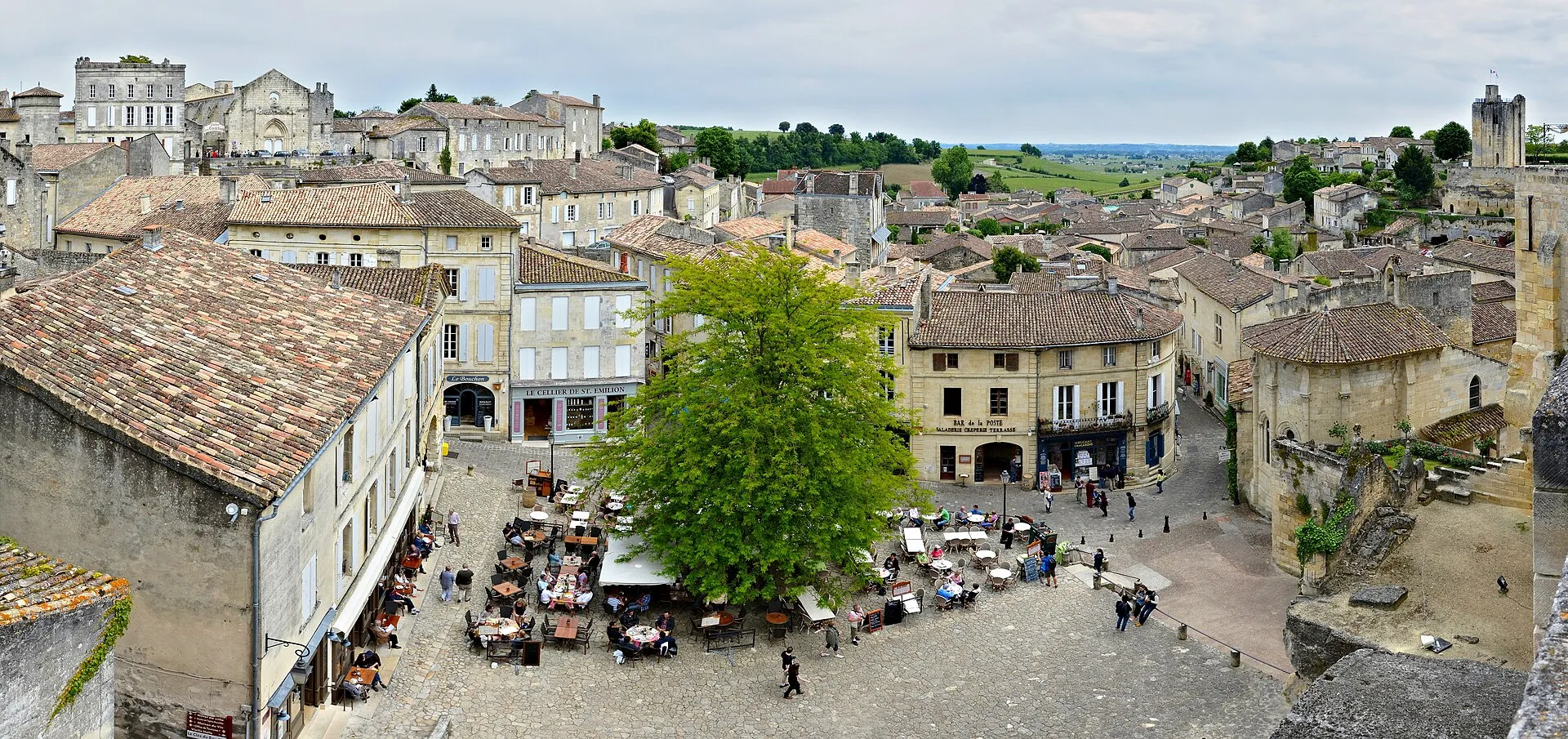
Tastings happen in two settings. In the village, cellars and wine shops around the main square pour by the glass and run informal classes; out among the vines, individual châteaux offer cellar tours that end in a seated tasting. A guide builds a logical progression, from approachable village blends up to a Premier Grand Cru Classé, so your palate is not overwhelmed before the finest wines arrive.
Local Producers
What sets Saint-Émilion apart is its living classification. Created in 1955 and reviewed roughly every ten years, it is the only major Bordeaux ranking that can promote or demote estates with each revision — a sharp contrast to the fixed 1855 Médoc list. Its summit, the Premier Grand Cru Classé A tier, is reserved for a tiny handful of estates.
The great names cluster where the soils change. On the limestone plateau and its côtes, Château Ausone and Château Pavie draw power from shallow, stony ground; on the gravel and clay near the Pomerol border, Château Cheval Blanc and Château Figeac built their fame on an unusually high share of cabernet franc. Around them, hundreds of family vignerons farm smaller plots and welcome visitors for direct tastings and cellar-door sales.
Many of these growers belong to the Jurade, the wine brotherhood whose roots reach back to the charter of 1199 and which still parades in scarlet robes to proclaim the new vintage each spring. A Bordeaux-based guide can connect you with producers suited to your taste and secure appointments that would be hard to arrange alone.
Saint-Émilion timeline
- 8th century
Émilion's hermitage
A Breton monk settled in a limestone cave, and the monks who gathered around him carved the first rock sanctuaries that gave the village its name.
-
The Jurade chartered
King John of England granted Saint-Émilion self-government and valuable wine-trade privileges, creating the Jurade brotherhood that still proclaims each new vintage.
-
Macarons born
Ursuline nuns began baking the soft almond macarons that remain the village's signature sweet.
-
Wine classification created
Saint-Émilion established its own cru classification, uniquely revised about every decade so estates can rise or fall between editions.
-
UNESCO World Heritage
The Jurisdiction of Saint-Émilion became the first vineyard landscape inscribed on the World Heritage List.
When to Visit
Saint-Émilion rewards an early start. The underground tours run in small timed groups, and the first slots see the emptiest lanes and the softest light on the limestone. Allow half a day for the village itself, or a full day if you add château visits out among the vines.
- September–October (harvest) — the vendange fills the rows with pickers and every cellar with winemaking; warm days and golden light make it the most atmospheric window.
- May–June (flowering) — long sunny days, a green vine canopy and comfortable walking weather, with lighter crowds than high summer.
- April & November (shoulder) — quieter lanes and lower château-visit prices, though some smaller producers keep shorter hours.
- July–August (peak) — busiest and hottest; avoid the midday heat on the exposed cobbles and book tours well ahead.
- January–February (winter) — many small estates close to visitors and some monuments trim their hours, but the underground sites stay a steady 14°C year-round.
Admission and Costs
The village itself is free to wander — you pay only for guided access to the underground monuments, for château tastings, and for organised tours from the city. Prices below are per person unless noted.
- Underground monuments tour — €12–15 ($13–16), the only way to see the monolithic church and catacombs.
- Château visits and tastings — €15–50 ($16–54), rising with the estate's prestige.
- Full-day guided tour from Bordeaux — €120–200 ($130–215), transport and tastings included.
- Private guide — €250–400 ($270–430) for a half-day.
- TER train from Bordeaux — roughly €9 ($10) each way, about a 35-minute ride.
The Case for a Guide
A guide unlocks the parts of Saint-Émilion you cannot reach on your own:
- Underground access — the monolithic church, catacombs and Trinity Chapel open only on guided tours led from the Tourist Office.
- Château introductions — guides arrange visits to prestigious estates that rarely admit walk-in visitors.
- Terroir and classification — an expert explains why the limestone plateau and clay slopes yield such different wines, and how the ever-changing classification works.
- Transport solved — a driver-guide removes the designated-driver problem and the car-park scramble in a village of narrow medieval streets.
- Stories — the legends of Émilion, the medieval pilgrims bound for Santiago de Compostela, and the Jurade wine brotherhood come alive on the spot.
Tips for Visitors
A little preparation makes the visit smoother:
- Book the underground tour ahead — capacity is limited and tickets sell through the Tourist Office; the monolithic church and catacombs can only be seen with a guide.
- Wear flat, grippy shoes — the cobbles are steep and polished, and the cellars add worn stone stairs.
- Bring a light layer — the caves hold a constant 14°C even in high summer.
- Pace your tastings — with several cellars within a few streets, spit and drink water between pours.
- Plan your transport — the village is awkward to reach without a car; the TER train reaches the station on the plain, a 15-minute uphill walk from the centre, while guided tours include door-to-door transport.
- Save room for macarons — the soft almond macarons de Saint-Émilion have been baked here since 1620.
Frequently Asked Questions
When is the ideal season to visit Saint-Emilion's vineyards?
September and October during the grape harvest bring the vineyards to life with picking crews working the rows and chateaux buzzing with winemaking activity. May and June see the vines flowering under long sunny days perfect for walking the medieval lanes and tasting in cool limestone cellars. The shoulder months of April and November offer fewer tourists and lower chateau visit prices, while January and February shut down most smaller producers to visitors.
What can you see on the underground tour of Saint-Émilion?
The guided underground tour is the village's headline sight. It takes in the monolithic church, carved in the 11th and 12th centuries from a single limestone cliff and the largest of its kind in Europe, along with the catacombs, the hermitage grotto where Émilion is said to have lived, and the Trinity Chapel. Access is only possible with a guide, and tickets are sold through the Tourist Office, so book ahead in high season.
What does it cost to visit Saint-Émilion?
Wandering the village is free. The underground monuments tour costs about €12-15 ($13-16) per person, while château visits and tastings run €15-50 ($16-54) depending on the estate's prestige. A full-day guided tour from Bordeaux, with transport and tastings, is €120-200 ($130-215) per person, and a private half-day guide costs €250-400 ($270-430). The TER regional train from Bordeaux is roughly €9 ($10) each way.
Why is a guide essential for visiting Saint-Émilion?
A guide is essential because the monolithic church, catacombs and Trinity Chapel can only be visited on a guided tour. Guides also arrange tastings at prestigious châteaux that rarely accept walk-ins, explain how the limestone terroir and the unusual ten-yearly classification shape the wines, and solve the transport problem in a village of narrow streets and little parking. Along the way they bring alive the legends of Émilion and the Jurade wine brotherhood.
How do you get to Saint-Émilion from Bordeaux?
The village sits about 40 km east of Bordeaux. The quickest public option is the TER regional train from Bordeaux Saint-Jean, roughly a 35-minute ride, though the station lies on the plain about 1.5 km below the village - a scenic but uphill walk. Without a car, most visitors join a guided day tour that includes door-to-door transport, which also removes the designated-driver problem when tasting.