
Activities
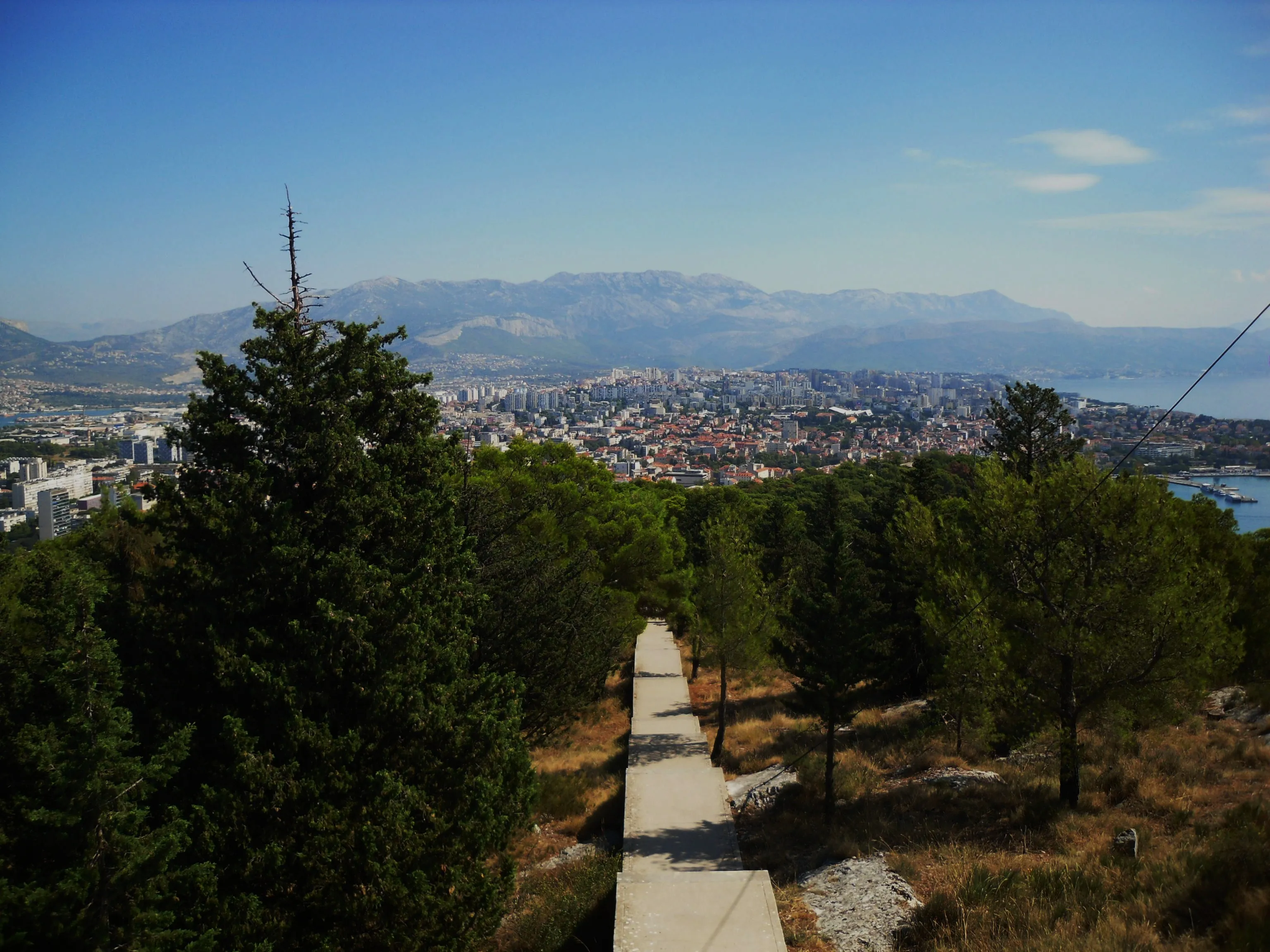
Marjan is built for active days outdoors. Hiking is the headline: a network of marked trails climbs from the Vidilica terrace to the Telegrin summit and threads the wooded interior, ranging from 20-minute strolls to a couple of hours. Trail running and cycling are hugely popular along the paved perimeter road, which loops the peninsula with sea views almost the whole way and is closed to general traffic. The south-facing limestone crags are an established rock-climbing area with bolted routes of varying grades, busiest in spring and autumn. Swimming and snorkelling fill the summer days at the Kašjuni and Bene coves, while the shaded picnic clearings near Bene draw families. Quieter pursuits include birdwatching in the pine canopy and visiting the cluster of hermit chapels on the southern cliffs.
Seasonal Highlights
Each season reshapes the hill. In spring (April–May) the understorey of rosemary, sage, and wildflowers bursts into colour and scent, and the climbing crags are at their best in mild temperatures. Summer (June–August) turns Marjan into a swimming and sunbathing destination — the coves are lively, the cafés busy, and early mornings or evenings are the only comfortable times for the summit climb. Autumn (September–October) is arguably the finest season: warm sea for late swims, clear air for island views, and far thinner crowds on the trails. Winter (December–February) brings crisp, quiet walks under green pines, occasional dramatic Adriatic storms seen from the cliffs, and the year-round draw of the floodlit summit cross above the city.
When to Visit
Marjan is open 24 hours, every day, with no admission. The best hours are early morning before the heat and late afternoon into sunset, when the Vidilica terrace and the Telegrin cross glow gold and the islands sharpen on the horizon. Avoid the midday hours of July and August (11 AM–4 PM), when the exposed staircases and summit paths bake. Spring (April–May) and early autumn (September–October) bring comfortable hiking temperatures and quieter trails. Allow 45 minutes for a quick viewpoint visit, 2–3 hours to add chapels and a swim, or a half day to walk the full perimeter.
Admission and Costs
Entry to the park is free. Coffee or a cold drink at the Vidilica or Bene cafés runs about €3–5 (roughly $3–6). A pastry or sandwich is €4–7 (about $4–8). Renting a city bike to ride the perimeter costs around €12–18 per day (about $13–20). The nearby Natural History Museum charges roughly €3 (about $3). A licensed local guide for a walking-and-history tour of the hill typically costs €80–130 (about $90–145) for a small private group.
The Case for a Guide
Marjan is easy to wander but rewards someone who knows its layers — the hermit history, the reforestation story, and the quietest trails are invisible without context.
- Finding the hidden chapels: The cliffside churches of St Nicholas, St Jerome, and Our Lady of Bethlehem are tucked off the main paths; a guide knows which unmarked turn-offs reach them and can explain the hermit tradition behind each
- Reading the reforestation: What looks like wild forest is largely a deliberate 19th–20th-century planting effort; a guide can point out the original barren karst, the planted pine belts, and the memorial groves
- Timing the light: Locals know exactly when the sun aligns over Šolta from the Telegrin cross versus the Vidilica terrace — a guide routes the walk to catch the best of both
- Swim-spot logistics: Choosing between Kašjuni and Bene depends on wind, season, and crowds; a guide steers you to the right cove on the day and points out the safest entry rocks
- Connecting hill and city: A good guide ties Marjan's monasteries and cemeteries to the wider story of Split, so the park reads as part of the city's history rather than a detached nature stop
Tips for Visitors
Start from Varoš: The stone staircase up from the Varoš neighbourhood is the classic approach and delivers you straight to the Vidilica terrace for the first big view. Carry water: Drinking fountains are sparse on the upper trails, and the pine forest offers shade but little relief from summer heat. Wear grippy shoes: The summit paths and cove approaches are rocky and can be slick after rain. Combine a swim with the walk: Pack a towel and end the hike at Kašjuni or Bene rather than backtracking into town. Respect the chapels: Several cliffside churches are still used for occasional worship — keep noise down and dress modestly if a service is underway. Catch sunset: The view west from the Telegrin cross or the Vidilica is among the finest in Dalmatia.
Frequently Asked Questions
How long does it take to walk up Marjan from the old town?
From the Varoš neighbourhood just west of the centre, the stone staircase up to the Vidilica viewpoint takes roughly 10–15 minutes at a steady pace — it is a genuine climb of around 150 steps. Reaching the Telegrin summit cross at 178 metres adds another 30–40 minutes of mostly gentle forest path. Most visitors budget 2–3 hours to combine the viewpoint, a chapel or two, and a swim.
Can you swim at Marjan, and where are the best spots?
Yes — the southern and western shores of the peninsula are lined with rocky and pebble coves. Bene at the far western tip has flatter rocks, shade, ladders into the water, and a small café, making it the most family-friendly. Kašjuni on the south side is a longer pebble beach with a beach bar. Both are reachable on foot, by bike, or via the seasonal bus.
Is Marjan suitable for families with young children?
Largely yes. The wide perimeter road that rings the peninsula is paved, stroller-friendly, and closed to most traffic, so families often walk or cycle it. The steep staircases up to the summit are harder going with toddlers, but the Bene end has a children's playground, a small zoo-free recreation area, and easy water access.
Do you need to pay or book anything to visit Marjan?
No. Marjan is a public forest park that is free and open around the clock, with no gate or ticket. The only paid extras are food and drink at the cafés, bike rental in the centre, and the modest entry to the small Natural History Museum near the lower slopes. Bring water, as fountains are limited along the trails.