
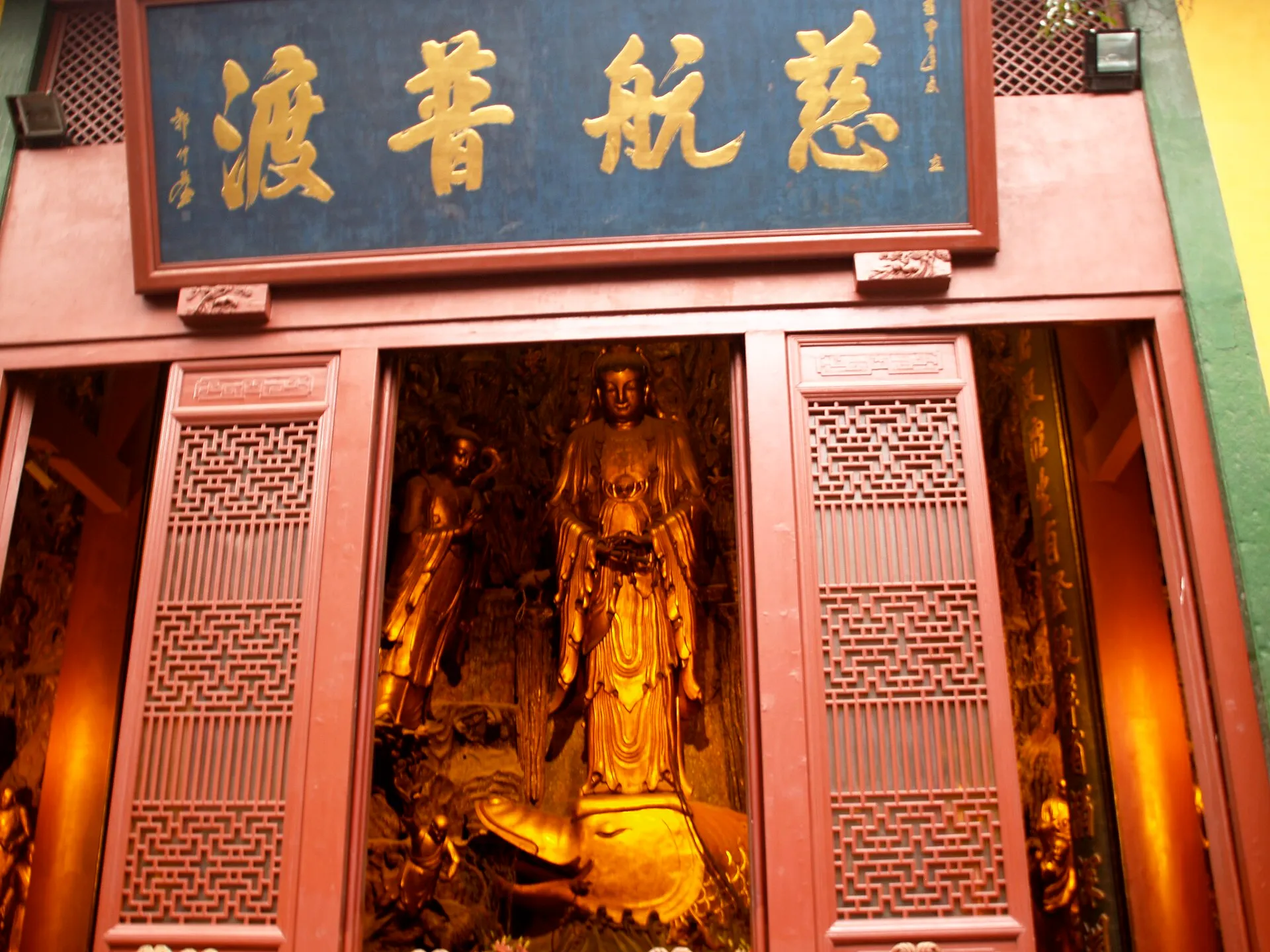
Spiritual Significance
Feilai Feng rock carvings: Over 300 Buddhist sculptures carved into the cliff face between the 10th and 14th centuries, including a famous laughing Maitreya Buddha. Camphorwood Sakyamuni: The 19.6-meter seated Buddha in the Great Hall is carved from 24 sections of camphor and took master artisans two years to complete. Forest canopy walk: Ancient camphor, ginkgo, and cedar trees form a dense canopy over the paths between temple buildings. Hall of Five Hundred Arhats: A long corridor lined with gilded bronze statues, each depicting a different Buddhist saint with unique posture and expression. Incense courtyard rituals: Worshippers light tall sticks of incense and bow in each cardinal direction before the main hall, following a practice unchanged for centuries. North Peak cable car: A short gondola ride from the temple area to a hilltop with aerial views over the monastery roofs and surrounding forest
When to Visit
Temple grounds: 7:00 AM to 6:15 PM daily (last entry 5:30 PM). Morning prayer sessions: Audible from the main hall around 4:30 AM; early risers can hear chanting from outside the gates. Best time: Weekday mornings before 9 AM, when incense smoke drifts through empty courtyards and monks go about their routines. Avoid: Chinese New Year and Buddhist festival days, when tens of thousands of worshippers pack every hall
Admission and Costs
Feilai Feng scenic area entry: ¥45 (required to reach the temple). Lingyin Temple entry: Additional ¥30, for a combined total of ¥75. Incense bundle: Free basic incense provided at the entrance; larger bundles ¥10-30. Getting there: Bus Y1, Y2, or 7 from West Lake area; taxi about ¥20 from the lakefront
Tips for Visitors
Buy both tickets together: You cannot reach the temple without passing through the Feilai Feng area, so plan for the combined ¥75 cost. Dress conservatively: Lingyin is an active monastery with resident monks; cover shoulders and avoid loud clothing as a sign of respect. Explore the grottoes first: Most visitors rush past Feilai Feng to reach the temple; the rock carvings deserve at least 30 minutes of attention. Vegetarian restaurant on-site: The monastery dining hall serves simple Buddhist cuisine at very low prices; open for lunch only. Combine with tea village: Longjing village is a 15-minute taxi ride from the temple, making for a contemplative afternoon pairing
Frequently Asked Questions
When is the best season to visit Lingyin Temple?
March through May wraps the temple in spring greenery and blooming camphor trees, while September-October offers crisp autumn air and the surrounding Feilai Feng forest turning golden — both seasons provide the most atmospheric conditions for this mountain-valley setting. Summer monsoon season (June-August) brings heavy rain that makes the stone paths slippery and obscures the cliff carvings in mist, though the lush post-rain forest has its own dramatic appeal.
What time does Lingyin Temple open to sightseers?
Temple grounds: 7:00 AM to 6:15 PM daily (last entry 5:30 PM). Morning prayer sessions: Audible from the main hall around 4:30 AM; early risers can hear chanting from outside the gates.
How much does it cost to enter Lingyin Temple?
Feilai Feng scenic area entry: ¥45 (required to reach the temple). Lingyin Temple entry: Additional ¥30, for a combined total of ¥75. Incense bundle: Free basic incense provided at the entrance; larger bundles ¥10-30.
What should visitors know before visiting Lingyin Temple?
Buy both tickets together: You cannot reach the temple without passing through the Feilai Feng area, so plan for the combined ¥75 cost.