
Walking Route
Engineering Facts
The system stitches together three distinct rope technologies, each solving a different slope:
- Congress to Hungerburg — a Standseilbahn (funicular) whose cabins pivot to stay level as the gradient steepens, running through a tunnel and across a bridge over the Inn in roughly eight minutes.
- Hungerburg* to *Seegrube — a Gondelbahn (gondola) that climbs about 1,045 meters up the wooded lower face to the tree line at 1,905 meters.
- Seegrube* to *Hafelekar — a Pendelbahn (aerial tramway) of two counter-balanced cabins that swing the final stretch to 2,256 meters.
The mountain cable cars to Seegrube and Hafelekar opened in 1928, engineered by the Tyrolean ropeway pioneer Luis Zuegg and counted among the earliest connections running from a city directly to high-Alpine terrain; the original Hungerburgbahn funicular dated back to 1906. Between 2005 and 2007 the funicular was rebuilt from the ground up and reopened on 1 December 2007 with four new stations — Congress, Löwenhaus, Alpenzoo, and Hungerburg — designed by architect Zaha Hadid. Their double-curved glass roofs, thermoformed over steel like sheets of ice, deliberately echo the glaciers overhead and turned a piece of transport infrastructure into an architectural destination in its own right. End to end the network gains roughly 1,700 meters of vertical in under 20 minutes, one of the fastest city-to-summit connections anywhere in the Alps.
Observation Points
- Hafelekar summit terrace (2,256 m) — a 360-degree platform where the Karwendel's limestone towers face south over the whole Inn Valley; a short but steep 10-minute path climbs on to the Hafelekarspitze (2,334 m) for the classic ridge shot.
- Seegrube sun terrace (1,905 m) — the mid-mountain restaurant deck looks straight down the fall line on to Innsbruck's rooftops; light is cleanest in mid-morning before valley haze builds.
- The Hadid stations — Congress and Hungerburg are sculptural landmarks in their own right; photograph the shell-like roofs from outside, then again from within as daylight pours through the curved glass.
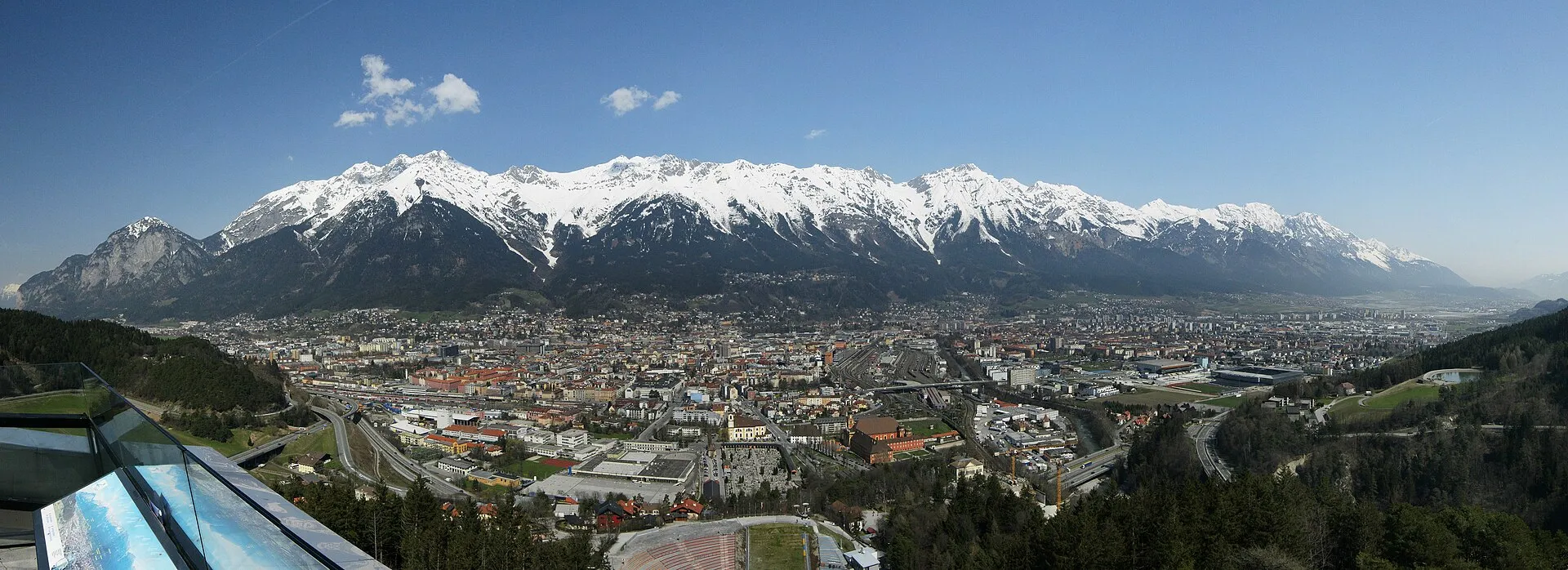
- Karwendel panorama — from the ridge the entire Karwendel nature park unfolds northward toward the German border, a sea of pale limestone summits.
- Alpine flower trail — a signed botanical path near Seegrube names the high-altitude wildflowers that peak from June to August.
- Freeride terrain — in winter the Nordkette is one of the steepest lift-served ski areas in the Alps, its runs dropping directly toward the city; the Karrinne couloir is a notorious test-piece for experts.
Nordkette Cable Car timeline
-
The first Hungerburgbahn
A funicular first carried Innsbruckers up to the Hungerburg terrace, opening the wooded lower slopes of the Nordkette to day-trippers.
-
Cable cars reach the ridge
Luis Zuegg's aerial ropeways extended the line to Seegrube and Hafelekar — among the world's earliest connections from a city straight to high-Alpine terrain.
-
Zaha Hadid's new funicular
The rebuilt Hungerburgbahn reopened on 1 December with four sculptural glass-and-steel stations, relaunching the Nordkette for a new generation of visitors.
When to Visit
The Hungerburgbahn funicular makes its first ascent around 8:30 AM, with the mountain cable cars to Seegrube and Hafelekar following from about 9:00 AM; the last descent leaves the summit around 5:30 PM, running later on long summer evenings and pulled earlier in winter. Because opening hours shift with the season — and the upper sections close for maintenance for a few weeks each spring and autumn — always confirm the day's schedule on the official Nordkette timetable before you travel. Departures run every 15 minutes on the funicular and every 15-30 minutes on the cable-car stages, and the full Congress-to-Hafelekar climb takes about 20 minutes. Ride early: summer cloud tends to build over the ridge by early afternoon, so the first cabins reward you with the sharpest views and the quietest terraces — and always leave a comfortable margin for the final descent, since missing the last car means a long walk down.
Admission and Costs
A full return to Hafelekar covering all three sections is €39 (about $42) for adults and €19.50 ($21) for children; a return only as far as the Seegrube mid-station is €29 ($31), and the Hungerburgbahn funicular alone costs €11.40 ($12) return. The best value by far is the Innsbruck Card, which folds a complete return to Hafelekar into a single pass — the cable car alone almost matches the card price, so the Golden Roof museum, Ambras Castle, and the sightseeing buses effectively come free on top. Small children travel free, and a certified Alpine guide for a full day of ridgeline hiking from the top runs roughly €250-400 ($270-430) for a private group. Fares and concessions change seasonally, so treat these as a planning guide and confirm current prices at the ticket window or on the operator's site.
The Case for a Guide
You do not need a guide to ride the cable car — but a knowledgeable one turns a scenic lift into a proper mountain outing. Innsbruck's state-certified city and mountain guides read the landscape for you and keep you safe above the tree line, where weather and exposure change quickly.
- Peak identification — from the Hafelekar ridge a guide names the dozens of summits, glaciers, and valleys on the horizon, from the Stubai Alps to the distant Dolomites.
- Architecture in context — the story of Luis Zuegg's 1928 ropeway and Zaha Hadid's 2007 stations lands far better with someone who can show how each detail works.
- Safe hiking above 2,000 m — certified Alpine guides lead everything from the gentle Seegrube nature trail to exposed Karwendel ridge routes, carrying the judgement that summit weather demands.
- Winter freeride safety — on the Nordkette's extreme terrain a local guide brings avalanche awareness and knows which couloirs are in condition.
- A seamless city-to-summit day — guides thread the cable car together with the Golden Roof, Ambras Castle, and the rest of the old town so nothing feels rushed or missed.
Tips for Visitors
- Dress for the summit, not the city — Hafelekar runs 10-15°C colder than Innsbruck and the ridge is windy; pack a warm layer and sun protection even in July.
- Mind the exposure — the Hafelekar platform sits on an open ridge crest with steep drops on both sides; the paved terrace suits most visitors, but the onward path to the Hafelekarspitze is narrow and best skipped if heights unsettle you.
- Solid shoes — trainers are fine for the terraces, but any hiking beyond them wants proper footwear, as snow patches linger into early summer.
- Accessibility — the funicular and both mountain cabins are step-free and take wheelchairs and pushchairs; the Seegrube terrace is reachable without walking, though the Hafelekar summit paths are not.
- Dogs welcome — leashed dogs ride all sections, making the Nordkette a favourite with local hikers.
- Time the Innsbruck Card — activate it on your Nordkette day so the pricey summit return anchors its value, then spend the rest of the day on museums and buses.
- Start from the old town — the Congress station is a flat 5-minute walk from the Golden Roof, so you can be on the ridge within half an hour of finishing breakfast.
Frequently Asked Questions
When is the ideal time of year to ride the Nordkette Cable Car?
June through September provides the most spectacular Alpine panoramas with wildflower-covered slopes and hiking trails at the summit, though summer clouds often build by early afternoon. Winter months (December-February) attract skiers to the steep freeride terrain, and the snow-covered peaks offer a completely different but equally dramatic experience — just dress for summit temperatures that can drop well below freezing.
What should visitors know before riding the Nordkette cable car?
Dress warmly: Summit temperature is typically 10-15°C cooler than Innsbruck — bring layers even in summer. Go early for views: Mountain clouds build after midday in summer; the first cable car offers the clearest panoramas.
What does a visit to Nordkette Cable Car cost?
Return ticket to Hafelekar (all stages): €39 adults, €19.50 children. Return to Seegrube only: €29 adults. Hungerburg funicular only (return): €11.40 adults. Innsbruck Card: Covers a complete return trip to Hafelekar — saves €39.
What do guides explain about Nordkette Cable Car peaks and stations?
Mountain identification: Guides point out and name the dozens of visible Alpine peaks, valleys, and glaciers. Zaha Hadid architecture: The four stations are significant works of architecture — guides explain the design philosophy.