
Bonaventure Cemetery timeline
-
A colonial plantation named Bonaventure
Colonel John Mullryne receives a royal land grant on the Wilmington River bluff and lays out the avenues of live oaks that still structure the grounds; the estate takes the Italian name for "good fortune."
-
Evergreen Cemetery is founded
Businessman Peter Wiltberger buys the former plantation and establishes a private garden cemetery, an early Southern expression of the rural-cemetery movement that let the existing oaks and wild undergrowth set the tone.
-
John Muir camps among the graves
The young naturalist sleeps several nights in the cemetery during the trek recorded in "A Thousand-Mile Walk to the Gulf," reading Bonaventure as a place of life rather than death.
-
Little Gracie Watson is memorialized
After the six-year-old dies of pneumonia, sculptor John Walz carves a life-size marble portrait from a photograph; it becomes the cemetery's most-visited grave, still ringed with toys left by visitors.
-
Savannah buys and renames the grounds
The City of Savannah purchases the burial ground and renames it Bonaventure, turning a private garden cemetery into the public city cemetery it remains today.
-
Midnight in the Garden of Good and Evil
John Berendt's bestseller puts Jack Leigh's photograph of the Bird Girl sculpture on its cover, transforming the cemetery into a literary pilgrimage site almost overnight.
-
The Bird Girl moves to the Telfair
To protect it from the crowds the book drew, the Bird Girl statue is relocated to the Telfair Academy downtown; the plot where it stood is now empty, and the sculpture is seen in the museum instead.
Historical Significance
Bonaventure's history reaches back to colonial Georgia and forward through the American cultural imagination. The plantation era ended in tragedy and legend: the Tattnalls who inherited the estate were Loyalists who fled during the Revolution, and one durable piece of local folklore holds that when the plantation house caught fire during a dinner party, the guests carried the table onto the lawn and finished the meal beneath the oaks — a story guides tell with appropriate skepticism but obvious relish.
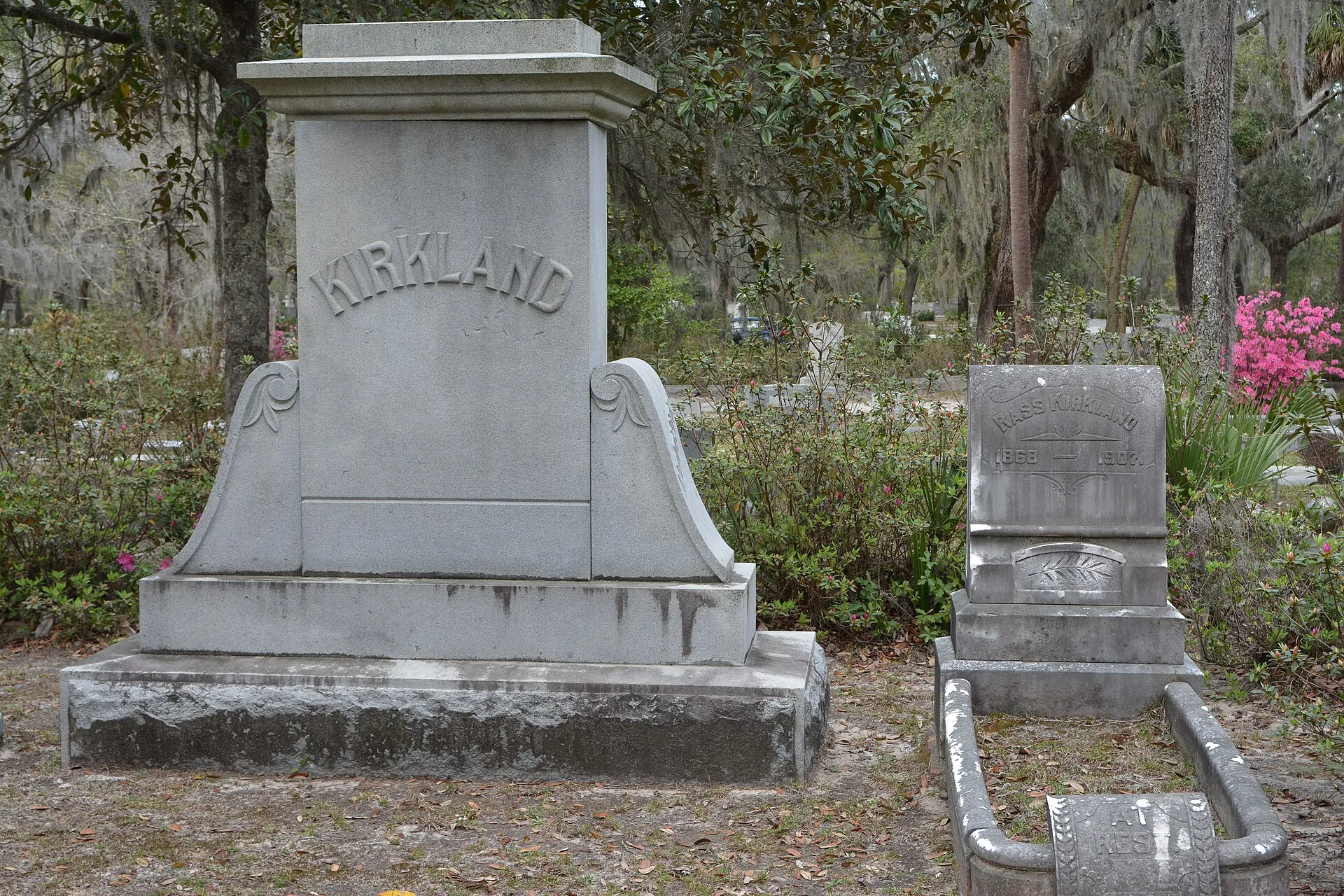
The cemetery as visitors know it is a product of the rural cemetery movement of the mid-19th century, when American cities began establishing garden-like burial grounds at their edges — both to improve public health and to create parklike spaces where the living could stroll among the dead. Boston's Mount Auburn (1831) pioneered the idea; Bonaventure, formalized as Evergreen Cemetery in 1846, gave the movement one of its most romantic expressions, letting the existing plantation oaks and wild undergrowth set the tone rather than imposing manicured order. The same era's yellow-fever epidemics — which could fill entire family plots within a matter of weeks — are written into the clustered dates on many of the older monuments.
Long before Berendt's novel, Bonaventure drew writers and naturalists. In 1867 the young John Muir camped among its graves for several nights during the trek he recorded in A Thousand-Mile Walk to the Gulf, and he wrote of the place with startling tenderness:
"Bonaventure is called a graveyard, a town of the dead, but the few graves are powerless in such a depth > of life... the calm, undisturbable grandeur of the oaks, mark this place of graves as one of the Lord's > most favored abodes of life and light."
Muir's reading of the cemetery as a place of life rather than death anticipates the reaction most visitors still have today, and it is one of the threads a good guide uses to connect the site's plantation past, its garden-cemetery design, and its literary afterlife.
Architecture
Bonaventure is best understood as an outdoor gallery of Victorian funerary art set within a designed landscape. The vocabulary of 19th-century mourning is all here — draped urns, broken columns, sleeping infants, weeping angels, and clasped hands — each symbol carrying a specific meaning that guides decode. Framing it all are the oak allées, the cemetery's main avenues lined with live oaks estimated at 200-250 years old, their massive limbs meeting overhead to form moss-draped tunnels unlike anything in the Historic District.
The monuments most visitors seek out include:
Little Gracie Watson — A life-size marble portrait of a six-year-old who died of pneumonia in 1889, carved by sculptor John Walz. It is Bonaventure's most-visited grave, still surrounded by toys and trinkets left by visitors; documented on the Bonaventure Historical Society site.
Johnny Mercer's plot — The songwriter behind "Moon River," "That Old Black Magic," and dozens of standards rests with his family near the eastern bluff, close to the river country that shaped his most famous lyric.
Conrad Aiken's bench — The Pulitzer Prize-winning poet's granite bench is inscribed "Cosmos Mariner, Destination Unknown"; visitors leave coins and, by long tradition, a splash of a cocktail in his memory.
Corinne Elliott Lawton — A serene seated marble figure that has become one of the cemetery's most photographed monuments, wrapped in its own layer of local legend.
The landscape plan is as much a part of the architecture as the stone. Curving avenues rather than a rigid grid, deliberately untamed vegetation, and the Wilmington River overlook at the eastern edge — where the bluff opens onto tidal marsh and river — all express the rural-cemetery ideal of a burial ground designed for the living to contemplate.
Best photo opportunities: shoot the oak allées in early-morning side light when the moss glows; frame Little Gracie against the surrounding oaks; and walk to the river bluff at the eastern edge for the widest Lowcountry vista in the cemetery.
When to Visit
Gates open daily from 8:00 AM to 5:00 PM, and visitors must exit by closing time — there is no evening or after-dark access, so the ghost-tour atmosphere so many associate with the cemetery is a daytime experience here. A few habits make the visit far better:
Come early for the light. Between 8:00 and 10:00 AM the low sun filters through the oak canopy and catches the Spanish moss in golden tones, the most atmospheric window for photography and the quietest hour on the paths.
Time it with a volunteer tour. The Bonaventure Historical Society runs free, donation-based walking tours on select Saturday mornings led by members who know the plots and their stories; check its schedule before you go, as dates are seasonal.
Mind the season. Spring (March–April) brings azaleas and dogwood blooming among the graves; autumn (October–November) offers the softest afternoon light and the most comfortable walking temperatures. Summer afternoons are hot, humid, and thick with marsh mosquitoes.
Allow enough time. A focused visit to the famous monuments takes about an hour; a full, unhurried wander of the avenues and the river bluff is closer to two.
Admission and Costs
Bonaventure is a public city cemetery, so admission is completely free at all times — you pay only for interpretation and transport, and a good guide is what turns a beautiful but silent landscape into a set of human stories.
Self-guided visit — Free. Bring a map from the entrance kiosk and explore at your own pace.
Bonaventure Historical Society tour — A suggested donation of $10-15 per person for the volunteer-led Saturday-morning walks; the donations support the society's preservation and restoration work.
Private guided tour — $150-275 for up to six people, typically 1.5-2 hours covering the cemetery's history, notable graves, and landscape design.
"Midnight" combination tour — $200-350 for private groups, tracing the real-life locations from Berendt's book, usually pairing Bonaventure with sites in the Historic District.
Getting there — Budget $12-20 each way by rideshare from downtown if you are not driving or booking a tour that includes transport.
Tipping private guides 15-20% is customary; the free Saturday society walks run on donations rather than fees.
The Case for a Guide
A self-guided visit to Bonaventure is undeniably moving — the atmosphere alone, with its avenues of oaks and river views, transcends most cemetery experiences. But without a guide the graves remain unmarked stones and the statuary is beautiful yet mute. Guides bring the cemetery to life — an irony not lost on them — by connecting each monument to a human story.
The famous graves gain their stories. A guide explains why Johnny Mercer's bench faces the river country that colors "Moon River," recounts Conrad Aiken's tragic childhood in a way that illuminates his verse, and tells the tale behind Little Gracie Watson's marble portrait.
The landscape reveals its logic. Guides who understand the 19th-century rural cemetery movement explain why Bonaventure's avenues curve rather than run straight, why the vegetation was left romantically untamed, and why the bluff was chosen for beauty as much as practicality.
The hard history is not skipped. Serious guides address the site's plantation origins and the enslaved people who worked the land, rather than treating Bonaventure only as a picturesque backdrop.
The ecology comes into focus. Guides point out the great blue herons, ospreys, and painted buntings that inhabit the grounds, and explain the tidal-marsh ecosystem visible from the river bluff.
You find what you came for. Across 100 acres of mostly unsignposted plots, a guide threads an efficient route to the monuments that reward a first visit, sparing you the scattershot wandering that frustrates most self-guided visitors.
Tips for Visitors
Plan your transport. Bonaventure is 3 miles east of the Historic District, too far for a comfortable walk. Drive, take a rideshare, or join a tour that includes transport; there is free parking near the gate and along the interior lanes.
Wear comfortable shoes. The paths are a mix of gravel, packed sand-and-shell, and grass; some stretches are soft and uneven, especially after rain.
Bring insect repellent. The riverside location means mosquitoes are present, particularly in warm months and near the marsh-facing bluff.
Respect the space. Bonaventure is an active cemetery where families visit loved ones. Keep voices low, stay on the paths, do not touch or climb on monuments, and never remove items left at gravesites.
Bring a map. The cemetery is large and not all graves are easy to find; the visitor kiosk near the entrance has maps marking notable sites, and most guides provide their own.
See the Bird Girl downtown. The famous sculpture from the Midnight book cover was moved to the Telfair Academy in 1997, so plan a separate museum stop if you want to see it in person.
Combine your visit. Pair Bonaventure with the Historic Squares, the Cathedral of St. John the Baptist, and a waterfront stroll on River Street for a full day of Savannah's history.
Frequently Asked Questions
When is the best season to visit Bonaventure Cemetery?
March through April and October through November offer the most atmospheric visits, with comfortable temperatures in the 70s, dramatic Spanish moss draping the live oaks, and soft light filtering through the canopy. October adds a fittingly eerie quality as Halloween approaches and the cemetery's famous Midnight in the Garden of Good and Evil associations feel most alive. August heat and humidity in the 90s, combined with relentless mosquitoes near the Wilmington River, make summer visits challenging.
When can visitors tour Bonaventure Cemetery?
Gates open daily from 8:00 AM to 5:00 PM, and visitors must exit by closing time. The cemetery keeps the same hours year-round, so plan your visit for the morning if you want the best light and the quietest paths.
How much is the entrance fee for Bonaventure Cemetery?
Cemetery admission is free — Bonaventure is a public city cemetery with no entrance fee. The Bonaventure Historical Society asks a suggested donation of $10-15 per person for its volunteer-led tours on select Saturday mornings, and private guided tours run roughly $150-350 depending on group size and whether the route traces Midnight in the Garden of Good and Evil locations.
How do you get to Bonaventure Cemetery from downtown Savannah?
Bonaventure sits about 3 miles east of the Historic District along Bonaventure Road, too far for a comfortable walk. Most visitors drive (there is free parking near the entrance and along the interior lanes), take a rideshare for roughly $12-20 each way, or join a tour that includes round-trip transport. There is no direct city bus to the gates, so budget for a car or a booked tour.
Which graves and monuments should visitors seek out at Bonaventure?
The most-visited sites are the Little Gracie Watson statue (a life-size marble portrait of a six-year-old who died in 1889), Johnny Mercer's family plot near the Wilmington River bluff, Conrad Aiken's bench inscribed 'Cosmos Mariner, Destination Unknown,' and the Corinne Elliott Lawton monument. Pick up a map at the entrance kiosk or join a guide, because the plots are spread across 100 acres and many are not signposted.
Is Bonaventure Cemetery accessible for wheelchairs and strollers?
Partly. The main avenues are firm sand-and-shell or paved lanes that a car or a sturdy wheelchair can follow, and most famous monuments sit close to a drivable lane, so you can see the highlights with limited walking. The narrower paths between older plots are grass, gravel, and tree roots, and they turn soft after rain, so plan to stay on the main routes if mobility is a concern.
Where is the Bird Girl statue from the Midnight in the Garden of Good and Evil cover?
The Bird Girl sculpture is no longer in the cemetery. It was moved to the Telfair Academy museum in downtown Savannah in 1997 to protect it from the crowds the book generated, so the spot where it once stood is now empty. Guides point out the location, but to see the statue itself you visit the museum, not Bonaventure.