
Fortification History
Fort McHenry was built as a coastal defense work, and its whole story is one of siege and standoff. Completed in 1803 and named for James McHenry, Secretary of War under George Washington, the pentagonal star fort was raised on Locust Point to close the water approach to Baltimore. Its defining test came on the night of September 13-14, 1814, when a British fleet unleashed a 25-hour bombardment, hurling an estimated 1,500 cannonballs, mortar bombs, and screaming Congreve rockets at the small garrison of roughly 1,000 men under Major George Armistead. The defenders never broke: the British could not silence the fort or slip warships past its guns, and the failed assault forced the Royal Navy to abandon its attack on the city. That successful defense is the reason Francis Scott Key, watching from a truce ship eight miles off, saw the flag still flying and wrote the verses that became the national anthem. The star shape was pure military logic, its five pointed bastions giving overlapping fields of fire that erased the blind spots attackers relied on. The defenses evolved long after 1814: a ring of dry moat and outer batteries was strengthened through the 19th century, the fort held Confederate sympathizers as a military prison during the American Civil War, and it served as a hospital and Army post into World War I before becoming a National Monument.
Notable Rooms
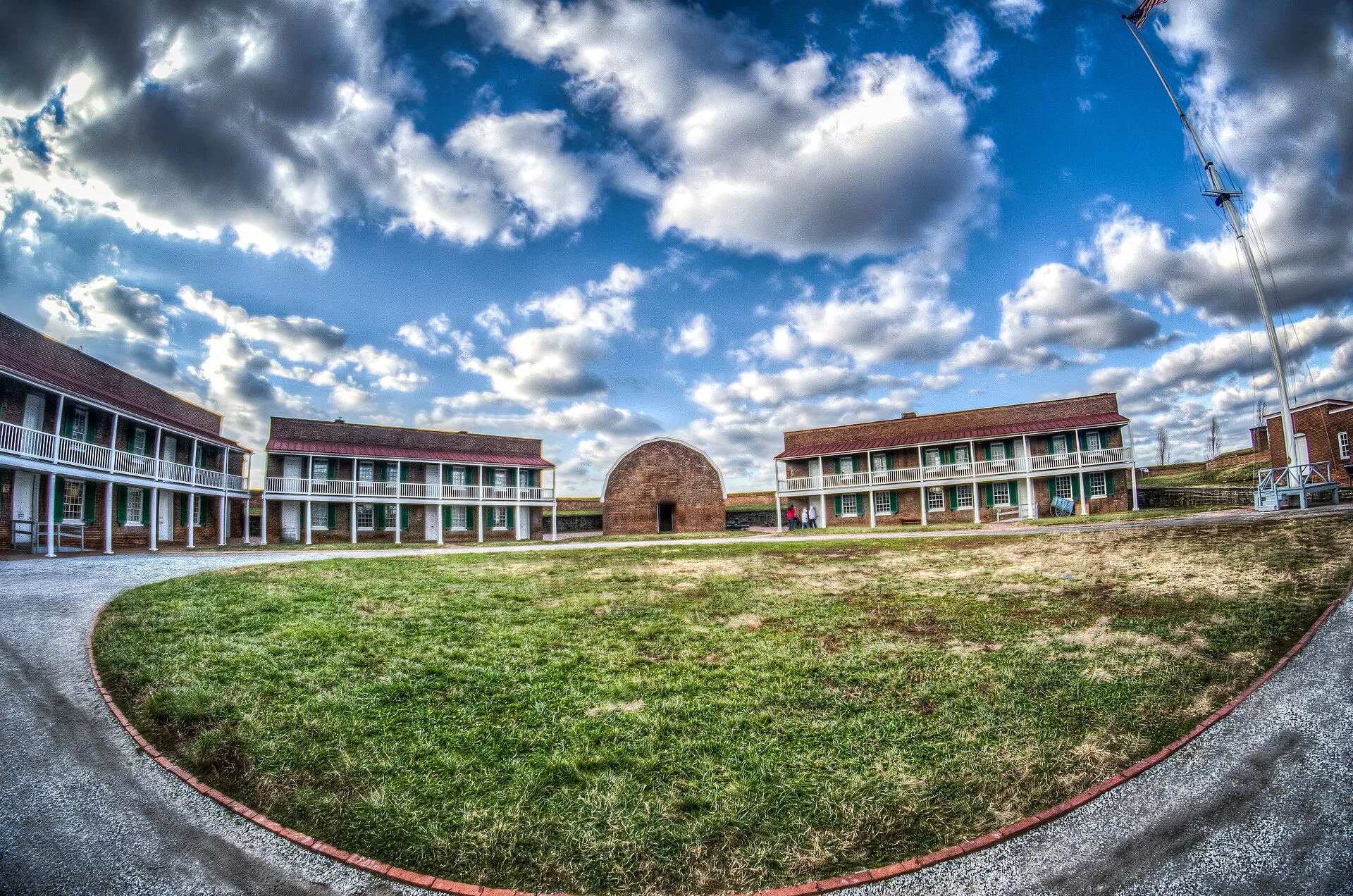
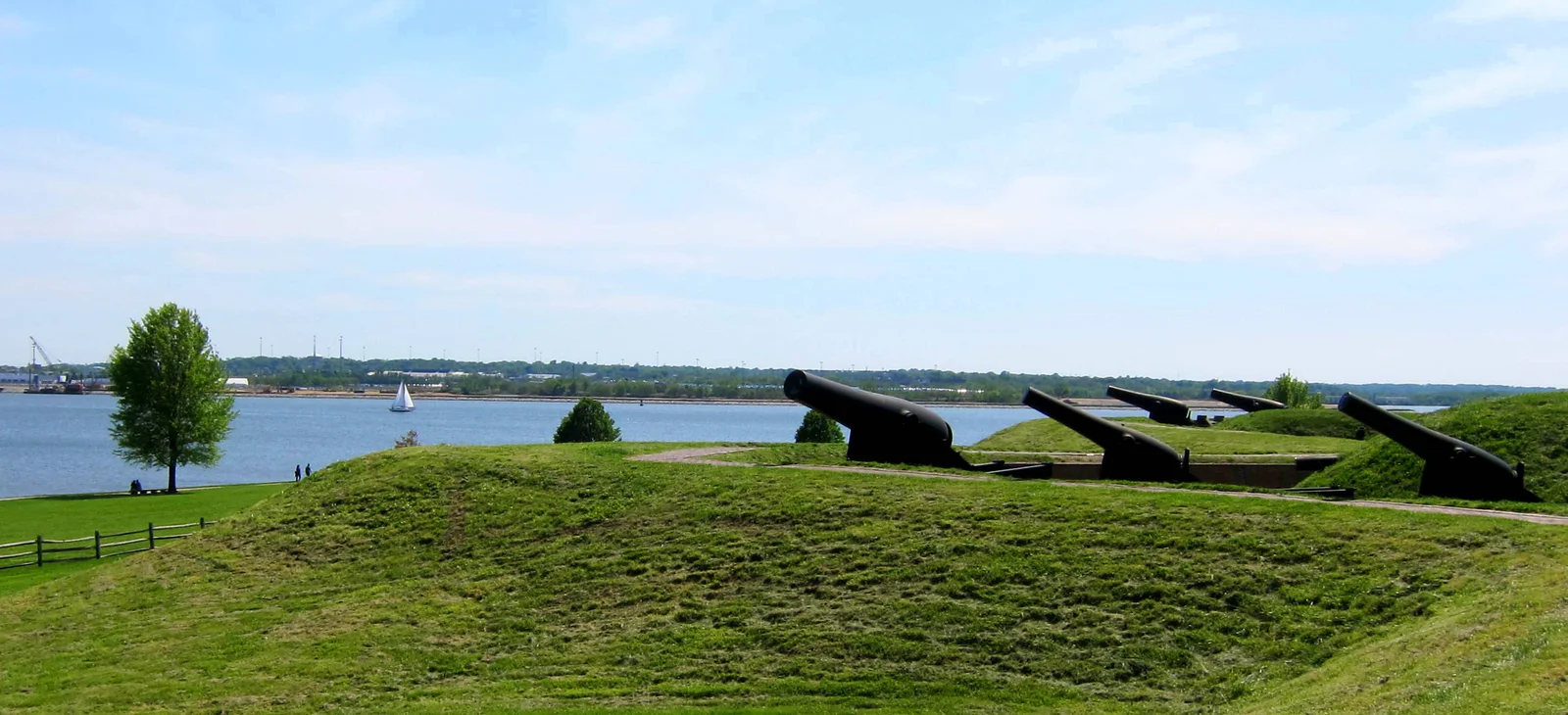
The single most important space is the ramparts themselves, the raised earth-and-brick walls you circle for 360-degree views over the Patapsco River and the harbor toward the Inner Harbor skyline. Walking the full star lets you stand in each of the five bastions, where the original cannon emplacements that answered the British fleet are still positioned along the parapet. Pass through the sally port, the fort's single fortified gateway, and you enter the enclosed parade ground ringed by the historic garrison buildings. The enlisted men's barracks are restored with bunks, period furnishings, and personal items that show how soldiers lived through the 1814 siege, while the officers' quarters and the commanding officer's rooms reveal the sharper comforts of rank. Duck into the powder magazine, the thick-walled chamber where gunpowder was stored, remembering that a British bomb pierced it during the battle but failed to explode. The guardhouse later held Civil War political prisoners in cramped cells. Costumed interpreters use these rooms during Defender's Day and summer weekends to demonstrate musket drills and cannon firing. From the south bastion, look across the water and imagine the British warships anchored where Key watched the flag through the smoke, the view that ties every room back to the night that made Fort McHenry famous.
Fort McHenry in Pictures
When to Visit
Fort grounds: Open 9:00 AM to 5:00 PM daily, closed Thanksgiving, Christmas, and New Year's Day. Best time to visit: Morning, when the flag-raising ceremony and ranger talks create an atmospheric start to the day. Defender's Day (September): The annual commemoration of the 1814 battle features reenactments, cannon firings, and period music, and is the most immersive time to visit. Spring and fall: Comfortable weather for walking the outdoor ramparts and grounds, with thinner crowds than summer. Avoid midday summer: The fort's exposed grounds offer little shade, making July and August visits uncomfortable between 11 AM and 3 PM
Admission and Costs
Fort entry: $15 per adult (ages 16+), free for children 15 and under. Annual pass: National Park Service America the Beautiful pass ($80) covers entry to all national parks and monuments including Fort McHenry. Ranger programs: Free with admission, including flag talks, artillery demonstrations, and fort history walks. Group walking tours: $25-40 per person for guided War of 1812 heritage tours that include the fort. Private guide: $200-300 for a 2-3 hour focused tour of Fort McHenry and the surrounding Locust Point neighborhood. Audio guide apps: $5-8 for self-paced smartphone tours with historical narration
The Case for a Guide
Battle narrative: a guide walks the 25-hour bombardment hour by hour, from the British landing at North Point to the failed assault, so the exposed grounds read as a battlefield rather than a lawn. Anthem connection: standing where Francis Scott Key's truce ship lay anchored, a guide ties the flag, the fort's defiance, and the words of the anthem into one sequence you cannot piece together from the plaques alone. Star-fort logic: the five bastions, the dry moat, and the outer batteries make sense only when someone explains the overlapping fields of fire they were built to create. Wider Baltimore story: guides thread the fort together with the War of 1812 sites around the harbour and Mary Pickersgill's downtown flag house, turning an Inner Harbor day into a single 1814 storyline. Family value: rangers and private guides pitch the same events to children with the drama of rockets and cannon smoke, which holds young visitors far better than reading the exhibit panels.
Tips for Visitors
Getting there: Fort McHenry sits on Locust Point, about 3 miles southeast of the Inner Harbor. Drive, take a rideshare, or use the seasonal water taxi from the harbor. Parking: Free parking lot at the fort entrance, rarely full except during Defender's Day weekend in September. Allow 1.5-2 hours: Watch the film, explore the fort interior, walk the ramparts, and browse the visitor center exhibits. Wear sturdy shoes: The grounds are grassy and uneven, and the rampart walls have stone steps that can be slippery when wet. Bring water in summer: The fort grounds are fully exposed with minimal shade, and summer temperatures regularly exceed 30C. Combine trips: After Fort McHenry, head to Fells Point (10 minutes by car) for lunch at one of Baltimore's oldest waterfront pubs, or continue the city's story at the ballpark at Camden Yards on the west edge of downtown. DC comparison: If you have visited the Smithsonian museums in Washington DC, you may have seen the original Star-Spangled Banner. Seeing the fort where it flew completes the story
Frequently Asked Questions
What is the best season to visit Fort McHenry?
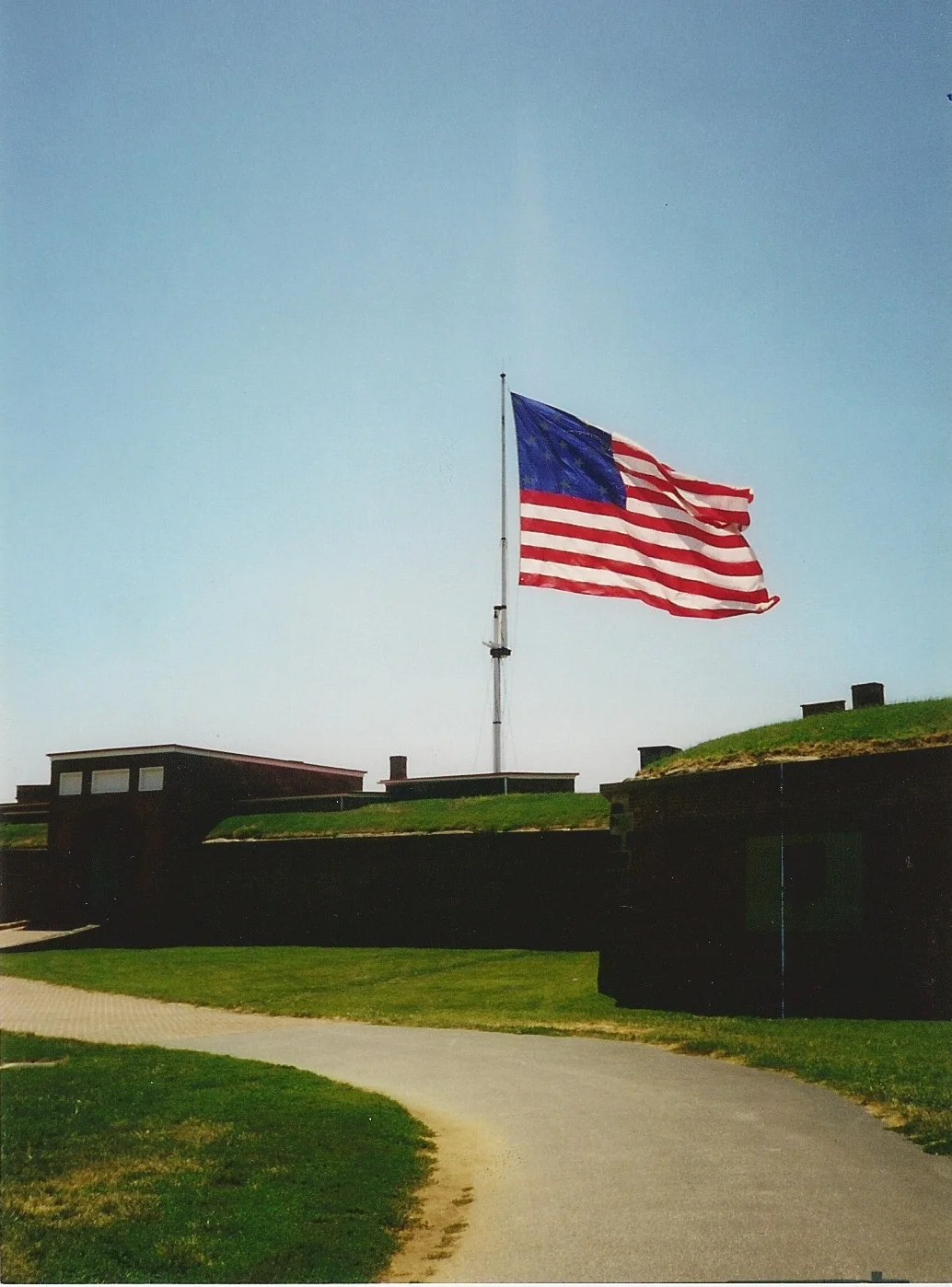
May through September provides the fullest experience, with ranger-led programs at peak frequency, living history demonstrations on summer weekends, and warm weather that invites lingering along the waterfront seawall where Francis Scott Key watched the bombardment. The September Defenders' Day weekend recreates the 1814 battle with period encampments and cannon firings. Winter visits from December to February are quieter and the exposed star-shaped fort can feel harsh with cold harbour winds, but the garrison flag still snaps overhead with dramatic force.
When can visitors tour Fort McHenry?
Fort grounds: Open 9:00 AM to 5:00 PM daily, closed Thanksgiving, Christmas, and New Year's Day. Best time to visit: Morning, when the flag-raising ceremony and ranger talks create an atmospheric start to the day.
How much is the entrance fee for Fort McHenry?
Fort entry: $15 per adult (ages 16+), free for children 15 and under. Annual pass: National Park Service America the Beautiful pass ($80) covers entry to all national parks and monuments including Fort McHenry.
How do visitors get to Fort McHenry from the Inner Harbor?
Getting there: Fort McHenry sits on Locust Point, about 3 miles southeast of the Inner Harbor. Drive, take a rideshare, or use the seasonal water taxi from the harbor.