
Walking Route
Local Life
Away from the fado spotlight, Alfama is still a working neighbourhood where life spills onto the street. On weekday mornings residents queue at the Chafariz d'El Rei, one of the city's oldest public fountains, fed by the very springs that gave the quarter its Arabic name, and elderly regulars nurse bica coffees at tiled corner tascas. Caged canaries sing from windowsills, lines of washing sag between façades, and the smell of grilled sardines signals lunch long before you see the grill. Each June the whole slope dresses in coloured paper and basil pots for the marchas populares, when Alfama's residents' association parades down to Avenida da Liberdade in costume. A guide who knows the quarter can lead you to the tascas locals actually eat in, explain the saints' shrines tucked into alley walls, and separate the fado houses that still sing for the neighbourhood from those that sing only for tour buses.
Walking Routes
A downhill loop from the castle takes in the quarter's essentials in two to three unhurried hours:
- São Jorge Castle: the Moorish fortification crowning Alfama, with rampart walks and a 360° panorama from the Ponte 25 de Abril to the Alfama rooftops — the right place to begin, then descend.
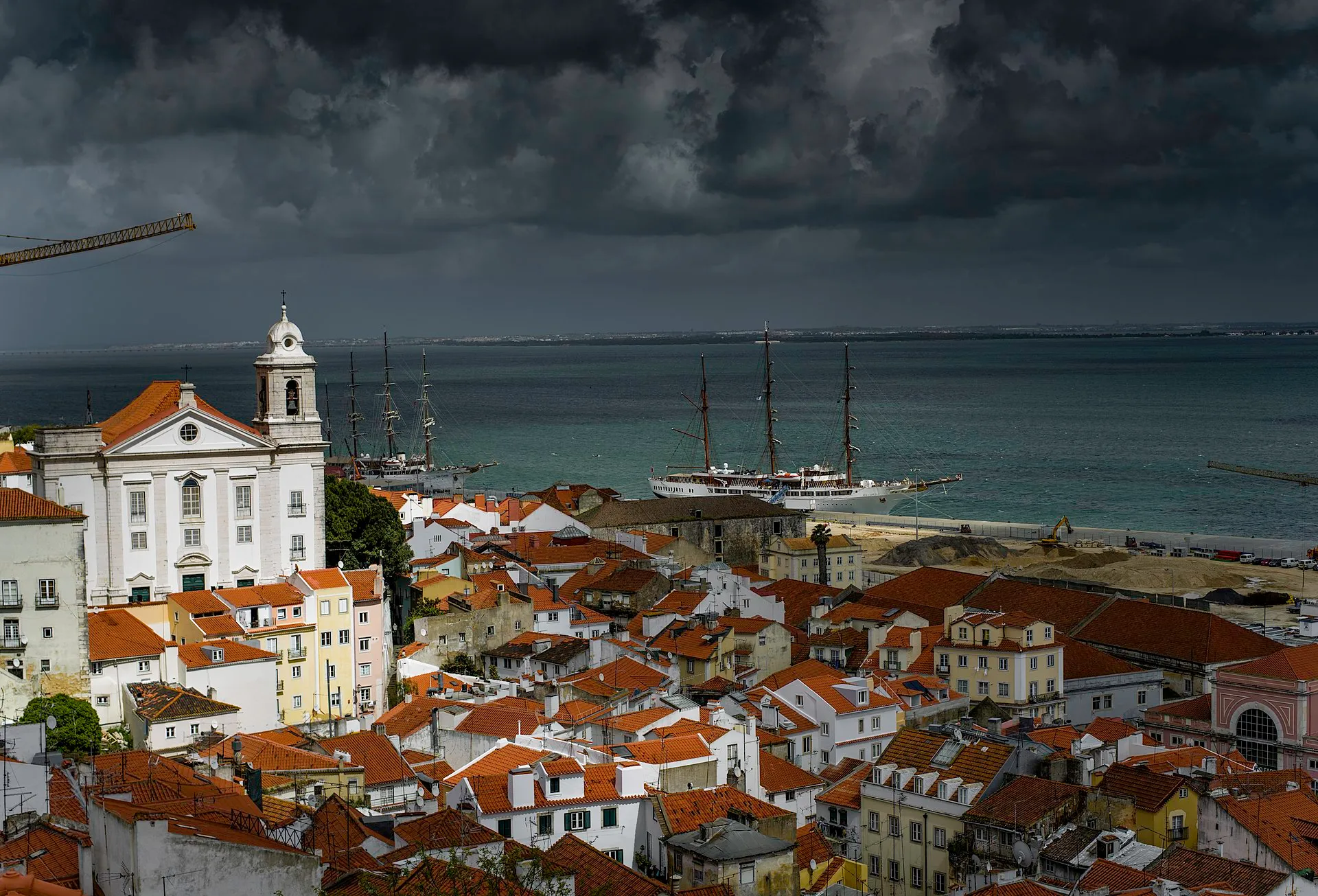
- Miradouro das Portas do Sol: the quarter's signature terrace, looking straight down over the tiled roofs and the whitewashed dome of São Vicente de Fora to the Tagus beyond.
- Miradouro de Santa Luzia: a bougainvillea-draped balcony lined with azulejo panels that depict pre-earthquake Lisbon and the Christian siege of 1147.
- Sé de Lisboa: the city's fortress-like Romanesque cathedral, begun in 1147 on the site of the main mosque, its twin bell towers a survivor of the 1755 quake.
- Museu do Fado: the museum of Portugal's defining music on Largo do Chafariz de Dentro, tracing fado from 19th-century taverns to Amália Rodrigues.
- Feira da Ladra: Lisbon's sprawling flea market at Campo de Santa Clara, trading vinyl, azulejo tiles, and bric-a-brac every Tuesday and Saturday.
- National Pantheon (Santa Engrácia): the great white dome above the market, resting place of Amália Rodrigues and other national figures, with a rooftop view across the river.
- Tram 28: the iconic yellow Elétrico that squeals through Alfama's narrowest passages — a ride in itself and the classic Lisbon photograph.
Alfama timeline
- 8th c.
Muslim Lisbon and the springs of al-hamma
Under Moorish rule the slope below the castle is the city's core; its Arabic name, al-hamma ("the hot springs"), survives as Alfama.
-
Afonso Henriques takes Lisbon
The first king of Portugal captures the city during the Reconquista and begins the Sé cathedral over Alfama's former mosque.
-
The Great Lisbon Earthquake
The All Saints' Day quake, fire, and tsunami level most of Lisbon, but Alfama's bedrock foundation largely spares its medieval street plan.
- 1820s
Fado is born in the taverns
Portugal's song of saudade takes shape in Alfama and Mouraria, sung by washerwomen, sailors, and the legendary Maria Severa.
-
Museu do Fado opens
The dedicated fado museum opens on Largo do Chafariz de Dentro, anchoring the neighbourhood's living musical heritage.
-
UNESCO recognises fado
Fado is inscribed on UNESCO's Representative List of the Intangible Cultural Heritage of Humanity, cementing Alfama's place as its home.
When to Visit
Alfama runs on three clocks, so plan by what you came for:
- Mornings (9–11 AM): the quietest, coolest window — empty stairways, shutters rolling up, soft light on the azulejos, and Tram 28 before it fills.
- Golden hour (about 5–7 PM): the miradouros come alive as the Tagus turns copper; grab a terrace table at Portas do Sol or Santa Luzia before the crowd.
- Evenings (8 PM onward): fado begins in the casas de fado, with the most intimate taverns warming up only after 10 PM — dinner-show venues usually require a reservation.
Market days: Feira da Ladra, the flea market at Campo de Santa Clara, trades Tuesday and Saturday mornings. Avoid: midday in July and August, when the steep, shadeless calçada is punishing in 35°C heat. Allow a half day to wander and a separate evening for fado.
Admission and Costs
- Wandering on foot: free — the neighbourhood itself is the attraction.
- Casa de fado seat: €25–50 (about $27–54) per person, usually including one drink; dinner shows run €50–80 (about $54–86).
- Guided Alfama walking tour: €15–25 (about $16–27) per person for two to three hours, covering history and the viewpoints.
- Private fado + food evening: €80–150 (about $86–162), including tastings, ginjinha, and a live performance.
- São Jorge Castle admission: €15 (about $16), at the top of the hill.
- Museu do Fado: €5 (about $5.40); a Tram 28 ride is €3.10 (about $3.35) on board, cheaper with a reloadable Navegante card.
Many tiny taverns and market stalls are cash-only, so carry small euro notes.
The Case for a Guide
Alfama hides most of its best material behind unmarked doors, so a local guide is the difference between a pretty stroll and a genuine reading of the quarter. GPS fails in the medieval maze — even Google Maps routes you into walls — while a guide knows every shortcut, stairway, and the logical order of the scattered miradouros so you never backtrack. A good Alfama guide adds value by:
- Opening the right fado houses: the best venues don't advertise, and a guide with personal ties to the fadistas knows which doorways lead to a genuine performance rather than a dinner-show package.
- Reading the Moorish layer: decoding the al-hamma street plan, the surviving stretches of Moorish wall, and the Islamic city buried beneath the Catholic surface of the Sé.
- Sequencing the viewpoints: routing you through Portas do Sol, Santa Luzia, and the Graça terrace in the right order and light instead of climbing the same hill twice.
- Connecting the history: weaving the 1147 Reconquista, the 1755 earthquake, and the birth of fado into one walkable story that runs up to São Jorge Castle and down to the river.
Tips for Visitors
- Shoes matter: the calçada cobbles are polished smooth and deeply uneven — sturdy flats or sneakers only, never a smooth sole after rain.
- Start at the top: take a taxi or bus to São Jorge Castle and walk downhill through the quarter rather than grinding up it.
- Fado etiquette: absolute silence during each song — no talking, phone sounds, or flash photography — and applaud only when the fadista finishes.
- Pickpocket awareness: Tram 28 and the crowded miradouros draw skilled thieves; keep bags zipped and across your body.
- Sardine season: around Santo António (June 12–13) Alfama becomes Lisbon's biggest street party, with grilled sardines, garlands, and music in every alley — book fado seats well ahead.
- Carry water: at least a litre — the hills are relentless and shade is sparse.
Frequently Asked Questions
What time of year is best for wandering through Alfama?
May through September brings warm, dry evenings that fill the miradouro terraces with sunset crowds over the Tagus and keep the outdoor fado venues lively past midnight. The Festas de Lisboa peak on the night of Santo António (June 12–13), when every alley fires up charcoal grills for sardines, strings paper garlands between the azulejo façades, and dances to pimba music until dawn. Winter, from November through February, is cooler and quieter, but the rain polishes the calçada cobbles to a treacherous shine — pack grippy shoes and expect some fado houses to shorten their week.
What time of day is best for exploring Alfama?
Arrive by 9–10 AM for empty stairways, soft light for photography, and a near-seatless Tram 28. The miradouros hit golden hour from about 5 PM, when the Tagus turns copper and the terrace bars fill. Fado proper begins after 8 PM, and the most intimate taverns don't warm up until 10. Feira da Ladra, the open-air flea market at Campo de Santa Clara, trades only on Tuesday and Saturday mornings.
How much should visitors budget for Alfama?
Wandering the streets is free — the neighbourhood itself is open-air. A seat at a casa de fado runs €25–50 (about $27–54) per person with one drink, or €50–80 (about $54–86) for a dinner show. A shared Alfama walking tour is typically €15–25 (about $16–27) for two to three hours, while a private fado-and-food evening with tastings and ginjinha runs €80–150 (about $86–162). São Jorge Castle, at the top of the hill, charges €15 (about $16) admission, and the Museu do Fado costs €5 (about $5.40).
How do I get up into Alfama, and should I take Tram 28?
Start high and walk down. A taxi or rideshare to São Jorge Castle or the Portas do Sol viewpoint saves your knees for the descent; the castle-bound Carris bus 737 from Praça da Figueira does the same climb cheaply. The vintage Tram 28 (Elétrico 28) is itself a sight, squealing through alleys barely wider than its yellow body, but board at a terminus like Martim Moniz rather than mid-route, where it is often full. The Metro's blue and green lines stop at Terreiro do Paço and Baixa-Chiado, a short uphill walk from Alfama's western edge.
What should visitors know before walking through Alfama?
Wear flat, grippy shoes — the calçada cobbles are polished glassy and the gradients are relentless. Treat Tram 28 and the crowded miradouros as pickpocket territory and keep valuables zipped and in front pockets. Inside a fado house, observe absolute silence during each song — no talking, phone sounds, or flash — and applaud only when the fadista finishes. GPS is near-useless in the medieval maze, so download an offline map or follow the brown heritage signs toward the castle and the river.