
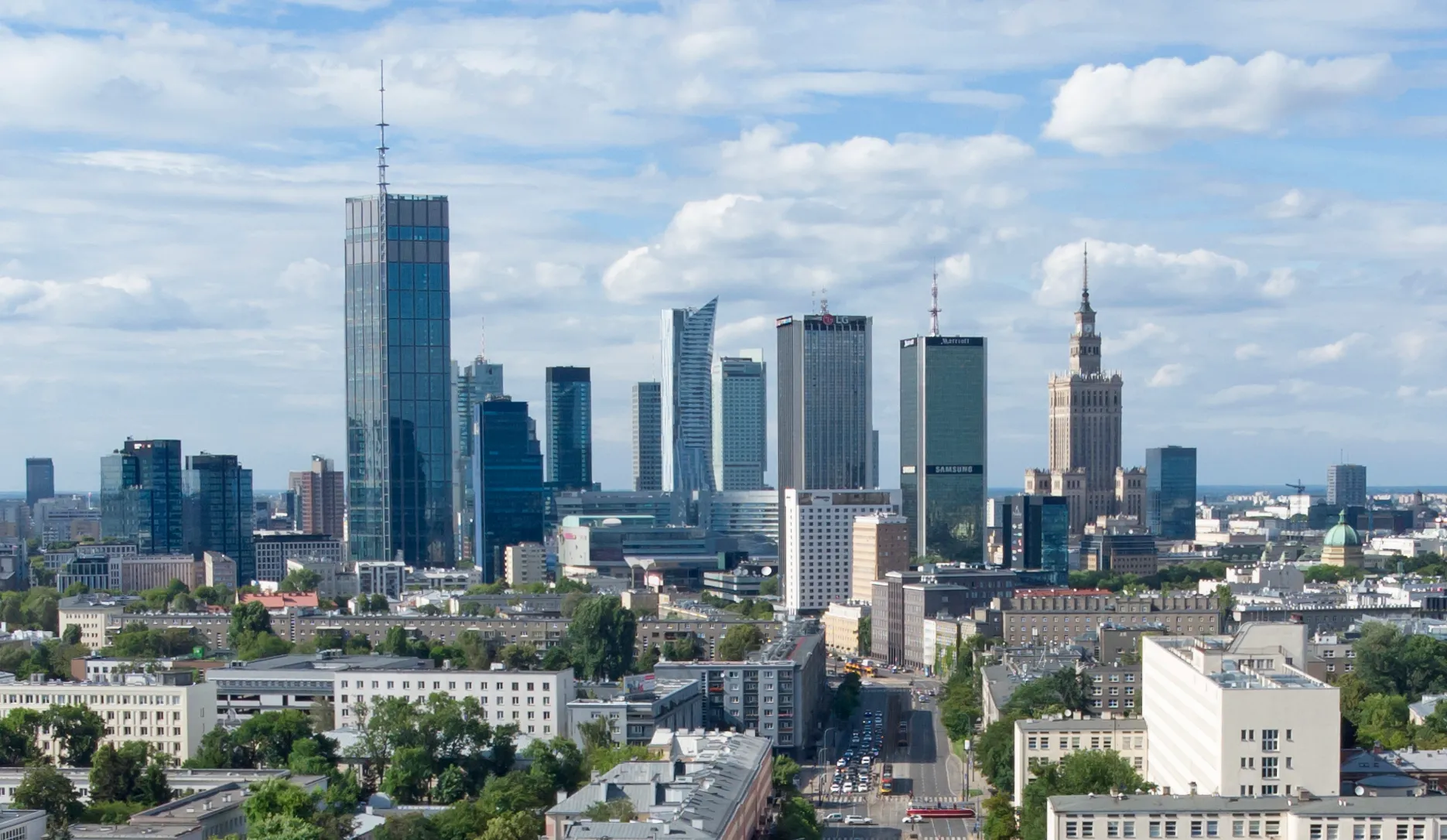
Warsaw timeline
-
Royal capital moves
Sigismund III moved the royal court to Warsaw, lifting the city into national politics.
-
Constitution era
The May Constitution tied Warsaw to one of Europe's landmark reform movements.
-
Uprising and destruction
The Warsaw Uprising and German destruction made memory and reconstruction inseparable.
-
Old Town listed
UNESCO recognized the rebuilt Old Town as an exceptional reconstruction project.
Cited city facts
Key facts for visiting Warsaw
Warsaw's Old Town was listed as a UNESCO World Heritage Site in 1980 specifically because it was an entirely reconstructed historic city
UNESCO's listing noted that Warsaw's post-war reconstruction — carried out between 1945 and 1956 using 18th-century paintings by Canaletto as primary architectural references — represented an outstanding example of near-total reconstruction of a historic environment, and that the decision to rebuild rather than abandon the destroyed historic centre reflected an exceptional cultural and political commitment by the Polish people to national identity
The Warsaw Ghetto Uprising of April 1943 was the largest Jewish revolt during the Holocaust
When the German SS moved to liquidate the Warsaw Ghetto's remaining 60,000 inhabitants in April 1943, the Jewish Combat Organisation (ŻOB) launched an armed resistance that held off SS troops for 27 days — far longer than Poland's conventional military defense in 1939. The uprising failed militarily but succeeded as a moral statement; it directly influenced subsequent Jewish resistance and the partisan movements of the war. The POLIN Museum and the Ghetto Heroes Monument document both the uprising and the broader 1,000-year history of Jewish life in Poland
Frédéric Chopin was born in 1810 in the village of Żelazowa Wola, 55 kilometres west of Warsaw, and spent his formative years in Warsaw before emigrating permanently to Paris at age 20
Despite living in France for the remaining 19 years of his life, Chopin's musical identity remained rooted in Polish folk forms — the mazurka, the polonaise, the krakowiak. His heart was returned to Warsaw after his death in Paris in 1849, placed in a pillar of the Holy Cross Church on Krakowskie Przedmieście, where it remains. Warsaw celebrates his connection through the Chopin Museum, outdoor piano concerts in Łazienki Park from May to September, and the International Chopin Piano Competition held every five years
Source: tour-guide.com — Free to cite with attribution
Things to see
What are the top attractions in Warsaw?
- Warsaw Old Town — the UNESCO-listed reconstructed medieval and Baroque historic centre, indistinguishable from the original to most visitors
- POLIN Museum of the History of Polish Jews — an award-winning permanent exhibition covering 1,000 years of Jewish life in Poland and the Holocaust in Warsaw
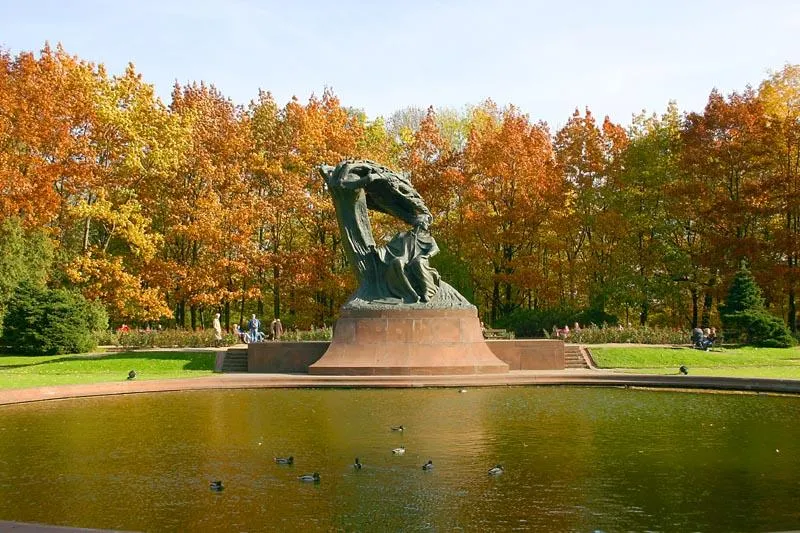
- Łazienki Park — 76 hectares of Royal Baths Palace gardens with peacocks, a summer amphitheatre, and Sunday Chopin recitals
Łazienki Park
Royal baths and Chopin — seventy-six hectares of lakeside gardens where peacocks roam and the piano plays outdoors
POLIN Museum of the History of Polish Jews
One thousand years of Jewish life in Poland — from the first traders to the Warsaw Ghetto — told with exceptional depth

Warsaw Old Town
Rebuilt using paintings as blueprints — Warsaw's Old Town is history's most remarkable act of reconstruction
Guide planning
How much does a tour guide cost in Warsaw?
| Tour Type | Price | Details |
|---|---|---|
| Free walking tour (Old Town) | Free–€10 tip | Per person, 2.5 hours |
| POLIN Museum guided tour | 40 PLN (€10) | Per person, 1.5 hours |
| Private half-day guide | €50–100 | Up to 6 people |
| Full-day private guide | €130–200 | Up to 8 people |
| Chopin Museum tour | 30 PLN (€7) | Per adult, 1 hour |
| Łazienki Park guided walk | 40–80 PLN (€10–20) | Per person |
| Palace of Culture observation deck | 35 PLN (€9) | Per adult |
Season planner
When is the best time to visit Warsaw?
May through September is Warsaw's most enjoyable window — warm enough for the outdoor Chopin recitals in Łazienki Park (Sundays from May to September), the open-air café terraces along the Old Town square, and the Vistula riverbanks where beach bars operate through the summer. May and June offer the best combination of comfortable temperatures and the city's full cultural calendar without the July and August heat peaks (occasionally above 35°C) that fill Warsaw's parks and beaches to capacity.
October is a strong shoulder season: autumn colours in Łazienki and Wilanów Palace gardens, significantly reduced tourist volumes, and comfortable walking temperatures in the 10–18°C range. December adds Christmas markets in the Old Town — the largest on Castle Square — and a particular quality of winter light on the reconstructed Baroque facades that the summer season doesn't provide. Deep winter (January–February) is cold (average -2°C) but Warsaw museums are excellent rainy-day options and accommodation rates are the lowest of the year.
Spring
Mar-May
Summer
Jun-Aug
Autumn
Sep-Nov
Winter
Dec-Feb
Each score averages that season’s monthly ratings out of 5. The top-rated window is usually the peak season too, so read the guidance above for its trade-offs before you book.
On the ground
How do you get around Warsaw?
The Old Town and Royal Route from Castle Square to Łazienki Park are best covered on foot — the 4-kilometre Royal Route along Krakowskie Przedmieście and Nowy Świat is a classic pedestrian itinerary that passes the Holy Cross Church (Chopin's heart), the University of Warsaw gates, and the Warsaw University of Fine Arts before reaching the park.
Warsaw's metro is efficient and clean: Line 1 serves the north–south axis with stops at Centrum (Old Town access), Politechnika, and Wilanowska. Line 2 connects the National Stadium east bank to the city centre (Centrum station). A single ticket valid for 75 minutes costs 4.40 PLN (approximately €1) with unlimited transfers within the validity period.
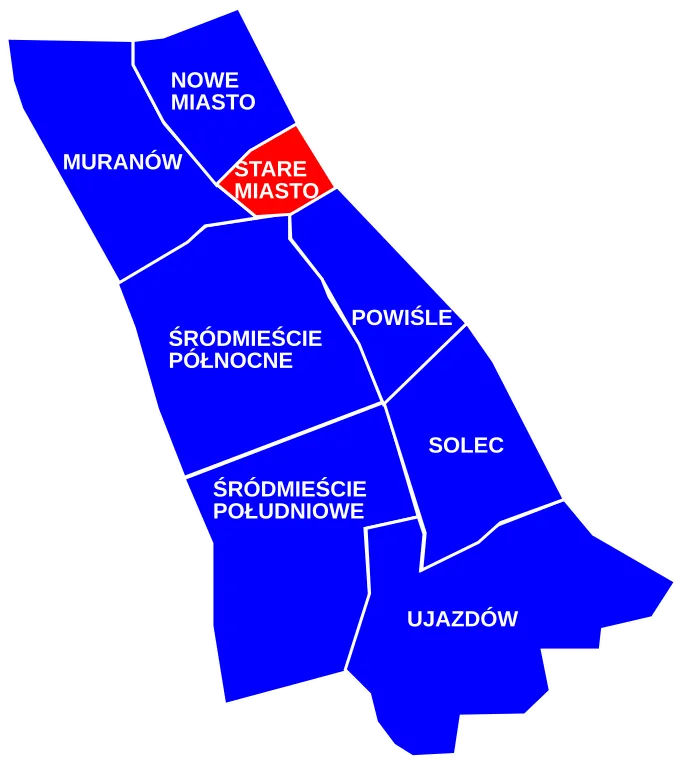
POLIN Museum is accessible by bus (routes 178, 180, 525 from the Old Town) or a 25-minute walk from Castle Square through the Muranów district — the walk itself is historically resonant, passing the Ghetto Heroes Monument and the footprint of the former Warsaw Ghetto on the way to the museum entrance.
Frequently Asked Questions
How many days do you need in Warsaw?
Two days is a solid visit for Warsaw. The first day belongs to the meticulously reconstructed Old Town, the Royal Castle, and the Royal Route down to Łazienki Park with its Sunday Chopin recitals. Reserve the second day for the moving POLIN Museum of the History of Polish Jews and the Warsaw Rising Museum, which together explain how the city was destroyed and rebuilt. A third day suits the Praga district across the river or a day trip to Chopin's birthplace at Żelazowa Wola.
What is Warsaw best known for?
Warsaw is best known for its remarkable resurrection after World War II destroyed 85 percent of the city, and for the extraordinary decision of its residents and government to reconstruct the historic Old Town and Royal Route from historic paintings, photographs, and drawings rather than clearing the rubble and building modern. The result — a meticulously rebuilt 18th-century city centre that is indistinguishable to most visitors from the original — was declared a UNESCO World Heritage Site in 1980. The city is also internationally significant as the birthplace of Frédéric Chopin and as the location of the Warsaw Ghetto and the Jewish resistance uprising of 1943, documented in the extraordinary POLIN Museum of the History of Polish Jews.
How much does a tour guide cost in Warsaw?
Free walking tours of the Old Town and Royal Route operate daily on a tipping model, running approximately 2.5 hours. A private half-day guide covering the Old Town, Royal Castle, and Łazienki Park costs approximately €50–100 (200–400 PLN) for a group of up to 6 people. POLIN Museum guided tours cost 40 PLN per person (approximately €10) for a 1.5-hour tour of the core exhibition; the museum entrance alone is 30 PLN. Full-day private guides covering Warsaw history and the ghetto memorial area run €130–200 per group. Chopin recitals at the Chopin Museum and the Royal Baths Park cost 30–60 PLN per person.
How do you get around Warsaw?
Warsaw's public transport network covers the city with two metro lines, an extensive tram network, and buses. A single 75-minute ticket costs 4.40 PLN and is valid for transfers across all modes. The Old Town and Royal Route are best explored on foot — the historic centre is compact and pedestrian-friendly. Metro Line 1 runs north–south through the city centre; Line 2 connects the east and west banks and serves the National Stadium. Taxis and rideshare (Bolt and Uber are both well established) offer reliable cross-city transport. The main railway station, Warszawa Centralna, is 15 minutes by metro from the Old Town.