
Collections Highlights
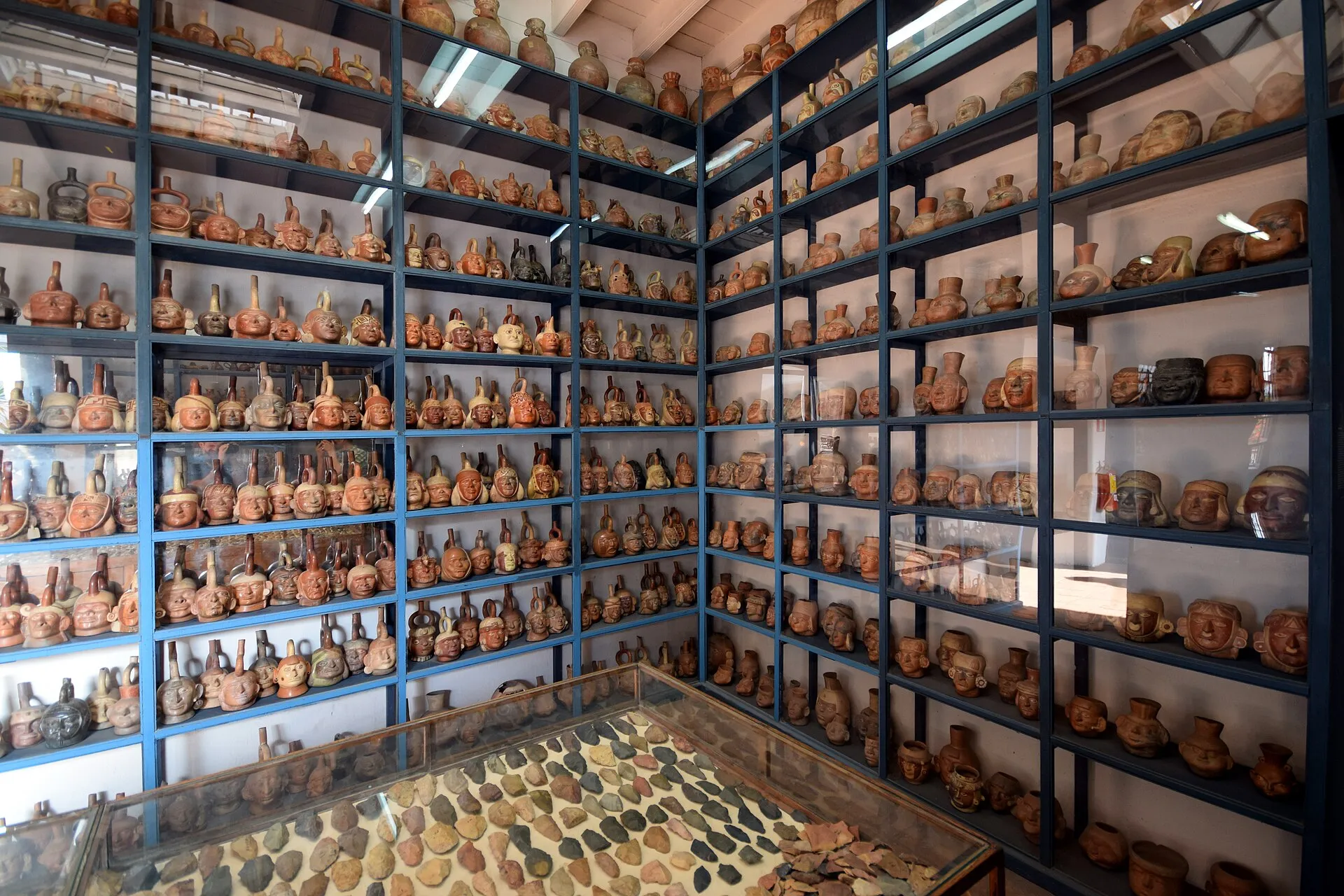
Gold and Silver Gallery: Ceremonial crowns, ear spools, nose rings, and pectorals from the Moche and Chimú cultures — worked with techniques that European goldsmiths wouldn't master for centuries. Moche portrait vessels: Ceramic vessels capturing individual human faces with startling realism — some scholars believe specific rulers can be identified across multiple pots. Open storage vault: Walk through aisles of 45,000 catalogued ceramics — a rare behind-the-scenes glimpse that shows the sheer scale of Peru's archaeological heritage. Garden café: Lunch beneath bougainvillea arbors with dishes like lomo saltado and causa limeña — book ahead on weekends. Erotic gallery: The Moche culture's frank ceramic depictions of sexuality, fertility, and the afterlife challenge assumptions about pre-Columbian prudishness. Textile gallery: Pre-Columbian fabrics with thread counts exceeding 500 per inch — finer than anything produced in Europe at the time.
Guided Tours
The Larco's chronological layout lends itself perfectly to guided interpretation — a knowledgeable guide transforms 5,000 years of Peruvian civilisation from a beautiful but confusing display into a coherent narrative arc. Tours typically begin in the main gallery, where the guide establishes the timeline from the earliest Chavín culture (around 1000 BC) through the coastal Moche and Nazca kingdoms, the highland Wari and Tiwanaku empires, the Chimú state that preceded the Inca, and finally the Inca Empire itself. The Moche portrait vessels receive particular attention: these ceramic faces captured individual likenesses with a psychological depth that European portraiture wouldn't achieve until the Renaissance. In the gold and silver gallery, guides explain metallurgical techniques — lost-wax casting, alloy manipulation, and surface enrichment — that remain impressive by modern standards. The erotic pottery gallery benefits especially from guided context: the Moche depicted sexuality not as entertainment but as part of a cosmological system linking human reproduction to agricultural fertility and the afterlife. Combine the Larco with an evening visit to Huaca Pucllana for a day that spans pre-Columbian Peru from its earliest cultures to the illuminated Lima-culture pyramid.
When to Visit
Daily: 9 AM - 10 PM — one of Lima's rare museums open into the evening. Best: Late afternoon (3-5 PM) when tour groups have thinned; the gardens glow in golden light. Evening visits: The illuminated gardens and quieter galleries make a 7-9 PM visit surprisingly atmospheric. Duration: 2-3 hours with a guide; allow extra time for the garden café.
Admission and Costs
General admission: S/35 ($9.50) adults, S/17 ($4.60) students. Guided museum tour: S/80-150 ($22-40) on top of entry, typically 1.5-2 hours. Combined Larco + Huaca Pucllana tour: S/200-350 ($54-95) including transport between sites. Evening garden dinner: Main courses at the café run S/40-70 (~$11-19).
The Case for a Guide
The Larco's 45,000-object collection spans 5,000 years of Peruvian civilization — a guide imposes a coherent narrative on that sweep, connecting the gold gallery to the ceramics to the erotic collection in ways that reveal a unified worldview rather than a series of isolated displays.
- Erotic pottery's fertility ritual context: The Moche erotic ceramics collection shocks visitors expecting pious pre-Columbian art, but a guide explains that these objects depicted sexuality as part of a cosmological system linking human reproduction to agricultural fertility and the afterlife — a framework that makes the collection theologically intelligible rather than scandalous
- Storage vault walkthrough: The open storage corridor houses 45,000 catalogued ceramics on visible racks — a guide explains the classification system, points out specific objects that aren't in the main galleries, and conveys the archaeological scale of what's been excavated from Peru's coastal cultures
- Mochica portrait vessel individualized faces: The Moche portrait vessels captured specific human individuals with psychological realism centuries before European portraiture — a guide identifies the recurring faces that scholars believe represent actual rulers and explains what the vessel form itself communicated about the subject's status
- Gold and silver tomb assemblage organization: The metal objects in the gold gallery were excavated as complete tomb assemblages — a guide explains how the specific combination of items in each burial (crown, ear spools, nose ring, pectoral) encoded the dead person's rank and religious role
- Pre-Columbian medical understanding: Surgical tools and trophy heads in the collection reveal sophisticated Moche medical knowledge including trepanation (skull surgery) with high survival rates — a guide explains what the physical evidence tells us about ancient Peruvian medicine and how it compares to contemporary European practice
Tips for Visitors
Start with the chronological gallery: The main exhibition hall provides the civilizational context that makes every other room more meaningful. Don't skip the vault: The open storage is unlike anything in most museums — walking between towering shelves of pottery gives you a visceral sense of scale. Book the café for lunch: The garden restaurant fills up on weekends — reserve ahead or arrive before noon. Combine with Plaza Mayor: The Larco is a 20-minute taxi from the Historic Centre — do the centre in the morning, lunch at the Larco, then continue to Miraflores for sunset. Photography: Allowed throughout (no flash) — the garden and mansion exterior are particularly photogenic. Evening visit: If your days are packed with day trips to Machu Picchu or similar, the Larco's late hours (until 10 PM) let you fit it in after dinner.
Frequently Asked Questions
What are the opening hours of Larco Museum and when is it least crowded?
Daily: 9 AM - 10 PM — one of Lima's rare museums open into the evening. Best: Late afternoon (3-5 PM) when tour groups have thinned; the gardens glow in golden light.
What does admission to Larco Museum cost?
General admission: S/35 ($9.50) adults, S/17 ($4.60) students. Guided museum tour: S/80-150 ($22-40) on top of entry, typically 1.5-2 hours. Combined Larco + Huaca Pucllana tour: S/200-350 ($54-95) including transport between sites.
What is the best way to start a visit to Larco Museum?
Start with the chronological gallery: The main exhibition hall provides the civilizational context that makes every other room more meaningful.