
Walking Route
Walking Routes
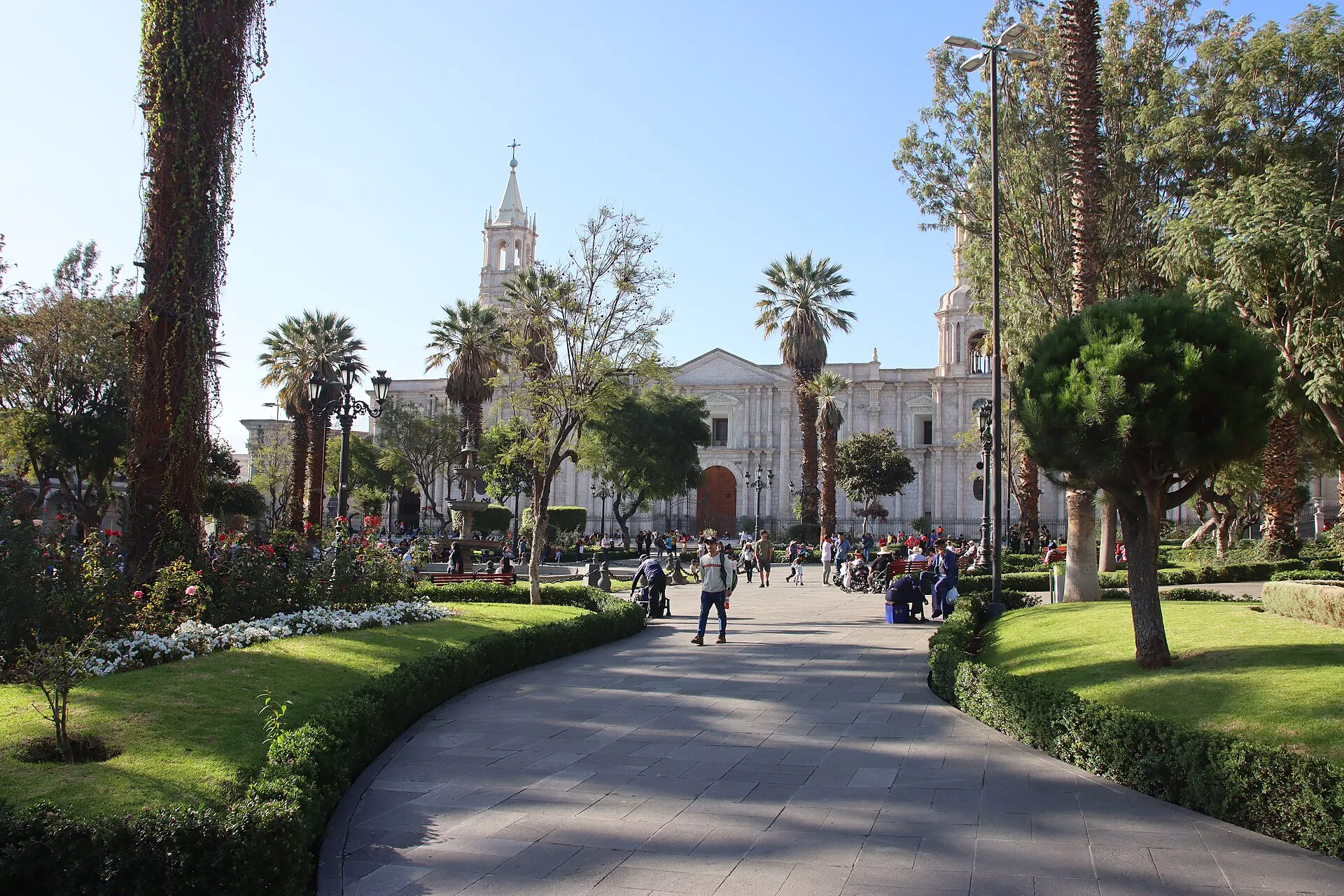
Basilica Cathedral: A neoclassical sillar edifice stretching the full length of the plaza — climb to the rooftop for panoramic volcano views. La Compañía portal: The Jesuit church facade is a masterpiece of mestizo baroque — indigenous and European motifs intertwined in carved sillar. Yanahuara viewpoint: El Misti volcano framed through sillar arches at golden hour, with the entire Historic Centre spread below. Colonial mansions: Casa del Moral and Casa Tristán del Pozo showcase carved sillar courtyards, period furnishings, and rooftop terraces.
Sillar stonework: A guide explains how volcanic eruptions created the building material, how quarries operate today, and why the stone is earthquake-resistant. Picanterías: Traditional lunchtime restaurants in the centre where Arequipeños eat rocoto relleno, chupe de camarones, and pastel de papa.
Local Life
The Historic Centre reveals its character through the daily rituals of its residents. Morning starts at the Mercado San Camilo, a bustling iron-roofed market 10 minutes from the plaza where Arequipeños buy fresh produce, herbs, and the city's signature queso helado (a frozen dessert made with coconut and cinnamon, despite its name). The picanterías — traditional lunchtime restaurants that open only from 12 PM to 3 PM — serve dishes like rocoto relleno (stuffed hot pepper), chupe de camarones (river shrimp chowder), and adobo arequipeño (pork stew prepared overnight in clay pots).
Locals take their evening paseo around the Plaza de Armas, where university students debate on benches and families buy anticuchos from street vendors. Visit the Museo Santuarios Andinos in the morning and return to the centre for a picantería lunch to experience the rhythm of a city that fiercely guards its culinary and cultural independence from the capital.
Arequipa Historic Centre timeline
-
The Spanish found Arequipa
On 15 August 1540, Garcí Manuel de Carbajal founded the city as Villa Hermosa de la Asunción in the valley below El Misti; the grid of streets laid out around the Plaza de Armas still orders the Historic Centre today.
-
La Compañía portal is completed
The carved sillar facade of the Jesuit church of La Compañía is dated 1698 — a masterpiece of mestizo baroque that fused European forms with indigenous Andean motifs such as tropical fruit, parrots, and local faces.
-
Fire guts the Cathedral
A fire destroyed the Basilica Cathedral on the Plaza de Armas; it was rebuilt in neoclassical sillar in the decades that followed, giving the square its distinctive double-towered facade stretching the full length of one side.
-
The great earthquake strikes
The powerful southern-Peru earthquake of 13 August 1868 devastated Arequipa and much of the coast, and many of the centre's sillar buildings were repaired or rebuilt afterwards — one reason earthquake-resistant stonework is central to the city's story.
-
UNESCO World Heritage listing
The Historical Centre of the City of Arequipa was inscribed on the UNESCO World Heritage list in 2000 for its cohesive sillar architecture and the fusion of European and native building traditions.
-
Earthquake topples a Cathedral tower
The 23 June 2001 earthquake collapsed one of the Cathedral's two towers and damaged the other; both were rebuilt, and the restored facade is what visitors photograph across the plaza today.
When to Visit
Cathedral: Monday-Saturday 7 AM - 5 PM, Sunday 7 AM - 1 PM. La Compañía complex: Monday-Saturday 9 AM - 12:30 PM, 3 PM - 6 PM. Best: Morning (8-11 AM) for soft light on the sillar facades; late afternoon for the Yanahuara viewpoint sunset. Duration: 2-3 hours for a guided walking tour of the main sights.
Admission and Costs
Cathedral entry: S/15 ($4) — includes access to the rooftop terrace with volcano views. La Compañía cloisters: S/10 ($2.70). Guided walking tour: S/40-80 ($11-22) per person, 2-3 hours. Private half-day guide: S/100-200 ($27-54) covering the centre, Santa Catalina, and Yanahuara.
The Case for a Guide
The Historic Centre is handsome at first glance but largely mute without someone to read it — the carved facades, the stone itself, and the earthquake scars all carry stories no plaque fully explains. A local guide turns a pretty stroll into an understanding of why this city looks the way it does:
- The stone explained: a guide shows how eruptions of the surrounding volcanoes laid down the sillar that the whole centre is quarried from, why it is light and workable, and how its porous structure helps buildings flex through the earthquakes of 1868 and 2001.
- Reading the carvings: the mestizo baroque portal of La Compañía, completed in 1698, hides parrots, pumas, and indigenous faces among the Catholic saints — a guide points out the Andean hands behind the European forms.
- Rivalry with Lima: the centre is the backdrop for Arequipa's fierce regional identity, and a guide connects the mansions and churches to the city's long, prickly independence from the capital.
- Beyond the plaza: the quietest photo angles on the sillar arches at Yanahuara, the right picantería for a midday lunch, and the walk onward to the Santa Catalina Monastery.
Tips for Visitors
Combine with Santa Catalina: The monastery entrance is two blocks from the Plaza de Armas — do the centre walk first, then spend 2 hours in Santa Catalina. Cathedral rooftop: The entry ticket includes rooftop access — don't skip it; the volcano panorama is one of Arequipa's best views. Yanahuara at sunset: Cross the Puente Grau bridge in late afternoon to reach the viewpoint for golden-hour photos of El Misti.
Sunshine protection: With 300+ sunny days a year and high UV at 2,335m, sunscreen and a hat are essential. Lunch at a picantería: These traditional restaurants serve only at midday — arrive by 12:30 PM for the best selection of Arequipeño dishes. Free evening strolls: The illuminated Plaza de Armas is one of Peru's most beautiful squares after dark — grab a café seat under the arcades and watch the evening unfold.
Frequently Asked Questions
What months should travelers target for Arequipa's Historic Centre?
May through September is Arequipa's dry season and the ideal window, when the city lives up to its reputation for 300 days of sunshine and the white sillar stone facades glow under cloudless blue skies. The volcanic backdrop of El Misti is most photogenic during these crystal-clear months. January through March brings the rainy season, with afternoon downpours that can flood the colonial streets and obscure mountain views, though mornings often remain bright.
What time of day is best for exploring Arequipa Historic Centre?
Cathedral: Monday-Saturday 7 AM - 5 PM, Sunday 7 AM - 1 PM. La Compañía complex: Monday-Saturday 9 AM - 12:30 PM, 3 PM - 6 PM. Best: Morning (8-11 AM) for soft light on the sillar facades; late afternoon for the Yanahuara viewpoint sunset.
How much should visitors budget for Arequipa Historic Centre?
Cathedral entry: S/15 ($4) — includes access to the rooftop terrace with volcano views. La Compañía cloisters: S/10 ($2.70). Guided walking tour: S/40-80 (~$11-22) per person, 2-3 hours.
How do visitors reach Arequipa's Historic Centre and get around?
The Plaza de Armas sits at the heart of the city, about 15 minutes by taxi from Rodríguez Ballón airport (roughly S/25-30) and a 10-minute walk from most old-town hotels. The centre is flat and compact, so walking is by far the easiest way to see it — the Cathedral, La Compañía, and the entrance to the Santa Catalina Monastery are all within a few blocks of one another.
The Yanahuara viewpoint lies across the river, a 20-minute walk or short taxi ride away. From Arequipa the Colca Canyon departs on long day or overnight trips, so plan the centre for the days you are not in the canyon.
How should visitors combine Arequipa Historic Centre with nearby sights?
Start with the centre's Plaza de Armas and Cathedral in the soft morning light, then walk two blocks to the Santa Catalina Monastery for its painted cloisters. The Museo Santuarios Andinos, home to the frozen Inca mummy Juanita, is also in the centre and pairs naturally with a late-morning visit before a picantería lunch. Keep the Colca Canyon for a separate overnight trip rather than trying to cram it into a city day.