Planning the Perfect Trip to Salzburg: Mozart and the Festival City
A practical Salzburg planner — how many days to give the baroque old town, when to visit around the Festival and the Christmas markets.
Read the full guideUpdated · 10 min read
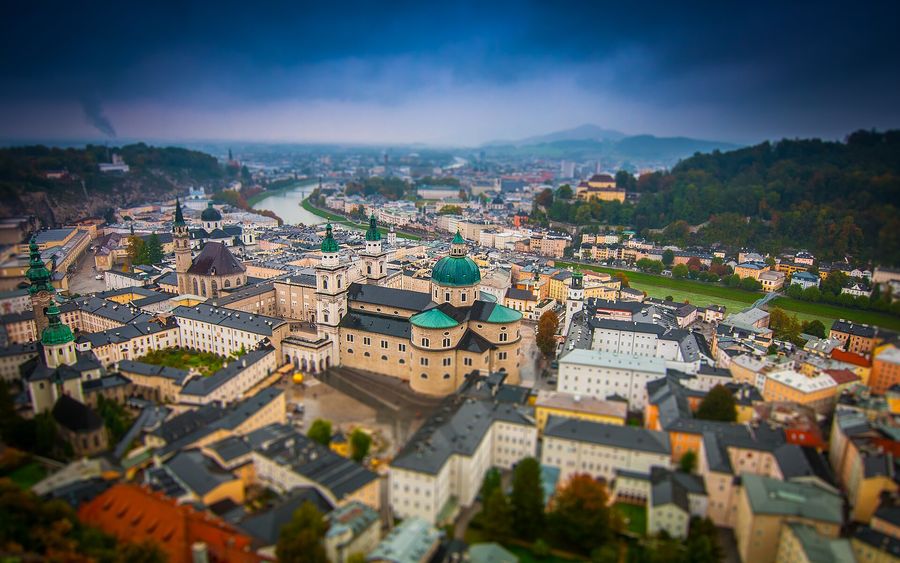
Give Salzburg two full days for the UNESCO old town, Hohensalzburg Fortress, and Mozart's Birthplace, adding a third for Hallstatt or a Sound of Music tour. Visit in May or June for blooms and thinner crowds, buy the Salzburg Card, and book a licensed walking tour to unlock the baroque history.
Few cities of 155,000 people punch as far above their weight as Salzburg. Wolfgang Amadeus Mozart was born here; the von Trapp family sang their way out of here in The Sound of Music; and for six weeks every summer the Salzburg Festival turns the place into the classical-music capital of Europe. The result is a baroque old town — UNESCO-listed and remarkably intact — that draws around three million overnight visitors a year to a footprint you can cross on foot in twenty minutes. Planning a Salzburg trip is mostly about two things: timing your visit to match the version of the city you actually want, and deciding where a local guide turns a pretty stroll into something you will remember.
How many days do you need in Salzburg?
Two full days is the sweet spot: give the first to the right bank — Hohensalzburg Fortress, the cathedral, and Mozart's Birthplace on Getreidegasse — and the second to Mirabell Palace and its gardens. A single day works as a Vienna day trip but feels like a sprint, while three days reaches the surrounding lakes.
Salzburg is a two-night city for most travellers, and a rewarding three-night one if you want to reach the surrounding lakes and mountains.
A single full day shows you the bones of the place: a walk up to the Hohensalzburg Fortress, a loop through the old town's lanes, and a glance at Mozart's Birthplace on Getreidegasse. It works as a day trip from Vienna, but it will feel like a sprint and you will skip the museums entirely.
Two full days is the sweet spot. Give the first to the right bank — the fortress, the cathedral, Getreidegasse, and Mozart's Birthplace — and the second to the left bank around Mirabell Palace and its gardens, with time left for a coffee and a slower wander.
Three days or more opens up the region. The Salzkammergut lakes, the salt-mine village of Hallstatt, and Berchtesgaden with the Eagle's Nest are all within about ninety minutes, and a Sound of Music tour that strings several filming locations together fills a half-day comfortably.
When is the best time to visit Salzburg?
May and June are arguably the best window — warm days, the Mirabell parterre in full bloom, and crowds below their July peak. July and August belong to the Salzburg Festival, glorious but the single biggest factor in your budget. December wraps the cathedral square in one of Europe's oldest Christmas markets.
Salzburg sits in an Alpine foothill basin, which means real seasons and a fair amount of rain — locals joke about the Schnürlregen, the "string rain" that can settle in for days. The month you choose changes the trip more than the weather alone suggests.
May and June are arguably the best window. Days are warm, the Mirabell parterre is in full bloom, and the crowds have not yet reached their July peak. This is the time to come if you want the city at its most photogenic without the Festival surcharge on every hotel room.
July and August belong to the Salzburg Festival, founded in 1920 and still one of the world's most prestigious performing-arts events, staging over 200 opera, drama, and concert performances across six weeks. It is glorious — and it is the single biggest factor in your budget, because rooms book out months ahead and prices climb accordingly. Come for the Festival deliberately, or avoid these weeks deliberately; drifting in by accident is the expensive option.
September and October bring golden light, comfortable temperatures, and a noticeable drop in numbers once the Festival crowds disperse.
December transforms the cathedral and Residenz squares into the Christkindlmarkt, one of Europe's oldest Christmas markets, with mulled wine, roasted chestnuts, and choirs under the baroque facades. It is cold and often snowy, but it is the most atmospheric time of all.
Whenever you come, reach the fortress at its 9 AM opening to enjoy the views before the day-trip buses arrive.
Which Salzburg tours are worth booking?
A licensed walking tour of the old town is the most useful single booking, threading the cathedral, Getreidegasse's guild signs, and the prince-archbishops' legacy into one story. A Sound of Music tour is the rare bus excursion worth the seat, and a Mozart-themed tour suits anyone who came for the composer. Fortress and gardens you manage alone.
Salzburg's old town is compact and walkable, so the honest question is never whether you can see something alone — it is whether a guide adds enough to justify the booking. For a few things, the answer is a clear yes.
A walking tour of the old town is the most useful single booking. A licensed guide threads together the cathedral where Mozart was baptised, the wrought-iron guild signs of Getreidegasse, and the prince-archbishops' fingerprints on every square, turning a handsome streetscape into a coherent story. Austrian guide licensing is rigorous and is legally required for guiding inside many museums and monuments, so a licensed guide is also the only way to get expert commentary in some interiors.
A Sound of Music tour is the rare bus excursion worth the seat. The filming locations — Leopoldskron Palace, Hellbrunn's gazebo, the Mondsee church, and the lake district where the opening shots were filmed — are scattered well beyond the centre, and a guided tour covers far more ground in an afternoon than you could ever manage on foot or by public transport.
A music- or Mozart-themed tour suits anyone who came for the composer. Guides connect Mozart's Birthplace at Getreidegasse 9 — the apartment where he spent his first seventeen years, now among Austria's most-visited museums with over 400,000 annual visitors — to the wider world of the court that employed, and frustrated, the Mozart family.
For the fortress itself, the gardens, and the Christmas markets, you are perfectly fine on your own.
How much does a Salzburg trip cost?
The smartest single purchase is the Salzburg Card at around €30-42, covering every major attraction, the fortress funicular, a Salzach cruise, and transport. Free walking tours warrant €8-12, group tours €20-35, and a private half-day guide €160-280. Your largest swing, by far, is accommodation timing around the late-July Festival weeks.
The smartest single purchase is the Salzburg Card (around €30–42 for 24 to 72 hours), which covers every major attraction, the fortress funicular, a Salzach river cruise, and all public transport. Because the Hohensalzburg Fortress alone is €13.80 for an adult without the card, two or three sights plus the cruise make it pay for itself in a day — and it removes the friction of buying individual tickets.
For guided experiences, expect a tips-based free walking tour to warrant about €8–12 per person, a group tour to run €20–35, and a private half-day guide for a small group to land in the €160–280 range. Specialist private guiding — Festival-week music history, or a tailored Mozart day — climbs toward €300–550 per day. Sound of Music and lake-district bus tours sit in the mid-range and fold in transport you would otherwise have to arrange yourself.
Your largest swing, by far, is accommodation timing. A room in mid-June and the same room during the Festival are barely the same product on price. If your dates are flexible and the Festival is not the point of your trip, shifting a week either side of late July and August is the easiest money you will ever save in Austria.
How do you get to Salzburg and get around?
Direct ÖBB Railjet trains link Vienna to Salzburg in about two and a half hours, running roughly twice an hour, and a Sparschiene advance fare costs far less than the walk-up price. Munich is under two hours by rail. Once you arrive, the entire old town covers less than a square kilometre and is made for walking.
Getting in is easy. Direct ÖBB Railjet trains link Vienna Hauptbahnhof to Salzburg in about two and a half hours, running roughly twice an hour; booking a Sparschiene advance fare online is far cheaper than buying on the day. Munich is even closer — under two hours by rail — and Salzburg's own airport sits a short bus ride from the centre. From the main station, the old town is a fifteen-minute walk or a quick bus hop.
Once you arrive, the entire old town covers less than a square kilometre and is made for walking; the only real climb is up the Festungsberg to the fortress, and even that is optional, since the funicular runs from the Festungsgasse. The Salzburg Card's transport coverage matters most for reaching outlying sights and the train station, not for the centre itself.
A few logistics worth knowing. Festival tickets sell fast — some performances are gone within hours of release, so book months ahead if a specific opera is the reason you are coming. Tipping follows the Austrian norm: around 10% for private guides and €5–10 for group tours, and rounding up in restaurants. And if you are weighing day trips, Hallstatt and the Salzkammergut reward an early start to beat the afternoon coach crowds — a guide or a scheduled tour handles the timing and the driving far better than improvising with regional buses.
Why does Salzburg repay a little planning?
Because Salzburg's calendar is sharply seasonal: June, Festival August, and snowy December each deliver a different city on the same baroque streets. Choose your dates deliberately, hand the old town two unhurried days, buy the Salzburg Card, and add a licensed walking tour — that little structure separates a charmed visit from an overpriced scramble.
Salzburg's pleasures are concentrated and its calendar is unusually decisive — the same streets feel like three different cities in June, in Festival August, and under December snow. Pick your season on purpose, give the old town two unhurried days, lean on the Salzburg Card, and book a walking tour to unlock the history behind the baroque facades. Do that, and the city that gave the world Mozart and The Sound of Music turns out to be every bit as charming as its reputation promises — without the queues and overspend that catch out travellers who arrive without a plan.
Frequently Asked Questions
How many days do you need in Salzburg?
Two full days is enough for the UNESCO old town, the Hohensalzburg Fortress, Mozart's Birthplace, and the Mirabell gardens at a relaxed pace. Add a third day for a Sound of Music tour or a day trip out to Hallstatt or Berchtesgaden, both within about ninety minutes.
Is the Salzburg Card worth buying?
For most visitors, yes. At roughly €30–42 for 24 to 72 hours it covers every major attraction, the fortress funicular, a Salzach river cruise, and all public transport. Visit the fortress, one museum, and take the cruise in a single day and it has already paid for itself.
When is the best time to visit Salzburg?
May and June bring warm days, blooming Mirabell gardens, and thinner crowds than high summer. July and August are Salzburg Festival season — extraordinary opera and concerts, but hotels book out months ahead. December wraps the cathedral square in one of Europe's oldest Christmas markets.
How do you get from Vienna to Salzburg?
Direct ÖBB Railjet trains run roughly twice an hour from Vienna Hauptbahnhof and reach Salzburg in about two and a half hours. Booking a Sparschiene advance fare online costs far less than the walk-up price, and the station is a fifteen-minute walk or a short bus ride from the old town.