
Manchester on Your Own or With a Guide: Making the Call
Compare Manchester's free museums and independent walks with stadium access, history guides and music tours, including prices and practical tram planning.
Read the full guideUpdated · 9 min read
A stadium interior is the clearest reason to book in Manchester: the public street cannot get you into the dressing rooms or tunnel. Elsewhere, the decision is about interpretation. You can walk Castlefield and the Northern Quarter yourself, then spend on a history or music guide if that subject is the reason you came.
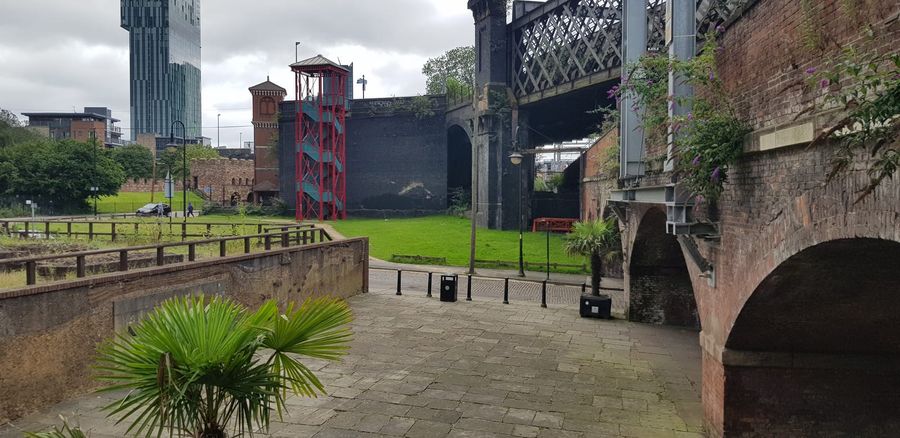
Canal basins, railway viaducts and former mills give Manchester an unusually readable industrial landscape, but they do not explain every dispute or invention associated with it. The same is true of its music venues: an address is easy to find, the story behind it less so. Use this guide to choose between independent stops and a specialist outing; the Manchester city guide handles the wider itinerary, with onward ideas in the England guide.
The Manchester You Can Cover Unassisted
The compact centre, the Northern Quarter and Manchester's unusually deep bench of free museums are enough for a full trip with nobody leading the way — the core is walkable and English-speaking, and the Metrolink carries you out to the rest.
Nobody needs help photographing the Town Hall, browsing the vinyl in the Northern Quarter, or wandering the free galleries of the Manchester Museum, the People's History Museum and the John Rylands Library — all free to enter. Piccadilly Gardens to the Northern Quarter is five minutes on foot, free Metroshuttle buses loop the rail stations, and the tram links Salford Quays and MediaCityUK for the price of a day travelcard. Castlefield's canals and the St Peter's Square Peterloo memorial are open-air and free to reach on your own. A museum visit and a canalside walk can fill a day; reserve a paid slot for the subject you want someone to explain in depth.
Where a Guide Unlocks the Hidden Layer
What gives Manchester its depth is a stratum you can't see from the pavement: the industrial and radical history that isn't self-evident, the stadium interiors you reach only on a booked tour, the musical geography scattered behind unmarked doorways, and the logistics of a day out to the Peaks.
The warehouses of Cottonopolis, the Bridgewater Canal at Castlefield and the site of the 1819 Peterloo Massacre only make full sense when someone ties them together — how cotton built the city, and how the fight for democracy grew from its slums. The dressing rooms, tunnel and pitchside at Old Trafford and the Etihad are open only on a booked tour, the one Manchester experience with no self-guided substitute. The doorway of the former Haçienda, the pubs and studios of the Madchester era, and the Salford streets behind the songs are invisible without a guide who lived it or has studied it. And for the Peak District, Liverpool or Chester, a tour absorbs the driving and timing so you spend the day looking out of the window rather than navigating unfamiliar roads.
Weighing It Up, Sight by Sight
Access is the dividing line at the stadiums. For the other stops below, decide whether you want a narrator, a convenient journey, or simply time to explore.
| Sight or experience | Best approach | Why |
|---|---|---|
| Northern Quarter & free museums | Self-guided | Compact, walkable and free to enter |
| Castlefield & Peterloo memorial | Self-guided or guided | Free to reach; a guide ties the history together |
| Old Trafford / Etihad stadiums | Guided (club tour) | Dressing rooms and pitchside open only on a tour |
| City-centre history walk | Guided | Cotton, reform and reinvention as one legible story |
| Madchester music trail | Guided (specialist) | The venues are unmarked; a fan's map is the point |
| Peak District / Liverpool day trip | Guided (operator) | Driving and timing handled on unfamiliar roads |
Book a club tour before building the rest of a football-focused day around it. A history walk has more flexibility: you can see Castlefield first and use the tour to answer questions the canals and warehouses raised. For an excursion outside Manchester, compare the operator's itinerary with the rail journey before paying for door-to-door convenience.
The Cost Gap Between Alone and Guided
Separate three budgets: free museum entry, a guide's time, and paid access such as a stadium tour. A private guide cannot make a club's admission charge disappear unless it is explicitly included in the booking.
Start with the museums you want to visit, then price the extra access or commentary separately. These are indicative ranges to check with each operator.
| Item | Approximate cost | Notes |
|---|---|---|
| Manchester Museum, People's History, John Rylands | Free | Self-guided, city centre |
| Small-group walking tour | £15–25 ($19–32) per person | City-centre history and themed walks |
| Music-heritage trail | £15–30 ($19–38) per person | Small-group specialist walks |
| Stadium tour | £29–40 ($37–51) per person | Old Trafford or the Etihad |
| Private half-day guide | £150–220 ($190–280) | City-centre highlights |
| Private full-day guide | £300–450 ($380–570) | Reaching Salford Quays or the Peak District |
A handful of things to factor in when you plan the spend:
- The free layer is large. With the marquee museums free to enter, spend your budget on the guided walks, stadium access and day trips.
- Blue Badge guides sit at the top. Nationally certified Blue Badge guides command the highest private rates and are the mark of formal accreditation across England.
- Private guides are priced per group. Splitting a half-day across three or four people brings the per-person cost down sharply.
- Tickets are often separate. Stadium and day-trip admissions, and any train fares to Liverpool or Chester, usually sit on top of a guide's fee unless a package bundles them.
Treat every figure here as a planning guide rather than a quote — rates change each season, so confirm the current price when you book.
When to Go, and the Metrolink Logistics That Shape a Day
Late spring and summer offer long evenings for walking, but Manchester's cultural life runs indoors, so winter still rewards museums, music and the Christmas Markets — and the tram network shapes any day out to the stadiums.
Late spring and summer (May–September) is the prime window for self-guided walks and canalside terraces, with festivals including Parklife in June and Manchester Pride over the August bank holiday; book stadium tours and football tickets well ahead. Autumn brings thinner crowds and golden canal light but more rain, winter leans indoors to the city's Christmas Markets and the music venues, and early spring is quieter and cheaper with changeable weather. Pack a waterproof whatever the month — Manchester's reputation is earned. For logistics, ride the Metrolink to reach Old Trafford, the Etihad Campus and MediaCityUK, keep the compact centre for walking, and plan around matchdays, when trams, pubs and the streets near both stadiums fill on fixture days. Book the marquee experiences — especially Old Trafford tours during the August–May league season — days or weeks ahead. The Manchester city guide covers month-by-month conditions in more detail.
Finding an Accredited Guide
Look for nationally accredited Blue Badge guides for the deepest city and heritage tours, established club-run tours for the stadiums, and small groups that leave room for questions.
For a serious city or heritage tour, a Blue Badge guide carries England's formal accreditation and tends to know the archives behind the buildings. Stadium tours are run by the clubs themselves, so book those direct. For music and food walks, favour specialists who live the subject rather than reciting it, and keep group size small — the smaller the group, the more room for the questions that make a tour memorable. The best Manchester guides read the room and connect the warehouses, the reform crowds and the record sleeves into a single story of a city that keeps reinventing itself.
Related Guides
- Manchester city guide — neighbourhoods, attractions and practical tips for the wider stay
- England country guide — how Manchester fits into a longer trip across the country
- Best Time to Visit London — pairing Manchester with the capital, about two hours away by train
Build the day around your strongest interest. Football fans should secure a club-tour slot first; music listeners can choose a specialist walk; a museum-focused visitor may need no guide at all. Leave travel time between the centre and the stadiums, check fixture-day restrictions, and carry a waterproof.
Frequently Asked Questions
Do you need a guided tour to see Manchester?
Not for the basics — the city centre is compact and walkable, the Metrolink reaches Old Trafford and MediaCityUK, and the Manchester Museum and Northern Quarter cost nothing to wander. A guide earns its place where Manchester is hard to read alone: the tangled industrial and political history around Castlefield and Peterloo, the geography of the Madchester music scene, the choreography of a matchday, and full-day trips into the Peak District where a driver handles the roads.
How much does a guided tour in Manchester cost?
Small-group walking tours run about £15–25 ($19–32) per person, and a stadium tour of Old Trafford or the Etihad £29–40 ($37–51). A private half-day city guide is roughly £150–220 ($190–280) and a full day £300–450 ($380–570), with nationally certified Blue Badge guides at the top of those ranges. Most city-centre museums are free, so a guide's fee is usually the only cost indoors.
When is the best time to take a walking tour in Manchester?
Late spring and summer bring long evenings for walking, but pack a waterproof in any month — Manchester's rain is not a myth. Winter shifts the best experiences indoors to museums, music venues and the Christmas Markets, while matchday weekends and festivals such as Parklife or Manchester Pride crowd the centre and are worth planning around.
What is the best Manchester tour for first-time visitors?
Start with a city-centre walking tour that threads Castlefield, the Town Hall and St Peter's Square to fix the industrial and political story in place, then add a stadium tour at Old Trafford or a Northern Quarter music-and-street-art walk depending on your interests. A second day suits a guided Science and Industry Museum visit or a Peak District day trip.
Are Old Trafford and Etihad stadium tours worth it?
For football fans, yes — the stadium-and-museum tours are the one Manchester experience with no self-guided substitute, taking you into the dressing rooms, tunnel and pitchside areas closed to casual visitors. Non-fans can skip them without missing the city's wider story. Book well ahead, as tours pause around fixtures during the August–May season.