
Collection Highlights
The Munich Tunnel and Memorial Clock
The tour's most solemn stop honours the twenty-three people, including eight Busby Babes, who died in the 1958 Munich air disaster. The Munich Tunnel display lines the walk with images of the lost team, while outside the ground the Munich Clock stands as a permanent memorial marking the date of the crash on 6 February 1958.
Sir Alex Ferguson Stand and the Museum
The North Stand was renamed for Sir Alex Ferguson in 2011 and houses the Manchester United Museum, which opened in 1986 as the first purpose-built museum at a British football ground. Its galleries trace the club from its 1878 origins as Newton Heath to the treble-winning side of 1999, with a trophy room displaying decades of silverware.
The Home Dressing Room and Players' Tunnel
Visitors step into the home dressing room where the squad prepares on match day, then follow the players' tunnel out towards the pitch — the same walk the team makes into a wall of noise. Guides point out the small rituals and superstitions that shape the pre-match routine.
The Stretford End
The West Stand, universally known as the Stretford End, has been the traditional home of United's most vocal supporters since the terracing days. Once vast standing room, it remains the ground's spiritual heart, and guides explain how its songs and sightlines helped forge Old Trafford's reputation as the Theatre of Dreams.
The United Trinity Statue
Unveiled in 2008 to mark fifty years since Munich, the United Trinity statue depicts George Best, Denis Law and Sir Bobby Charlton — three Ballon d'Or winners from the same team. It stands on Sir Matt Busby Way facing the statue of Busby himself, so the manager and his greatest players look permanently across at one another.
The Pitch and the Dugouts
The tour finishes at pitch level, where visitors sit in the dugouts that Sir Matt Busby and Sir Alex Ferguson once occupied and take in the arena from the touchline. The playing surface measures the international standard of roughly 105 by 68 metres and is one of the most recognisable in world football.
Seating Guide
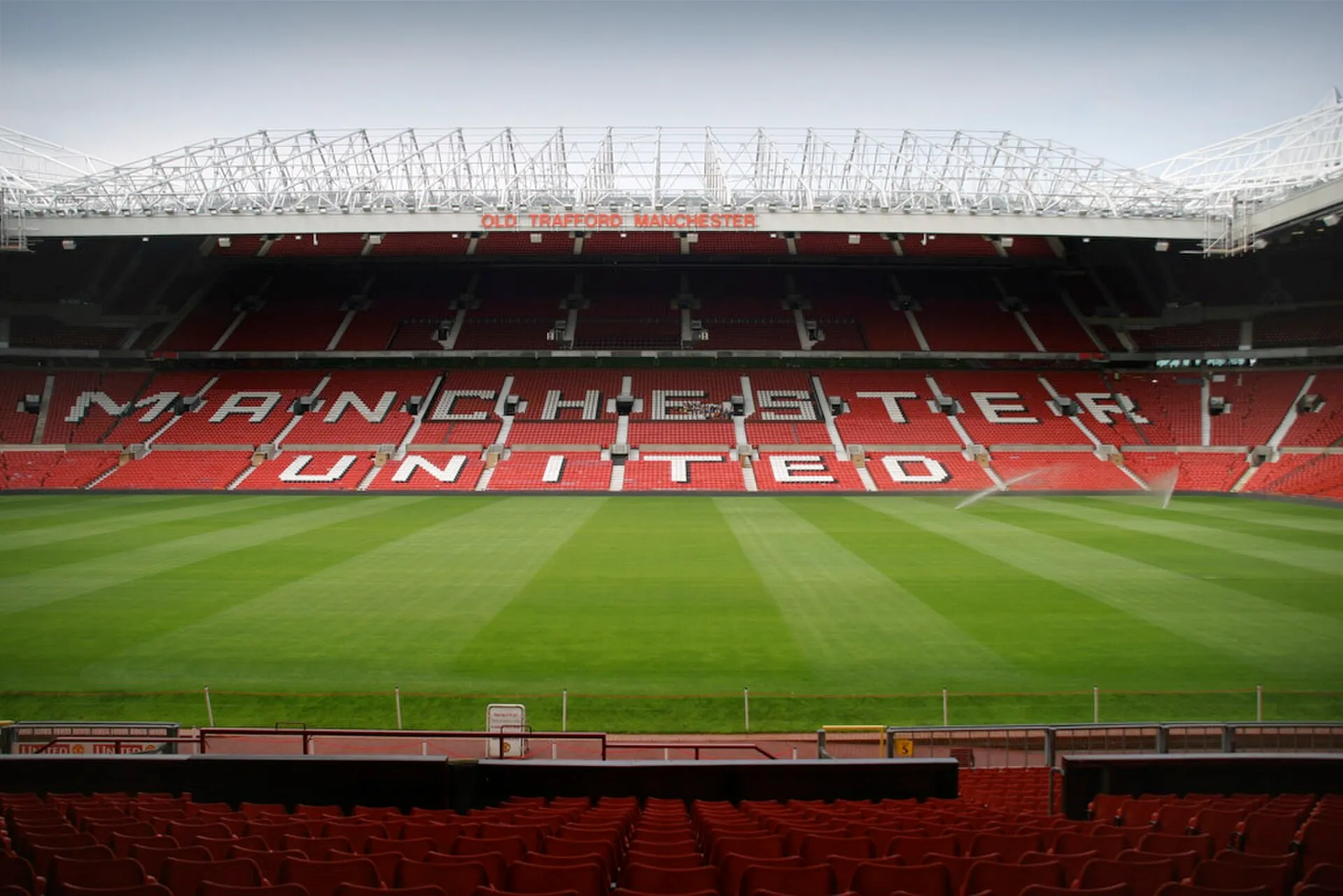
Old Trafford is built from four stands. The North Stand — renamed the Sir Alex Ferguson Stand in 2011 — is the tallest, a three-tiered wall that houses the museum and tour centre. Opposite it, the single-tier South Stand (the Sir Bobby Charlton Stand) stays low because the railway line runs directly behind it. The West Stand is the famous Stretford End, home to United's most vocal support, and the East Stand faces Sir Matt Busby Way, carrying the club crest above the megastore with the United Trinity and Busby statues outside. The tour lets you take in the pitch from several of these vantage points, including pitchside and the executive seats along the halfway line.
Events Schedule
Beyond Manchester United's Premier League and European fixtures from August to May, Old Trafford has a long record as a neutral host. It staged matches at Euro 96 and the 2012 Olympic football tournament, hosted the 2003 UEFA Champions League final, and has been the traditional home of rugby league's Super League Grand Final since 1998. The ground also stages occasional stadium concerts during the summer off-season. Checking the fixture and events calendar before you travel helps you choose between the quiet, full-access museum experience and the electricity of a live crowd.
When to Visit
Stadium tours run daily, typically from mid-morning with the last tour in the late afternoon (around 4:30 PM), and combine the behind-the-scenes route with entry to the club museum. On match days the tour is heavily restricted or cancelled and the museum keeps shorter hours, so a non-match day gives the fullest access to the dressing rooms, players' tunnel and pitchside. Book ahead through Manchester United's official website, as slots sell out during school holidays. The ground sits southwest of the city centre and is quickest reached by Manchester Metrolink tram, with the Old Trafford and Wharfside stops both a short walk from the turnstiles.
Admission and Costs
A standard stadium tour with museum entry costs around £29 (about $37) for adults and £19 (about $24) for children, while a museum-only visit is roughly £18 (about $23) adult and £12 (about $15) child. The premium Legends Tour, guided by a former player, runs near £40 (about $51). Match tickets, when released to non-members, generally start from £45 to £80 (about $57–$102) and climb steeply for marquee fixtures. Prices change each season, so confirm the current rates when you book.
The Case for a Guide
Every stadium tour includes an official audio guide, but a knowledgeable guide — the club's own tour host, or a private Manchester guide who builds Old Trafford into a wider city itinerary — turns the route into a story rather than a walk past empty seats. The moments that reward context most include:
- The Busby Babes and Munich — how the 1958 disaster reshaped the club and why the Munich Tunnel and memorial clock are treated as sacred ground.
- Ferguson's era — the decisions made from the home dugout across a trophy-laden reign that redefined English football.
- Reading the stands — why the Stretford End generates the noise it does, and how the ground grew from its 1910 opening into today's four-stand arena.
A guide also smooths the practicalities: timing your visit around fixtures, working through the vast megastore, and linking the stadium to the rest of the city.
Tips for Visitors
Book online ahead: Tours sell out, especially school holidays. Match day experience: If possible, attend a live game. Allow 90 minutes: Tour and museum combined. Red Devils Store: Massive megastore for merchandise. Getting there: Tram from city center (Metrolink) or free bus from Manchester Piccadilly
Frequently Asked Questions
What is the best time of year to experience Old Trafford?
The Premier League season from August through May is when the Theatre of Dreams is at its electric best, with match-day atmospheres unmatched by stadium tours alone. April and September combine active football fixtures with milder weather for walking around the exterior grounds. Summer months of June and July are quietest with no competitive matches, but stadium tours run daily without match-day interruptions and school holiday crowds keep the museum lively.
When can visitors attend events at Old Trafford Stadium?
Stadium tours run every day, usually from mid-morning until a final tour in the late afternoon (around 4:30 PM), and include entry to the club museum. On match days tours are heavily restricted or cancelled and the museum keeps shorter hours, so a non-match day gives the fullest access to the dressing rooms, players' tunnel and pitchside.
What do tickets cost at Old Trafford Stadium?
Stadium Tour: £29 adult, £19 child. Museum only: £18 adult, £12 child. Legends Tour: £40 with a former player as guide. Match tickets: £45-80+ (book well ahead).
How should visitors prepare for Old Trafford Stadium?
Book online ahead as tours sell out, especially during school holidays. Allow 90 minutes for the tour and museum combined. Getting there: Tram from city center via Metrolink or free bus from Manchester Piccadilly.