
Getting Around Lyon: A Practical Transport Guide
How to move around Lyon on foot, by metro, tram, funicular, and Vélo'v bike — plus climbing to Fourvière, arriving at Part-Dieu, reaching the airport.
Read the full guideUpdated · 11 min read
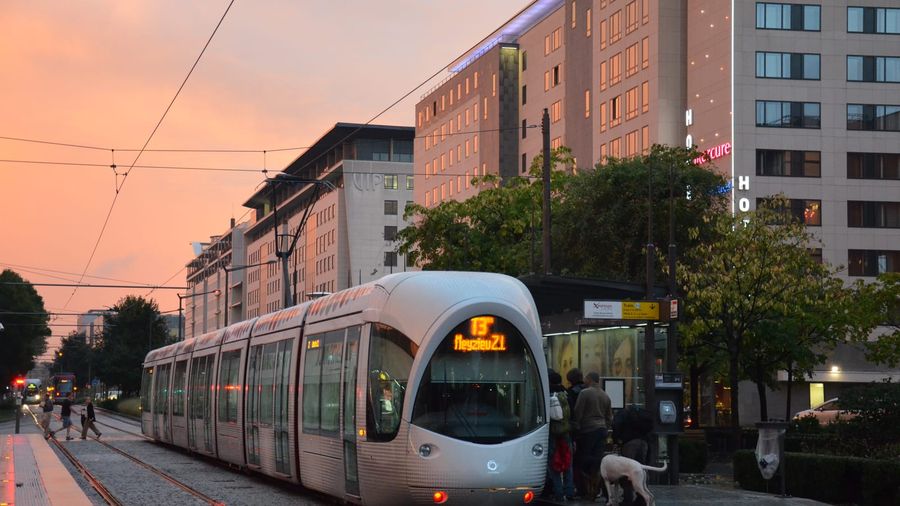
Lyon is easy to cross without a car: the flat Presqu'île and Vieux Lyon are made for walking, and the compact TCL network — four metro lines, seven tram lines, two funiculars, and a dense bus web — handles everything else on a single ticket. Save the funicular for the climb to Fourvière, use Vélo'v to hop between the two rivers, and arrive by TGV rather than fighting the traffic.
Lyon sits where the Rhône and the Saône meet, and its geography explains how you get around it. The city's heart is the Presqu'île, a long, flat peninsula between the two rivers, with the Renaissance quarter of Vieux Lyon pressed against the Saône and two hills framing everything — Fourvière, "the hill that prays," and Croix-Rousse, "the hill that works." That layout is half the battle: level ground you walk, hills you ride up, rivers you cross by bridge or bike. Everything else runs on one operator's single ticket.
Is Lyon's centre walkable, and where should you start?
Yes — start on foot on the Presqu'île. The peninsula is flat and its main sights line up along a walkable spine, while Vieux Lyon across the Saône is a compact, cobbled quarter best explored slowly. The only central journey you shouldn't attempt on foot is the climb to Fourvière.
The Presqu'île is the natural place to begin. From the grand Place Bellecour — one of the largest pedestrian squares in Europe — it is a level, twenty-five-minute walk north to the Hôtel de Ville and the food halls, or south toward Perrache station, with cafés and river quays the whole way. Walking the peninsula is the best orientation you can ask for, and it costs nothing.
Cross the Saône by any footbridge and you reach Vieux Lyon, one of Europe's largest surviving Renaissance districts and home of the traboules, the covered passageways that thread between streets and courtyards. Many are in private buildings, so a guided visit is the reliable way to see them. The quarter is small enough to wander without a plan — simply walk.
How does the TCL network work?
One operator, TCL, runs the metro, trams, funiculars, and buses on a single fare system. The four metro lines cover the centre fastest, the seven tram lines reach the outer districts, the funiculars climb Fourvière, and buses and trolleybuses fill the gaps — all interchangeable on one ticket.
TCL (Transports en Commun Lyonnais) is the network you will use for almost every ride — compact, frequent, and easy to read once you know its four pieces.
| Mode | What it is | Best for |
|---|---|---|
| Metro (lines A, B, C, D) | Four lines, with driverless line D among the busiest automated lines in France | Fast trips along and across the Presqu'île |
| Tram (T1–T7) | Modern street-level lines fanning out from the centre | Reaching Part-Dieu, the Confluence, and outer districts |
| Funicular (F1, F2) | Two short cable railways from Vieux Lyon up the hill | The climb to Fourvière and Saint-Just |
| Bus & trolleybus | Dense network, including electric "C" trunk lines | Neighbourhoods and hills the rails miss |
Metro line C is unusual — it uses a rack railway to haul itself up the Croix-Rousse slope, a rare survival worth a ride for its own sake. For most visitors the metro and trams do the heavy lifting; plan any trip in the TCL app, which shows live times and sells tickets.
What do tickets cost and how do you pay?
Buy a single ticket for one-off hops or a 24-hour pass for a full day of sightseeing, and validate every time you board. A single ticket covers an hour of unlimited connections across metro, tram, funicular, and bus, so most short journeys need only one.
Fares are simple, but always check current prices in the TCL app before you buy, as they are revised periodically. The table below shows the typical structure rather than exact centimes.
| Ticket | Roughly | Good for |
|---|---|---|
| Single ticket | ~€2 | One journey, up to an hour of connections |
| 24-hour pass | ~€6–7 | A full day of sightseeing across all modes |
| Group / evening pass | Varies | Small groups or late trips; check the app |
| Rhônexpress airport tram | ~€16 one way | Airport transfer only — a separate premium fare |
The easiest approach for a visitor is the TCL app: buy and store tickets on your phone, then validate on board. Station machines sell the same tickets, and contactless card readers are being rolled out, but the app is the most dependable option. Validate every time you board — inspections happen and an unvalidated ticket counts as fare evasion. If you plan to combine transport with museums, the separate Lyon City Card bundles unlimited TCL travel with entry to many attractions and a river cruise, and can pay for itself on a busy day.
Should you cycle Lyon with Vélo'v?
For flat trips between the two rivers, yes. Vélo'v, Lyon's pioneering bike-share launched in 2005, has hundreds of stations across the centre, and the level quays along the Rhône and Saône make riding a genuine pleasure. Avoid the hills unless you take an electric bike.
Lyon helped invent modern bike-share: Vélo'v was one of the first large-scale systems in the world when it opened in 2005, and it now blankets the city with stations, including electric bikes for the climbs. Grab a bike from any station, ride, and dock it at another; short trips are cheap with a day pass bought at the terminal or in the app.
The riding is best where the land is flat. The Rhône's eastern bank has wide, car-free riverside quays among the nicest places to cycle in any French city, and the Presqu'île is level throughout. The two hills are steep enough that most visitors leave them to the funicular and the metro, though an electric Vélo'v makes even those manageable.
How do you get up to Fourvière and the Roman city?
Take funicular line F2 from Vieux Lyon straight up to the Basilica of Notre-Dame de Fourvière and the Roman theatres. It is covered by a standard TCL ticket, saves a punishing climb, and drops you beside the best panorama in the city.
Fourvière is the hill you ride, not the hill you walk. From the funicular station in Vieux Lyon, two short cable lines climb the slope: F2 serves Fourvière itself, delivering you next to the basilica and its terrace view over the rooftops, while F1 runs to the Saint-Just quarter. Both are part of the TCL network, so a normal ticket is all you need. Locals call them la ficelle — "the string" — a nickname left over from the era of cable haulage.
Once you are up top, the Roman theatres of Fourvière — the remains of ancient Lugdunum — sit a short walk from the basilica, and you can wander down through the archaeological site rather than ride back. It is one of the few places where descending on foot beats the funicular, because the walk down through Vieux Lyon is part of the pleasure.
How do you arrive in Lyon and reach the airport?
Arrive by TGV at Gare de la Part-Dieu, Lyon's main station, with Paris a little over two hours away; Perrache handles some services on the Presqu'île's southern tip. For the airport, take the dedicated Rhônexpress tram from Part-Dieu — about thirty minutes, and far simpler than a taxi.
Lyon is superbly connected by rail, which is the reason most visitors never need a car. Gare de la Part-Dieu is the principal station and a major TGV hub, putting central Paris a little over two hours away and cities across France within easy reach; a tram or metro ride links it to the centre in minutes. Perrache, at the southern end of the Presqu'île, is the older station and still useful for some regional and TGV services.
For Lyon-Saint-Exupéry Airport, about 25 km east of the city, the answer is the Rhônexpress — a distinctive red tram-train that runs between the airport and Part-Dieu in roughly thirty minutes, every fifteen minutes for most of the day. It carries a premium fare of its own, separate from and dearer than a standard TCL ticket, so buy the Rhônexpress ticket directly rather than trying to travel on a metro fare. It is still the fastest and most predictable way into town.
Which guided tours are worth it, and what do they cost?
A traboules walking tour and a river cruise are the two paid experiences that repay the outlay: the walk unlocks private Renaissance passageways you cannot enter alone, and the boat shows the two rivers from the water. Food tours are the third pillar in the gastronomic capital.
Lyon's guided offerings play directly to its strengths — hidden passages, rivers, and food. The table below shows the main options and rough per-person costs; prices vary by operator and season.
| Tour type | Roughly | Why take it |
|---|---|---|
| Traboules walking tour | €15–25 | Access to private Vieux Lyon passageways, with the history behind them |
| River cruise (Rhône & Saône) | €13–20 | The Confluence and old town seen from the water |
| Food / bouchon tour | €75–120 | Tastings across markets and traditional restaurants |
| Private half-day guide | €150–280 | A tailored route for up to a small group |
A traboules walking tour is the most Lyon-specific choice, because many of the passageways sit behind doors only guides can open. A river cruise is the easiest way to grasp the city's two-river geography and glides past the striking Musée des Confluences where the Rhône meets the Saône. And in a city with more restaurants per head than any other in France, a food tour through the markets and bouchons is a fair use of a half-day. Whatever you choose, book food tastings and traboule walks ahead — the best ones fill up.
Day trip or base — how should you plan Lyon?
Lyon works best as a base of two or three nights rather than a day trip, because its rewards — evening light on Fourvière, a leisurely bouchon lunch, the calm of Vieux Lyon after the coaches leave — belong to people who stay. Fast rail then turns the surrounding region into easy day trips.
You can see the headline sights in a long day, but Lyon repays an overnight stay more than most French cities. Evenings are when it is at its best: the basilica glows above the rooftops, the Saône quays fill with strollers, and the bouchons settle into their unhurried rhythm. From a Lyon base, the TGV and regional trains put the Beaujolais vineyards, the Alps, and even Paris within a comfortable day's reach.
Once you have the transport sorted, the Lyon city guide covers what to see when you arrive — from the traboules and the food halls to the parks and the Roman city on the hill.
Frequently Asked Questions
Is Lyon's centre walkable?
The Presqu'île peninsula and Vieux Lyon are very walkable — you can cross the flat central spine on foot in about twenty-five minutes, and the two old quarters sit on opposite banks of the Saône a short walk apart. What you don't want to do on foot is climb Fourvière hill; take the funicular for that.
How do you pay for the metro, tram, and bus in Lyon?
Everything is run by TCL on one ticket. Buy a single ticket or a 24-hour pass from station machines or the TCL app, and validate it each time you board — a single ticket allows one hour of connections across metro, tram, funicular, and bus. Contactless payment is being rolled out on readers, but the app is the most reliable option for visitors.
How do you get from Lyon-Saint-Exupéry Airport to the city centre?
Take the Rhônexpress, a dedicated red tram-train that links the airport to Gare de la Part-Dieu in about thirty minutes, running every fifteen minutes for most of the day. It is a premium service with its own fare, separate from and dearer than a standard TCL ticket, so buy that ticket rather than trying to use a normal metro fare.
How do you get up to the Fourvière basilica?
Take funicular line F2 from the Vieux Lyon station up to Fourvière; it is covered by a standard TCL ticket and saves a steep climb. The second funicular, F1, runs to Saint-Just. Locals nickname the funiculars la ficelle, "the string.
Do you need a car in Lyon?
No. Between the metro, trams, funiculars, buses, and Vélo'v bikes, the city is easy to cover without one, and the historic core has restricted traffic and expensive parking. Arrive by TGV at Part-Dieu or Perrache and rely on public transport and walking.