
Getting Around Ghent: Trams, Tickets & Bikes
How to get around Ghent on foot, by bike, and on De Lijn trams and buses — the tram lines that matter, how to buy Ghent (Gent) tram tickets and pay fares.
Read the full guideUpdated · 16 min read
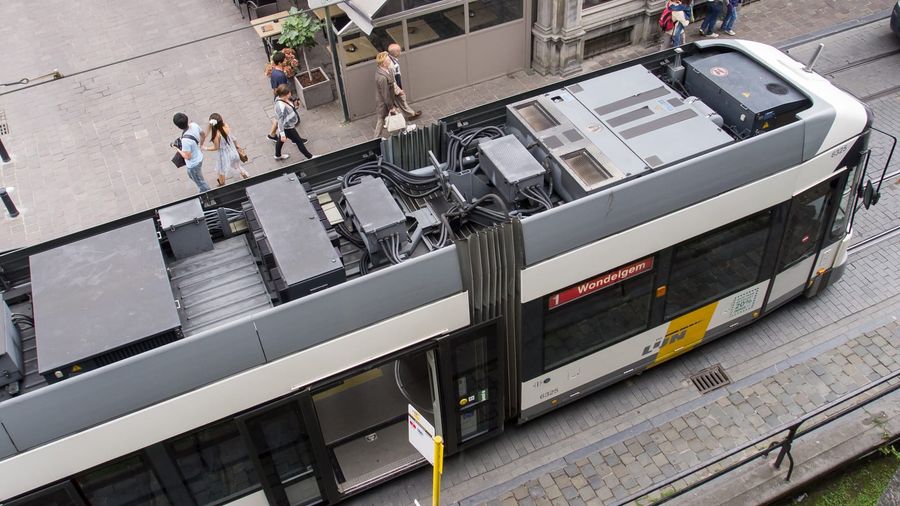
Ghent is best explored on foot and by bike: the medieval centre is compact, flat, and largely car-free, so you can reach almost every headline sight without paying a fare. Save Ghent's public transport — the De Lijn trams and buses — for the ride in from Gent-Sint-Pieters station and the outer neighbourhoods, tapping a contactless card or buying tickets through the De Lijn app.
Ghent rewards visitors who realise one thing on arrival: this is a city built around walking, cycling, and water, not the car. The historic core holds one of the largest intact medieval centres in Europe, and since the city's 2017 circulation plan divided the centre into traffic sectors, the streets around the Graslei waterfront and the old guildhalls are calmer and more pedestrian-friendly than ever. Everything you came to see in Ghent — the castle, the cathedral, the canals — sits within a footprint you can cross in twenty minutes. The trick is knowing when to walk, when to grab a bike, and when the tram genuinely saves you time.
Is Ghent's centre walkable, and where should you start?
Yes — start on foot at the Korenmarkt. From there Gravensteen castle, St. Bavo's Cathedral, and the Graslei guildhalls are each a walk of well under fifteen minutes, all car-free and free to reach.
The Korenmarkt is the natural hub of the old town, and almost everything worth seeing radiates from it. Walk north-west along the Leie and you reach Gravensteen, the moated castle of the Counts of Flanders, in about ten minutes. Turn the other way and St. Bavo's Cathedral — home to Jan and Hubert van Eyck's Ghent Altarpiece, the most frequently stolen artwork in recorded history — is a five-minute stroll past the Belfry.
The single most Ghent thing to do on foot is the waterfront. The Graslei and Korenlei face each other across the Leie, their thirteenth-century guildhalls forming the city's postcard view. Walking the quays is free and the best orientation you can give yourself; do it first, ideally at golden hour when the reflected light on the water is at its best.
A sensible on-foot sequence for one day: climb Gravensteen's ramparts in the morning, cross to St. Bavo's for a booked Altarpiece slot, then wander the Patershol lanes toward the waterfront for the evening. None of it costs a cent in transport.
Is cycling the best way to get around Ghent?
For anything beyond the medieval core, yes. Ghent is flat, compact, and bike-friendly, and rental bikes — including Blue-bike at Gent-Sint-Pieters station — are cheap. A bike turns the university quarter, the port-side arts district, and the parks into easy ten-minute rides.
Ghent is a cycling city in the Flemish tradition: dead-flat, threaded with bike lanes, and calmer in the centre since through-traffic was rerouted.
- Renting: Blue-bike, Belgium's national station bike-share, has a rack at Gent-Sint-Pieters and is ideal for day hires; private rental shops and many hotels also lend bikes. Expect a low daily rate plus a deposit.
- Riding: Marked lanes run almost everywhere and the terrain is flat, but the medieval centre's cobbles and pedestrian priority mean you should ride slowly and walk your bike through the busiest lanes.
- Parking: Use marked racks and the large station and Korenmarkt bike parkings rather than leaning bikes against bridges — the city removes strays.
A bike is what makes the edges of Ghent effortless: the student streets around Overpoort, the design and arts venues near the old docks, and the citadel park all become quick hops rather than long walks.
Ghent's public transport: when do you actually need the trams and buses?
Ghent's trams and buses earn their keep on the station journey and to the outer neighbourhoods; between the central sights you are almost always quicker on foot. Save the De Lijn network for the ride in from Gent-Sint-Pieters and the districts beyond the medieval core.
De Lijn, the Flemish public transport operator, runs all of Ghent's trams and buses on a single fare system, so one ticket covers whichever mode you hop on. There is no metro or underground here; everything runs at street level, so you simply board wherever you spot a De Lijn stop.
One thing catches first-time visitors out: on local signage, tram-front displays, and inside the De Lijn app the city is spelled Gent, its Flemish name. A search for "Gent trams" or "Gent public transport tickets", or a tram destination you don't recognise, is the same system under the local spelling — Ghent and Gent are one and the same place.
Which Ghent trams run, and where do the lines go?
Ghent's passenger tram network is down to three lines during reconstruction: T1 links Gent-Sint-Pieters to Kouter and Gent-Zuid, T2 threads the Korenmarkt through the medieval core, and T4 serves the Gravensteen side, while T3 stays suspended.
Current service, checked 14 September 2026: the De Lijn Ghent network overview and construction notice replace older tourist maps. The first works phase runs until late November; later phases change the eastern end of T1 again.
| Service | Current route or connection | When it helps |
|---|---|---|
| T1 | Flanders Expo — Gent-Sint-Pieters — Kouter — Zuid; some services continue to Gentbrugge depot | Station to Kouter, followed by a walk into the historic core |
| T2 | Van Beverenplein — Rabot — Korenmarkt — Zuid — Melle Leeuw | Stops in the medieval centre and connections at Zuid |
| T4 | Gent-Sint-Pieters — Rabot — Muide — Lange Steenstraat | The Gravensteen side of the centre; currently does not continue to UZ Gent |
| P3 bus | Gent-Sint-Pieters — Nieuw Gent — Zwijnaarde | Replacement for suspended T3, including access towards the hospital |
T3 is planned to remain suspended until May 2027. T1 runs more frequently between Flanders Expo and Zuid during the works, roughly every ten to fifteen minutes by day before service thins in the evening and on Sundays; not every service continues beyond Zuid. Match the displayed destination to the journey planner, and check the last departure for your return — the works timetable retimes both the first and last trams, so confirm live times rather than assuming a fixed midnight finish. Buses also connect districts and park-and-ride sites beyond the tram network.
Which Ghent tram stop is closest to each sight?
You rarely ride more than one Ghent tram to reach the big sights: most cluster within a few minutes' walk of the Korenmarkt, Kouter, or Lange Steenstraat stops.
The tram's real job is closing the gap between Gent-Sint-Pieters station and the edge of the medieval core; from there you walk. Pick the stop nearest your first sight below, then confirm it against the De Lijn journey planner, since the works timetable can shift a terminus.
| Sight | Nearest tram stop | Line | Walk from the stop |
|---|---|---|---|
| Korenmarkt and the Graslei & Korenlei waterfront | Korenmarkt | T2 | 2–3 minutes |
| St. Bavo's Cathedral and the Ghent Altarpiece | Korenmarkt | T2 | ~5 minutes past the Belfry |
| Gravensteen castle | Lange Steenstraat | T4 | ~5 minutes |
| Kouter flower market and the southern old town | Kouter | T1 | at the stop |
Arrive at Kouter or Lange Steenstraat on a station tram and the rest of the core is a flat, car-free walk — you seldom need a second tram between sights.
Ghent tram tickets: how do you pay, and where do you buy them?
Ghent tram tickets cost €3 for a single De Lijn ride, whether paid contactlessly or through the app. Compare your planned journeys with a €9 adult day ticket; a museum-focused visit may suit CityCard Gent instead.
There is no separate tram-only ticket: the same fare covers De Lijn buses. The current single-ticket and day-ticket pages explain prices and activation. Searching the Flemish "Gent tram tickets" lands on the same De Lijn products — there is no Ghent-only or tourist tram ticket to hunt for separately.
| How to pay | Price | Best for |
|---|---|---|
| Contactless card or mobile wallet | €3 per single ride | Boarding without installing an app |
| Single app ticket | €3 | Buying ahead and activating before boarding |
| 24-hour day ticket | €9 adult; €4.50 ages 6–11 | Multiple journeys; adult savings begin beyond three singles |
| CityCard Gent | €49 for 48 hours; €55 for 72 hours | Combining covered attractions, local transport, and a boat tour |
One card can pay for a group: De Lijn’s contactless instructions allow up to five passengers, with a separate tap for each at the same white terminal within two minutes. On a transfer, tap once per passenger with the same card or device. There is no tap-off. Keep that payment medium available for inspection.
App tickets need activation before boarding; they are not validated by tapping the contactless reader. Children under six ride free with an accompanying paying passenger aged at least 12. The official CityCard Gent page lists included attractions and transport: add up what you actually intend to visit, particularly for children who already receive free entry at many museums.
How do you arrive in Ghent and reach the outer sights?
Arrive by train at Gent-Sint-Pieters, about 2.5 km south of the centre, then use the current tram connections to Kouter or Lange Steenstraat. Fast rail links put Bruges about 25 minutes away and Brussels around half an hour.
By train. Gent-Sint-Pieters is Ghent's main station and one of Belgium's busiest, with frequent direct services from Brussels, Bruges, and Antwerp (about an hour), plus Brussels Airport in roughly an hour — so most visitors never need a car to arrive. From the station, take T1 to Kouter or T4 towards Lange Steenstraat, choosing the stop nearest your accommodation in the journey planner.
By car — think twice. The historic centre is a Low Emission Zone with a one-way circulation plan that deliberately makes driving through it slow. Leave the car at a park-and-ride on the ring and continue by tram or bus; on-street parking in the core is scarce and expensive.
Should you take a boat or a guided tour, and what does it cost?
A canal boat is the one paid ride worth building in: 40-minute guided trips along the Leie run about €10–14 and show you the guildhalls from the water. Free tip-based walking tours and specialist Altarpiece guides round out the options.
Ghent's waterways are part of how the city works, and a canal boat tour is the most rewarding way to see the medieval waterfront. Boats depart from the Graslei and Korenlei, and a typical 40-minute guided loop costs around €10–14, gliding past guildhalls and under low bridges a walker never sees.
On land, tour choices span every budget. Free walking tours run on a tip basis — €10–15 for a two-hour loop is standard — and are the best-value orientation. For the Ghent Altarpiece, an art-historian guide (roughly €60–90) turns Van Eyck's panels from a beautiful puzzle into a story you can follow; book a timed cathedral slot online first, as entry is limited to control crowds. If you'd rather see the wider Flemish circuit, Ghent pairs naturally with the other medieval cities of Belgium on a longer trip.
A canal boat trip is also bundled into the Ghent City Card covered in the fares above, so a museum-heavy itinerary may already include this ride — the card pays off only when you use enough of its benefits.
Once you've sorted out how to move, the Ghent city guide covers what to do when you get there.
Frequently Asked Questions
Is Ghent's historic centre walkable?
Yes — the medieval core is compact and largely car-free, and you can walk from the Korenmarkt to Gravensteen, St. Bavo's Cathedral, and the Graslei in well under fifteen minutes each. The only time you need transport inside the city is the ride between Gent-Sint-Pieters station and the centre.
How do you get from Gent-Sint-Pieters station to the centre?
During the current works, take T1 towards Gent-Zuid and get off at Kouter, then walk to the medieval centre. T4 towards Lange Steenstraat is another option for the Gravensteen side. Do not rely on an old map showing tram 1 directly through Korenmarkt: check the De Lijn route planner for your travel date and destination. Walking from the station to the historic core takes roughly half an hour.
Does your train ticket cover the tram in Ghent?
A standard train ticket to Gent-Sint-Pieters does not include De Lijn travel. Buy or activate a separate tram or bus ticket, or tap a contactless card when boarding. A De Lijn single ticket costs €3 and permits transfers within 60 minutes. Check any special combined product separately rather than assuming your rail ticket covers the local journey.
How do you pay for a tram in Ghent?
Tap a contactless card or mobile wallet on the white reader when boarding, or buy an app ticket and activate it before you get on. Both single fares cost €3 and cover De Lijn buses as well as trams for 60 minutes. Contactless passengers tap again when transferring, using the same card or device; an activated app ticket is shown on your phone for inspection.
Do you need to buy Ghent tram tickets before you arrive?
No — there is nothing to arrange before your trip. If you carry a contactless bank card you simply tap it on the on-board reader the moment you board your first tram, and if you would rather use your phone the De Lijn app sells m-tickets on the spot, so neither needs setting up in advance. There is no city travel card to order by post and no tourist tram pass to collect on arrival; the only thing worth doing before you leave home is installing the De Lijn app so it is ready if your card ever fails to tap.
Where can you buy a Ghent tram ticket without the app or a contactless card?
You still have offline options. De Lijn's Lijnwinkel shop at Gent-Zuid sells single tickets, day passes and the multi-ride Lijnkaart over the counter, and ticket vending machines stand at Gent-Sint-Pieters station and the larger park-and-ride stops. Many newsagents and shops that display the De Lijn sign — Press Shop and Relay branches, some supermarkets — sell prepaid tickets too. Buy before you board, since cash is no longer sold on newer trams, and validate the ticket at the on-board reader each time you get on.
Can you pay cash for a tram in Ghent?
You cannot buy a ticket with cash from the driver. Buy before boarding at a De Lijn sales point or a ticket machine if you need an alternative to the app or contactless payment. Check the payment methods offered by that outlet; the on-board contactless reader takes cards and mobile wallets, not coins or banknotes.
Can you use Apple Pay or Google Pay on Ghent trams?
Yes. Tap your supported mobile wallet on the white contactless reader when boarding. Use that same phone or watch for transfers and inspections: the plastic card linked to the wallet is a different payment medium. The single fare is €3; a day ticket is a separate product, so compare the options before tapping.
Is Ghent a good city to cycle in?
Very much so. The terrain is flat, the centre is calm since the 2017 circulation plan cut through-traffic, and rental bikes — including Blue-bike at the station — are cheap and widely available. Cycling is the quickest way to reach neighbourhoods beyond the medieval core.
Do you need a car to visit Ghent?
No, and a car is a liability here. The historic centre is a Low Emission Zone with restricted, one-way traffic, and parking is pushed to the edges. Arrive by train and rely on walking, cycling, and the occasional tram.
How many tram lines does Ghent have?
Ghent's tram network is small and easy to picture: four numbered lines, T1 to T4. Only three carry passengers at the moment — T1, T2 and T4 — because T3 is paused while its corridor is rebuilt. Rather than meeting at one central hub, the routes overlap around Gent-Zuid on the south side, while only one of them runs directly through the Korenmarkt in the medieval core, so most visitors only ever ride one or two of them.
Where can you see a Ghent tram map and live departure times?
Use De Lijn’s current Ghent network page for the map that matches your travel dates. In the app, select your stop to check departures or enter your destination in the journey planner. Construction diversions change both termini and connections, so an old printed tourist map may show a service that is not running.
How often do Ghent trams run, and when is the last tram?
Ghent trams are frequent by day — roughly every ten to fifteen minutes on the busy T1 station corridor, with T2 and T4 at comparable daytime intervals — so you can usually just turn up at the stop. Service thins in the evening and on Sundays and public holidays. First trams run early morning and the last services finish around midnight, but the reconstruction timetable retimes both ends, so check the De Lijn app or the real-time stop display and confirm your last tram back to Gent-Sint-Pieters before a late night out.
Does Ghent have a metro or underground?
No. Ghent’s local public transport runs at street level on De Lijn trams and buses. The railway stations serve regional and intercity trains. Within the compact old town, walking is often simpler than making a short tram connection.
How does Ghent's public transport work?
De Lijn trams and buses share a ticket system. Choose a route in the journey planner, check the destination on the vehicle, and use the correct validation method for your ticket. Frequency and first or last departures depend on the line, day, and works timetable; check your return trip before a late evening out.
How much do tram tickets cost in Ghent?
A single ticket is €3. A 24-hour day ticket costs €9 for ages 12 and over or €4.50 for ages 6–11; children under six travel free when accompanied by a paying passenger aged at least 12. CityCard Gent costs €49 for 48 hours or €55 for 72 hours and combines local transport with attractions. At three adult single rides, the €9 day ticket costs the same; further rides make it cheaper.
How long is a De Lijn ticket valid in Ghent?
A single ticket permits transfers within 60 minutes. A day ticket lasts 24 hours from activation, rather than expiring at the end of the calendar day. CityCard Gent has its own 48- or 72-hour validity window; follow the activation instructions supplied with that card.