
Best Time to Visit Iguazú
Iguazú Falls runs all year, but timing shapes everything — water volume, heat, crowds, and cost. Here is how to choose the right months.
Read the full guideUpdated · 10 min read
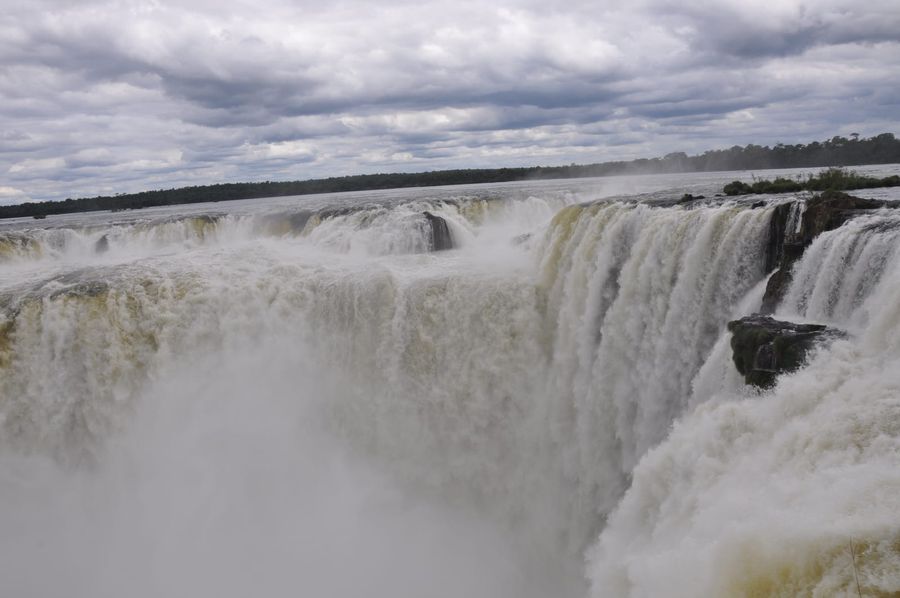
Iguazú Falls runs all year, but the smartest timing is March to May and August to October: strong water flow, walkable temperatures around the mid-20s, and lighter crowds. Come December to March for maximum, thunderous volume if you can take 35°C heat and holiday crowds; June and July are coolest and quietest.
There is never a bad time to stand in front of Iguazú Falls — 275 cascades spread across nearly three kilometres of jungle, with the horseshoe of the Garganta del Diablo plunging 82 metres into permanent mist. But there is a smartest time for your trip, and at Iguazú the variables pull against each other. The months with the most thunderous water are also the hottest, the most humid, and the most crowded. The months with the gentlest weather carry a little less flow. Getting the timing right is mostly about deciding which of those trade-offs you are willing to make.
Because Iguazú sits at the subtropical northern tip of Argentina, in Misiones province where the country meets Brazil and Paraguay, the seasons are inverted from the northern hemisphere and far milder than Patagonia's. There is no winter to plan around in the European sense — only a wetter, fiercer summer and a drier, calmer winter. What follows is how the year actually unfolds at the falls.
What is the short version of when to visit Iguazú?
Let the trade-off decide. If raw power is everything, brave the wet-season heat of December to March. If you would rather walk in comfort with rainbows and space, choose the shoulder months or the mild, sunny winter. Just plan around January, Semana Santa and the July school break, when crowds surge.
- Best all-round balance: March to May and August to October — solid water flow, walkable temperatures, manageable crowds
- Maximum water and drama: December to March, if you can take the heat and the company
- Coolest, calmest, least crowded: June and July, outside the mid-July school holidays
- Crowds to plan around: January, Semana Santa (Easter week), and the July winter break
What is summer like at Iguazú (December to March)?
This is Iguazú at its most overwhelming. Subtropical rains peak from November to March, so spray off the Devil's Throat can be felt long before the platform and the catwalks vanish into mist. The price is comfort: temperatures above 35°C, high humidity, peak January holiday crowds, and occasional flood closures of the Garganta walkway.
This is Iguazú at its most overwhelming. The subtropical rains that feed the Iguazú River peak between November and March, and the falls respond in kind — the spray off the Devil's Throat can be felt long before you reach the viewing platform, and on the highest-flow days the catwalks themselves are veiled in mist. If your single goal is to witness the raw force the place is famous for, these are the months.
The price is comfort. Daytime temperatures routinely climb above 35°C with humidity to match, which turns the open lower-circuit catwalks into genuinely demanding walking. January is also the heart of the Argentine and Brazilian summer holidays, so the park, the town of Puerto Iguazú and the ecological train all run at their busiest, and hotel rates sit at their annual peak. Occasionally — during the most extreme floods, when volumes can reach many times the normal rate — the authorities close the Garganta del Diablo walkway or the park entirely for safety, so build a spare day into a wet-season itinerary in case a viewpoint is shut on your first attempt.
If summer is your only window, start early. The park opens around 8 a.m., and the first two hours at the Devil's Throat — before the tour groups arrive and before the midday heat — are the closest you will get to having one of the planet's great waterfalls to yourself.
Are the shoulder months the sweet spot at Iguazú?
For most visitors, they are. By March to May the fierce summer heat has broken, the rivers still carry wet-season volume, and the holiday crowds have gone. August to October mirrors that balance from winter's far side, with September especially quiet and green. Watch only for Semana Santa, one of Argentina's busiest weeks.
For most visitors, the shoulder seasons are simply the right answer. By March to May, the worst of the summer heat has broken, the rivers are still carrying plenty of the wet-season volume, and the holiday crowds have gone home. Autumn light filters through the Atlantic Forest canopy, wildlife is active along the trails, and walking the circuits is a pleasure rather than an endurance test. The chief calendar hazard is Semana Santa (Easter week), one of the busiest travel periods in Argentina — check the date and either lean into it or book well around it.
August to October mirrors that balance from the other side of winter. Flow is recovering, the days are warming without yet being oppressive, and September in particular tends to be quiet and green. These windows also make the most of a guided visit: with the catwalks less congested, a local guide can time your arrival at each viewpoint to dodge the worst of the crowds and point out the coatis, toucans and great dusky swifts — the small birds that nest behind the cascades and dart straight through the falling water — that casual visitors walk straight past.
What is winter like at Iguazú (June to August)?
A revelation for anyone expecting cold. Days are mild and often sunny, nights cool, and humidity drops to its most comfortable. Water eases from the summer maximum but stays powerful, and the reduced spray means clearer photos and longer rainbows. Crowds thin except during the July school holidays; June and late August are quietest.
Iguazú's "winter" is a revelation for anyone expecting cold. Days are typically mild and often sunny, nights are cool, and the humidity drops to its most comfortable level of the year. Water flow eases from the summer maximum but remains powerful — this is not a trickle season, simply a calmer one — and the reduced spray can actually mean clearer photographs and longer rainbows at the Devil's Throat.
Crowds thin out too, with one exception: the July winter school holidays bring a surge of Argentine and Brazilian families, briefly pushing numbers and prices back toward summer levels. June and the back half of August are the genuinely quiet stretches. Winter is also the most reliable time for the full-moon walks, when on five nights around each full moon the park opens after dark for guided strolls to the Garganta del Diablo, the mist turning silver and the occasional moonbow appearing over the gorge — book these well ahead, as places are strictly limited.
How should you choose your Iguazú tours by season?
The headline excursions run year-round, but weight them by season. A guided falls-circuit day earns its keep most in the busy summer weeks, the Gran Aventura boat ride suits the warm months, and jungle wildlife walks reward the cooler, drier winter. Crossing to the Brazilian side is worth a second day in any season.
The headline excursions run year-round, but the season should steer how you weight them:
- Falls circuits with a guide — The Argentine side's upper and lower circuits, plus the train to the Devil's Throat, fill a full day in any month. A guided Falls Day Tour runs roughly AR$50,000–90,000 ($50–90) including transport, and earns its keep most in the busy summer and holiday weeks, when local knowledge of timing is worth far more.
- The Gran Aventura boat ride — The Zodiac run that drives straight under the cascades for a guaranteed soaking is most fun, and most available, in the warm months from spring through autumn; it can pause during the highest floods. Budget around AR$30,000–50,000 ($30–50) per person.
- Jungle and wildlife walks — A half-day Jungle & Wildlife Tour (about AR$40,000–70,000 / $40–70) rewards the cooler, drier winter and shoulder months, when animals are active and the trails are comfortable.
- Both sides of the falls — Crossing to the Brazilian side for the panoramic long view is worth a second day in every season; a two-day Both Sides package runs roughly AR$100,000–180,000 ($100–180) total. The crossing needs a passport and, for some nationalities, a visa, so check requirements before you go.
A quieter season also makes the free, often-overlooked boat to San Martín Island easier to fit in, and leaves time for sunset at the Hito Tres Fronteras, where Argentina, Brazil and Paraguay meet across the rivers.
How does the calendar affect your Iguazú budget?
Timing is a budget lever. January, Semana Santa and the July holidays are when Puerto Iguazú's hotels charge the most and sell out earliest, while the shoulder months and quiet winter weeks are noticeably cheaper for the same rooms. Park admission and guide rates stay broadly stable, so most savings come from accommodation and flights.
Timing is also a budget lever. January, Semana Santa and the July holidays are the three windows when Puerto Iguazú's hotels charge the most and sell out earliest; the shoulder months and quiet winter weeks are noticeably cheaper for the same rooms. Park admission and guide rates stay broadly stable across the year, so most of your seasonal savings come from accommodation and flights. Argentina's persistent peso inflation and parallel exchange rates mean the dollar figures above shift over time — treat them as a guide to relative cost rather than fixed prices, and confirm the current rate when you book.
What local logistics should you know for Iguazú?
A few practicalities hold true all year. Flights from Buenos Aires reach Iguazú airport in under two hours, and it is about 20 kilometres on to the park. A free ecological train links the circuits, you will get wet at the Devil's Throat, and the bold picnic-area coatis will raid any unguarded bag.
A few practicalities hold true across every season:
- Getting there — Cataratas del Iguazú International Airport (IGR) takes direct flights from Buenos Aires in under two hours, far quicker than the long overnight bus. From the airport or town it is about 20 kilometres to the park entrance by taxi, remís (private car) or local bus.
- Inside the park — A free ecological train links the entrance to the upper circuit, lower circuit and the Devil's Throat trailhead, with well-marked walking trails connecting the viewpoints. The train and the most popular catwalks are where queues form first on busy days.
- You will get wet — Spray is constant at the Devil's Throat and on the lower circuit, so pack a waterproof bag for your phone and camera and wear quick-dry clothing or a poncho in any season.
- Mind the coatis — The raccoon-like coatis that patrol the picnic areas are bold and will raid an unguarded bag; never feed them, and keep food sealed.
Pick your months honestly. Come in the wet-season heat for sheer overwhelming volume, or in the shoulder and winter weeks for comfort, light and space — but either way, give Iguazú the two days it deserves, and let what you most want from the falls, rather than the dates on your calendar, decide when you go.
Frequently Asked Questions
When is the best time to visit Iguazú Falls?
March to May and August to October give the best balance of strong water flow and comfortable temperatures, with lighter crowds than the southern-hemisphere summer holidays.
What is the highest-water season at Iguazú?
The subtropical wet season from November to March brings the most dramatic volume, but also heat above 35°C, high humidity, and the heaviest domestic crowds.
Is Iguazú worth visiting in winter?
Yes. June to August is cooler and drier with reduced but still powerful flow, smaller crowds outside the July school holidays, and the most comfortable walking weather.
How many days do you need at Iguazú?
Plan at least two days — a full day for the Argentine side's circuits and the Devil's Throat, plus a half to full day for the wider Brazilian panoramas.