
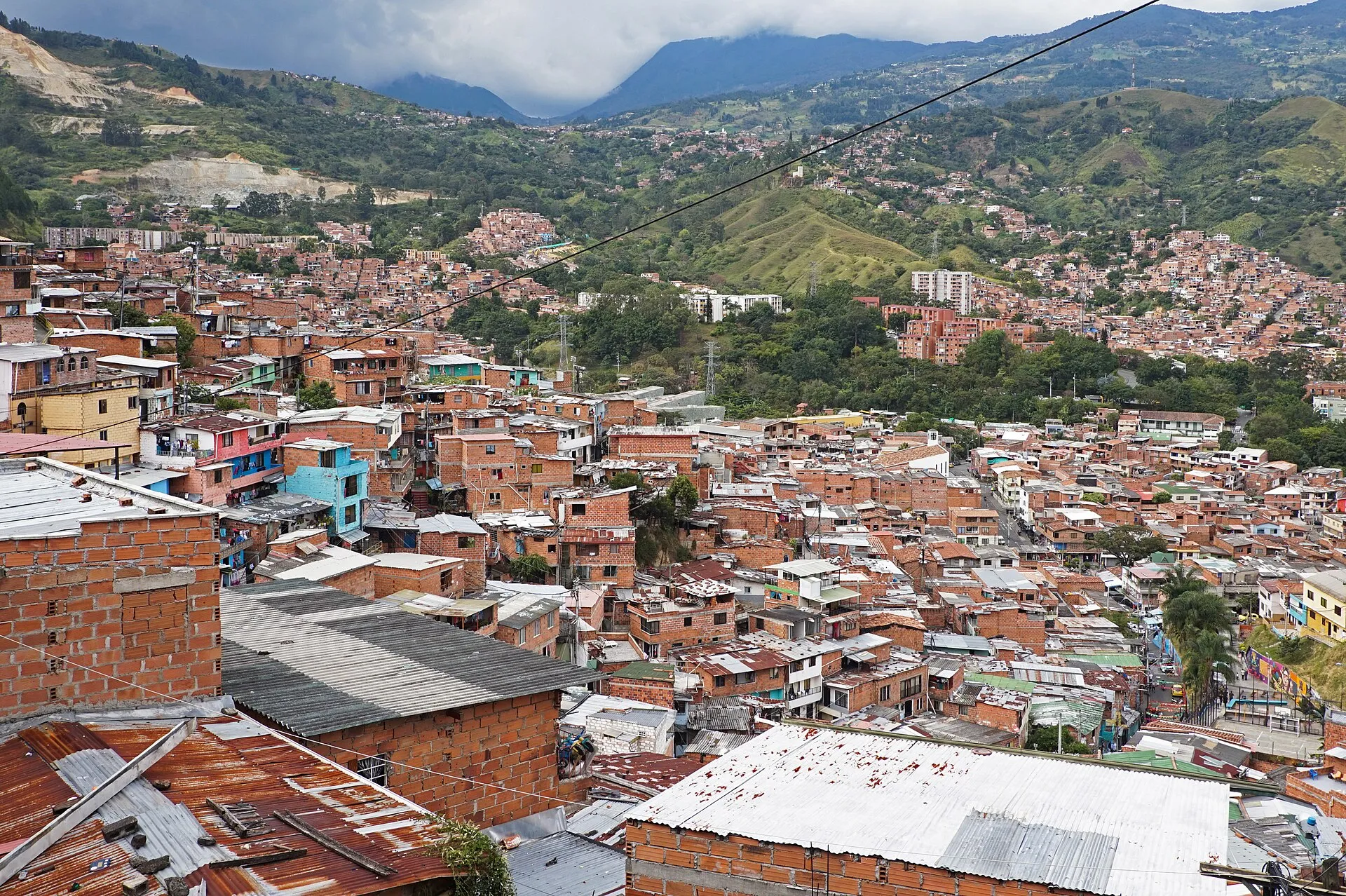
Walking Routes
Escaleras eléctricas — the six-section covered escalator through Las Independencias, the walk's spine and its most photographed landmark. Mural corridors — painted alleys off each escalator landing where works depict displacement, the 2002 raids, and community memory. Casa Kolacho — the hip-hop collective's base, where many guided routes begin with the story behind the graffiti. Miradores — upper viewpoints looking out over Medellín's Aburrá Valley, best in late-afternoon light before you descend
Local Life
Abuela-run tiendas along the escalator route sell mango con sal and empanadas to commuters heading downhill to work each morning. Teenage breakdancers rehearse on the concrete platforms near the upper escalator station, perfecting routines they perform for weekend crowds. Residents tend rooftop herb gardens visible from the mirador viewpoints, and hip-hop crews from groups like C15 and AgroMC gather at makeshift studios carved into hillside homes to record tracks that tell the barrio's ongoing story.
When to Visit
Tours run daily, roughly 8 AM – 5 PM, with most departing between 9–10 AM or 2–3 PM. Morning slots bring cooler air on the steep streets and softer light for the murals; weekdays feel more like a working neighborhood and less like a tour queue. Getting there: take Metro Line B to its western terminus, San Javier, then a short integrated feeder bus or taxi up to the escalators. Skip visiting after dark — the upper barrios are residential and best seen with a guide during daylight
Admission and Costs
Walking the neighborhood: Free (but going with a guide is strongly recommended). Group Graffitour with a local collective: COP 60,000–100,000 ($15–25) per person. Private guide: COP 200,000–350,000 ($50–85) for up to 6 people. Escalators: Free public infrastructure. A Metro ride from downtown to San Javier costs about COP 3,200 ($0.80). Street food and juice stops: COP 5,000–15,000 ($1.25–3.75) per item
The Case for a Guide
Comuna 13's transformation from Medellín's most violent neighborhood to its most visited cannot be understood from murals alone — a guide who lived through it (or whose family did) turns a colorful hillside into a testimony of survival, community agency, and the ongoing negotiation between memory and tourism.
- Operation Orion transformation story: On October 16-17, 2002, Colombian military and police conducted a helicopter assault on the neighborhood to dislodge armed groups — a guide describes what that day felt like from inside the community, which corners saw the worst violence, and how residents began reclaiming public space almost immediately afterward
- Each mural's specific meaning: The murals are not interchangeable street art — each was painted by a named artist with a specific message about displacement, identity, or hope — a guide identifies the artists, explains the symbolism, and describes the community conversations that preceded each commission
- Escalator as social mobility metaphor: The six outdoor escalator sections installed in 2011 reduced a 28-minute uphill walk to 6 minutes — a guide explains why this matters beyond convenience, how it changed children's school attendance and adults' employment access, and why critics called it a metaphor for vertical mobility that hadn't actually improved economic conditions
- Hip-hop as violence deterrent: Groups like C15 and AgroMC developed a hip-hop scene in the early 2000s that gave young men an alternative identity to gang membership — a guide introduces you to the cultural geography where this happened and explains how the music carries the neighborhood's oral history
- Community pride vs. past danger contrast: The same streets that experienced targeted killings 20 years ago now see hundreds of tourists weekly — a guide navigates this tension honestly, explaining which elements of the transformation represent genuine community agency and which represent external investment that has displaced some of the original residents
Tips for Visitors
Go with a local guide: This is non-negotiable — residents' stories give the murals their meaning, and guides ensure respectful visits. Support the community: Buy from local vendors, tip performers, and hire guides who live in the neighborhood. Photography etiquette: Ask before photographing residents, especially children. Physical fitness: The streets are steep — the escalators help, but expect stair-climbing between mural stops. Sensitivity: Remember this is where people live and many experienced trauma — follow your guide's lead on tone
Frequently Asked Questions
When is the best season to visit Comuna 13 in Medellin?
Medellin's eternal spring climate means Comuna 13 is walkable year-round, but the drier months of January, February, June, July, and August see the least rain on the steep hillside streets and outdoor escalators. The Feria de las Flores in August adds special energy to the city, and the murals photograph best under dry-season skies when colors pop against bright sunlight.
What time of day is best for exploring Comuna 13?
Tours run: Daily 8 AM – 5 PM (most depart between 9–10 AM or 2–3 PM). Best: Morning tours for cooler temperatures and better mural lighting. Weekdays: Fewer tourist crowds, more authentic neighborhood feel.
How much should visitors budget for Comuna 13?
Walking the neighborhood: Free (but going with a guide is strongly recommended). Group tour with local guide: COP 60,000–100,000 ($15–25) per person. Private guide: COP 200,000–350,000 ($50–85) for up to 6 people.
What etiquette should visitors follow when touring Comuna 13?
Go with a local guide: This is non-negotiable — residents' stories give the murals their meaning, and guides ensure respectful visits. Support the community: Buy from local vendors, tip performers, and hire guides who live in the neighborhood.
How do I get to Comuna 13 from central Medellin?
Take Metro Line B west to its final stop, San Javier — roughly 15 minutes from the city center. From the station, an integrated feeder bus or a short taxi ride reaches the foot of the outdoor escalators in Las Independencias. Many guided Graffitours meet at the San Javier station exit.