
Trails
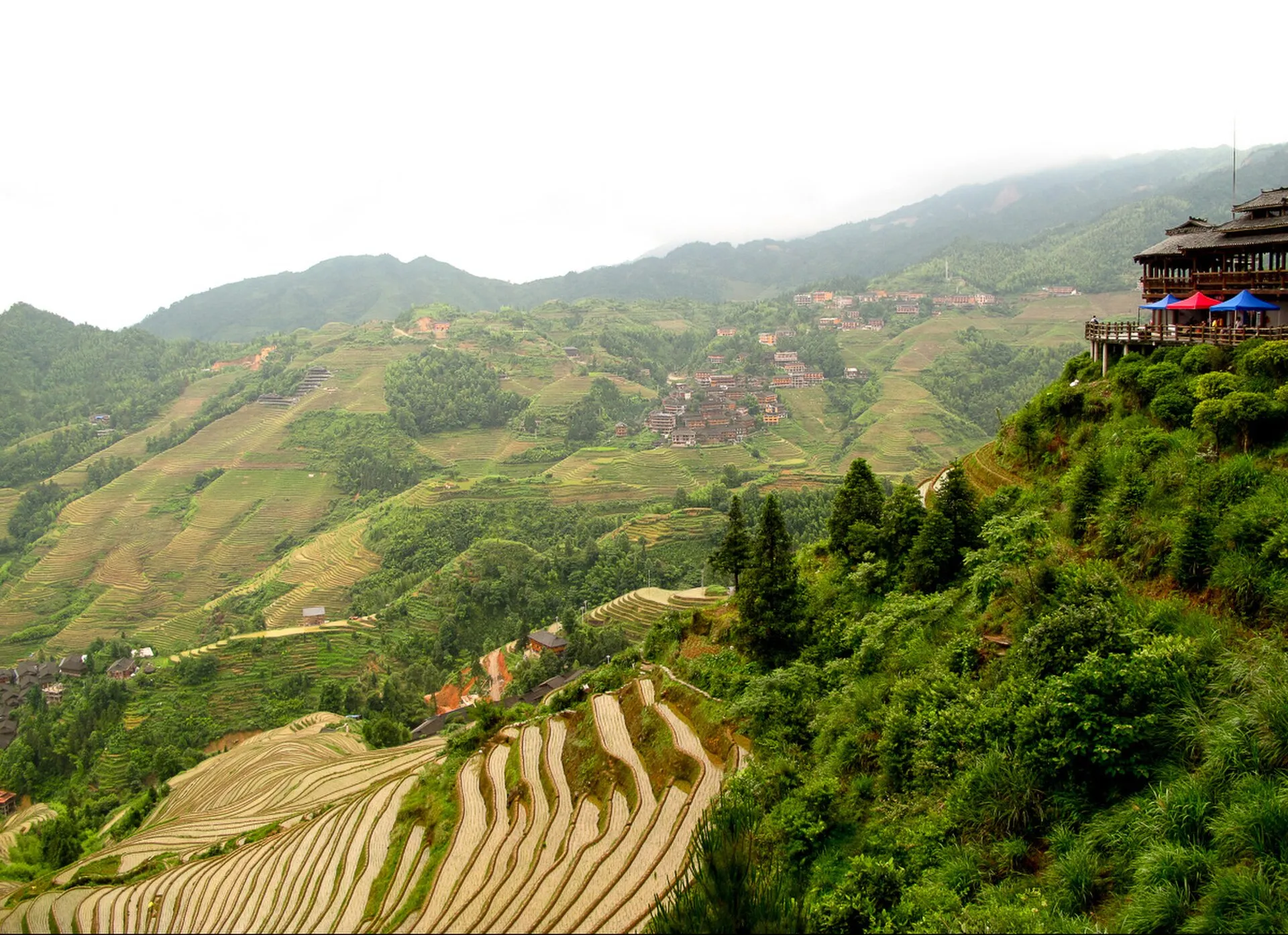
Viewpoint No. 1 at Ping'an: Nine Dragons and Five Tigers overlook, where nine ridges of terraces snake downhill like a dragon procession. Yao long-hair village at Huangluo: Red Yao women grow their hair to two meters and perform traditional combing ceremonies for visitors. Wooden stilt houses: Zhuang villages build elevated homes from local timber, with livestock below and families above. Sunrise from Jinkeng Viewpoint 3: Watch dawn light creep across the terraces from the highest accessible point. Bamboo-tube rice: A local specialty where sticky rice, pork, and herbs steam inside a sealed bamboo tube over an open fire. Zhuang folk songs: Villagers perform antiphonal singing during festivals, a tradition recognized by UNESCO
Wildlife
The terraced hillsides sit within a corridor of subtropical montane forest where Zhuang and Yao farmers share the landscape with diverse birdlife. Hwamei thrushes sing from dense bamboo thickets between the paddies, and fork-tailed sunbirds dart among flowering shrubs along the hiking trails between Ping'an and Jinkeng. Water buffalo work the flooded paddies during planting season, and in the surrounding forest canopy, Pallas's squirrels leap between camphor trees while black-naped orioles flash yellow against the green hillsides.
When to Visit
Scenic area gates: Open 8:00 AM to 6:00 PM daily; guests staying overnight in village guesthouses can enter freely. Flooded terraces (May-June): Water fills the paddies, turning each tier into a mirror that reflects the sky. Green season (July-August): Lush emerald rice plants cover every level in vivid color. Golden harvest (late September-October): The most photographed period, when ripe grain paints the hillsides amber and gold
Admission and Costs
Entrance ticket: ¥80 per person, valid for the entire scenic area. Cable car at Jinkeng: ¥55 one way, ¥100 round trip. Village guesthouse: ¥100-300 per night for a basic room with terrace views. Transport from Guilin: Direct buses ¥40, roughly 2.5 hours; private car ¥300-400 one way
Tips for Visitors
Stay overnight: The terraces empty after 4 PM when day-trippers leave; sunrise and sunset from a village guesthouse are the real reward. Pack hiking shoes: Stone paths between villages are uneven and slippery after rain; sturdy footwear is essential. Hire a local porter: Elderly villagers offer to carry luggage uphill for ¥30-50; it supports the community and saves your knees. Bring cash: ATMs are absent in the villages; mobile signal can be weak for digital payments. Respect the culture: Ask permission before photographing Yao women or entering homes; a small tip of ¥5-10 is appreciated
Frequently Asked Questions
What are the hours and seasonal highlights of Longji Rice Terraces?
Scenic area gates: Open 8:00 AM to 6:00 PM daily; guests staying overnight in village guesthouses can enter freely. Flooded terraces (May-June): Water fills the paddies, turning each tier into a mirror that reflects the sky.
How much does it cost to access Longji Rice Terraces?
Entrance ticket: ¥80 per person, valid for the entire scenic area. Cable car at Jinkeng: ¥55 one way, ¥100 round trip. Village guesthouse: ¥100-300 per night for a basic room with terrace views.
What should visitors bring when visiting Longji Rice Terraces?
Pack hiking shoes: Stone paths between villages are uneven and slippery after rain. Bring cash as ATMs are absent in the villages, and mobile signal can be weak for digital payments.