
Collection Highlights
The horseshoe auditorium and Soldi dome
The main hall is the reason the Colón exists — seven tiers of red velvet and gold leaf curving around the stage beneath Raúl Soldi's 1966 painted dome. Step in and look up before the lights dim; the room is designed to overwhelm you before a single note is played.
The one-ton central chandelier
Suspended at the centre of the dome, the chandelier weighs more than a ton and carries some 700 lightbulbs. On certain occasions a small group of singers can be concealed inside it to create a surround-sound choral effect — a detail most guides will point out.
The Salón Dorado
A Versailles-inspired golden hall dripping with gilt moldings and Murano glass, used for chamber concerts, lectures and receptions. Its mirrored walls and painted ceiling make it the most photographed room on the tour after the auditorium itself.
The subterranean workshops
Beneath and beside the stage, artisans still build sets, paint scenery, stitch costumes, make wigs and craft shoes entirely in-house — one of the last opera houses in the world to do so. Access depends on the day's rehearsals, so a guide is essential here.
The paraíso and the acoustics
The standing-room gallery at the very top is where music students and budget-minded porteños gather. The view is distant but the sound is famously clear, proof of the hall's acoustic design and the cheapest way in the world to hear a great orchestra.
The marble foyer and grand staircase
The main entrance opens onto a foyer lined with imported marble, columns and statuary, sweeping up a grand staircase toward the auditorium. It sets the tone of French-Italian opulence that runs through the whole building.
The resident companies
Unlike many touring houses, the Colón maintains its own permanent Orquesta Estable, Coro Estable and Ballet Estable, plus an in-house arts institute. Catching a performance means hearing the ensembles the building was built around, not a visiting act.
The Plaza Lavalle facade
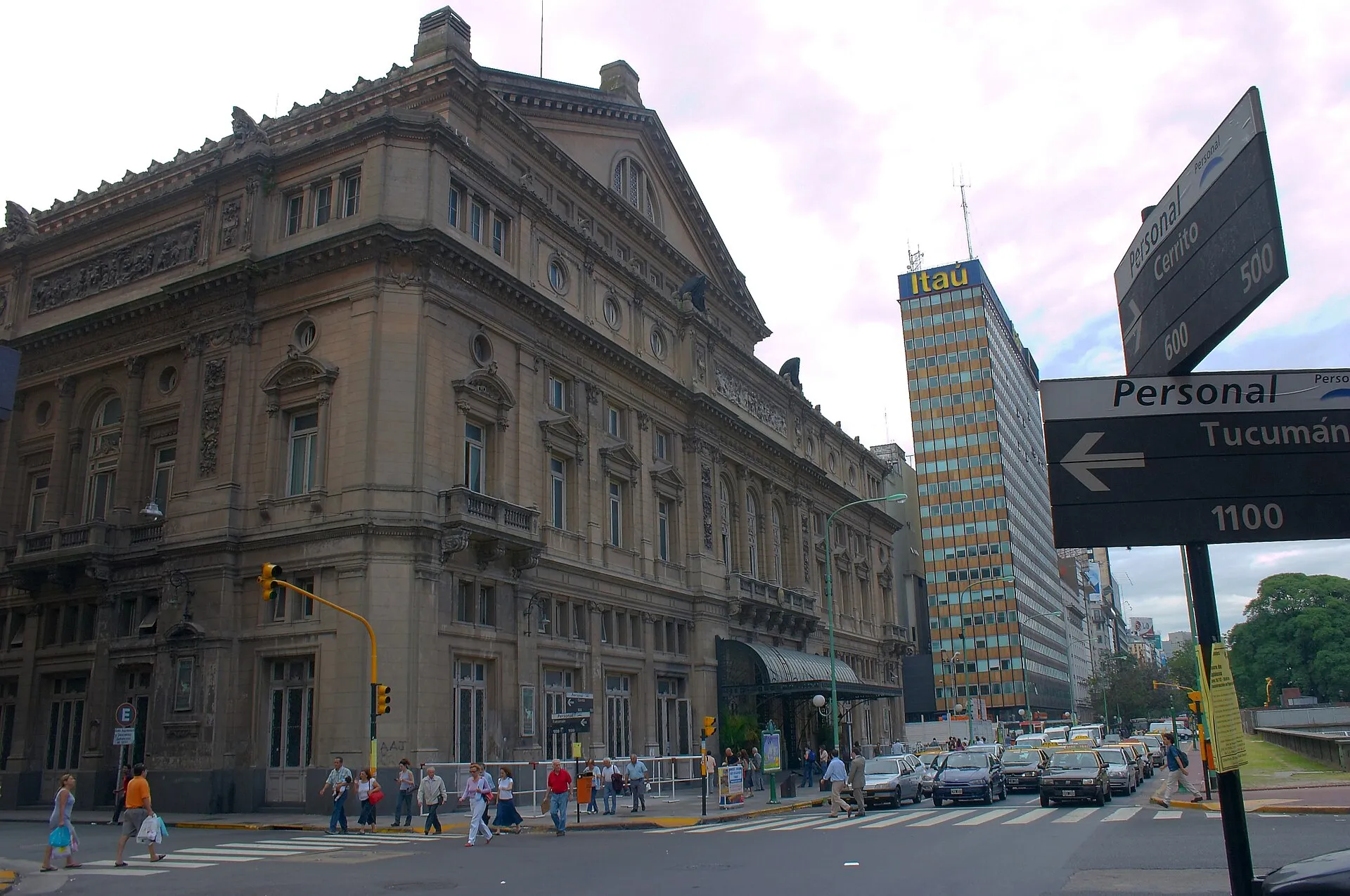
The grand entrance faces leafy Plaza Lavalle, while the theatre's long flank runs along the Avenida 9 de Julio. The best exterior photograph frames the eclectic facade from the plaza, with the surrounding law courts and jacaranda trees in view.
Events Schedule
The main auditorium: Step into the horseshoe-shaped hall and look up — the painted ceiling dome by Raúl Soldi, the seven gilded tiers, and the massive chandelier create a space that takes your breath away before a single note is played. The season runs from March through December, with opera, ballet, symphonic concerts, and chamber music rotating through the calendar, performed by the theatre's own resident companies — the Orquesta Estable, the Coro Estable, and the Ballet Estable. Backstage workshops: Watch artisans build sets, stitch costumes, and craft shoes in workshops that operate like a Renaissance guild — all production happens in-house. Acoustic test: Guides often demonstrate the hall's acoustics by dropping a coin on stage — you can hear it from the highest balcony. The Salón Dorado (Golden Hall): A Versailles-inspired salon used for chamber concerts and receptions, dripping with gilt moldings and Murano glass. The Colón's ghost stories: Staff and performers have reported unexplained phenomena backstage for decades — your guide knows the tales.
Seating Guide
The horseshoe layout means every seat hears the music differently. The platea (orchestra stalls) delivers the most balanced sound — center rows F through L are considered the sweet spot. The palcos (boxes) on the first and second tiers offer intimacy and excellent sightlines but slightly less acoustic immersion. The tertulia (upper balcony) provides surprisingly good sound thanks to the hall's design, and seats here cost a fraction of the orchestra price. Paraíso (standing room at the very top) is where music students and budget-savvy porteños gather — the view is distant but the acoustics are remarkably clear. For ballet, the first palco tier gives the best overhead perspective on choreography. For opera, center platea or second-tier palco bajos offer the ideal balance of visual and vocal impact.
Teatro Colón timeline
-
The first Teatro Colón opens
The original opera house opened facing the Plaza de Mayo and served the city for three decades until it was sold in 1888, its site later taken over by the national bank.
-
Work begins on the present theatre
Construction of the new Colón at Plaza Lavalle outlasted three architects — Francesco Tamburini died early in the project, his successor Vittorio Meano was assassinated in 1904, and the Belgian Jules Dormal completed the building with French touches of his own.
-
The new Teatro Colón opens with Aida
The theatre was inaugurated on 25 May 1908 with Verdi's Aida, launching a hall that would go on to host Caruso, Toscanini, Callas, Nureyev and Pavarotti.
-
Raúl Soldi repaints the dome
The Argentine painter Raúl Soldi replaced the deteriorated original ceiling fresco with the figures that crown the auditorium today, completing the look that visitors see overhead.
- 2006–2010
Master-plan restoration
A major restoration closed the theatre for several years and returned it to its 1908 splendour, reopening on 24 May 2010 for Argentina's bicentennial.
Teatro Colón in Pictures


When to Visit
Guided tours run daily from 9:00 AM to 5:00 PM, departing every 15-20 minutes and lasting roughly 50 minutes. The first morning slots (9:00-11:00 AM) have the smallest groups and the best natural light falling into the main hall; mid-afternoon is the busiest window. Performances fill the season calendar from March through December, with evening shows typically starting at 8:00 PM, so a daytime tour and an evening performance can be combined on a single visit. Because tours are occasionally shortened or rerouted during rehearsals and special events, confirm the day's schedule on the official site before you arrive, especially in the September-November high season.
Admission and Costs
Guided tour: AR$8,000-15,000 ($8-15), with different rates for Argentine residents and foreign visitors. Performance tickets: AR$5,000-150,000 ($5-150) depending on the seat and the production. Standing room (paraíso): AR$3,000-5,000 ($3-5) — the most affordable way to experience the acoustics, and the choice of music students and budget-minded porteños. Private English-speaking guide + tour: AR$30,000-50,000 ($30-50) for a small group. Buy tour and performance tickets online or at the box office on Calle Libertad; prices shift with inflation and programming, so confirm current rates when you book.
The Case for a Guide
The Colón overwhelms on sight, but its real depth is invisible without someone to unlock it — and that is where a guide earns their fee. A good guide turns the auditorium from a beautiful room into a living machine: they explain why the horseshoe shape and the mix of wood, plaster and fabric produce acoustics that made Pavarotti nervous, then demonstrate it, often by dropping a coin on stage so you can hear it ring from the highest balcony. They layer on the human history the architecture only hints at — the first theatre that stood by Plaza de Mayo until 1888, the nearly two-decade construction that outlasted three architects and cost Vittorio Meano his life, and the parade of legends who have sung here since 1908.
A guide is also the key to the parts of the building you would otherwise never see. The subterranean workshops — where artisans still build sets, stitch costumes, and craft shoes by hand, one of the last opera houses on Earth to do so — are only reachable on a tour, and only a guide can read the day's rehearsal schedule to know which spaces are open. They handle the language (English-speaking guides are easy to arrange), steer you to the best vantage points for photos, and know the theatre's decades of backstage ghost stories. For a first-time visitor, a guided tour is the difference between admiring the Colón and understanding it.
Tips for Visitors
- Book tours early. Morning tours sell out in the June-August winter high season, when cold weather drives tourists indoors. Buy online or arrive 30 minutes before opening.
- Attend a performance. Tours are excellent, but hearing the acoustics with a full orchestra is transformative — the paraíso standing room costs next to nothing and the sound is remarkably clear.
- Dress the part for evenings. Smart casual is the minimum for performances; Argentines dress up for the Colón. Jeans and sneakers are fine for daytime tours but feel out of place at an evening show.
- Mind the camera rules. Photos without flash are allowed on tours; no photography or recording is permitted during performances.
- Combine it with the centre. The Colón is a 10-minute walk from Plaza de Mayo and 15 minutes from San Telmo — build it into a walking tour of central Buenos Aires.
Frequently Asked Questions
When is the best time of year to experience Teatro Colón?
The performance season runs March through December, so almost any month rewards opera and ballet lovers, but the calendar peaks from September through November during the Argentine spring, when the most prestigious productions are staged. Winter (June through August) drives tourists indoors and fills the daytime guided tours, yet the acoustics are magnificent year-round and January-February daytime tours are the quietest, since the resident companies are on their summer break.
What are the opening hours of Teatro Colón, and when should I visit?
Guided tours run daily from roughly 9:00 AM to 5:00 PM, departing every 15-20 minutes and lasting about 50 minutes. Arrive for one of the first morning slots (9:00-11:00 AM) for smaller groups and the best natural light in the main hall; mid-afternoon tours are the busiest. Evening performances typically begin at 8:00 PM, so a daytime tour and an evening show can be combined on the same visit. Confirm the day's schedule in advance, because tours are occasionally shortened during rehearsals or special events.
How much do tickets cost at Teatro Colón?
A standard guided tour is around AR$8,000-15,000 ($8-15), with different rates for Argentine residents and foreign visitors. Performance tickets range widely, from about AR$5,000 to AR$150,000 ($5-150) depending on the production and the seat. The cheapest way to hear the hall is the paraíso standing room at roughly AR$3,000-5,000 ($3-5), while a private English-speaking guide for a small group runs about AR$30,000-50,000 ($30-50). Buy tickets online or at the box office on Calle Libertad.
How do you get to Teatro Colón?
The theatre occupies a full block between Libertad, Tucumán, Viamonte and Cerrito, with its grand entrance facing Plaza Lavalle and its side flank on the broad Avenida 9 de Julio. Línea D of the Subte (Tribunales station) stops at its doorstep, and dozens of bus lines pass along 9 de Julio. It is an easy 10-minute walk from Plaza de Mayo and about 15 minutes from the antique stalls of San Telmo, so the Colón slots neatly into a day on foot through the city centre.
What will I see on a guided tour of Teatro Colón?
A standard tour takes in the marble main foyer and grand staircase, the gilded Salón Dorado, the Pasos Perdidos galleries, and the horseshoe auditorium beneath Raúl Soldi's painted dome and the one-ton central chandelier. Guides explain the hall's celebrated acoustics and point out the seven tiers, from the orchestra platea up to the paraíso. Many tours also describe the subterranean workshops where sets, costumes, wigs and shoes are still made in-house, though access to the working areas can depend on the day's rehearsal schedule.
What should visitors wear and know before going to Teatro Colón?
For daytime tours there is no dress code, and jeans and comfortable shoes are fine for the stairs and standing. For evening performances the expectation is smart casual at a minimum, and most porteños dress up for the Colón. Photography without flash is allowed on tours, but no photography or recording is permitted during performances. The paraíso is standing room with a distant view but famously clear sound, so budget-minded visitors can hear a world-class orchestra for the price of a coffee.