
Collections Highlights
A carrier is a floating city, and the Midway rewards visitors who seek out the spaces beyond the flight deck. These are the stops most worth your time:
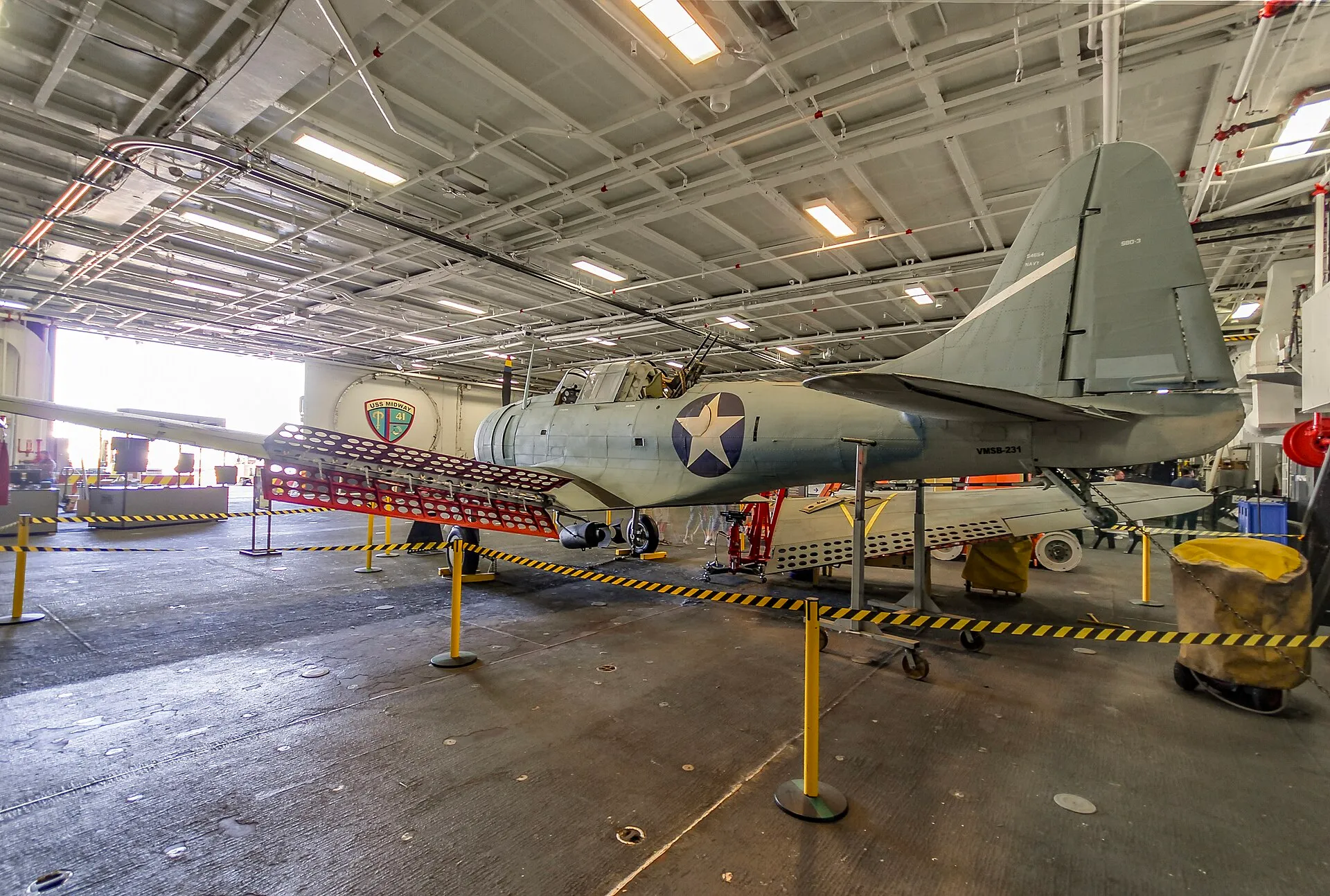
- Flight deck aircraft - about 30 restored planes and helicopters, several open for cockpit photos, tracing naval aviation from propeller fighters to supersonic jets.
- The island and captain's bridge - the superstructure rising above the deck, where you stand at the controls the ship was actually steered and fought from.
- Primary Flight Control (Pri-Fly) - the "control tower" overlooking the deck, from which the Air Boss directed every takeoff and landing.
- Combat Information Center - the darkened nerve center of radar screens and plotting boards that tracked aircraft and threats during Cold War deployments.
- Engine and fire rooms - the deep machinery spaces that drove the ship, reached by the steepest ladders aboard.
- Galley, berthing and brig - the living quarters, mess, and lockup that reveal what daily life was like for 4,500 sailors packed into one hull.
- Flight simulators - two motion rides that recreate a carrier takeoff and aerial combat (separate ticket).
When to Visit
Open daily 10:00 AM - 5:00 PM with last admission at 4:00 PM, the museum closes only on Thanksgiving and Christmas Day. The best window is a weekday morning, when cockpits, ladders and simulators are least congested; weekends and holiday afternoons bring the longest waits. Allow 3-4 hours to see the ship properly.
Because the flight deck is fully exposed, San Diego's dry sun can make the topside surprisingly warm even in winter, while late-spring mornings sometimes start under the coastal marine layer ("May Gray" and "June Gloom") that usually burns off by midday. In late spring, Fleet Week and special military ceremonies occasionally restrict access to certain decks, so check the schedule before you travel. Spring and autumn - roughly April and September to October - offer the clearest, most comfortable deck weather of the year.
Admission and Costs
General admission runs about $31 at the door, a few dollars less when booked online ahead of time. Youth (ages 6-12) are around $18, and children under 6 enter free. Active-duty military and veterans get a reduced rate with valid ID, and retired-military and reciprocal passes are honored. The two motion flight simulators are $8-12 per ride, charged separately from admission.
Guided experiences cost more: a veteran-led small-group tour runs roughly $35-50 per person for a two-hour deep dive, and a private tour with a retired naval aviator is about $300-450 for a group of up to eight. The included self-guided audio tour, narrated by former Midway sailors, is free with every ticket.
The Case for a Guide
Walking the decks of an aircraft carrier without context means missing the human stories that give the steel and machinery meaning. Many docents aboard the Midway served on carriers themselves, and a guided visit turns metal corridors into living history.
- Firsthand accounts: veteran docents describe the controlled chaos of launching jets from a pitching deck, the intimacy of sharing berthing with dozens of sailors, and the tension of Cold War patrols.
- An efficient route: guides plot a logical path through the Combat Information Center, engine room, bridge and flight deck so you see every major exhibit without backtracking through cramped companionways.
- The aircraft explained: they place each plane in context, from F-14 Tomcats flying fleet defense to SH-60 Seahawks hunting submarines, across decades of naval aviation.
- The Midway's war record: guides connect the ship to Vietnam, to Operation Frequent Wind - the 1975 evacuation of Saigon, when crews pushed helicopters overboard to clear the deck for a South Vietnamese pilot who landed a tiny Cessna with his family aboard - and to its role as a flagship in Operation Desert Storm.
Tips for Visitors
- Wear closed-toe shoes. You will climb steep ship ladders and walk on metal decking; sandals are not suitable.
- Mind your head. Doorways and passageways were built for 1940s sailors, so anyone over 5'10" will duck often.
- Start at the top and work down. The exhibits flow more logically from the flight deck downward through the ship.
- Plan your parking. Use the Embarcadero lots or ride the trolley to the Convention Center stop, a five-minute walk away.
- Combine it with the water. Several harbor-cruise operators depart from nearby piers and offer sea-level views of the carrier.
- Check accessibility first. An elevator reaches the hangar and flight decks, but lower spaces are ladder-only; detailed accessibility maps are available at the entrance.
Frequently Asked Questions
How long does it take to tour the USS Midway Museum?
Most visitors spend 3 to 4 hours aboard. A quick pass through the hangar deck and up to the flight deck takes about 2 hours, but working through all 60-plus exhibits, climbing to the island and bridge, and descending to the engine room and crew berthing easily fills half a day. The free self-guided audio tour, narrated by sailors who served aboard, adds roughly an hour if you follow every stop.
How much does admission to the USS Midway Museum cost?
Adult admission is about $31 at the door and a few dollars less when booked online in advance. Youth (ages 6-12) are around $18, children under 6 enter free, and active-duty military and veterans receive a discounted rate with valid ID. The two motion flight simulators cost an extra $8-12 per ride and are not included in general admission.
Is the USS Midway Museum suitable for children and visitors with limited mobility?
Families do well here - kids can sit in real cockpits, try the simulators, and follow a dedicated audio track made for younger visitors. Mobility is more complicated - an elevator reaches the hangar and flight decks, but the lower engineering spaces and the island are accessed only by steep original ladders. Pick up the accessibility map at the entrance to plan a route around the parts you can reach comfortably.