Historical Significance
Understanding why Japan targeted this specific harbour turns a memorial visit into a strategic education. Oahu's geography funnelled the Pacific Fleet into a confined anchorage; American intelligence failures let the attack force approach undetected despite radar warnings dismissed as a flight of incoming B-17s; and the devastating success of December 7, 1941 rewrote naval doctrine, proving that carrier air power, not the battleship, would decide the Pacific war.
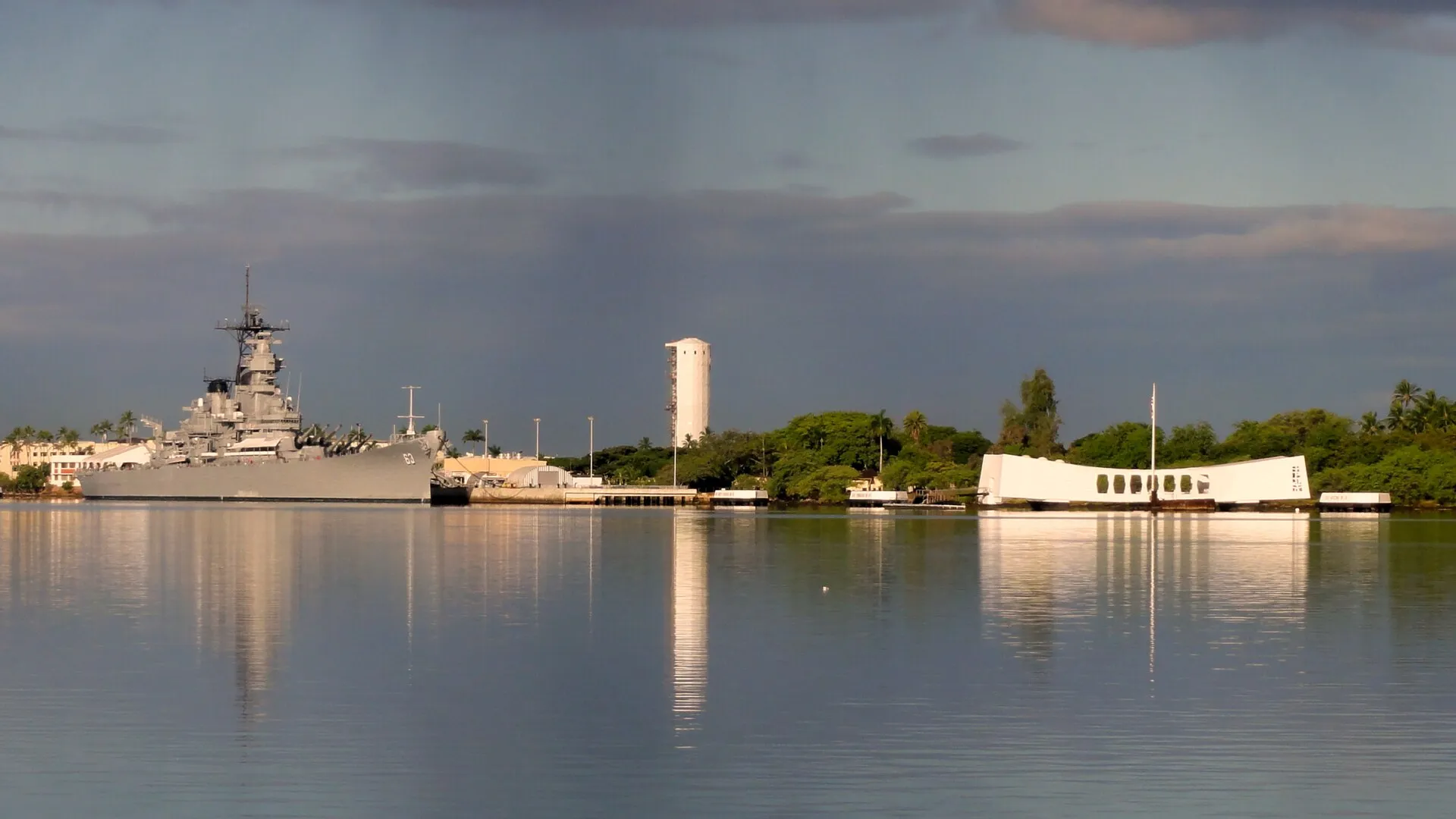
Statistics flatten the human dimension that individual stories restore. Doris Miller, a mess attendant with no gunnery training, manned an anti-aircraft gun on the USS West Virginia and became the first Black American awarded the Navy Cross. The band of the USS Nevada finished playing the national anthem as bombs fell around them before running to their battle stations. Twin brothers lie entombed together within the Arizona's hull, among the 2,403 Americans killed that morning. The memorial's symbolism rewards a slow look: the 21 open windows along each side evoke a 21-gun salute, and the roofline that sags in the centre and rises at both ends reflects initial defeat followed by eventual victory. The engagement itself lasted roughly 90 minutes across two waves, sinking or damaging 19 US Navy ships.
Architecture
From the memorial platform you look straight down through clear water at the Arizona's rusting hull, the turret barbettes, and the oil still rising after more than 80 years. The shrine room's marble wall lists all 1,177 Arizona crewmen killed; gold-lettered names mark those whose remains were later recovered, while unmarked names belong to sailors still within the ship. Survivors of the crew have the right to be interred with their shipmates, and Navy divers have returned dozens of urns to the hull over the decades.
Aboard the Battleship Missouri, a brass plaque on the teak deck marks the exact spot where General MacArthur accepted Japan's unconditional surrender on September 2, 1945. The USS Bowfin lets you descend into the cramped interior of a WWII fleet submarine, walkable bow to stern, that completed nine war patrols across the Pacific. Back on shore, the visitor center's free outdoor exhibits — a detailed attack timeline, Battleship Row map, and the two museum galleries "Road to War" and "Attack" — set the context before the 23-minute National Park Service documentary, which pairs archival footage with survivor testimony to set the tone for the boat ride out.
When to Visit
The visitor centre opens daily 7 AM to 5 PM and closes only on Thanksgiving, Christmas, and New Year's Day. USS Arizona Memorial programmes run 7:30 AM to 3 PM, departing every 15 minutes; each pairs the 23-minute film with a short Navy-boat crossing to the memorial and back. The Battleship Missouri opens 8 AM to 4 PM with a shuttle from the visitor centre across to Ford Island.
Come early. Arrive by 7 AM to claim same-day Arizona tickets, which are often gone by mid-morning, especially between December and March. Trade winds usually keep mornings clearest, and the harbour is calmest before midday. One date to avoid for a standard visit is December 7: the annual commemoration ceremony closes the memorial to the general public, so plan for the day before or after if your trip falls that week.
Admission and Costs
The USS Arizona Memorial is free, including the film, the Navy boat ride, and the memorial itself; timed-entry tickets can be reserved online at recreation.gov for a $1 booking fee, or collected free at the visitor centre on a first-come basis. The ticketed sites are run by separate operators: the Battleship Missouri is $35 adults / $18 children ages 4-12; the USS Bowfin submarine is $18 adults / $12 children (no children under 4 aboard); and the Pearl Harbor Aviation Museum is $26 adults / $15 children. The Passport to Pearl Harbor bundle covers all four major attractions for $89 adults / $45 children — worthwhile only if you plan a full day across every site.
The Case for a Guide
The free audio tour and film cover the essentials, but a licensed guide is what connects Pearl Harbor to the rest of the island's story. A good guide sequences the day so the emotional weight lands in the right order — the Road to War gallery, then the film, then the silence of the memorial — and explains why the surrender was staged on the Missouri overlooking the sunken Arizona to bring the war full circle. Guides also handle the logistics that trip up independent visitors: the strict no-bag rule, the timed-entry scramble, and the shuttle timings between Ford Island sites.
A guide adds the most value when they:
- Secure or advise on Arizona timed-entry tickets so you are not turned away at a sold-out counter.
- Frame the attack's strategic causes and intelligence failures, not just the casualty numbers.
- Surface the human stories — Doris Miller, the Nevada's band, the entombed twins — that the exhibits only sketch.
- Manage pacing and transport between the Arizona memorial, the Missouri, the Bowfin, and the Aviation Museum.
- Connect the site to Hawaii's wider history, from Iolani Palace and the 1893 overthrow to the territory's wartime role.
Tips for Visitors
Reserve tickets early: online Arizona reservations open 60 days in advance and sell out for peak dates — book the moment they release, especially for visits between November and March. Travel light: backpacks, purses, camera bags, and diaper bags are barred beyond the visitor centre; paid storage is available but the line can add 15-20 minutes, so bring only a phone and wallet. Dress respectfully: this is an active naval base and a war grave, so swimwear, bare feet, and overly casual attire are out of place.
Allow a full day if you want the Missouri, Bowfin, and Aviation Museum on top of the roughly 75-minute Arizona programme. Getting there: Pearl Harbor is about 30 minutes west of Waikiki by car, with paid parking on site; without a car, TheBus Route 20 and 42 connect Waikiki to the visitor centre in around an hour for a few dollars, and the Skyline rail's Halawa (Aloha Stadium) station is a short ride away. Pace the day thoughtfully: Pearl Harbor asks for emotional energy, so pair it with a quiet afternoon rather than rushing on to a snorkel trip at Hanauma Bay the same day.
Frequently Asked Questions
What is the best time of year to visit Pearl Harbor?
Pearl Harbor is meaningful in any month thanks to Oahu's consistently warm climate, but crowds matter more than weather here. The shoulder windows of February through March and September through November see thinner lines than the June-August peak, making same-day USS Arizona Memorial tickets easier to secure. Book online 60 days out for peak dates. Note the December 7 anniversary, when commemoration ceremonies close the memorial to general visitors for the day.
When can visitors tour Pearl Harbor National Memorial?
The visitor center is open daily 7 AM to 5 PM and closes only on Thanksgiving, Christmas, and New Year's Day. USS Arizona Memorial programs run 7:30 AM to 3 PM, departing every 15 minutes; the Battleship Missouri is open daily 8 AM to 4 PM.
How much is the entrance fee for Pearl Harbor National Memorial?
The USS Arizona Memorial is completely free, including the film and Navy boat shuttle; timed-entry tickets carry only a $1 booking fee on recreation.gov, or are handed out free at the visitor center on a first-come basis. The Missouri, Bowfin, and Pacific Aviation Museum charge separate admission.
What should visitors know before visiting Pearl Harbor National Memorial?
Reserve USS Arizona tickets early: online slots open 60 days in advance and sell out for peak dates. No bags are allowed past the visitor center, so travel light or use the paid storage; and because this is an active naval base and war grave, dress respectfully rather than in beachwear.