
Observation Spots
Formation
Unlike the spring-fed swimming holes elsewhere in the city, Lady Bird Lake is an entirely engineered body of water — a constant-level reservoir created in 1960 when the City of Austin completed Longhorn Dam across the Colorado River, originally to supply cooling water for the riverside Holly Street Power Plant. Water enters from the west, released downstream through Tom Miller Dam, and spills over Longhorn Dam at the eastern end, holding the surface almost perfectly level year-round rather than rising and falling like the Highland Lakes upstream.
The reservoir is shallow — rarely more than 14 feet deep — and narrow, tracing the original river channel for close to five miles between the two dams. Barton Creek joins from the south near Barton Springs, feeding cool spring water into the lake. At the western end sits Red Bud Isle, a small wooded island formed from debris that washed downstream after the earlier granite McDonald Dam burst in a 1900 flood — today an off-leash dog park below Tom Miller Dam.
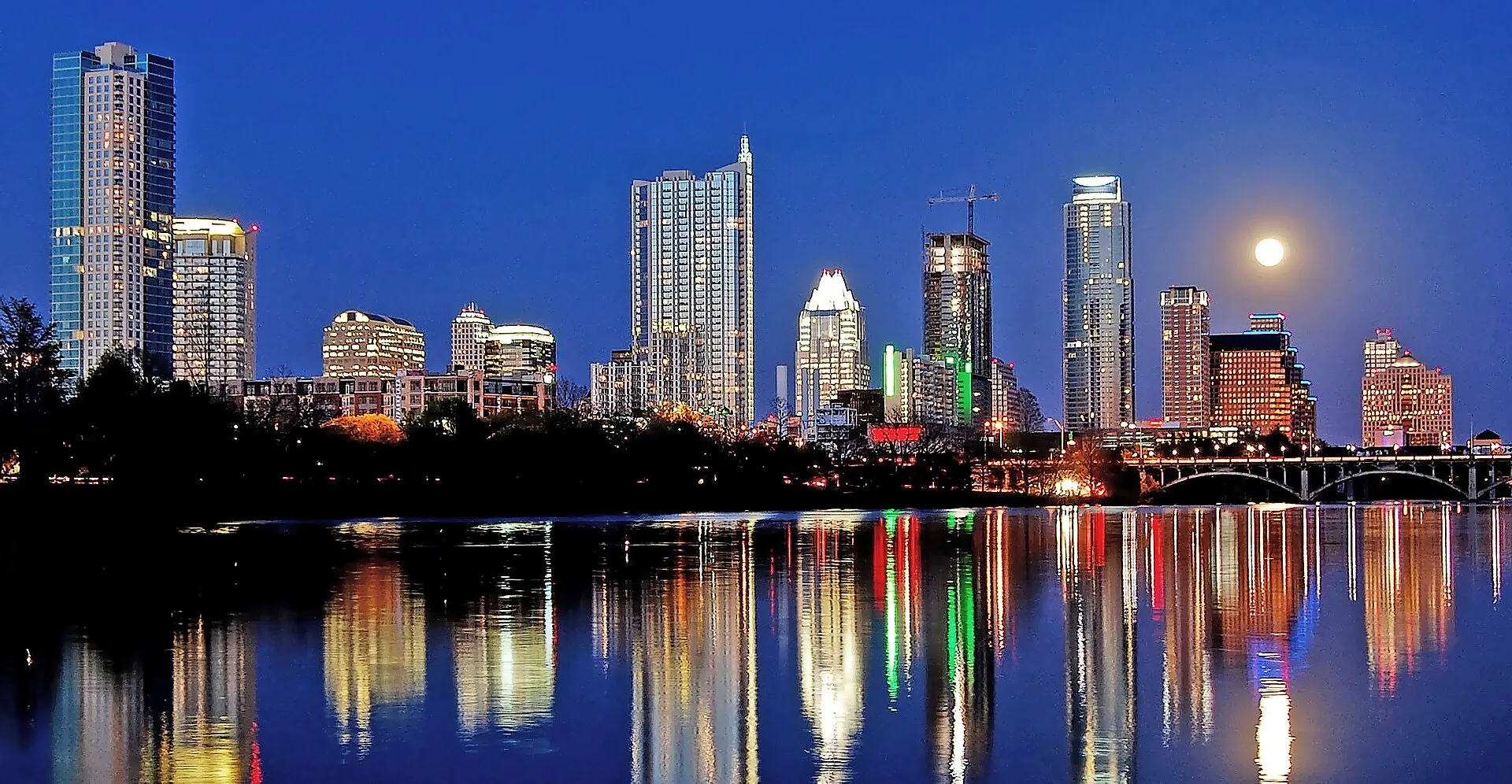
To protect this urban waterway, the city bans gas-powered motorboats entirely; only kayaks, canoes, stand-up paddleboards, rowing shells, and small electric craft are allowed, which is why the water stays glassy and quiet enough for a sunrise paddle beneath the skyline.
Wildlife
Witnessing up to 1.5 million Mexican free-tailed bats spiral from beneath the Congress Avenue Bridge is one of Austin's defining experiences. The colony chooses this bridge for the narrow expansion-joint crevices left by its 1980 reconstruction, which provide ideal roosting conditions. The population swells each August when pups join the nightly hunt, and according to Bat Conservation International the bats consume an estimated 10,000-30,000 pounds of insects every evening.
Beyond the famous bat spectacle, the lake harbours an ecosystem that most joggers never notice. Great blue herons stand motionless in the shallows, painted turtles stack themselves on fallen logs, and kingfishers patrol the quieter inlets. River otters occasionally surface along the less-trafficked western stretches near Red Bud Isle.
Native plants that Lady Bird Johnson championed along these shores have regenerated habitat corridors connecting the urban lake to surrounding Hill Country ecosystems. Her environmental legacy, which includes the Lady Bird Johnson Wildflower Center she founded south of the city, receives its most fitting tribute here on the lake that bears her name.
Where flowers bloom, so does hope.
That line, long attributed to Lady Bird Johnson, captures the beautification ethic that reshaped this shoreline from a power-plant backwater into the green heart of the city.
Trails
🦇 Bat emergence at Congress Avenue Bridge: Watch from the bridge rail or the south-bank observation lawn below as up to 1.5 million bats spiral into the dusk sky in a twisting column. 🚣 Sunrise paddle: Launch a kayak from the Rowing Dock before 7 AM and glide through mist as the downtown towers catch the first light.
🚶 Boardwalk section: The 1.3-mile boardwalk along the south shore floats over the water and provides the best unobstructed views of the skyline. 🌳 Pfluger Pedestrian Bridge: This graceful footbridge arcs across the lake near Lamar Boulevard, offering a mid-trail viewpoint where you can see both directions of the waterway. 🐢 Turtle spotting at Red Bud Isle: The small island at the western end of the lake is a designated off-leash dog park surrounded by turtle-covered logs and wading herons.
🎵 Auditorium Shores and the Stevie Ray Vaughan statue: The south-bank lawn faces the full downtown skyline and honours the late Austin blues guitarist with a bronze memorial that draws fans at sunset. 🌝 Moonlight trail run: The lit sections of the trail make evening runs popular year-round, and full-moon nights bring a festive atmosphere to the path. 🌱 Zilker Park trailhead: Start at the western end where the trail connects to Zilker Park and Barton Springs, allowing a full day of outdoor activities along the same corridor.
Lady Bird Lake timeline
-
The old Austin Dam collapses
A flood bursts the granite McDonald Dam upstream on the Colorado River. The debris that washes down eventually piles into the small landmass now known as Red Bud Isle at the lake's western end.
-
Longhorn Dam creates Town Lake
The City of Austin completes Longhorn Dam across the Colorado River, impounding a constant-level reservoir named Town Lake to supply cooling water for the riverside Holly Street Power Plant.
-
The Town Lake Beautification Project
Lady Bird Johnson and civic leader Roberta Crenshaw launch the campaign that plants trees, lays the first hike-and-bike paths, and reclaims the industrial shoreline as public parkland.
-
The Congress Avenue Bridge is rebuilt
A reconstruction leaves narrow expansion-joint crevices beneath the deck - accidental, ideal roosts that Mexican free-tailed bats colonize, growing into North America's largest urban bat population.
-
Town Lake becomes Lady Bird Lake
Months after her death, the Austin City Council renames the reservoir to honor Lady Bird Johnson. The Holly Street Power Plant that first justified the dam is decommissioned the same year.
-
The Boardwalk closes the loop
A 1.3-mile boardwalk floating along the south shore bridges the last gaps in the Ann and Roy Butler Hike-and-Bike Trail, completing a continuous 10-mile loop around the water.
When to Visit
Trail access: the hike-and-bike trail is open 24 hours, with most sections lit at night. Kayak and paddleboard rentals: typically available from 7 AM to sunset, with multiple vendors along the south shore. Bat-viewing season runs March through October, with the colony emerging 20 to 30 minutes before sunset nightly; August is peak, when that summer's pups join the hunt.
Time your visit around the heat and the light:
- Sunrise paddle, before 9 AM — the water is glassy and the air still bearable, and low golden light rakes across the downtown towers for the best reflections.
- Dusk at the bridge — arrive at least 30 minutes before sunset to claim a bat-viewing spot on the Congress Avenue Bridge or the south-bank lawn below it.
- Avoid midday from May through September — trail temperatures can exceed 100°F by noon, with little shade on the exposed eastern stretches between I-35 and Longhorn Dam.
Admission and Costs
Trail access: completely free at all times, and bat-emergence viewing from the Congress Avenue Bridge or either bank costs nothing. Single kayak rental: $15-20 per hour from lakeside vendors along the south shore; stand-up paddleboards run $15-25 per hour.
A guided naturalist kayak tour is $60-90 per person for a 2-hour paddle covering the bat colony, wildlife, and Lady Bird Johnson's conservation legacy, while a private guided walking or paddle tour runs $120-200 for groups up to six. Parking near the busiest south-shore launches between South First Street and I-35 is metered or paid; many visitors instead leave the car near Barton Springs or in South Congress and walk in.
The Case for a Guide
Witnessing up to 1.5 million Mexican free-tailed bats spiral from beneath the Congress Avenue Bridge demands more than showing up at sunset. Naturalist guides understand the colony's biology intimately and know exactly where to position you for the most spectacular view.
- Bat colony biology and timing: Guides explain why these bats chose this particular bridge, how the population swells each August when pups join the nightly hunt, and what the presence of North America's largest urban bat colony reveals about Austin's relationship with its wild neighbours.
- Hidden lake ecosystem: Most joggers and cyclists never notice great blue herons standing motionless in the shallows, painted turtles stacking on fallen logs, or kingfishers in the quieter inlets. Guides lead kayaks to the stretches where river otters occasionally surface and point out the native plants that Lady Bird Johnson championed along these shores.
- Lady Bird Johnson's conservation legacy: Her environmental work, which includes the Wildflower Center she founded south of the city, receives its most fitting tribute here on the lake that bears her name — guides articulate that legacy and connect it to the visible restoration of the shoreline habitat.
- Positioning for photographers: Guides have scouted the angles where the downtown skyline reflects most dramatically, where the bat emergence creates the most striking silhouettes against the sunset, and where wildlife encounters happen reliably enough to have your camera ready.
- Connections to the wider outdoor corridor: A guided paddle can become the centrepiece of a full day exploring Austin outdoors, with guides linking the lake to Barton Springs, Zilker Park, and the South Congress neighbourhood at the western end of the trail.
Tips for Visitors
No swimming allowed: Lady Bird Lake has a strict no-swimming policy due to underwater hazards and bacterial levels; use Barton Springs for that instead. Bring water and shade: the trail has limited water fountains and sparse shade on some stretches, so carry a bottle and wear a hat during warm months. Rent near the Boardwalk: the south shore between South First Street and I-35 has the most rental options and the easiest lake access for beginners.
Combine with South Congress: the SoCo district is a short walk south from the trail, making it an ideal post-exercise reward stop for tacos and shopping. Dog-friendly: dogs are welcome on leash along the entire trail, and Red Bud Isle at the western end offers off-leash freedom with water access. Accessibility: the trail surface is firm crushed granite and the Boardwalk is a flat, wide, level deck, so most of the south-shore loop is navigable by wheelchair and stroller, though some older riverbank segments are narrow and root-crossed.
Bat timing is everything: arrive at the Congress Avenue Bridge at least 30 minutes before sunset to claim a viewing spot, because the emergence lasts only about 20 minutes. Weekend crowds: Saturday and Sunday mornings draw heavy foot and bike traffic on the trail, so weekday early mornings offer a far more peaceful experience.
Frequently Asked Questions
What are the access hours and rental options at Lady Bird Lake?
Trail access: The hike-and-bike trail is open 24 hours, with most sections lit at night. Kayak and paddleboard rentals: Typically available from 7 AM to sunset, with multiple vendors along the south shore.
How much does it cost to access Lady Bird Lake?
Trail access: Completely free at all times. Kayak rental: $15-20 per hour for a single kayak. Stand-up paddleboard rental: $15-25 per hour from lakeside vendors.
Can visitors swim in Lady Bird Lake?
No swimming allowed: Lady Bird Lake has a strict no-swimming policy due to underwater hazards and bacterial levels; use Barton Springs for that instead.
How long is the Ann and Roy Butler Hike-and-Bike Trail, and is it a full loop?
The Butler Trail forms a continuous 10-mile loop around Lady Bird Lake. It became a true loop only in 2014, when a 1.3-mile floating boardwalk along the south shore closed the final gap. Shorter 3-to-4-mile circuits are easy to make by crossing at the Pfluger, First Street, or Congress Avenue bridges.
Where is the best place to watch the Congress Avenue Bridge bats?
The most reliable sightlines are the bridge sidewalks, the grassy bat-observation lawn on the south-east bank, and a kayak on the water below. Arrive about 30 minutes before sunset from March through October; the emergence lasts roughly 20 minutes and peaks in August.
Why is it called Lady Bird Lake?
The reservoir was named Town Lake from its creation in 1960 until 2007, when the Austin City Council renamed it for former First Lady Lady Bird Johnson, who led the 1971 Town Lake Beautification Project that planted its trees and built its first trails.
Can you bring a dog to Lady Bird Lake?
Yes. Dogs are welcome on leash along the entire Butler Trail, and Red Bud Isle, a small island at the western end below Tom Miller Dam, is a popular off-leash dog park with direct water access.