
Guided Tours
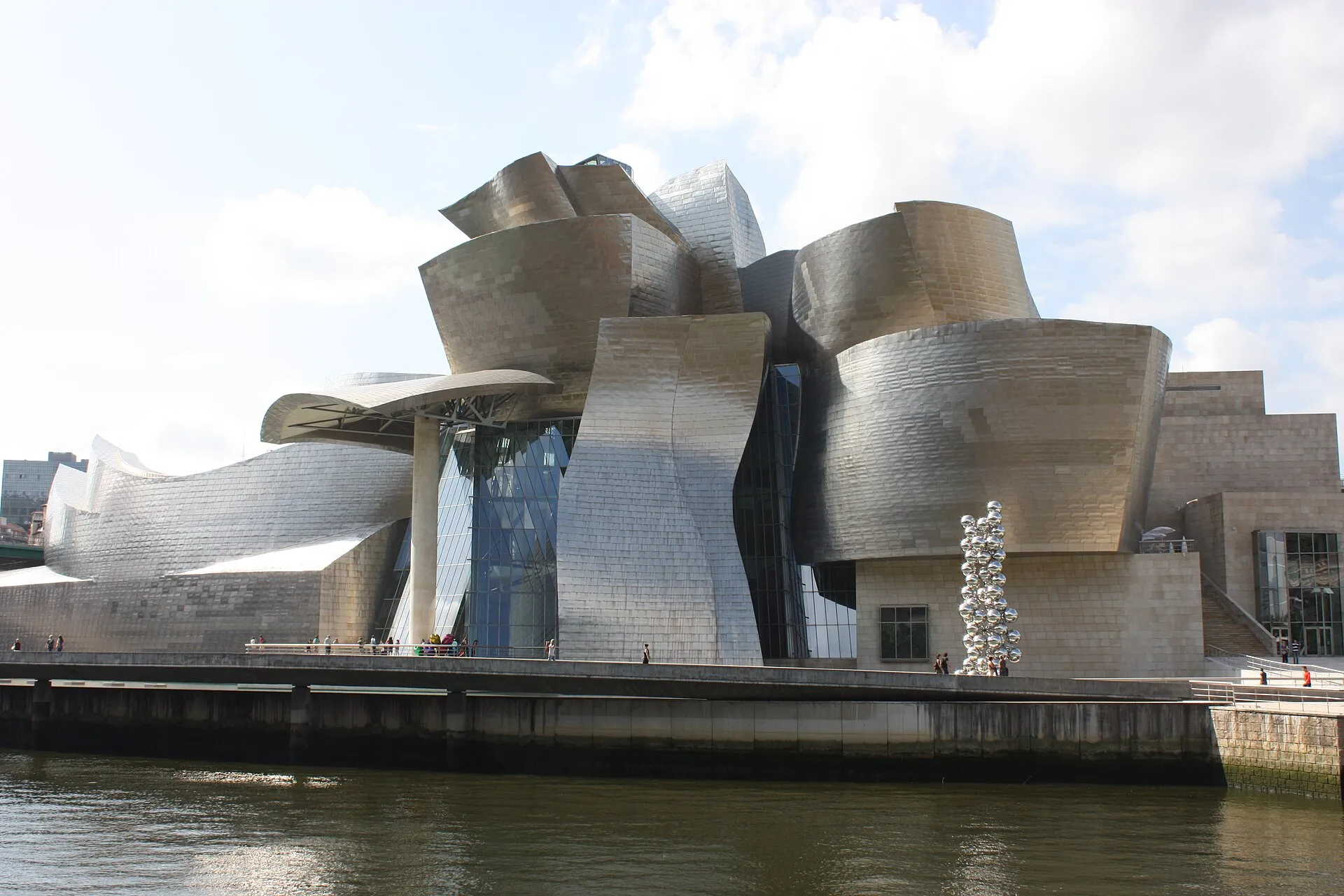
When Frank Gehry's shimmering titanium museum opened in 1997, it didn't just give Bilbao a building -- it gave the city an entirely new identity. The structure's flowing, organic curves clad in 33,000 paper-thin titanium panels catch the Basque light in ways that change by the hour, making the exterior itself an ever-shifting work of art. The phenomenon was so dramatic that urbanists coined the term "Bilbao effect" to describe how a single architectural landmark can revitalize an entire city. Standing guard at the entrance is Jeff Koons's Puppy, a 12-metre-tall West Highland terrier covered in tens of thousands of living flowers, while Louise Bourgeois's towering bronze spider Maman lurks beside the riverfront terrace. Inside, a soaring 50-metre atrium connects 20 galleries showcasing works by Richard Serra, Anish Kapoor, Jenny Holzer, and rotating international exhibitions. Use our Bilbao city guide to plan your full itinerary, cross the UNESCO-listed Vizcaya Bridge downriver for the city's industrial counterpoint, or explore more destinations across Spain.
Collections Highlights
The Atrium: Stand beneath the soaring 50-metre glass-and-steel canopy that floods the interior with natural light. Serra's The Matter of Time: Walk through eight massive weathered steel sculptures that warp your sense of space and gravity. Puppy: Photograph the iconic 12-metre flower-covered terrier -- replanted with seasonal blooms twice a year. Maman: Stand beneath Bourgeois's nine-metre spider clutching a sac of marble eggs along the riverside. Fog sculpture: Fujiko Nakaya's mist installation envelops the museum exterior on humid days, blurring architecture into atmosphere. Nerua restaurant: Cap your visit with Michelin-starred Basque cuisine steps from the galleries
When to Visit
Regular season: Tuesday to Sunday, 10 AM - 7 PM. Summer (July-August): Open daily including Mondays, 10 AM - 8 PM. Closed: Mondays (September-June), Christmas Day, January 1st. Best time: Weekday mornings right at opening for near-empty galleries. Golden hour: Late afternoon visits let you catch sunset reflections off the titanium exterior afterward
Admission and Costs
General admission: €13 (adults). Seniors (65+): €7.50. Students (under 26): €7.50 with valid ID. Children under 12: Free. Guided group tour: €25-35 per person (1.5 hours, includes entry). Private guide: €150-250 for up to 6 people (tickets purchased separately). Annual pass: €23 (unlimited visits for 12 months)
The Case for a Guide
The Guggenheim Bilbao is as famous for transforming a post-industrial city as for its art, and a guide who understands both Frank Gehry's deconstructivist engineering and the Bilbao of the 1990s makes the building itself the most compelling artwork on the premises.
- Titanium panel curvature calculations: The building's 33,000 titanium shingles were designed using CATIA aerospace software originally developed for the French Dassault aviation company; a guide explains that each panel is subtly curved to catch light differently throughout the day, and that the technology Gehry used had never previously been applied to architecture at this scale.
- Puppy's hidden irrigation system: Jeff Koons' 12-meter topiary dog outside the entrance contains 70,000 flowering plants maintained by a programmable irrigation and fertilization system built into its steel armature; a guide explains the seasonal replanting schedule, which flowers are chosen for different times of year, and why Koons insisted on this level of maintenance precision as part of the work's meaning.
- Maman's maternal symbolism: Louise Bourgeois' spider sculpture outside the riverfront entrance is 9 meters tall and casts a genuinely disturbing shadow; a guide explains Bourgeois' stated connection between the spider and her mother — both weavers, both protective and threatening — and how the specific bronze casting technique makes the egg sac beneath the abdomen appear simultaneously fragile and massive.
- Bilbao's post-industrial transformation: In 1991, Bilbao was a declining steelworks city with contaminated river banks and 25% unemployment; a guide traces the specific political decisions — the Basque regional government's investment, the Solomon R. Guggenheim Foundation's deal structure — that turned a single building commission into a model studied by urban planners worldwide as "the Bilbao Effect."
- Nervión River reflections as architectural feature: Gehry specifically oriented the building's curving titanium facades toward the river so that the water reflections would animate the surfaces differently throughout the day; a guide positions you at the riverbank viewpoints at different distances to show how the building reads as a ship, a fish, and an abstract topographical form depending on your angle and the light.
Tips for Visitors
Buy online: Skip the ticket queue by purchasing at guggenheim-bilbao.eus -- no timeslot required. Bag check required: Large bags and backpacks must be left in free lockers at the entrance. Wear comfortable shoes: Gallery 104 alone covers 130 metres of walking through Serra's steel curves. Riverside walk: After your visit, stroll along the Nervion River toward the Zubizuri bridge for postcard views of the museum. Combine visits: The Fine Arts Museum is a 10-minute walk away and pairs perfectly for a full art day. Rainy day bonus: Bilbao's frequent drizzle makes the titanium tiles sparkle -- some locals insist the building looks its finest in the rain
Frequently Asked Questions
What are the opening hours of Guggenheim Museum Bilbao?
Regular season: Tuesday to Sunday, 10 AM - 7 PM. Summer (July-August): Open daily including Mondays, 10 AM - 8 PM. Closed: Mondays (September-June), Christmas Day, January 1st. Best time: Weekday mornings right at opening for near-empty galleries.
Why is it worth hiring a guide for the Guggenheim Bilbao?
Decode contemporary art: A knowledgeable guide transforms abstract installations from puzzling to profound, explaining the concepts and techniques behind each piece.
What practical tips help when visiting the Guggenheim Bilbao?
Buy online: Skip the ticket queue by purchasing at guggenheim-bilbao.eus -- no timeslot required. Bag check required: Large bags and backpacks must be left in free lockers at the entrance.