
Visitor Etiquette
Dress code: Shoulders and knees must be covered — the Sagrada Familia is a consecrated basilica and staff enforce the requirement at the entrance. Keep voices low: Services take place regularly, and visitors are expected to speak quietly throughout the interior. No flash photography: Standard photography is permitted, but flash, tripods, and selfie sticks are prohibited. Stay behind barriers: Active construction zones and certain chapels are cordoned off for safety and reverence. Follow the one-way flow: The visitor route moves in a single direction through the basilica to manage crowd density — backtracking disrupts the experience for everyone.
Spiritual Significance
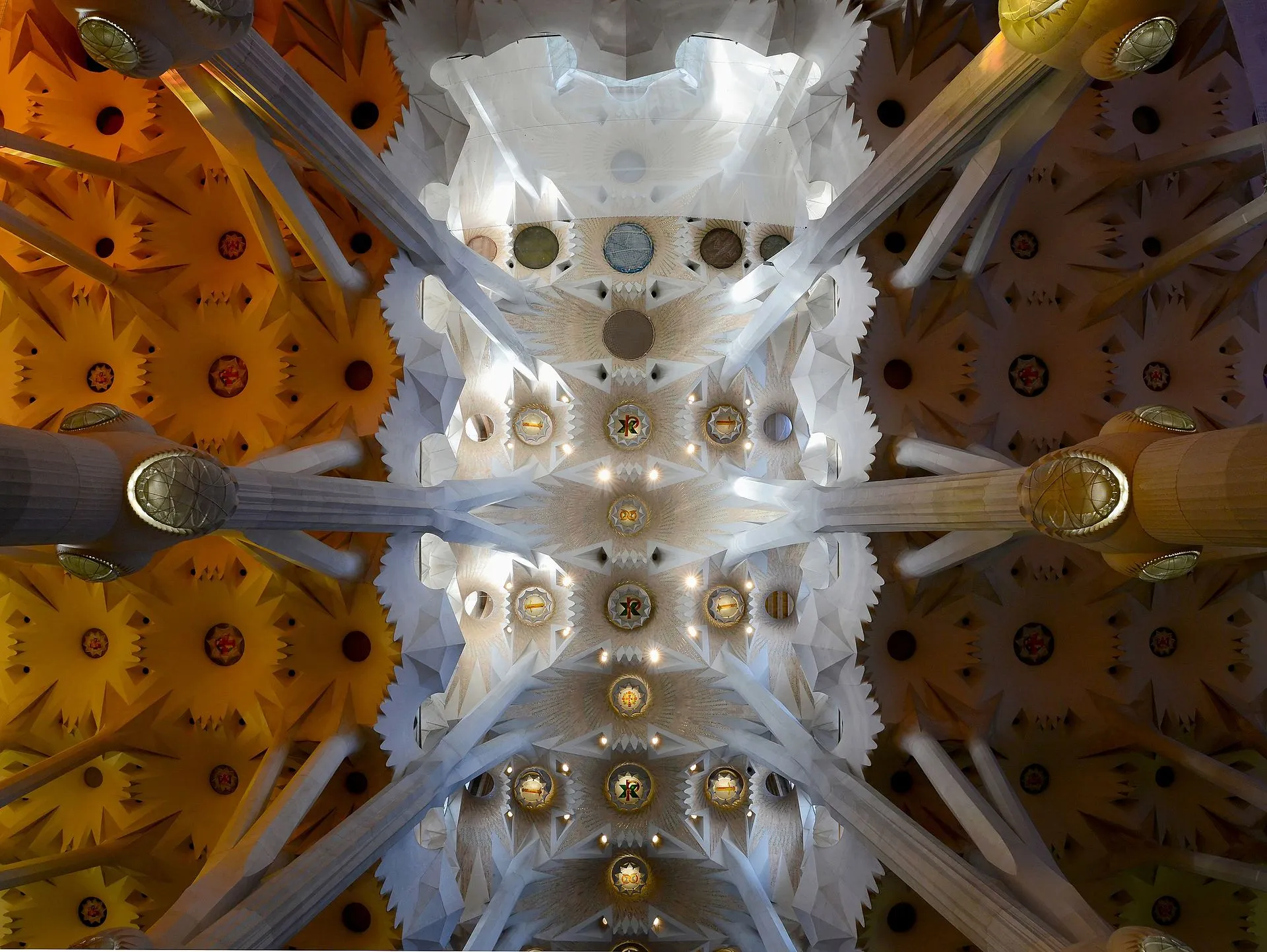
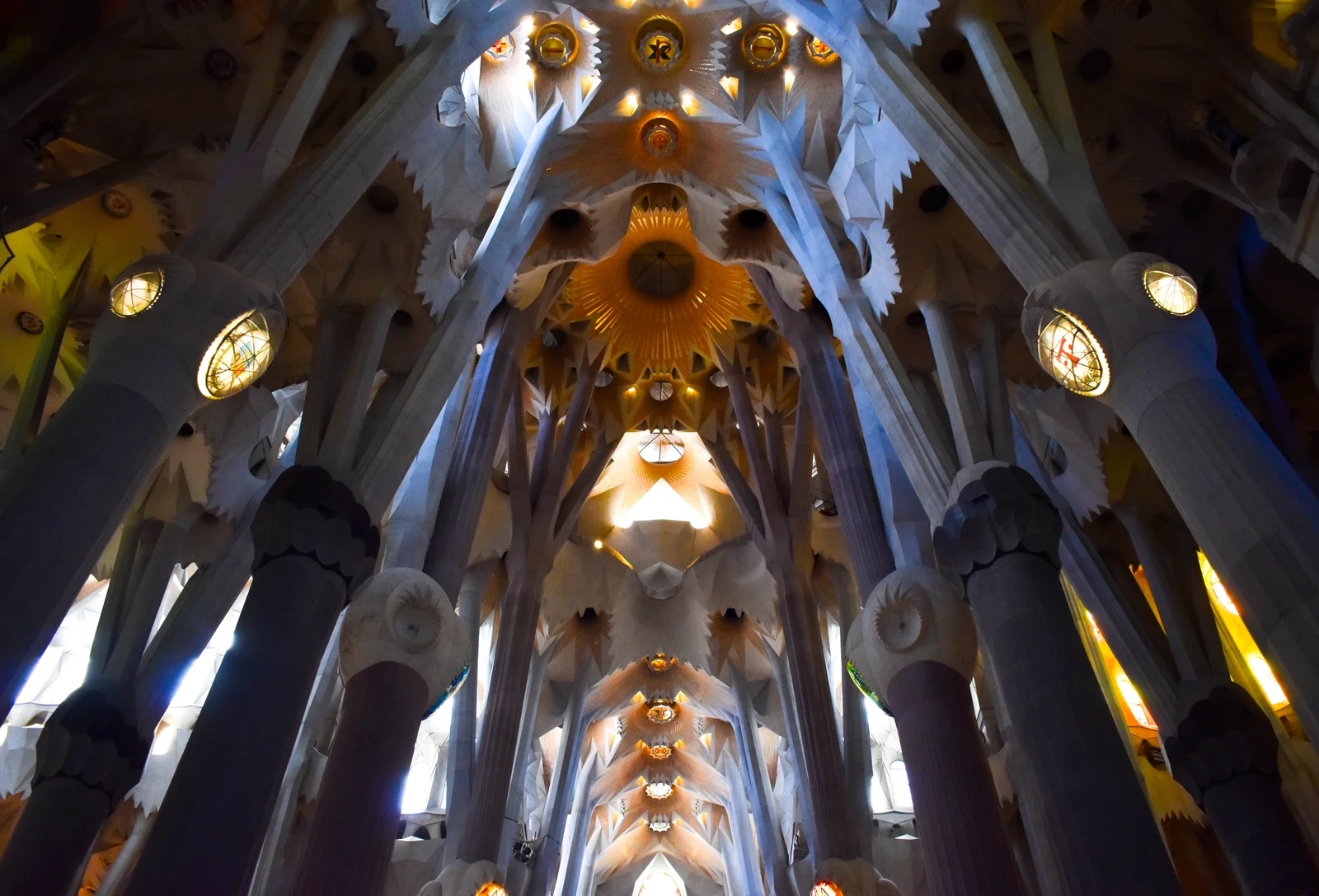
Gaudí conceived the Sagrada Familia as a prayer in stone, dedicating the final four decades of his life to a building he knew he would never see completed. Every element carries theological meaning: the three facades represent the birth, death, and glory of Christ, while the eighteen towers symbolize the twelve apostles, four evangelists, the Virgin Mary, and Jesus. The forest-like interior columns were designed to draw the eye upward toward heaven, echoing the canopy of trees Gaudí studied in nature. Stained glass bathes the nave in shifting color — cool blues and greens on the east side for morning light, warm reds and oranges on the west for afternoon — intended to represent the passage of divine light through the day. Gaudí is buried in the basilica's crypt, and his cause for beatification was opened in 2003, reflecting the depth of faith that drove his work.
Sagrada Familia in Pictures
When to Visit
Hours: November-February: 9 AM-6 PM | March & October: 9 AM-7 PM | April-September: 9 AM-8 PM. Best time: First slot at 9 AM (fewer crowds, morning light through stained glass). Least crowded: Weekdays in winter, late afternoon slots. Light show: Mid-morning (10-11 AM) for blue light, late afternoon for orange/red hues
Admission and Costs
- Basilica only: €26 ($28) timed-entry admission, sold exclusively through the official ticketing site.
- Basilica + tower: €36 ($39), adding a lift up either the Nativity or Passion facade tower for close views of the pinnacles and across the Eixample grid below.
- Basilica + guided experience: €33 ($36) for the official audio-guide option, or €50–75 ($54–81) per person for a 1.5-hour skip-the-line tour with a licensed art-historian guide.
- Private guide: €200–350 ($215–380) for a group of up to six (admission not included) — the most flexible option if you are also touring Park Güell, which likewise sells out its own timed slots well ahead.
The Case for a Guide
Gaudí spent 43 years designing a building where every column, every carved creature, and every stained glass color carries theological meaning — visitors without a guide see extraordinary forms; visitors with one understand an entire biblical and natural philosophy encoded in stone and glass.
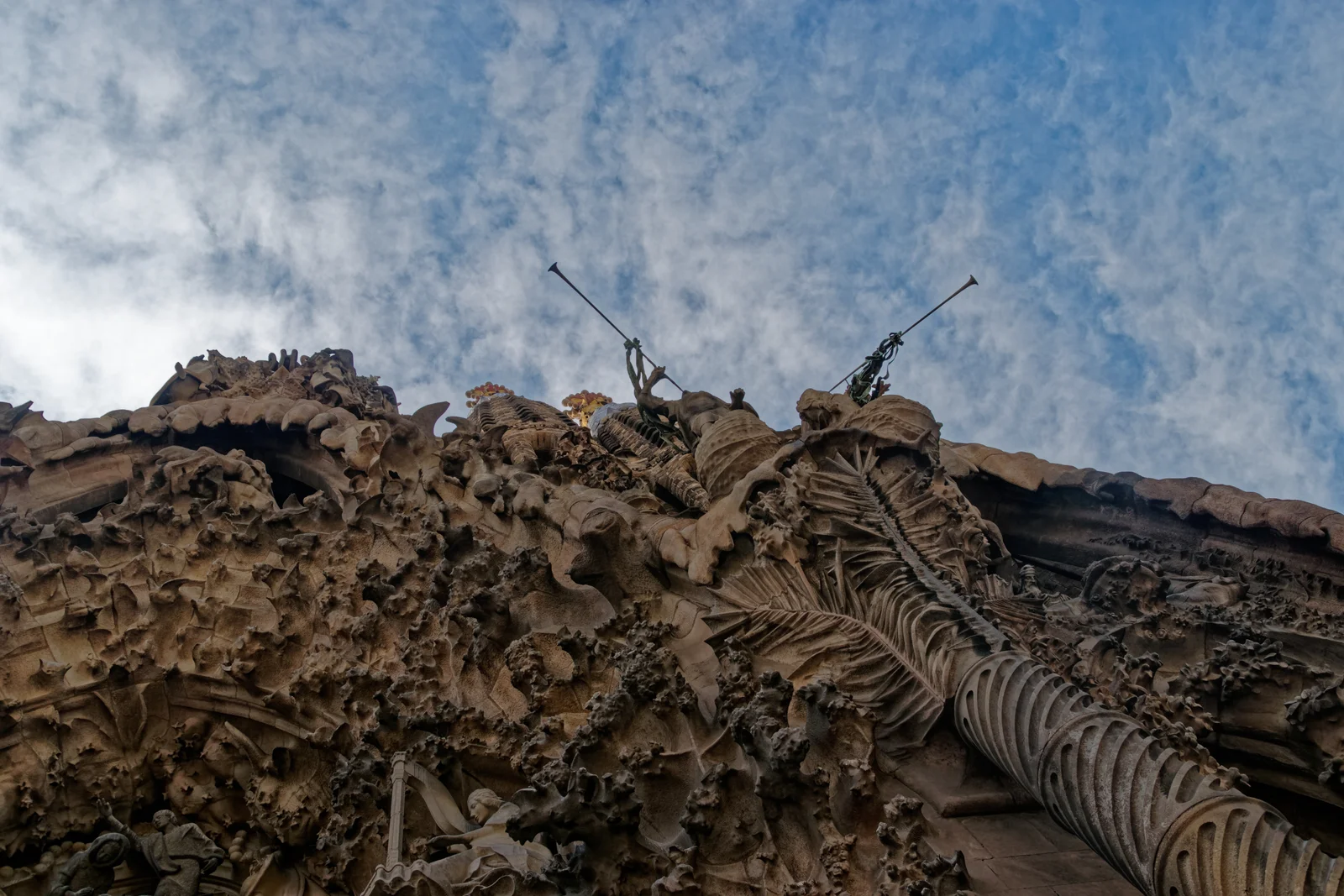
- Nativity vs. Passion facade comparison: The Nativity facade (Gaudí's own work) is teeming and joyful with naturalistic plant and animal forms; the Passion facade (completed post-Gaudí) is stark and angular, representing suffering — guides position you at each and explain what each carving depicts and why the stylistic contrast was deliberately programmed into the original design.
- Nature-coded column symbolism: The branching interior columns represent a forest, with species chosen to encode meaning — the oak columns of the nave carry different theological significance than the palm-shaped columns near the apse; guides explain the entire arboreal iconography Gaudí drew from Catalan nature.
- Crypt access and Gaudí's tomb: The crypt beneath the basilica contains Gaudí's tomb and active religious services; guides explain the circumstances of his death (struck by a tram in 1926, unrecognized in the street), his beatification process, and what it means that the world's most famous unfinished building contains its architect's remains.
- Geometric mathematics made visible: The basilica uses hyperbolic paraboloids, hyperboloids, and helicoids — mathematical surfaces Gaudí derived from nature — to distribute structural load without flying buttresses; guides demonstrate with simple physical gestures how these shapes work and why they revolutionized structural engineering.
- Funding by public donations: Uniquely among world-class monuments, the Sagrada Família has been funded entirely by visitor admissions and private donations since the 19th century — no government money — and guides explain how this funding model shaped construction priorities and why completion in 2026 marks exactly a century since Gaudí's death.
Tips for Visitors
Book online only: No walk-up tickets available - must pre-purchase with timeslot. Arrive 20 min early: Security screening takes time. Dress code: Shoulders and knees covered (it's a working basilica). Tower elevator: Limited capacity, books up fast - reserve when buying tickets. Photos allowed: No flash, no tripods, no commercial use. Allow 1.5-2 hours: 3+ hours if climbing towers and visiting museum. Getting there: The Sagrada Família metro stop (lines L2 and L5) surfaces directly opposite the Nativity facade, and buses 19, 33, 34, H10 and V21 stop within a block — there is no visitor car park, so public transport is easiest. Best photo angle: The ponds in Plaça de Gaudí on the north side mirror the Nativity towers at dawn, while Plaça de la Sagrada Família to the south frames the Passion facade. Pair the visit: It is a 30-minute walk down through the Eixample to La Boqueria on Las Ramblas, or a short metro hop to Gaudí's Park Güell
Frequently Asked Questions
When should visitors plan a trip to the Sagrada Familia?
March through October provides the fullest experience, as the basilica's famous stained glass windows cast the most dramatic interior light during longer days and the tower views extend across a sun-drenched Barcelona. The shoulder months of March-April and October balance manageable queues with comfortable weather, while January and February see shorter lines but reduced daylight limits the spectacular light shows inside the nave.
What are the opening hours for Sagrada Familia?
Hours: November-February: 9 AM-6 PM | March & October: 9 AM-7 PM | April-September: 9 AM-8 PM. Best time: First slot at 9 AM (fewer crowds, morning light through stained glass). Least crowded: Weekdays in winter, late afternoon slots.
Why is it worth hiring a guide for Sagrada Familia?
A good guide turns an overwhelming interior into a readable one. They explain the structural engineering Gaudí pioneered — the branching columns and hyperboloid vaults that carry the roof without a single flying buttress — and the mathematics behind shapes he derived from nature rather than a drawing board. They also handle the logistics that trip up independent visitors: which facade to enter by, when the coloured light peaks in the nave, and how the timed one-way route flows so you are standing in the right place at the right hour.
What do guides reveal about Sagrada Familia's facades and symbolism?
Each of the three facades tells a different chapter and was carved in a different hand. The Nativity facade, the only one Gaudí saw largely finished, teems with naturalistic plants and animals celebrating Christ's birth; the Passion facade, sculpted by Josep Maria Subirachs from the 1980s, is stark and angular to convey suffering; the Glory facade, still under construction, will become the basilica's main entrance. Guides connect these narratives to the interior columns — modelled on a forest — and to the stained glass, cool blues and greens on the morning side, warm reds and oranges on the afternoon side.