
Fortification History
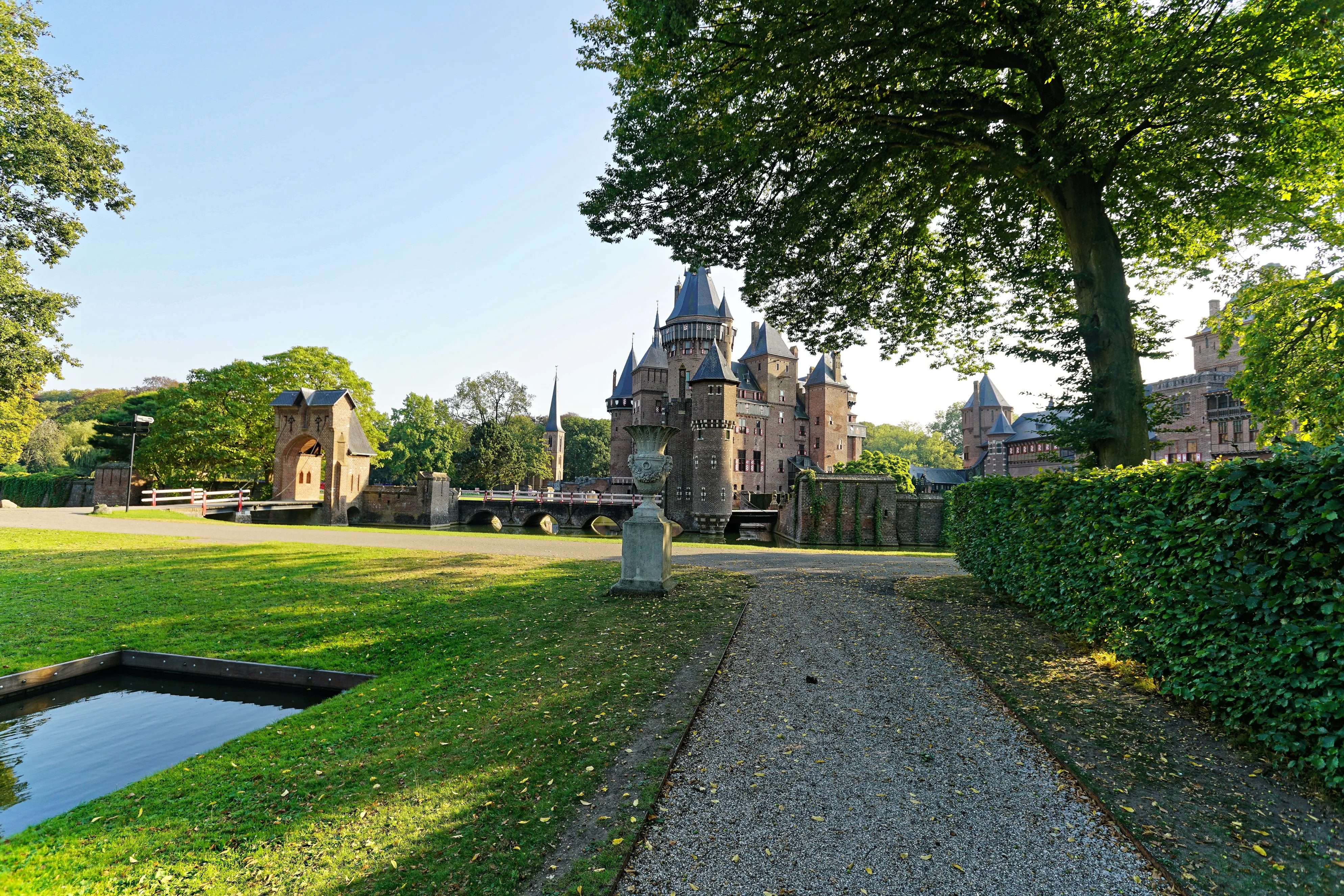
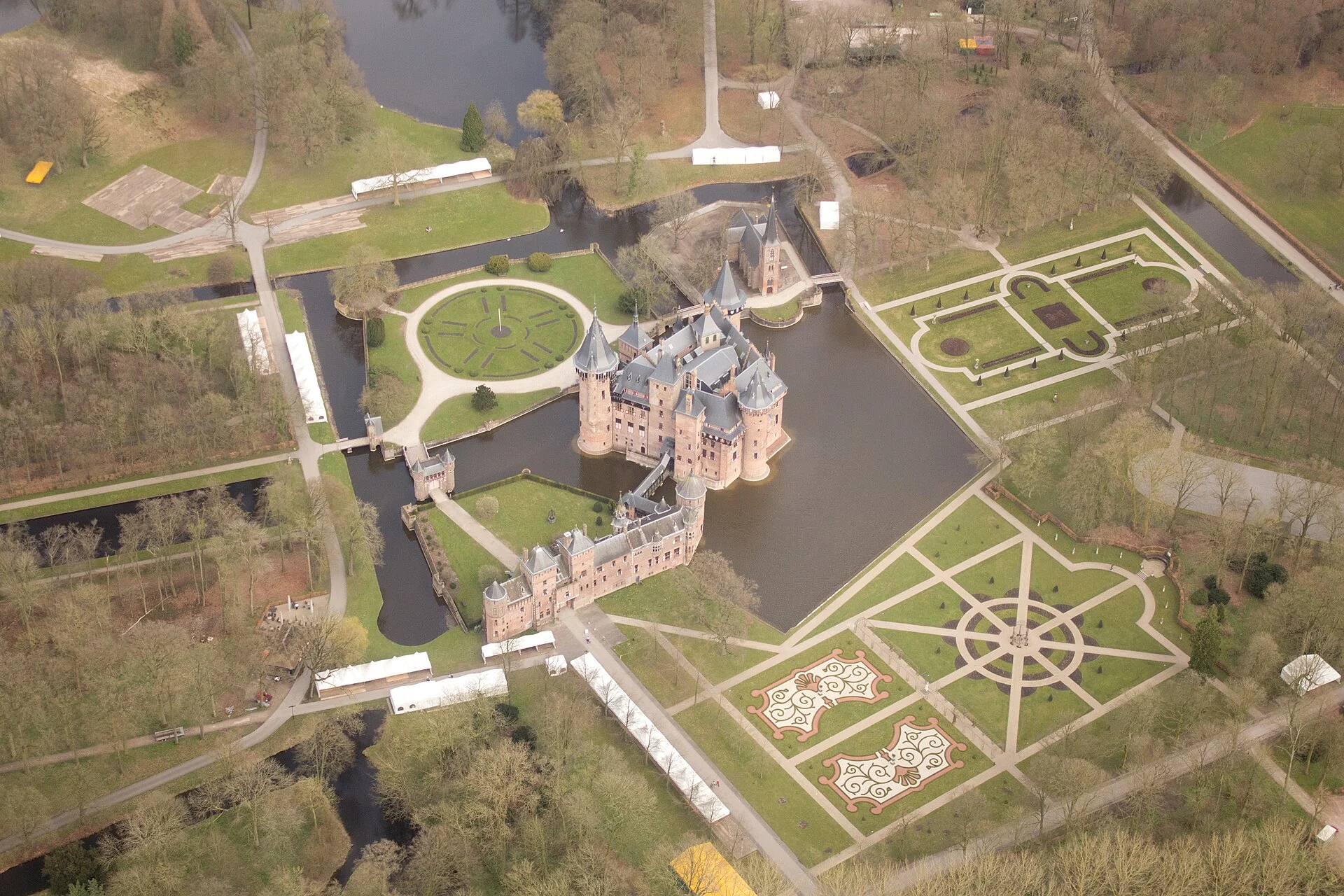
Medieval origins: The first castle on the site is recorded in 1391, held by the De Haar family before passing to the Van Zuylens — the moat and footprint preserve that medieval logic even though the visible building does not. Ruin and revival: The original castle decayed after the male line died out in the fifteenth century and was largely a romantic ruin by the 1800s, the state in which Cuypers found it. A modern medievalism: The 1892-1912 rebuild reproduced drawbridges, battlements, and a defensive silhouette for effect rather than war — by then a castle was a statement, not a stronghold. Hidden engineering: Behind the historic-looking stone, Cuypers concealed steel structure, electric wiring, central heating, and plumbing, making De Haar one of the most technologically advanced houses of its era. A landscape reshaped: The defensive setting was completed by moving an entire village and laying out formal gardens and a deer park, so the fortification reads as part of a designed estate.
Notable Rooms
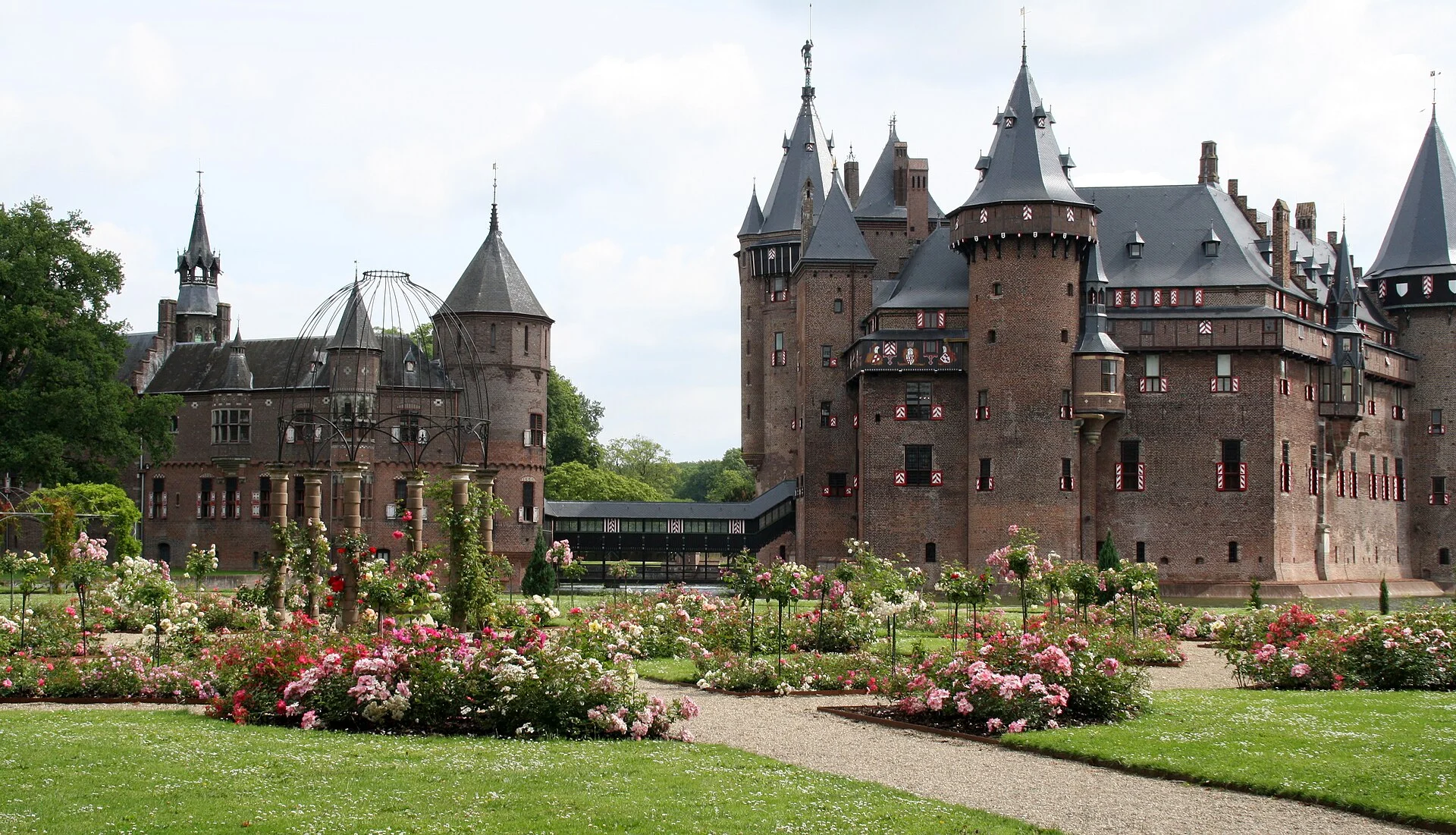
The Knights' Hall: The great hall rises like a cathedral nave, with a soaring timber-and-stone ceiling that is the castle's single most impressive interior space. Carved oak interiors: Cuypers' workshops filled the rooms with intricately carved oak, neo-Gothic detailing, and built-in furniture that blur the line between architecture and craft. The Rothschild collections: Tapestries, paintings, and furnishings funded by the Rothschild fortune give the rooms a richness rarely seen outside royal palaces. Concealed comforts: Look for the period conveniences tucked into the Gothic fabric — radiators, electric fittings, and a kitchen built for grand entertaining — evidence of the castle's modern heart. The chapel and library: Smaller, atmospheric rooms that show the family's private life amid the grandeur, and the kind of detail a guide brings to the fore.
Kasteel de Haar in Pictures
When to Visit
Park and gardens: Open daily year-round and lovely in every season, peaking in late spring when the formal beds are planted. Castle interior: Open on a published schedule that narrows in winter and around private events — check before travelling. Best: May to September for the gardens and outdoor avenues; December for the castle's Christmas Fair. Allow: A half to full day, including travel from Utrecht and time to walk the grounds. Events: The Elfia fantasy fair (spring) and Christmas Fair (late autumn) draw large crowds — wonderful but busy.
Admission and Costs
Park ticket: A few euros buys access to the gardens, avenues, and deer park — enough for visitors who mainly want to walk the grounds. Castle interior: A combined ticket including the interior route is around €18 for adults, with reductions for children and families. Guided vs self-guided: The interior is seen on a set route; guided options add the social history a self-guided walk can miss. Booking: Reserve ahead for weekends, school holidays, and the castle's fairs, when timed entry is used. Museumkaart: Acceptance varies and may exclude event days — confirm when buying.
Tips for Visitors
Plan the transport first: Public transport to Haarzuilens is limited — check current bus times, or cycle the flat 40-minute route from the city centre, which many locals consider the nicest way to arrive. Do the gardens justice: The grounds are half the experience; allow time to walk the avenues and rose garden rather than rushing to the interior. Time it for an event — or avoid one: The Elfia and Christmas fairs are spectacular but crowded; pick your date deliberately depending on whether you want the spectacle or the calm. Dress for the grounds: There is a lot of outdoor walking on gravel and grass, so wear comfortable shoes and bring a layer even in summer. Pair with the city: Treat De Haar as the rural counterpoint to Utrecht's compact centre — a morning at the castle and an afternoon at the canal wharves make a well-balanced day. Bring a picnic: The park has space to sit, and outside food is welcome in the grounds, keeping costs down.
Frequently Asked Questions
How do you get to Kasteel de Haar from Utrecht without a car?
The castle sits in Haarzuilens, about 13 km west of Utrecht. Take a train or bus toward Vleuten, then a local bus or a 30-minute walk or cycle to the gates; cycling the whole way from the centre takes roughly 40 minutes on flat, well-signed paths. Check current bus routes, as the rural service is limited.
How much does it cost to visit Kasteel de Haar?
There are two tickets: the surrounding park and gardens cost a few euros, while a combined ticket including the castle interior runs around €18 for adults, with reductions for children. The interior is seen on a guided or self-guided route — buy ahead on busy days and during the castle's fairs.
What makes Kasteel de Haar worth the trip out of Utrecht?
It is the largest castle in the Netherlands and one of the most complete neo-Gothic ensembles in Europe — rebuilt from a ruin between 1892 and 1912 by Pierre Cuypers and paid for with a Rothschild fortune. The lavish interiors, formal gardens, and the story of a whole village moved to make room repay the journey.