
Wildlife
The surrounding forest of Moroccan fir, Atlas cedar, and endemic wildflowers creates a rich habitat at the transition between town and mountain. Barbary partridge — Morocco's most distinctive upland game bird — frequents the forest edge along with woodpeckers and raptors riding thermals above the Rif peaks. The Rif Mountains are one of the last refuges of the Barbary macaque, though sightings near the town itself are increasingly rare. Butterflies congregate around the spring in warmer months, and the stream below the cascade supports dragonflies and freshwater invertebrates. Mountain guides with naturalist knowledge identify the endemic flora — including species found nowhere else outside the Rif — on the trails beyond the Spanish Mosque toward the Akchour waterfalls.
Formation
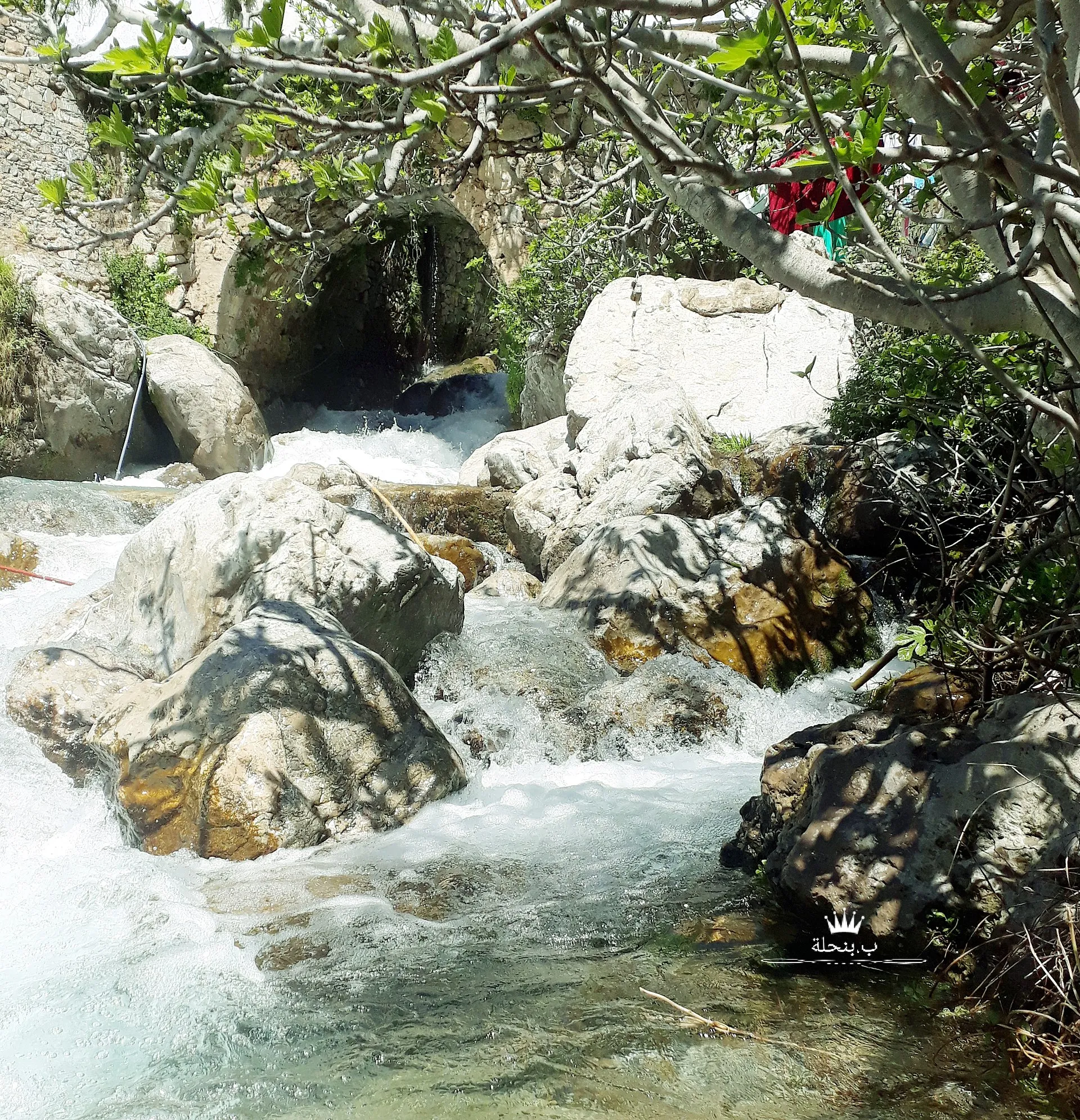
The Ras el-Maa waterfall is fed by a karst spring: rain and winter snowmelt soak into the porous limestone of the Rif Mountains, travel underground, and re-emerge here where the rock meets an impermeable layer, forcing the water to the surface at the medina's edge. That underground filtering is why the flow stays cold and clear year-round even when the surrounding hills look parched. The cascade drops barely a couple of metres over a natural rock shelf into a shallow catch-pool — modest in scale, but reliable, which is precisely why the town grew up around this exact point rather than a few hundred metres either way.
Flow is strongest in spring (April-May), when snowmelt off the higher Rif peaks swells the stream and the cascade runs its loudest; by late summer it can thin to a gentle trickle. The same spring historically supplied Chefchaouen's drinking water and powered small grain mills downstream, and its channels still feed fountains inside the medina. Understanding that this is a living water source — not a scenic set-piece — reframes the modest cascade as the reason the Blue Pearl exists at all.
Trails
Women scrubbing colorful wool in the cold spring water is a centuries-old tradition best witnessed in the mornings. From the base of the waterfall, the Spanish Mosque trail climbs a clear stone path uphill for about 30 minutes to the hilltop mosque — abandoned since the end of the Spanish Protectorate — with sweeping views of the blue town spread below; this is the single most rewarding short walk from the spring and the one most first-time visitors pair with it. The cascade itself, where mountain water tumbles over mossy rocks into a crystalline pool, is the natural focal point. Pine and cedar trees shade the surrounding area, offering a cool break from the medina's stone-paved alleys. Simple riverside cafes serve mint tea and msemen (flatbread) with mountain views. Beyond the Spanish Mosque, trails continue into the Rif toward the Akchour waterfalls — a full-day hike requiring a local guide for navigation.
When to Visit
Access: Always open; it is a natural outdoor site at the medina edge. Morning (8-10 AM): Best chance to see women washing wool at the spring, a tradition fading with younger generations. Midday: Locals and visitors rest by the water in the shade of surrounding trees. Late afternoon: Pleasant temperature as mountain air cools the water's edge. Best time: Spring (April-May) when the waterfall flows strongest from snowmelt.
Admission and Costs
Visiting the Ras el-Maa waterfall itself is free — it is an open natural site, with no gate, ticket, or opening hours. The costs are optional add-ons. The riverside cafes lining the approach charge roughly 10-15 MAD (€1-1.50) for a glass of mint tea and 10-20 MAD (€1-2) for a plate of msemen flatbread; a table with a waterfall view costs nothing beyond an order, so there is no reason to pay a "view surcharge" if one is suggested. Guided walk including Ras el-Maa: 100-250 MAD (€9-23) per person as part of a medina tour. Spanish Mosque hike from Ras el-Maa: 200-400 MAD (€18-37) for a guided 2-hour round trip. Full mountain hike from Ras el-Maa: 500-1,000 MAD (€46-92) for a full-day trek into the Rif toward the Akchour falls.
The Case for a Guide
Ras el-Maa is small, free, and self-explanatory, so be honest about whether you need a guide here at all. Worth a guided visit if you want the context — why women still wash wool in a public spring, how the khettara channels distribute this water through the medina, and what the Spanish Protectorate left behind on the hill above. Skip the guide if you only want to see the cascade, snap a photo, and move on; a self-guided ten-minute stop is completely fine and costs nothing.
Where a guide genuinely earns the fee is beyond the waterfall itself. The trail from Ras el-Maa up to the abandoned Spanish Mosque is easy to follow, but the longer routes into the Rif toward Akchour and God's Bridge are unsigned, and every year visitors lose the path or misjudge the daylight. A licensed mountain guide handles navigation, reads the weather that funnels down the valley, and knows which riverside cafes are honest about prices — turning the spring from a quick photo stop into the gateway for a proper half-day in the mountains.
Tips for Visitors
Getting there: Walk east through the medina, following the uphill alleys toward the sound of water (10-15 minutes from the main square). Sturdy shoes: The rocks around the waterfall are wet and slippery; sandals are risky. Water refill: Locals drink the spring water, but visitors should stick to bottled water. Photography respect: Women washing at the spring may not want to be photographed; always ask first. Sunset from the Spanish Mosque: If you hike up, time it for golden hour when the town below glows blue and orange. Pack a snack: The riverside area is a pleasant spot for a picnic before or after a hike.
Frequently Asked Questions
Where is the Ras el-Maa waterfall in Chefchaouen?
It sits at the northeastern edge of Chefchaouen's medina, about a 10-15 minute uphill walk from the main square (Place Outa el-Hammam). Follow the eastern alleys toward the sound of running water; it is where the blue town meets the Rif Mountains and the hiking trails begin.
Is the Ras el-Maa waterfall worth visiting?
Yes, if you go with the right expectations. It is a modest knee-to-waist-high cascade, not a dramatic falls, so it is worth it for the setting, the women washing wool, and the trailhead atmosphere rather than the water volume itself. Since it is free and a 10-minute walk, it is an easy yes; skip it only if a low-flow trickle in late summer would disappoint you.
When is Ras el-Maa open and what's the best time of morning?
Access: Always open; it's a natural outdoor site at the medina edge. Morning (8-10 AM): Best chance to see women washing wool at the spring, a tradition fading with younger generations. Spring (April-May) is when the waterfall flows strongest from snowmelt.
How much does it cost to access Ras el-Maa?
Visiting Ras el-Maa: FREE (natural outdoor site, no ticket or gate). Riverside cafes charge about 10-15 MAD (€1-1.50) for mint tea. Guided walk including Ras el-Maa: 100-250 MAD (€9-23) per person as part of a medina tour. Spanish Mosque hike from Ras el-Maa: 200-400 MAD (€18-37) for a guided 2-hour round trip.
How do visitors reach Ras el-Maa and what footwear is needed?
Getting there: Walk east through the medina, following the uphill alleys toward the sound of water (10-15 minutes from the main square). Sturdy shoes: The rocks around the waterfall are wet and slippery; sandals are risky.
Is the Ras el-Maa waterfall worth visiting in Chefchaouen?
Ras el-Maa is a modest mountain cascade rather than a dramatic falls, but it is worth the 10-15 minute uphill walk from Chefchaouen's main square for what surrounds it — cold Rif spring water tumbling over mossy rocks, riverside cafes serving mint tea, and the trailhead for the Spanish Mosque sunset hike. Skip it if you expect a towering waterfall like Akchour; come for it if you want the blue medina's most atmospheric edge, the centuries-old wool-washing scene, and a shaded spot to rest before or after a hike.
What is the wool-washing tradition at Ras el-Maa (also spelled Ras el-Ma)?
For generations, Chefchaouen women have carried wool and textiles to the cold spring at Ras el-Maa — the name means "head of the water" — to scrub and rinse them by hand in the running current, then spread the bright fabrics on the rocks to dry. The custom is fading as younger residents switch to machines, so the best chance of witnessing it is early morning, roughly 8 to 10 AM. Always ask before photographing the women at work; many would rather not be photographed.